









Sewerage & underground infrastructure
Eleven pipe jacks beneath Antwerp’s E34 and E17
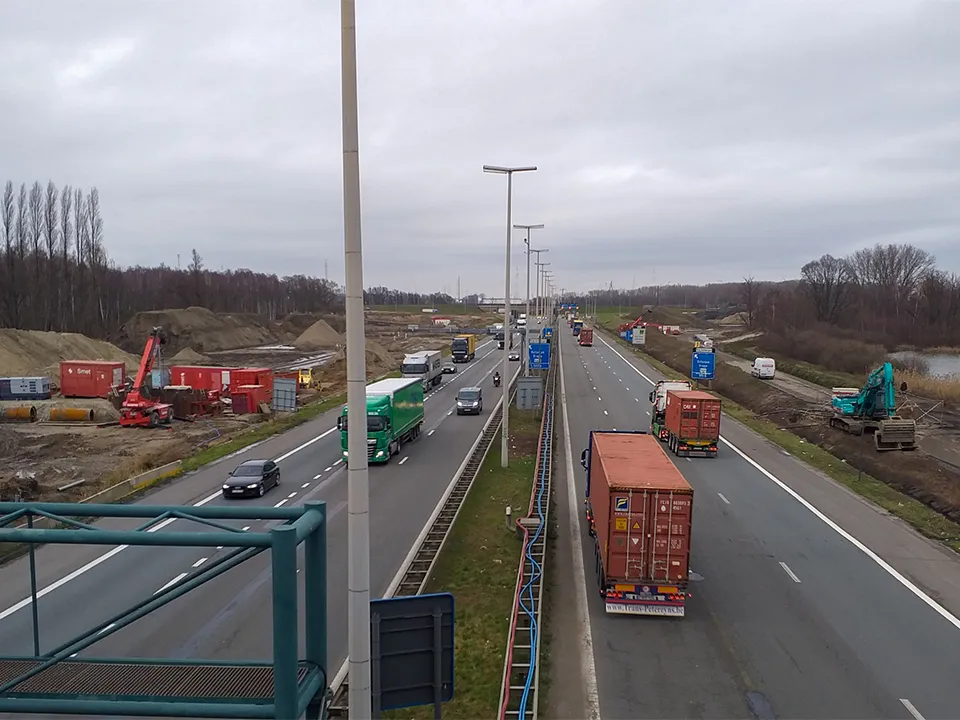
Work to improve traffic flow on the Antwerp Ring will continue until 2025.
Oosterweel is an ambitious, large-scale and complex project that aims to complete the Antwerp Ring, while also creating more space for other forms of transport, nature and the surrounding area. The sewer system alongside the motorway is also being renovated and upgraded. To this end, Smet-Tunnelling is carrying out no fewer than eleven pipe jacks beneath the E34 and E17 using state-of-the-art technology.
“The existing sewer network runs along both sides of the E34 and E17 and no longer meets requirements,” says Jan Vaessens, project manager at Smet-Tunnelling. “The network drains the motorways and connects the surrounding villages to the wastewater treatment plant. To upgrade the existing sewer network, connections need to be made between the systems on either side of the motorway. To avoid having to close the motorways for this work, THV Rinkoniên, comprising Stadsbader, Artes, CIT Blaton and Mobilis, and responsible for the Oosterweel Linkeroever/Zwijndrecht project, opted for pipe jacking.” Smet-Tunnelling was brought in to carry out the pipe jacks.
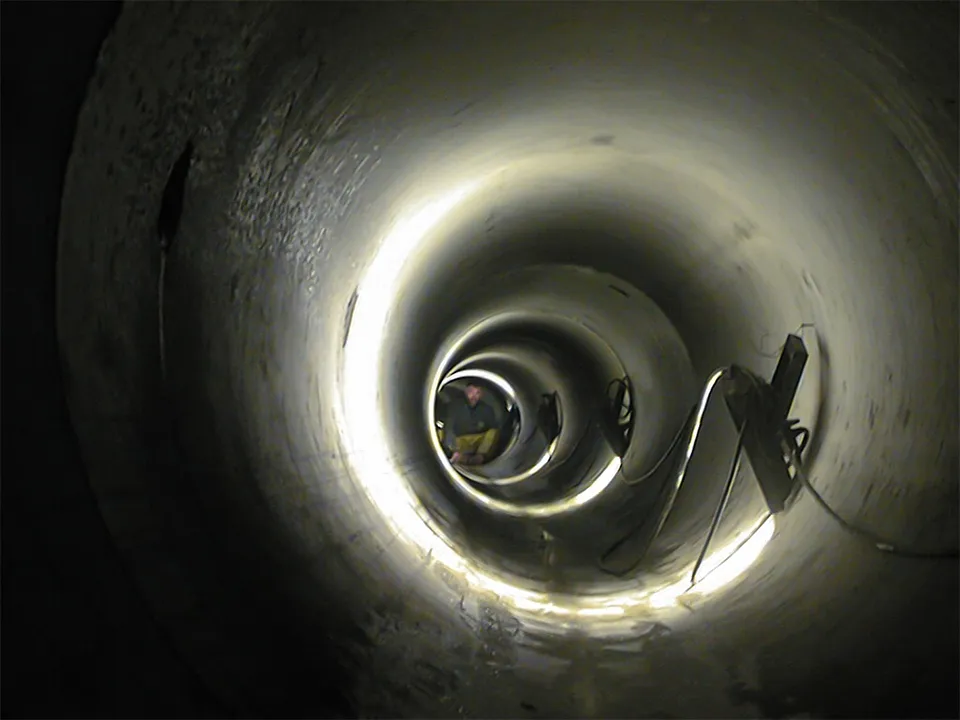
Microtunnelling
“We have now successfully completed eight pipe jacks at various locations,” says Vaessens. “We used microtunnelling, or pipe jacking with a closed-face boring shield. A laser aligned with the theoretical axis of the boring shield lets us see to within a millimetre whether it is deviating from the planned alignment, and correct it if necessary. The longest distance we had to cover on this project was 358 metres. The bores, with an external diameter of 1.50 metres, were completed in a straight line to within 3 centimetres, around 2.5 metres beneath the motorway. Some of the bores passed through an area contaminated by industry. Because we work from watertight shafts without lowering the groundwater level, the pumped groundwater does not need to be treated. This is an additional advantage of pipe jacking over open-cut methods.”
Smet-Tunnelling also carried out a pipe jack right alongside the E34. Vaessens says: “What made this pipe jack unique was that it had to follow a curve to avoid existing underground infrastructure. Using state-of-the-art technology with motorised theodolites that measure each other’s position, we can determine the exact position of the boring shield. This also allows us to successfully carry out curved pipe jacks, as we have demonstrated here in Antwerp.”
Question about this story? Ask your question
Keep following this
Get an email when a new story is published. No account needed.
- SubjectSewerage & underground infrastructure







