









Sewerage & underground infrastructure
“Early consultation and training are absolutely crucial”
Text Niels Rouvrois Beeld VLARIO, VLAWEBO, Aquafin, Fluvius, NAV, B-rain Connect, Sweco
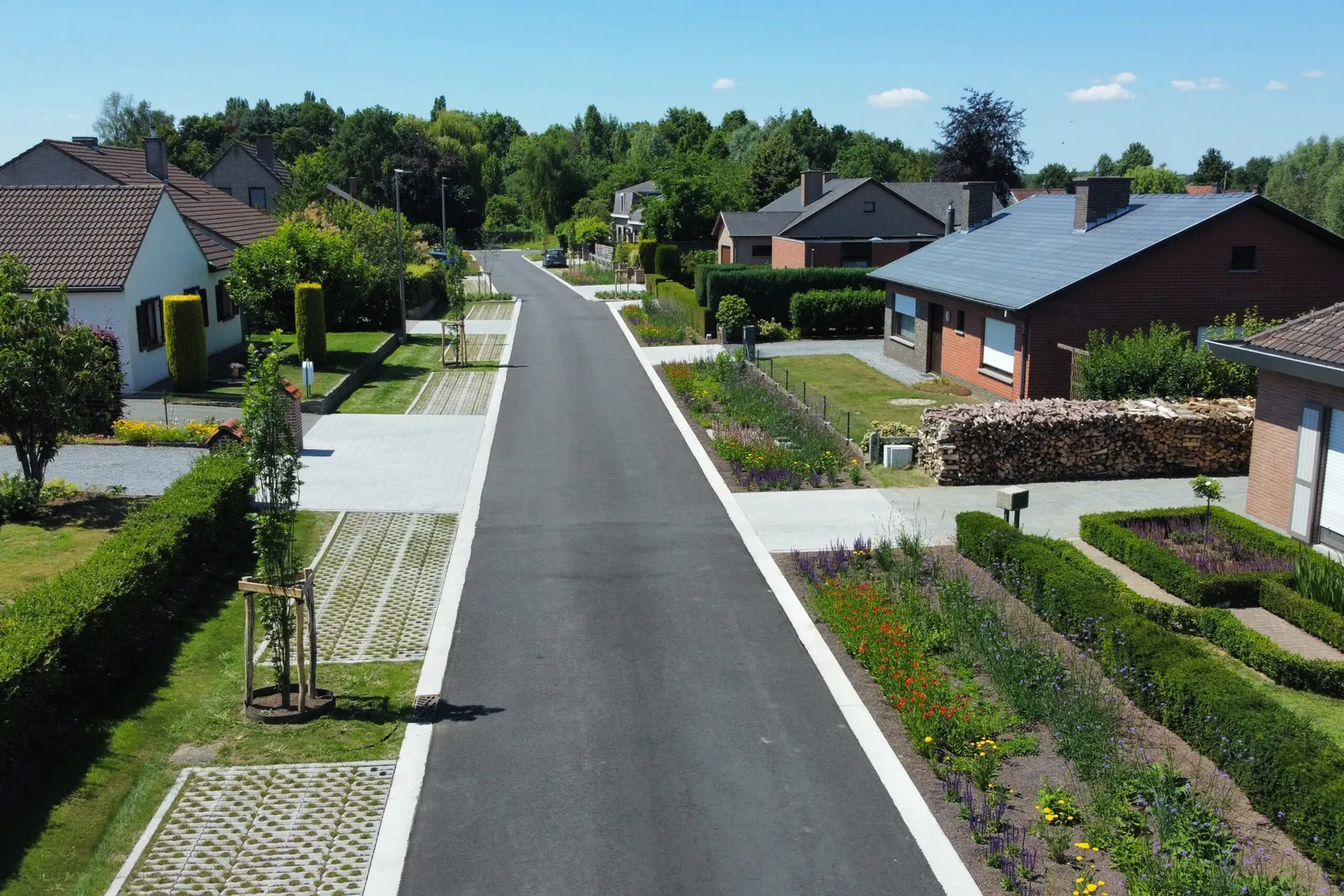
On 10 February 2023, the Flemish Government gave final approval to the regional 2023 Rainwater Ordinance. There is plenty to say about the ordinance and its accompanying rules. GWW explored the strengths, weaknesses and challenges of the GSV Rainwater with seven experts from across the sector. Wendy Francken (VLARIO), Joëlle Eggermont (VLAWEBO), Katrien Vanhove (Fluvius), Sylvia De Nolf (NAV), Geert Wellens (Aquafin), Philippe Segers (B-rain Connect) and Carlo Bollen (Sweco) joined the discussion.
The impact of extreme weather is increasingly being felt. In recent years, we have seen both more extreme rainfall, causing widespread flooding, and longer periods of drought. The previous Flemish rules on rainwater collection did not adequately account for these developments. Moreover, Flanders has a high proportion of sealed surfaces, which causes water to run off quickly.
The aim of the latest GSV is therefore to retain as much water as possible where it falls. This helps us get through periods of drought and reduce the impact of sealed surfaces on flooding. The starting point is that everyone, from private individuals to public authorities, should collect and retain water, thereby making the living environment more climate-resilient and climate-adaptive. Tighter rules are essential and, given the changing climate, it is realistic to expect them to be tightened again within a decade or so.
The new rules have applied to private property since 2 October 2023, and the public realm followed at the start of this year, on 7 January. This is a good opportunity to make an initial assessment.

What are the advantages of the 2023 GSV Rainwater Ordinance compared with the previous ordinance?
Geert Wellens (Aquafin): “The new ordinance finally provides a structural response to the challenges posed by climate change. It has become an important policy tool for climate adaptation. The GSV provides clear guidance, particularly for private property, with straightforward design rules that are easy to apply. Things are more complex in the public realm: there are more functions to consider and a greater need for tailored solutions.”
Sylvia De Nolf (NAV): “As a professional association, we wholeheartedly support the principle of ‘keeping as much rainwater as possible where it falls’. So the spirit of the ordinance is good. In practice, however, we often come up against rules being applied too rigidly. I don’t entirely agree with Geert that the rules themselves are straightforward. In practice, they can be very difficult to implement. At NAV, we believe that outcome-based regulation is more effective than prescriptive design formulas.”
Philippe Segers (B-rain Connect): “I do feel that the ordinance was drawn up with too much reliance on a theoretical model and not enough connection to day-to-day practice. In reality, we encounter technical constraints that are not recognised in the regulations. A better-tailored guidance document could certainly help. Work is under way on that, but it is not there yet.”
So there are still quite a few challenges to address?
Joëlle Eggermont (VLAWEBO): “From the contractors’ perspective, the main issue is often whether projects can actually be built as designed. Technical decisions are made during the preparation phase without sufficient consultation with those carrying out the work. This leads to practical problems on site that could easily have been avoided. More interdisciplinary consultation from the outset would prevent a lot of frustration.”
Katrien Vanhove (Fluvius): “One major challenge is that the system needs to be sensitive to its context. Every site is different. We find that the regulations are sometimes applied too uniformly, without enough attention to local factors such as drainage, groundwater flows or existing rainwater plans. A broader approach is needed, one that also takes maintenance and sustainability into account.”
Wendy Francken (VLARIO): “There are regulations, of course, but above all, don’t forget training. And technical support for both permit authorities and permit applicants. We see enormous potential here to address the problems being raised.”
Carlo Bollen (Sweco): “As a consultancy, we try to explain the complexities to our clients. We generally manage that well, but in our view there is still a lack of experience, particularly in the public realm. It is also crucial that permit authorities have enough knowledge to assess exceptions correctly. So I certainly agree with Wendy on that.”

How much consultation between the different stakeholders takes place at the outset at present?
Silvia De Nolf (NAV): “Clearly, too little time is set aside for meaningful early consultation. This is often due to capacity problems at permit authorities, which are overstretched. Yet such consultation can provide the basis for efficient solutions that everyone supports. It is a missed opportunity, especially on large-scale projects, when it does not take place. We are also seeing growing tension between permit applicants and permit authorities. In my view, resolving that tension is the biggest challenge posed by the rainwater ordinance.”
Carlo Bollen (Sweco): “We find that early consultation often leads to surprisingly good, pragmatic solutions, especially when permit authorities are open to dialogue. For more complex projects, it is essential to review the design choices together and check them against the realities of the site.”
Joëlle Eggermont (VLAWEBO): “Contractors are making it clear in large numbers that they want to have a say. They don’t just want to make adjustments on site; they want to be involved in the thinking from the outset. Some design choices have direct implications for technical feasibility. More collaboration would significantly improve efficiency.”
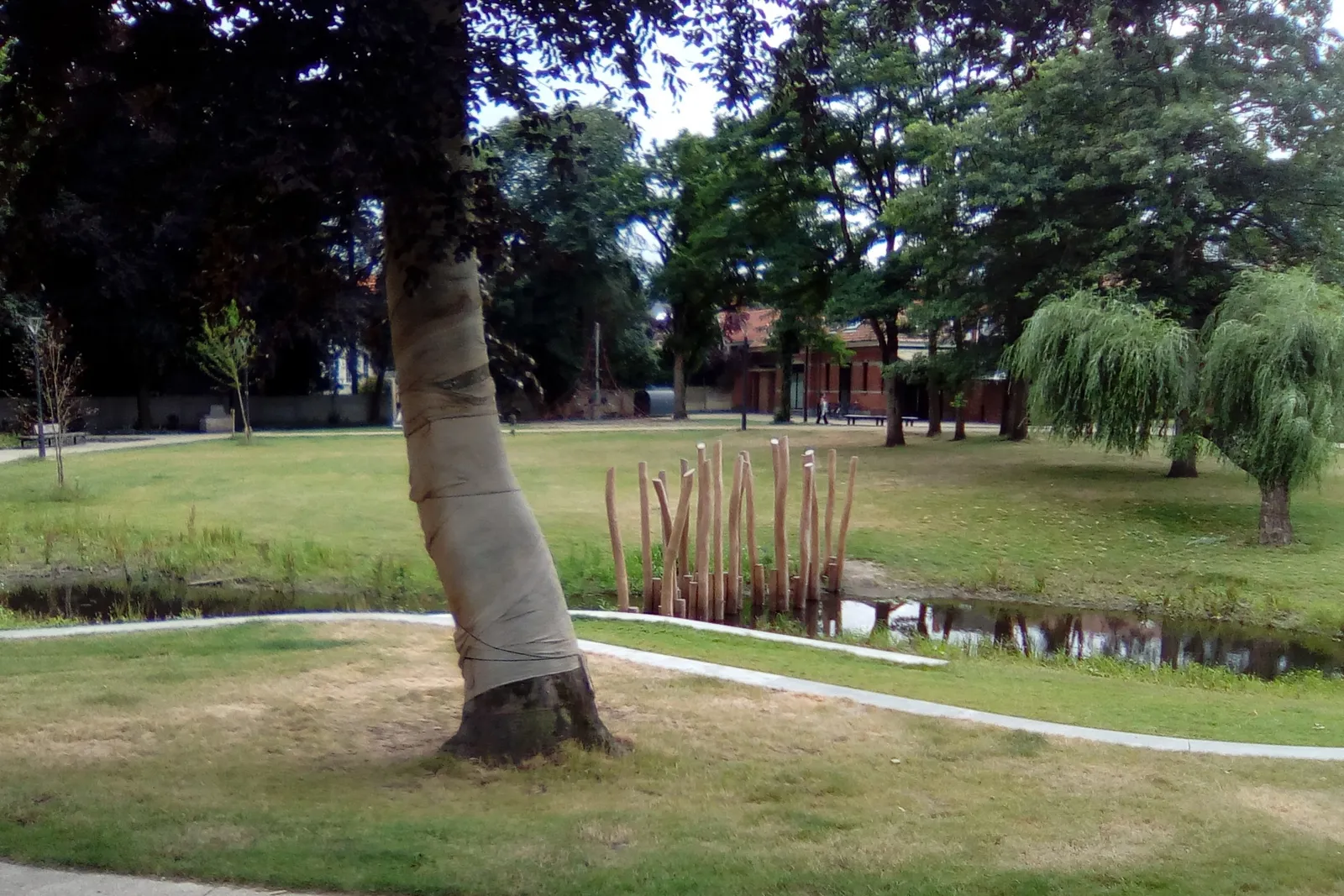
So, more consultation and more scope for tailored solutions. Does the GSV in its current form allow enough room for the latter?
Philippe Segers (B-rain Connect): “There is little room for manoeuvre. Take a new housing development, for example: you have to provide surface infiltration, even if the soil can barely accommodate it. Instead, take a step back and consider how you can actually retain water where it falls, reuse it and, finally, allow it to infiltrate. Without affecting the public sewer or the surrounding area. Analyse the soil conditions, incorporate green space, make optimal use of water … That is the only way to arrive at a robust, sustainable design.”
Geert Wellens (Aquafin): “The prescribed rules, such as a requirement for 330 m³ of infiltration volume per hectare, are well-intentioned, but they are not always easy to meet in the public realm. That is why I, too, argue for a more pragmatic approach that considers the end result rather than blindly focusing on parameters. There are still too many cases where permit authorities fail to take sufficient account of the local context.”
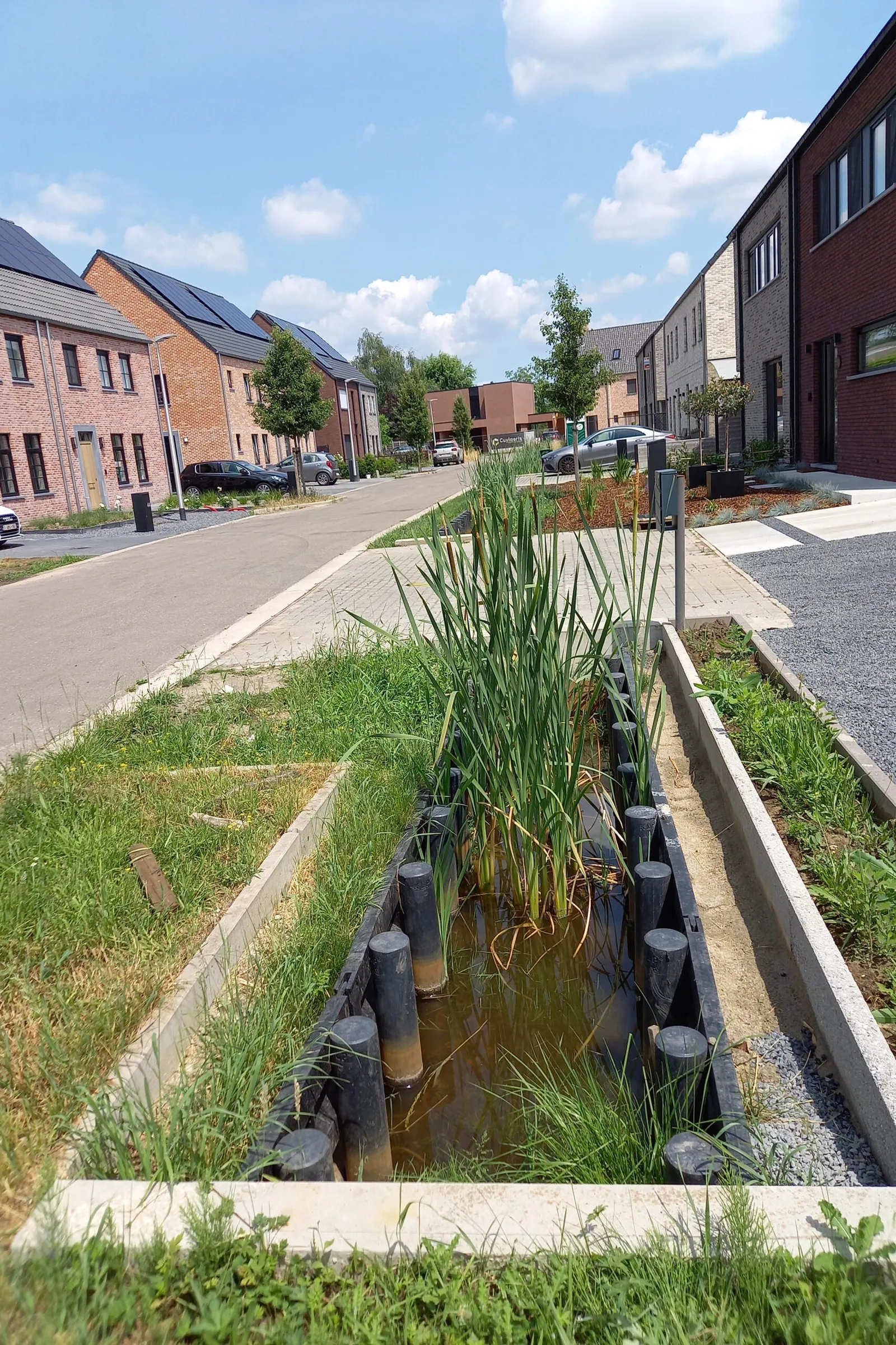
Katrien Vanhove (Fluvius): “The surrounding context must always be taken into account. Above all, we need to raise awareness and encourage people to think differently. Water can be visible, and it is not necessarily a nuisance. If we can raise public awareness, we can also make more room for blue and green infrastructure in our streets.”
What role does the financial aspect play in implementation? Are there enough incentives from above?
Wendy Francken (VLARIO): “I urge everyone to look not just at the costs, but especially at the benefits. Avoided damage from waterlogging, rising insurance premiums, increased property values … These factors are often overlooked in financial analyses, yet they are essential to making the case for policy choices. As for incentives, I have just one message: introduce an infiltration bonus. VLARIO cannot think of a single argument against doing so.”
Philippe Segers (B-rain Connect): “I completely agree about the benefits. Total Cost of Ownership is rarely taken into account. People look only at construction costs, even though maintenance and repair costs also have a major impact. In densely built-up areas in particular, repairs can result in substantial economic losses. We urgently need to assess this more fully.”
Silvia De Nolf (NAV): “I think financial incentives are especially needed for training and early consultation, for both permit applicants and permit authorities. Expensive installations such as pumps are sometimes required when a simpler underground system could be just as effective. That is a real shame.”
Geert Wellens (Aquafin): “I always wonder why there has to be a financial incentive. I think this is often a matter of social responsibility, with everyone realising that they can play their part in limiting the impact of climate change. And we should indeed consider the benefits, but sometimes clients or sewer managers are forced to incur high costs, and the additional benefits can be questionable. For example, in an urban setting with very narrow streets, expensive underground facilities may still be needed.”
Carlo Bollen (Sweco): “It is sad to say, but a long drought or heavy rainfall is always a boon for us, because it makes it easier to sell sustainable solutions. But the infiltration bonus could indeed be an effective, permanent incentive.”
How important are monitoring and enforcement?
Geert Wellens (Aquafin): “At present, we don’t really have a clear picture of the impact of the measures on the water system as a whole. That is not easy to assess, since many other factors also play a part. So we don’t really know whether we’re on the right track.”
Silvia De Nolf (NAV): “Monitoring at project level is at least as important. It is the only way to find out whether the technical solutions work in practice as intended. There is currently no ongoing funding for this. NAV is working on this too.”
Wendy Francken (VLARIO): “Without enforcement, rules remain a dead letter. On private property in particular, we can carry out inspections without incurring significant additional costs. One well-enforced rule is better than ten theoretical rules that are never checked.”
Philippe Segers (B-rain Connect): “I think monitoring is essential for effective evaluation. It should start in the very first phase, with an analysis of soil conditions, local circumstances, nearby watercourses … A detailed preliminary study is simply crucial to achieving a successful outcome.”
Finally, GWW asked each expert to share a concluding thought, final message or golden tip:
- Geert Wellens: “Allow alternative solutions if they perform better than the standard design. Focus on the objective, not the rule.”
- Silvia De Nolf: “More tailored solutions, more pragmatism. That is the only way to build broader support.”
- Philippe Segers: “One point hasn’t been mentioned yet: don’t lose sight of groundwater quality, especially if we are focusing on reuse.”
- Katrien Vanhove: “Make sure completed projects retain their value. This means maintaining them and integrating them into their surroundings, but also sharing knowledge and communicating.”
- Carlo Bollen: “Invest in joint training and knowledge-building. Early consultation only works if all parties have sufficient knowledge and experience to contribute to creative solutions.”
- Wendy Francken: “Be pragmatic, focus on raising awareness and keep enforcing the rules. That is the only way to make real progress.”
- Joëlle Eggermont: “Technical feasibility must be a standing item on the agenda at every design meeting. Without it, we will continue piling up problems on site.”
Question about this story? Ask your question
Keep following this
Get an email when a new story is published. No account needed.
- ThemeSpace for water and green infrastructure
- SubjectSewerage & underground infrastructure







