









Sewerage & underground infrastructure
Development of Antwerp’s Cadix district enters next phase
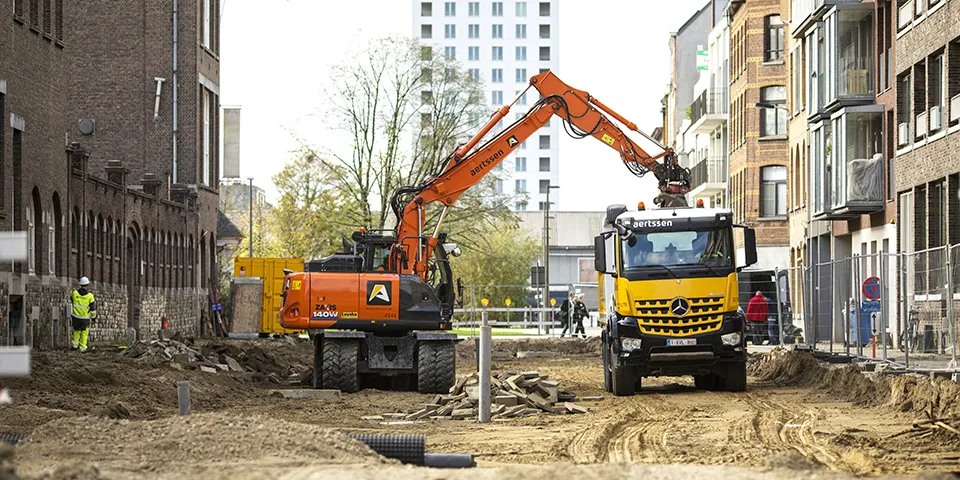
The new Cadix district on Antwerp’s Eilandje continues to flourish. After the first residents moved into the blocks in the north of the district and the roadworks at the Houtdok were completed, work is now under way on utilities in the inner streets of a new zone. “And, as with the previous two zones, Aertssen Group is once again carrying out the roadworks,” says An Hendriks, project manager at Aertssen Group.
In the summer of 2018, around ten houseboats were allocated moorings at the Houtdok. Today, several thousand people already live in the Cadix district, and that number is set to grow in the coming years. The project, which is transforming a derelict industrial zone into a sustainable residential district, is taking shape. Much of the credit goes to contractor Aertssen, which has completed the public realm works at pace. Aertssen is responsible for rebuilding a number of roads on the site, with the project being delivered in several phases and ultimately creating a mixed-use development. The district will include shops, schools, childcare facilities, offices, hospitality venues, a green neighbourhood square and a varied range of homes for a broad target group.
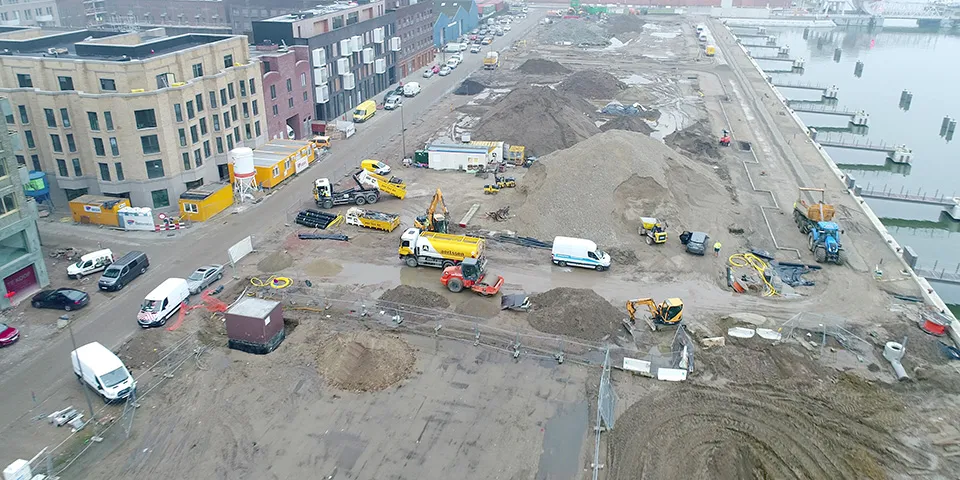
The Cadix district in Antwerp is undergoing a complete overhaul: the derelict industrial zone is making way for a sustainable residential district. This photo dates from 2017-2018, during the first phase of the works.
Next phase
After successfully completing the first two projects, Aertssen Group was also brought on board for the next phase. An Hendriks: “Aertssen left the site for a while in spring 2019, but since September we have been back at full capacity in the Cadix district. As with the first two phases, we won this contract through a tender. It is essentially a repeat of the work we carried out earlier on the site: rebuilding the inner streets, including the utilities. The project is also similar in size to the previous one.”
So, familiar territory for the Stabroek-based construction multinational, although the project requires more logistical attention than the earlier works in the district. An Hendriks: “The previous works were in open spaces, which made things easier both technically and logistically. We are now working among apartment blocks and houses, so we have to take residents into account when managing disruption. But that is nothing new for Aertssen Group, of course. We expect to keep to the schedule for this phase as well. To do so, we have a team of four or five workers on site at all times. Work is now in full swing, and completion is expected in November 2020.”
Long-term plan
Aertssen carried out work on several streets on the site in 2012 and 2013, and returned to continue the work in 2017 and 2018. An Hendriks: “In the east of the district, between Indiëstraat and Madrasstraat, there are 3 building zones for luxury apartments and social housing, among other things. Noorderpershuis is also located on this side of the district. In time, it will be restored as a public-facing building and will be an important heritage site for the identity of the Cadix district. A few years ago, we completely rebuilt Indiëstraat and the streets between these building zones. In 2018, on the other side, we took on Madrasstraat, together with the 340-metre-long quay at the Houtdok. Houseboats have since moored at this quay.”
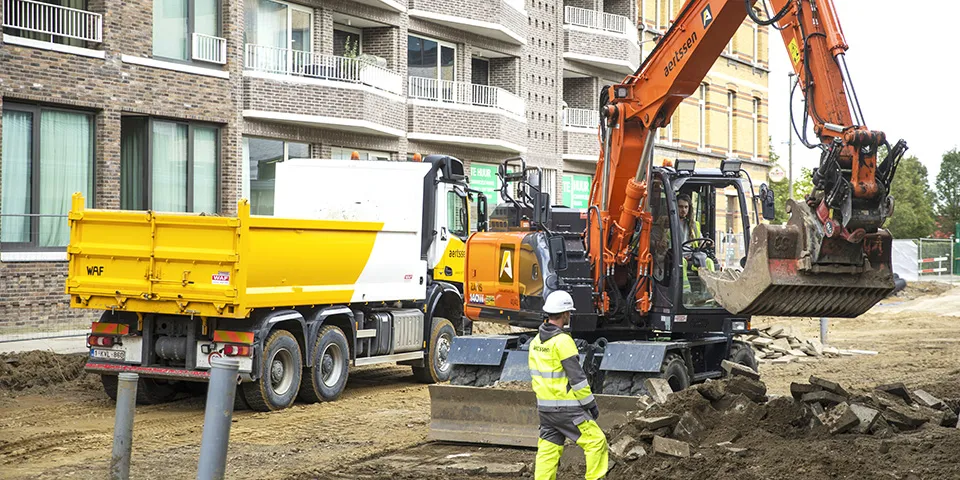
The project involves rebuilding the inner streets, including the utilities. It is also similar in size to the previous one.
From demolition to construction
Aertssen is the contractor responsible for the complete reconstruction of the roads. An Hendriks: “Our company has all the specialist teams needed for projects like this, so there was no need to bring in other roadworks partners. We were responsible for demolishing the existing surfacing, carrying out remediation where needed, renewing the existing sewers, installing new utility services throughout the project and, finally, completing the entire road structure, including the foundations and kerbs. We also excavated and removed 11,000 m³ of soil. That is exactly why we are so proud of this project: it is the kind of work we are really good at, bringing together our different divisions and allowing us to respond quickly.”
Question about this story? Ask your question
Keep following this
Get an email when a new story is published. No account needed.
- SubjectSewerage & underground infrastructure







