









Sewerage & underground infrastructure
An unconventional sewer renovation in Anderlecht
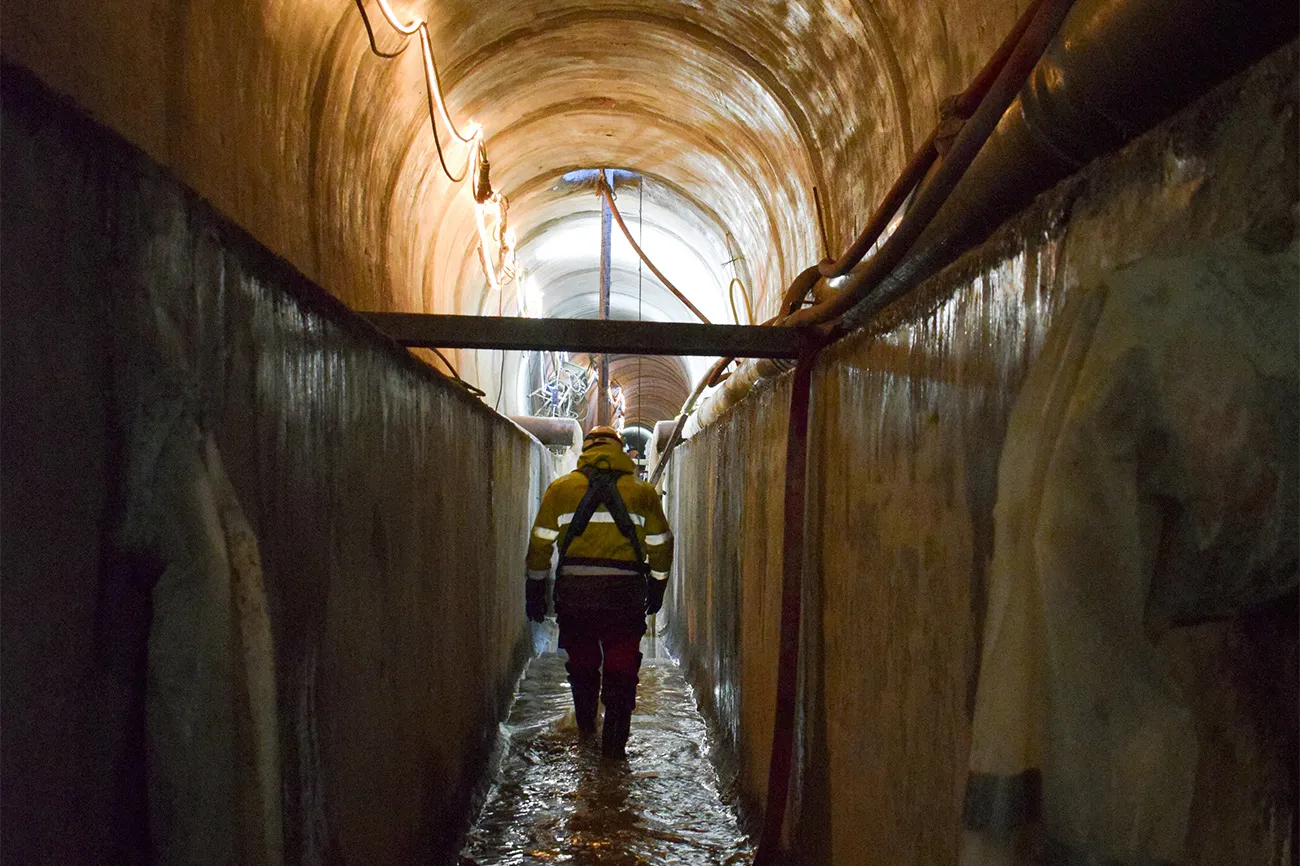
Renotec recently carried out a unique sewer renovation on Bergensesteenweg in Anderlecht. The sewer had subsided and needed a new foundation, with the stabilisation work having to be carried out from inside. All this with minimal disruption to the surrounding area, while keeping the sewer operational throughout the works.
Renotec took charge of the sewer renovation alongside Soletanche Bachy, on behalf of Vivaqua. The route was underpinned, the sewer was injected, reinforcement was installed and shotcrete was used to create a new structural sewer. It sounds like a straightforward process, but it was far from simple. The sewer’s mushroom-like shape was one factor, along with the weather and several other challenges.
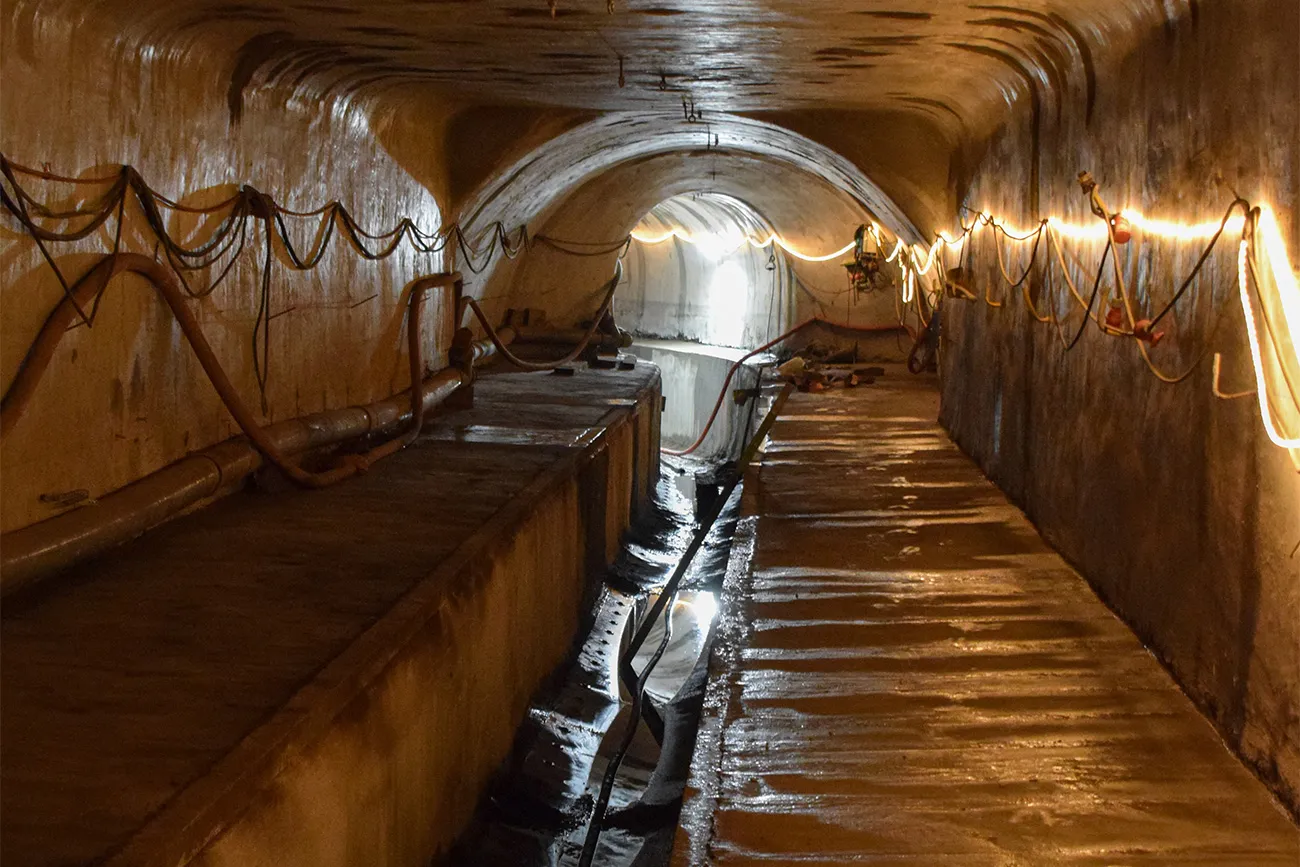
Subsided and unstable
The first step in a project like this is to create a workable site. “Renotec is good at using techniques that minimise disruption,” says manager Robin Vanvyve. “We could have opened up the busy road, but we chose not to. We renovated a large section of the sewer from a single central shaft, using just 2 small areas of a nearby park as the work site and taking up a few parking bays. Our lasting aim is to avoid compromising the quality of life of local residents.”
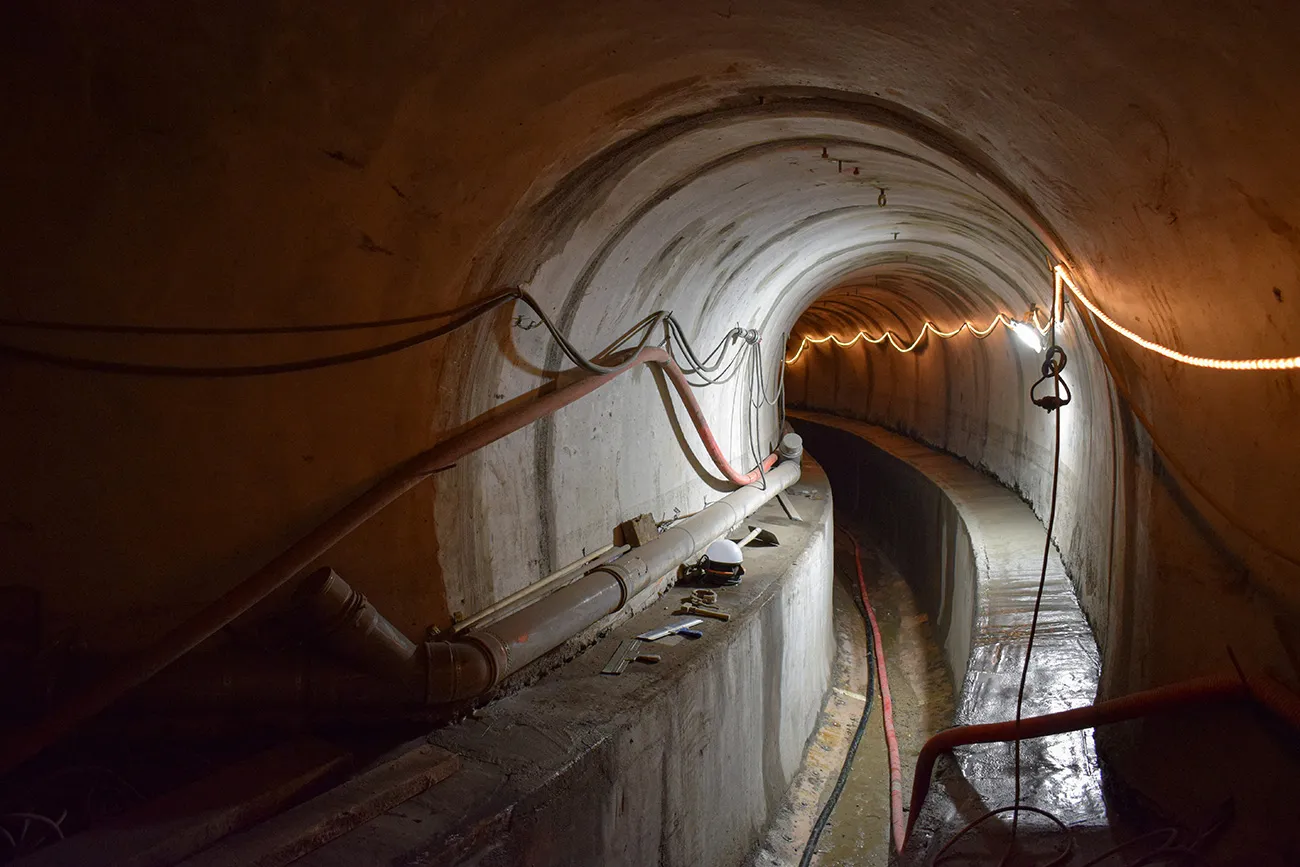
And that is what we achieved. A total of 340 m of sewer had to be renovated. Before that could happen, the sewer needed a new foundation because it had subsided. The cause was probably a meander of the Zenne that once flowed past the site, as historical photographs suggest. This may explain why the sewer was so unstable. The solution was to stabilise it underground. The sewer was also injected all around to restore contact between the sewer wall and the surrounding ground. The sewer’s unusual shape, with a ‘hat’ around 2 m high and a channel with a diameter of 2 m, called for a creative approach to getting materials down into it.
Jet grouting: a first
Assistant project manager Seppe Glorie: “The original specification called for the foundation to be installed using micropiles. However, when tendering, Renotec and Soletanche Bachy jointly proposed a more efficient alternative: jet grouting, or strengthening the foundation with so-called grout piles, carried out from inside the sewer. Unlike micropiles, this meant no major structural modifications to the sewer’s base slab were needed to take the load. The larger contact area of the grout piles means the sewer can largely rest on the grout mass. This is a first in construction, and Soletanche Bachy adapted an existing machine so it could work inside the sewer. Positioning the machine took some thought. For example, we had to dismantle the tracks and create a construction pit to lower the equipment into place.”
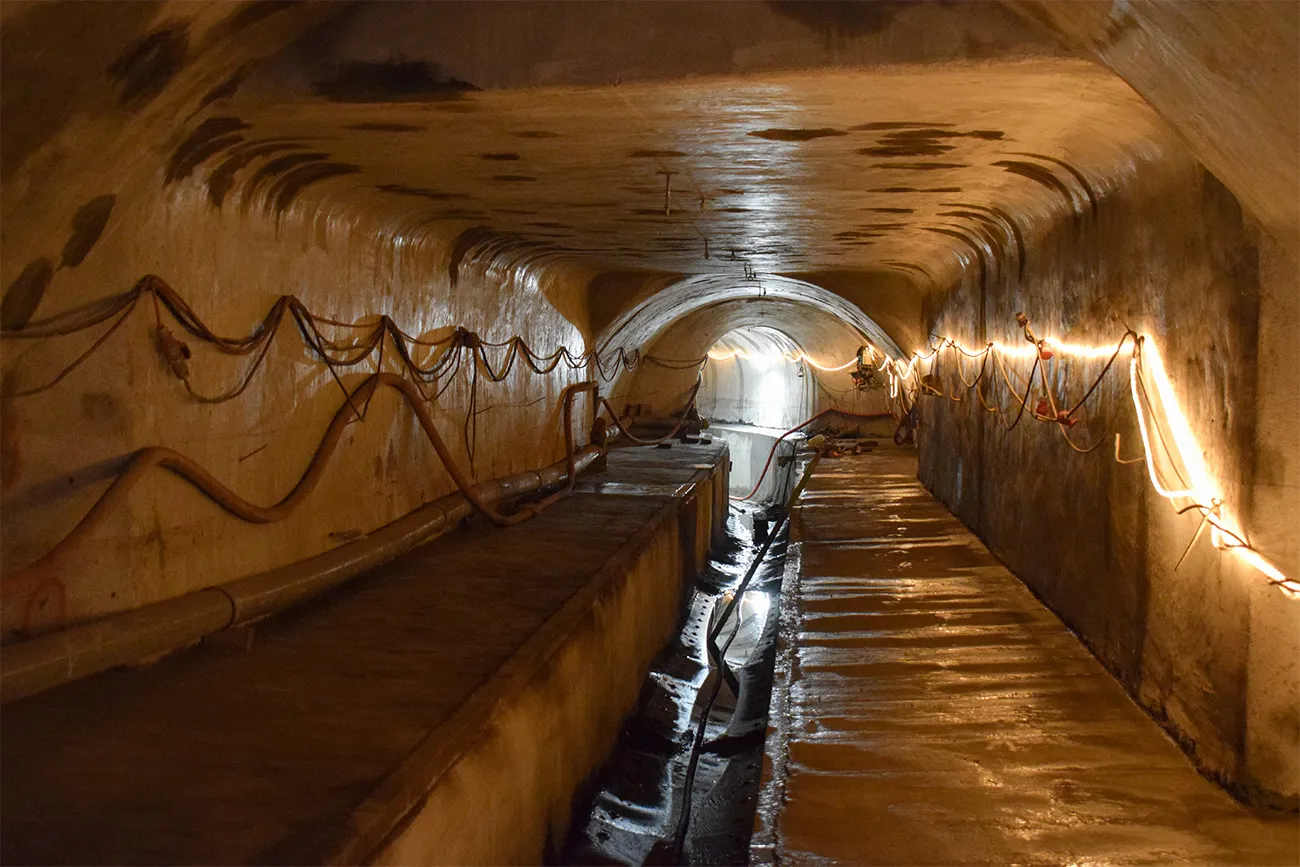
Once the foundation work along the route was complete, the sewer could be repaired and made watertight again, before being structurally renovated from the inside. “We installed a precast element and reinforced the channel with shotcrete,” says project manager Patrick Van Hooydonck. “Given the size of the sewer, a complete precast renovation would be too costly. Using the wet-mix shotcrete method, you can easily renovate 200 m on either side with just 1 installation. This is a tried-and-tested method that creates a new structural whole. The shotcrete could be reinforced by adding cast-iron fibres or synthetic fibres, or by installing reinforcement mesh. Property connections are reconnected watertight to the sprayed surface, ensuring proper drainage.”
Thinking outside the box
Working underground always presents challenges, especially with a sewer that remains ‘in service’ and rain that can throw a spanner in the works. At Renotec, we combine technical expertise with out-of-the-box thinking. Sewer renovation is never entirely predictable: surprises can always crop up, and this project was no exception. Its complexity and the techniques used meant that plans had to be adjusted and discussed regularly. Seppe Glorie: “For example, getting the channel dry was no easy task. Many connections from houses and other sewers discharge into this large sewer, and cleaning it sometimes felt more like dredging. In just 10 minutes, the conduit could be full of water. At the slightest doubt, we evacuated. We took no risks. Clients can count on us to find creative solutions, and we adapt flexibly. For me, the sewer renovation on Bergensesteenweg was my first major project in the pipeline engineering department. It was anything but routine, and we really had to pull out all the stops. I learnt a huge amount, with Patrick and Robin by my side.” They are very pleased with the result.
“The strength of the project also lay in the partnership between our experienced project manager Patrick and our young assistant project manager Seppe. Together, they got things moving on this sewer renovation. It was top teamwork, and shared knowledge drives us forward. We’d love to see more of it,” concludes Robin Vanvyve.
Question about this story? Ask your question
Wie aan Rioolrenovatie Bergensesteenweg Vivaqua Anderlecht werkte
- jetgroutingSoletanche BachyIn this story
Keep following this
Get an email when a new story is published. No account needed.
- ProjectSewer renovation Bergensesteenweg Vivaqua Anderlecht
- ThemeRenewing pipelines and sewers
- SubjectSewerage & underground infrastructure
- CompanySoletanche Bachy







