The unifying power of natural concrete
Text Niels Rouvrois Beeld Ebema-Movito
Precast concrete and nature. At first glance, they may seem difficult to reconcile, but recent projects show that they can make a highly successful partnership. Concrete can be perfectly integrated into nature, where the setting is just as important as the object or building. “Nature and the object become inextricably linked”, says Herwig Dessers of EBEMA, a member of FEBESTRAL, the division within FEBE representing manufacturers of precast concrete products for the paving market.
FEBE is the recognised trade association for manufacturers of precast concrete products and represents the interests of the sector. FEBESTRAL operates within FEBE as a division bringing together manufacturers of precast concrete products for the paving market, such as concrete block paving, concrete flags, linear elements and accessories.
Corporate identity
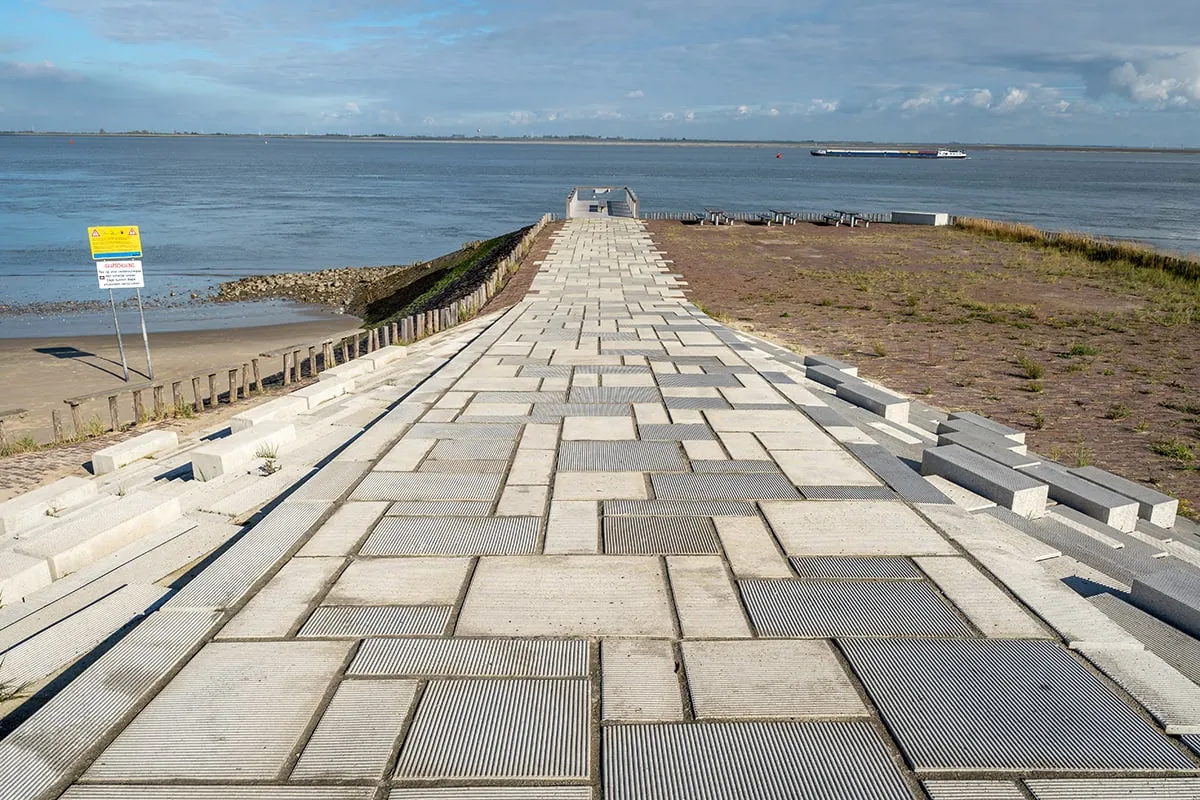
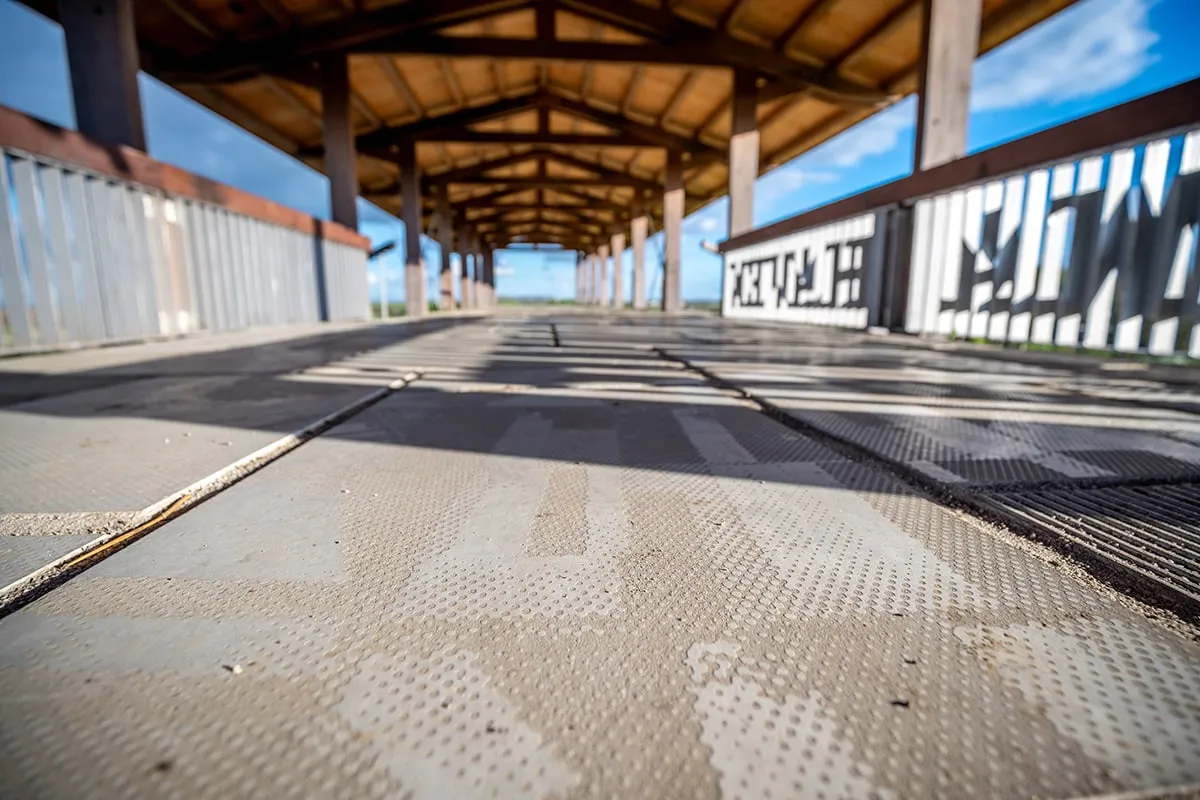
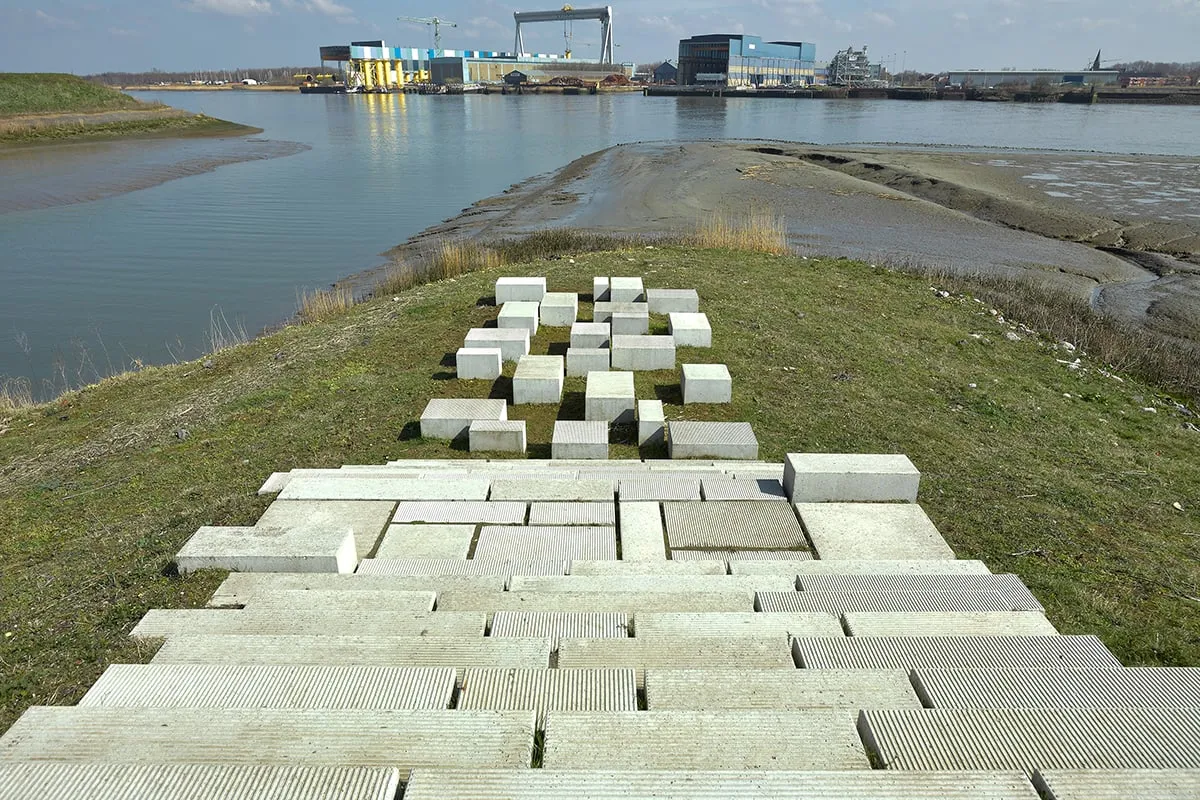
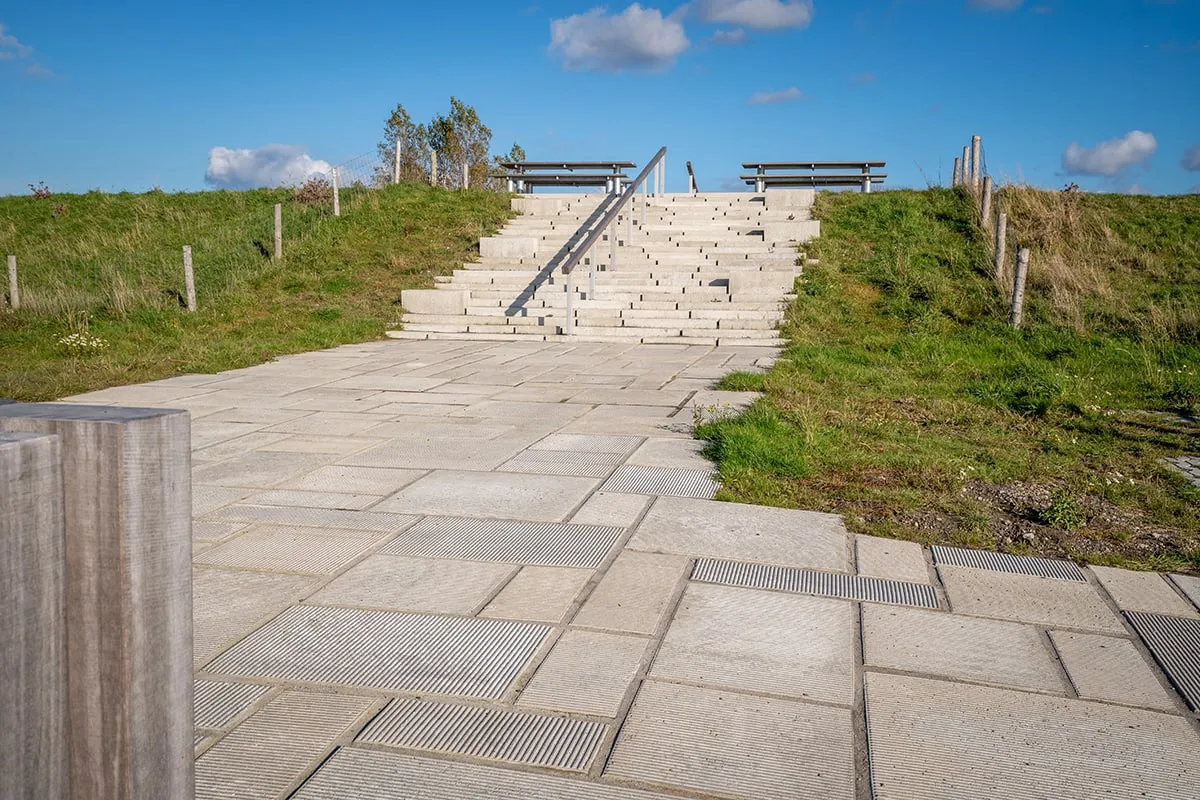
FEBE member EBEMA is a leading precast concrete manufacturer with a strong focus on public spaces. Nature is part of that too, as demonstrated by the project along the Westerschelde, where concrete dike transitions become part of the natural landscape and reunite the residents of five coastal villages in the Dutch municipality of Hulst with ‘their’ Scheldt coast. EBEMA produced bespoke concrete elements in keeping with the corporate identity of Grenspark Groot Saeftinghe, the transition zone between East Zeelandic Flanders and the Waasland. Herwig Dessers says: “Hulst is part of the same natural and flood-prone area along the Scheldt as the Sigmaplan. We have also supplied natural concrete materials for the Sigmaplan project. This helps carry the corporate identity through the entire area. New elements were created especially for the project in Hulst: corner elements, printed paving flags and trafficable paving flags.”
“At the request of local stakeholders, we designed a corporate identity catalogue for architects and landscape designers to work with: benches, picnic tables, cycle paths, a dike house, an activity amphitheatre …”, says designer Stefan Schöning of stefan.schöning.studio. “We work with organic, rough elements that create contrast. The timber from the old lock becomes a bench, while white concrete in the green dike forms a path to the Scheldt. We choose rugged concrete that has character and gives nature room. I had already worked with EBEMA on the Sigmaplan project in Kruibeke. Here in Hulst, we use similar concrete structures and visitor features. In a way, this links the Zeeschelde with the Westerschelde.”
Natural concrete: a trend
Herwig Dessers says: “You could certainly call it a trend. In any case, it is a clear sign that concrete does not always have to be sleek and smooth. What explains the trend? Paving in natural areas is needed to help people negotiate changes in level in a practical way. Along the Westerschelde, the paving also serves to protect the banks. In the Sigmaplan project, it is particularly important that the concrete does not dominate the natural landscape and is used subtly, with plenty of attention paid to its aesthetic value too. For example, panels featuring images that tell the story of the region.”
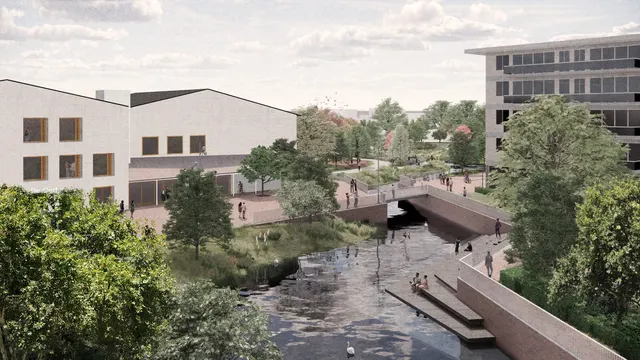
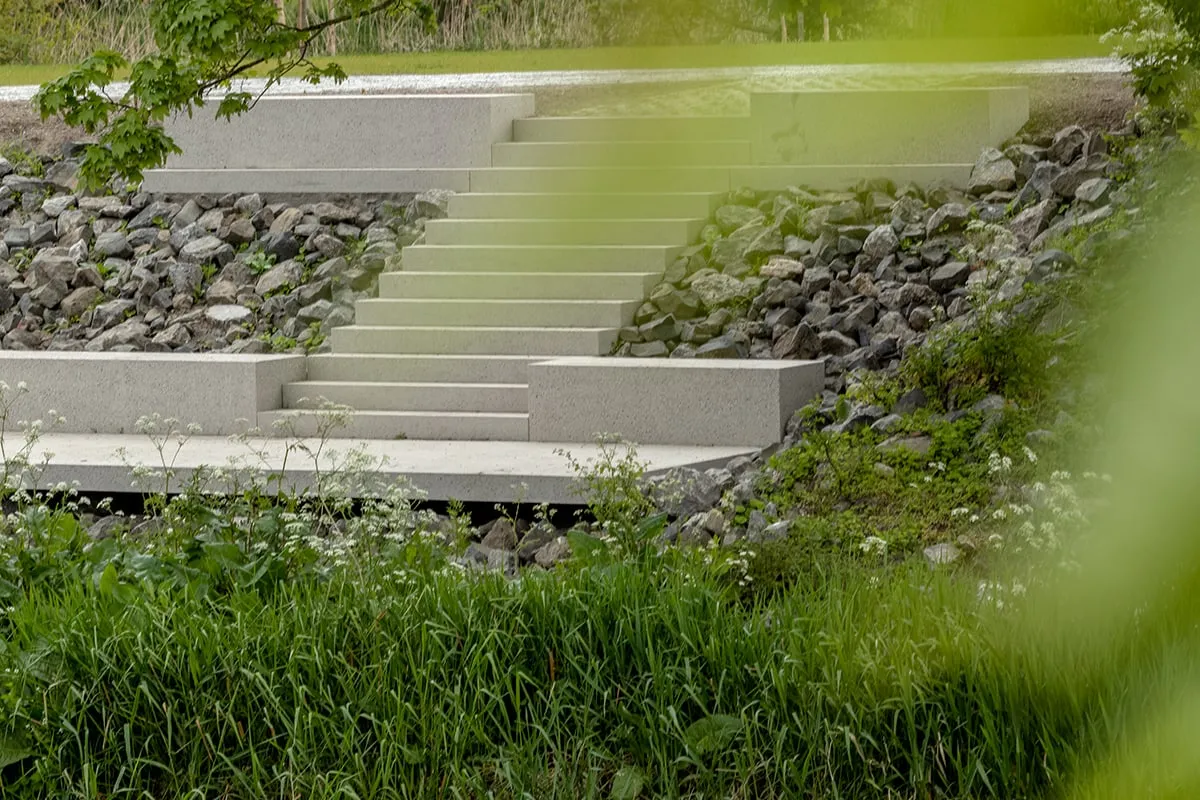
The Mercatoreiland in Rupelmonde is also characterised by natural concrete. The design there restores the connection with the water and the area’s cultural and maritime heritage. Along the Scheldt, the gravel car park has been transformed into a green meeting place. A raised platform beside the new flood defence offers panoramic views of the river, where visitors can enjoy the sunset in summer. In the park, concrete seating elements beneath the existing weeping willow create a place to meet, and visitors can descend to a landing stage by the Vliet. For these elements, the client chose earth-coloured concrete, with irregularities and a distinctive surface texture in exposed architectural concrete.
Rough appearance
The natural concrete used in projects like these is distinguished by its rough appearance. Herwig Dessers says: “It has plenty of ridges, unlike the sleek, smooth concrete often seen in public spaces. For example, it may still contain air bubbles, which would normally be considered unacceptable in self-compacting concrete.
The concrete generally used for these projects is immediately demoulded, vibrated (humarbo) concrete, cast in moulds used exclusively for this type and model of concrete product. Because it is demoulded immediately, the concrete has a much rougher surface texture and therefore more small holes caused by trapped air.”
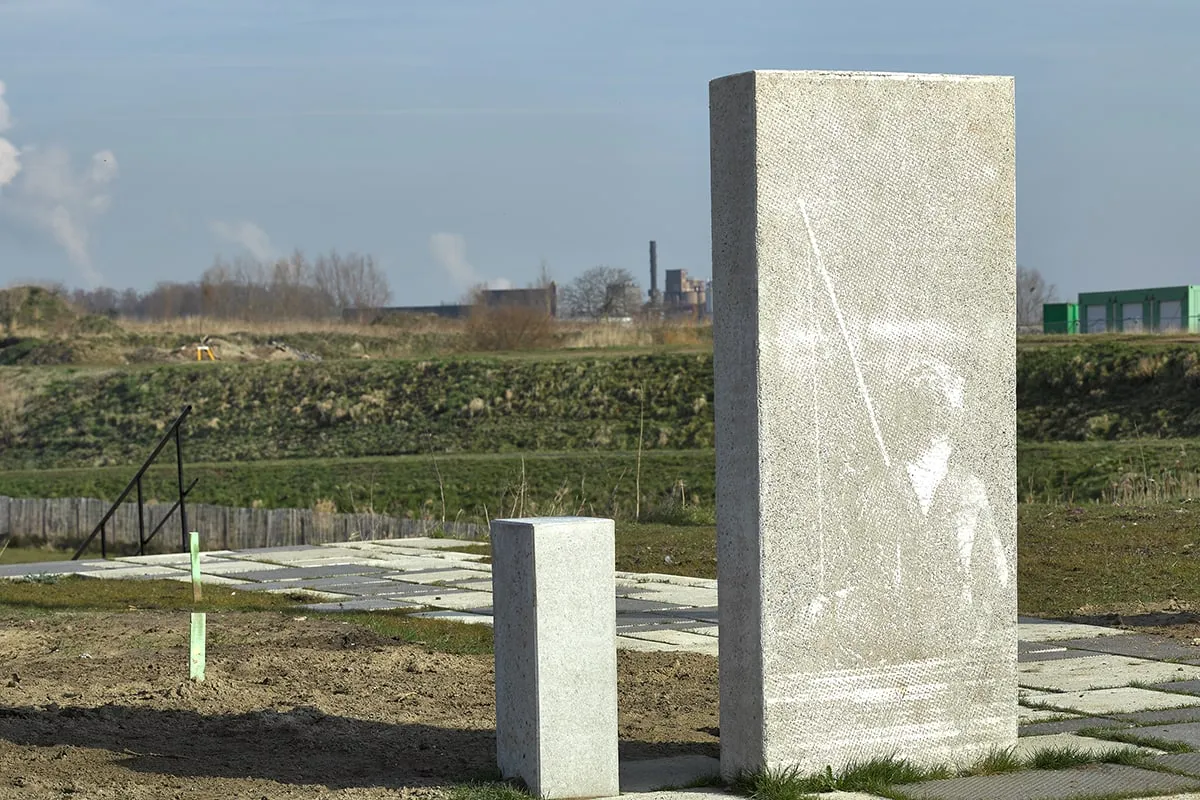
Because of its rougher appearance, the concrete will also turn green more quickly. “Stefan Schöning’s aim is precisely for the blocks to ‘blend into nature’. The ridged texture is not created by sticking a textured liner into the mould. Instead, custom-made metal moulds are used, with the ridged texture built into them. The functional and aesthetic versatility of precast concrete is beautifully demonstrated in projects like these. The elements are also made in ideal conditions and can be delivered just in time. That is a major benefit in a natural setting”, concludes Herwig Dessers.
Een zakelijke vraag aan Ebema_LivingCity? Get in touch
Companies in this story
Keep following this
Get an email when a new story is published. No account needed.
- ThemeMaterials with a lower environmental impact
- SubjectPublic space
- CompanyEbema_LivingCity