Smarter journeys through mobility management
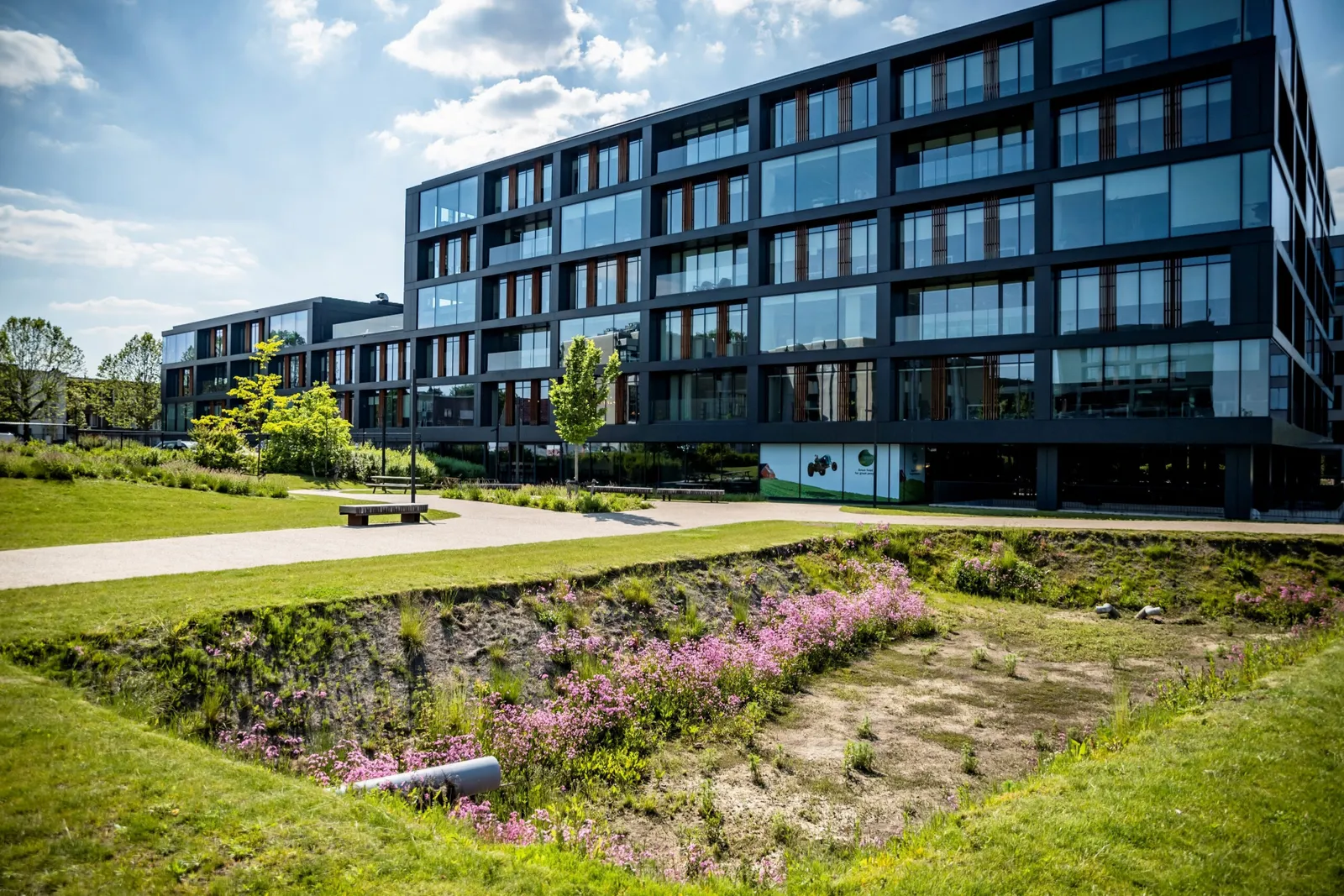
In Flanders, commuting to work or school accounts for just a quarter of all passenger-kilometres travelled, yet it causes enormous peak-hour congestion. To reduce traffic jams and improve accessibility, we need to embrace sustainable alternatives and smart mobility management. Our mobility experts Veerle Duportail and Tijs Veyt share their insights.
From king car to king bike
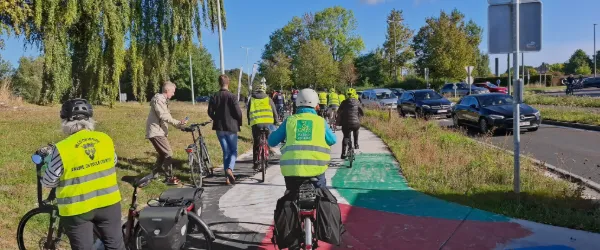
Despite the rise of the electric bike and the mobility budget, the car remains king for commuting. The company car is still the most popular choice in flexible benefits plans, and the number of registered lease cars has reached a record high. Remote working could help ease rush-hour congestion. But although 38% of employees say they regularly work from home, we are seeing the rise of the DIDO economy: a phenomenon in which employees mainly come into the office on Tuesdays and Thursdays. This leads to unprecedented peak demand on roads, parking spaces and public transport. Yet there is significant potential for cycling, as a quarter of employees live less than five kilometres from work and more than half live within a ten-kilometre radius. Even so, 2024 was a record year for traffic congestion.
Are multimodal workplaces the answer?
There is a shift away from traditional business parks on the outskirts of cities towards workplaces in urban areas with multimodal connections. This encourages smarter mobility behaviour, but also creates new traffic bottlenecks, particularly around cities and regional economic centres. In addition, planning applications often encounter issues such as traffic impact, air quality and noise pollution. Expanding road infrastructure is not a sustainable option either. Flanders must therefore seek sustainable, systematic mobility solutions to manage peak congestion efficiently.
“At Sweco, we believe that smartly matching supply and demand can create room for mobility. By deploying innovative solutions and technologies, we can develop a more efficient mobility system that takes account of the needs of everyone involved.” Veerle Duportail, mobility manager
The power of soft policy measures
The key to smarter mobility is better matching supply and demand. This means spreading journeys throughout the day, tailoring mobility to people’s needs and offering effective alternatives that really work. The driving force behind this mobility management is ‘soft’ measures such as clear communication, smart services and close collaboration between different partners. This soft approach is often what makes hard interventions truly effective.
In practice, it all comes down to working together at every level. Policymakers, spatial planners, businesses and business parks: only by joining forces can they get the system moving. A coordinated approach that brings all stakeholders together makes our mobility policy not only more efficient, but also more sustainable and adaptable.

Success factors and bottlenecks
From studies to practice: There are numerous mobility studies at regional and urban level, as well as for business parks, for example on cycling infrastructure and public transport. So the problem is not so much a lack of knowledge as a failure to implement it. Resources and responsibilities are fragmented, and crucial questions about management are not being asked often enough. Building a good cycle path in a business park is one thing, but who makes sure it stays clear of snow and ice?
Businesses as a driving force, Businesses can do a great deal themselves to change mobility behaviour. But not every business has the resources or long-term certainty to sustain such measures, even though continuity is essential for lasting change.
Employers are willing, In the competition for talent, forward-thinking mobility can be a key asset for employers seeking to make their company more attractive. But keeping initiatives going requires a driving force. Mobility policy can only work if there is a sufficient critical mass. Without that group dynamic, initiatives grind to a halt and the wider picture falls behind, even when individuals are willing to act.
The missing link in mobility policy
Businesses can drive mobility change, but they often lack the overview and capacity to achieve lasting progress. Collaboration at business-park level is therefore essential, but difficult to sustain in practice. Individual initiatives may succeed temporarily, but they often lose momentum without a shared, coordinated approach.
“Without a shared approach, mobility change in business parks remains stuck at the level of good intentions and temporary successes.” Tijs Veyt, senior mobility expert
The belief in voluntary collaboration often runs up against a stubborn reality: free-riding. Some businesses benefit from shared mobility solutions without investing in them themselves. Participation is particularly important for systems such as car-sharing or collective transport, because they only work with a sufficient critical mass. Many businesses also tend to think in the short term: anything that does not deliver a quick return is rarely made a priority. As a result, the initiatives with the greatest impact are the ones that get stuck at the planning stage.
At the same time, different stakeholders, from local authorities to road and site managers, work with different objectives, resources and priorities. And who makes the final decision when interests conflict, for example when balancing logistics development against cycle access? Without an independent coordinator to make decisions, coordinate interests and enforce collaboration, we cannot move forward. As long as no one takes the lead, good plans remain on the discussion table and mobility management goes no further than isolated initiatives.
Towards a holistic sustainability strategy
Mobility should be part of a broader sustainability strategy covering waste management, energy use, water management and green spaces. Without this integration, mobility measures will have limited impact.Sustainable mobility solutions such as cycling and shared transport work best within broader energy and spatial policies, with electric vehicles supported by charging infrastructure connected to renewable energy sources. Smart parking options can also free up space for green areas and water management, while helping create an attractive, climate-resilient workplace.
Strategic decisions at the highest level are an important prerequisite. CEOs need to integrate mobility management into the wider business strategy to future-proof their organisations and attract talent more easily. At the same time, cross-sector collaboration enables businesses to invest together and develop innovative solutions, putting them at the forefront of sustainability initiatives.
“This holistic approach is not only practical, it is also becoming more attractive to employees, who are increasingly choosing employers with a strong commitment to sustainability and a pleasant working environment. Smart mobility measures should go hand in hand with amenities such as green spaces and efficient water management, which further support employee wellbeing.” Veerle Duportail, mobility manager
The importance of a neutral coordinator
What is missing is a neutral coordinator: a person or organisation that not only sets a clear direction, but also oversees implementation, aligns interests and keeps progress on track. This role could be filled by a mobility coordinator at business-park level, a public-sector organisation or a specialist organisation acting as an independent hub. What matters is that this driving force has sufficient authority, resources and determination to take mobility projects from vision to implementation. Only when one party brings all stakeholders together and provides clear direction can mobility management become a genuine lever for a more efficient, sustainable system that eases peak congestion and makes mobility easier to manage.
“The role of a neutral coordinator is important for effective mobility management. With sufficient authority and resources, that person can take mobility projects from vision to implementation.” Tijs Veyt, senior mobility expert
Eiland Zwijnaarde
A pilot project is under way at the Eiland Zwijnaarde business park. Our mobility manager is working with all the stakeholders at business-park level to develop a strategy offering efficient, sustainable and integrated mobility solutions. The aim is to roll out sustainable, integrated solutions that make Eiland Zwijnaarde a pioneering project in future-focused mobility management.
“Eiland Zwijnaarde is growing rapidly, but is reaching the limits of what can be achieved by car. That is why we are focusing on smart mobility that can ensure accessibility. It is a challenging task, with the ambition of incorporating mobility measures into a Mobility Service Company.” Veerle Duportail, mobility manager
4 steps in the process
Focus on practical, achievable steps. Small, visible improvements such as better cycle parking facilities, shared mobility schemes or partnerships to support flexible working can quickly make an impact and build trust among businesses.
Choose a thematic priority. The bicycle is an obvious choice here: cycling is growing in popularity and offers a clear business case for companies. A safe, dense cycling network, comfortable cycling facilities at workplaces, lease bikes, cycle allowances and shared bikes for the ‘last mile’ to and from stations or multimodal hubs can all make cycling more attractive.
Strengthen communication and participation. Start with a clear analysis of mobility problems and work towards a shared vision for the future. When all stakeholders can identify with the same vision, collaboration becomes second nature and practical solutions are found more quickly. Also mobilise companies with an interest in and commitment to sustainability. These ‘champions’ help build critical mass and lend credibility to the mobility manager’s message. This significantly increases support for sustainable mobility.
Start small, but think big. An approach to mobility management on a business park needs to work on several fronts at once. What would make for a robust organisational structure that has broad support? What financial resources are available? Which measures at business-park level could also have an impact on the wider area, for example on public transport? How can we integrate other value streams, such as energy? The strategic management of ‘hard’ assets, such as car parks, also plays a crucial role. Shared parking, for example, can help use space more efficiently, but whoever manages the parking infrastructure or operates the charging infrastructure also has a major influence on how mobility behaviour develops and whether the proceeds are reinvested in sustainable alternatives.
Smart mobility is key
To improve accessibility in Flanders and reduce traffic congestion, we need to embrace sustainable alternatives and smart mobility management strategies. At Sweco, we are committed to developing innovative solutions that contribute to a more efficient and sustainable mobility system. By encouraging cycling, optimising public transport, investing in technology and putting sustainability at the heart of our approach, we can create a future in which mobility runs smoothly and efficiently for everyone.
Question about this story? Ask your question
Keep following this
Get an email when a new story is published. No account needed.
- SubjectPublic space