Certified road markings are essential for safe roads
Text Niels Rouvrois Beeld COPRO

Road markings play a crucial role in road safety. Fulcrane De Bruyn, certification manager at COPRO, stresses that ensuring the quality of these markings is essential. “The road marking systems used on our public roads therefore undergo an extensive certification process, coordinated by COPRO and the authorities Agentschap Wegen & Verkeer (AWV) and Service Public de Wallonie (SPW)”, she says.
All road users will agree that clearly visible road markings contribute to road safety. COPRO plays an important role in both the CE marking and BENOR certification of road marking products. Thanks to close cooperation between COPRO, road marking product manufacturers and the country’s different regions, certification makes a significant contribution to product quality and road safety.
Baillonville test sections
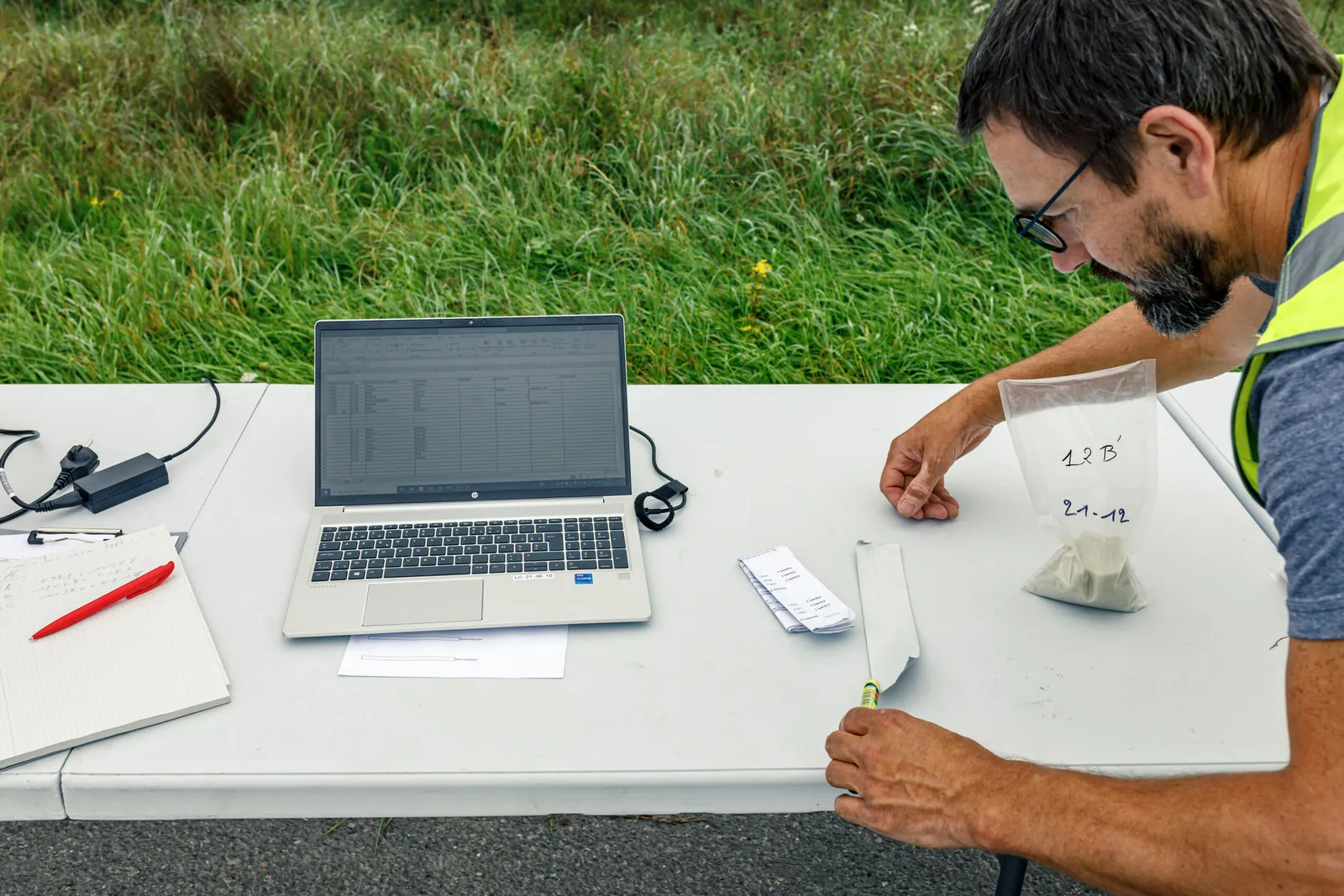
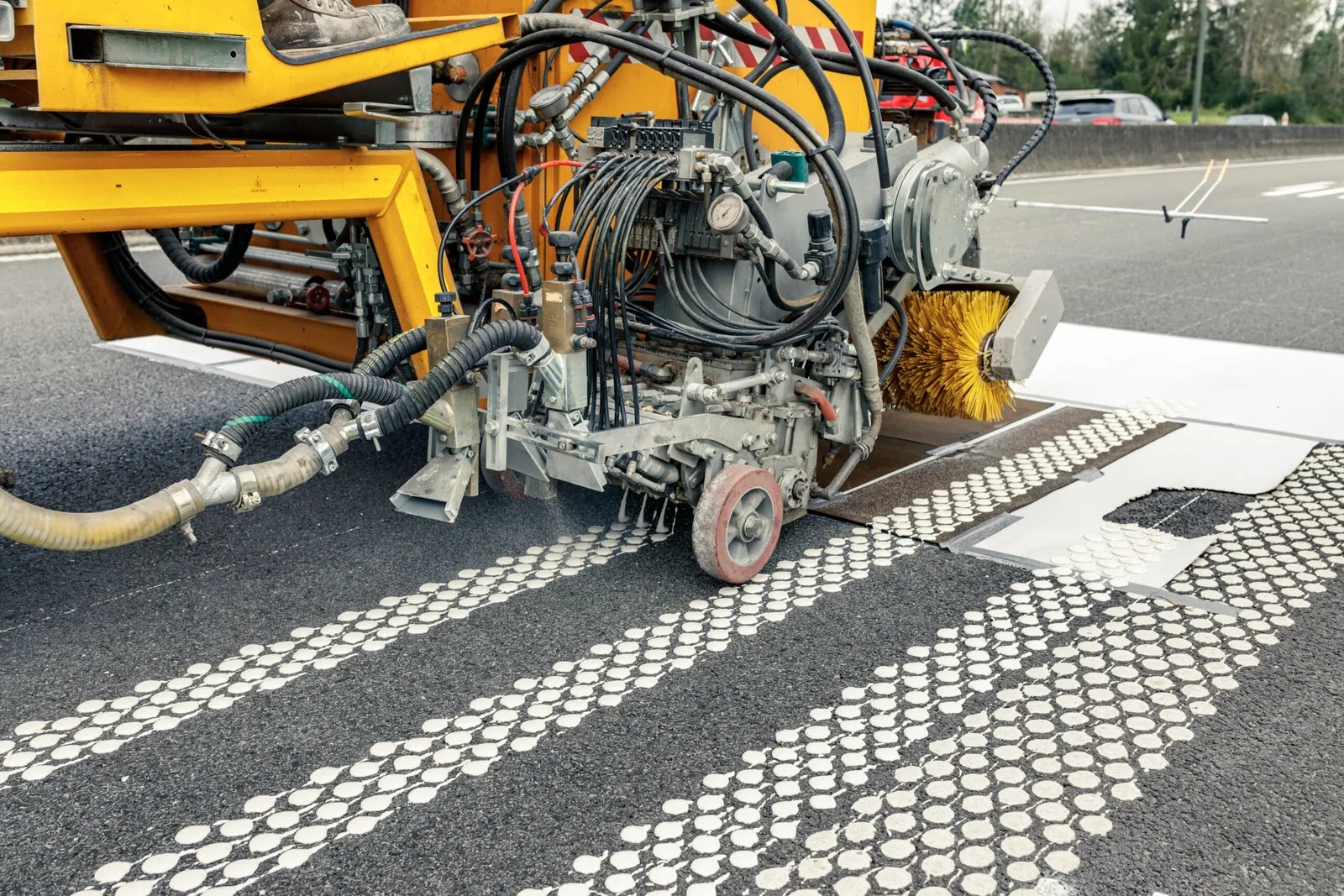
Products used to apply road markings in Belgium are subject to conformity checks. These procedures include official tests of daytime and night-time visibility, skid resistance and visibility in rain and wet conditions. The results provide a measure of the overall durability of these marking systems. To this end, test sections (in accordance with the specifications of standard NBN EN 1824 and guideline G0025) are laid on the N63 in Baillonville, between Marche-en-Famenne and Liège. A homologation campaign for these systems is held every year, with the participation of AWV and SPW.
Fulcrane De Bruyn: “Tests were carried out in Baillonville again this year, in May. Six manufacturers in total had several of their products applied. International manufacturers can also take part in the Baillonville tests. What makes these tests unique is that the base material and the drop-on material are certified separately, but tested together to determine the durability of the complete system. Checks are carried out under strictly controlled conditions to ensure fair comparisons between manufacturers, regardless of the weather during application on the test sections.”
Application checks
An inspection can check whether, during application, the combination of base material and drop-on material applied at Baillonville is adhered to. Enhanced application checks can be requested on a project-by-project basis. Correct application rates and conditions are then closely monitored on site. Fulcrane De Bruyn: “We already carry out project-level inspections today at the request of Brussels Mobility.”
1 million wheel passages
Official measurements on the test sections in Baillonville are taken after one million wheel passages. “That is usually after about a year,” says Fulcrane De Bruyn. “So the next official measurements will most likely take place in May 2026. Certification can then be requested for the base product and the drop-on material, provided they also meet the technical requirements (PTVs). Removability is also tested for temporary markings, for example those applied during roadworks. Naturally, it is important that no residue is left behind when these temporary markings are removed.”
Planning and communication
The process around the test sections is logistically demanding. COPRO keeps manufacturers informed of progress and, following measurements, provides them with detailed reports on the performance of their systems. Close cooperation between all parties involved, and the continuous improvement of test methods, remain essential to ensuring quality and safety on our roads. “Manufacturers need to be kept informed so they can organise themselves accordingly. The whole process is also weather-dependent. The road must be completely dry before we can apply the test lines. Clear planning and good communication between everyone involved are absolutely essential to ensure everything runs smoothly,” concludes Fulcrane De Bruyn.
Een zakelijke vraag aan Copro? Get in touch
Companies in this story

Keep following this
Get an email when a new story is published. No account needed.
- ThemeFuture-proofing roads and railways
- SubjectPublic space
- CompanyCopro