Bricks for a gentler world
Text Wienerberger / Niels RouvroisImage Wienerberger
No resource is more precious for securing a liveable future than water. That is why, at a rapid pace, urban and rural areas across the Low Countries are removing hard surfacing. This is happening not only through encouraging initiatives such as the ‘tile-lifting’ competition, but also by providing attractive alternatives wherever possible. Passaqua, a special clay paver from Wienerberger, could be the ideal solution.
In recent years, we have faced prolonged periods of drought, while hot, dry summers are depleting the soil more and more. Moreover, the generally low rainfall cannot seep into the ground because so much of the landscape is covered with hard surfaces. And when exceptionally heavy rain does fall, those same hard surfaces greatly increase the risk of flooding. The water simply cannot drain away quickly enough.
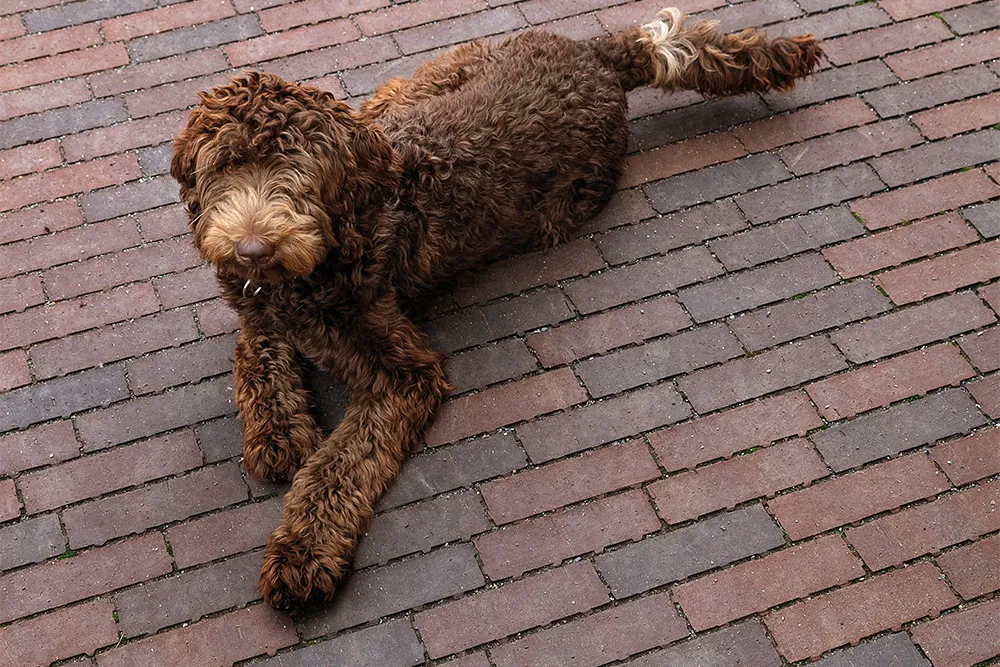
Lifting tiles, no permission required
There is great ambition to remove hard surfacing. In public spaces, the proportion of sealed surfaces must be reduced by one fifth by 2050. The urgent need is already having an effect: around 293 of Flanders’ 300 cities and municipalities are working on projects to transform paved areas such as car parks and wide roads, making more room for trees, flowers, grass, ponds or a rain garden. Lifting tiles and removing hard surfacing have also become much easier now that the permit requirement for removing hard surfacing has been abolished. Anyone wishing to do so no longer needs permission.
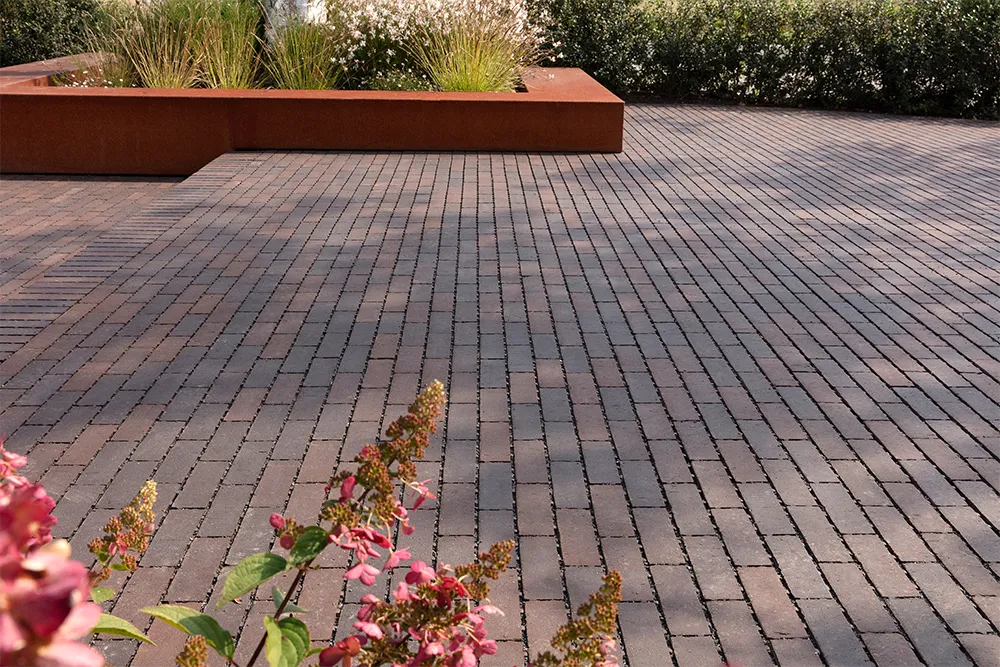
A water-permeable alternative
It is not possible to leave the ground as bare earth everywhere. Where a paved road foundation is needed, creative alternatives are required to create a liveable place to live and work with less hard surfacing. If you are a homeowner who wants to make your property driveable and water-permeable, a more even surface is much better. Public buildings also need to have part of their grounds literally accessible, even if only as an escape route for the fire brigade. To allow enough water to seep into the ground, the open joint area of water-permeable paving must be at least 10 %. Gravel is a viable option, but this loose material is certainly not suitable for every site or every form of mobility. Patios, parking spaces and driveways need a different surface that is much easier to use. Nor is every alternative equally attractive aesthetically.
A paver with groundbreaking design
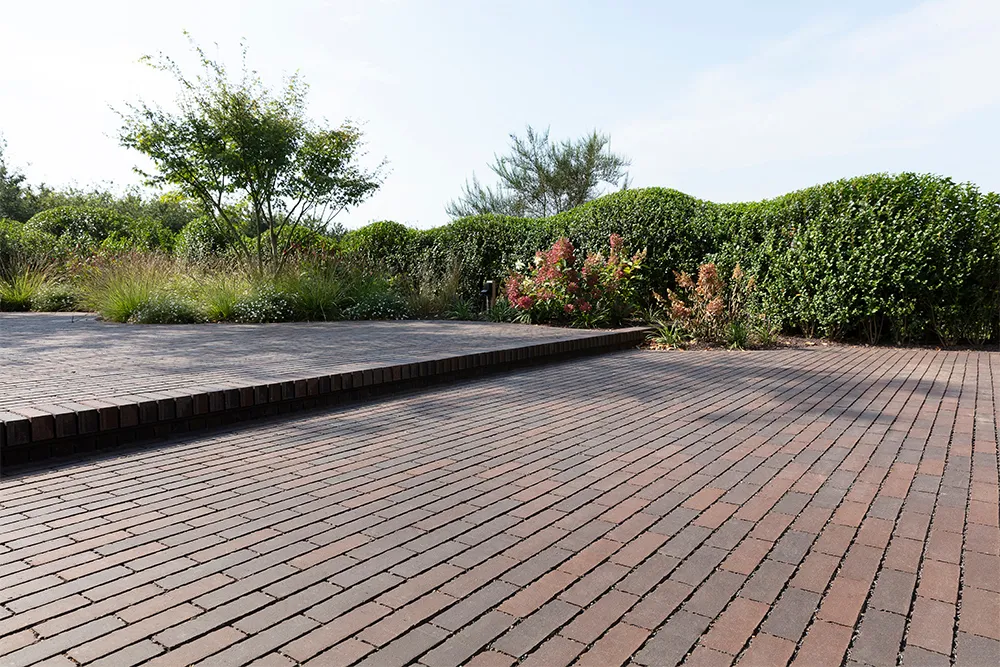
The best alternative turns out to be the age-old clay paver, but in a modified version that leaves the joints between the pavers open, such as Wienerberger’s Passaqua clay paver. Wienerberger’s sustainable, circular vision goes beyond product innovation alone. The company also seeks to optimise its production process, packaging and transport. The Passaqua clay paver is an excellent example. With a fairly simple yet ingenious design modification, Wienerberger has developed a water-friendly paver that meets every possible requirement, including aesthetic ones. The principle is simple: spacers have been added to the sides of the clay paver’s distinctive shape to keep the joints open, allowing the water needed to seep into the ground. The paver itself does not let water through, but its 6 mm-wide joints do. Passaqua is therefore not a water-permeable clay paver, but a water-passing clay paver that allows water to infiltrate through the joints. An added benefit is that, as rainwater flows around the pavers and straight into the grooves, the risk of moss and weeds is reduced.
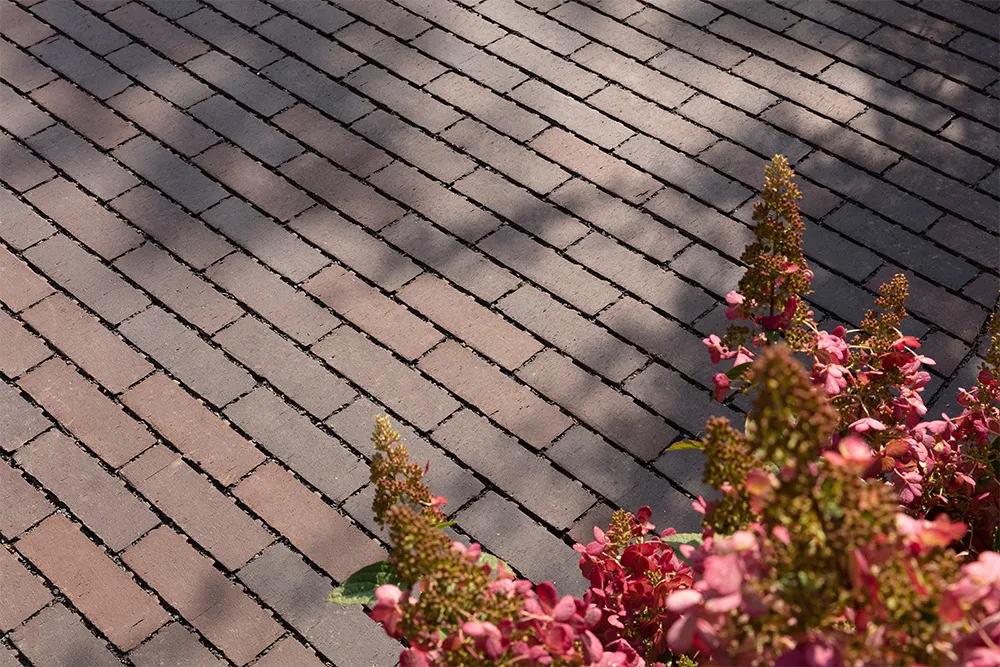
Durably attractive design, versatile in use
A special clay paver that helps water reach the ground is both practical and climate-conscious. However, Passaqua pavers must be professionally laid, with a suitable foundation, bedding layer and jointing materials, to ensure optimal water infiltration. The construction can vary depending on the soil type. Dense loam or clay requires a thicker sub-base than sandy soil to allow rainwater to seep through efficiently. A quick analysis will show how the construction should be carried out.
The paver was rigorously tested in practice in a real residential setting. Thanks to the fixed joint width and grading of the jointing material, Wienerberger can offer a strong guarantee of long-lasting, consistent water infiltration with minimal maintenance. Passaqua pavers are also an attractive aesthetic choice that can be effortlessly incorporated into any landscape design and any setting, urban or rural. The clay paver comes in four colours: chocolate brown (Doris), terracotta red (Magma), warm grey (Lotis) and understated black (Eros), and can be laid in various patterns or bonds just like a standard paver. This makes Passaqua suitable for a range of architectural styles and different preferences.
Question about this story? Ask your question
Keep following this
Get an email when a new story is published. No account needed.
- SubjectPublic space