Biodiversity in the city: how do Brussels and Antwerp measure up?
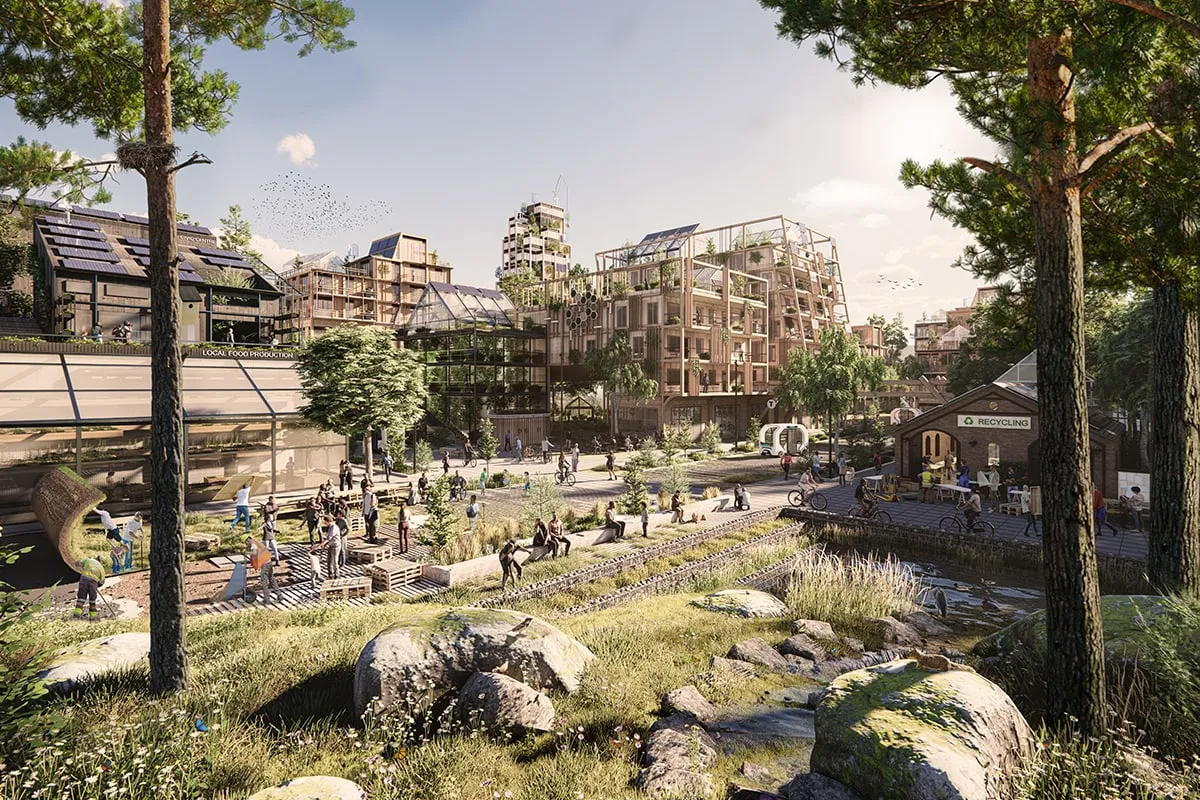
Our cities continue to grow, making the need to tackle biodiversity loss increasingly urgent. Biodiversity is declining rapidly, particularly as urban expansion replaces nature with concrete. This creates ecological deserts and makes us more vulnerable to climate disasters.
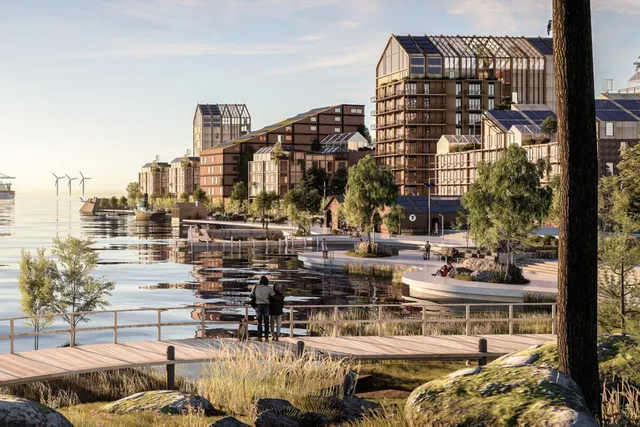
Sweco’s latest Urban Insight report offers valuable insights and practical recommendations for integrating regenerative design into urban planning. By working together and putting nature at the heart of our approach, we can create cities that not only support human activity, but also care for the ecosystems that sustain us.

Tobias Nauwelaers
Sweco expert in nature conservation and urban ecology, and co-author of the report.
“Biodiversity is declining at an alarming rate and on a large scale, triggering a chain reaction. This threatens essential ecosystem services such as clean water, clean air and crop pollination, on which citizens depend.”
“One way to address the biodiversity problem in cities is to apply regenerative design. By integrating natural and semi-natural systems and creating more green-blue spaces, cities can not only limit ecological damage, but also help strengthen ecosystems and biodiversity.”
Green resilience in Brussels and Antwerp
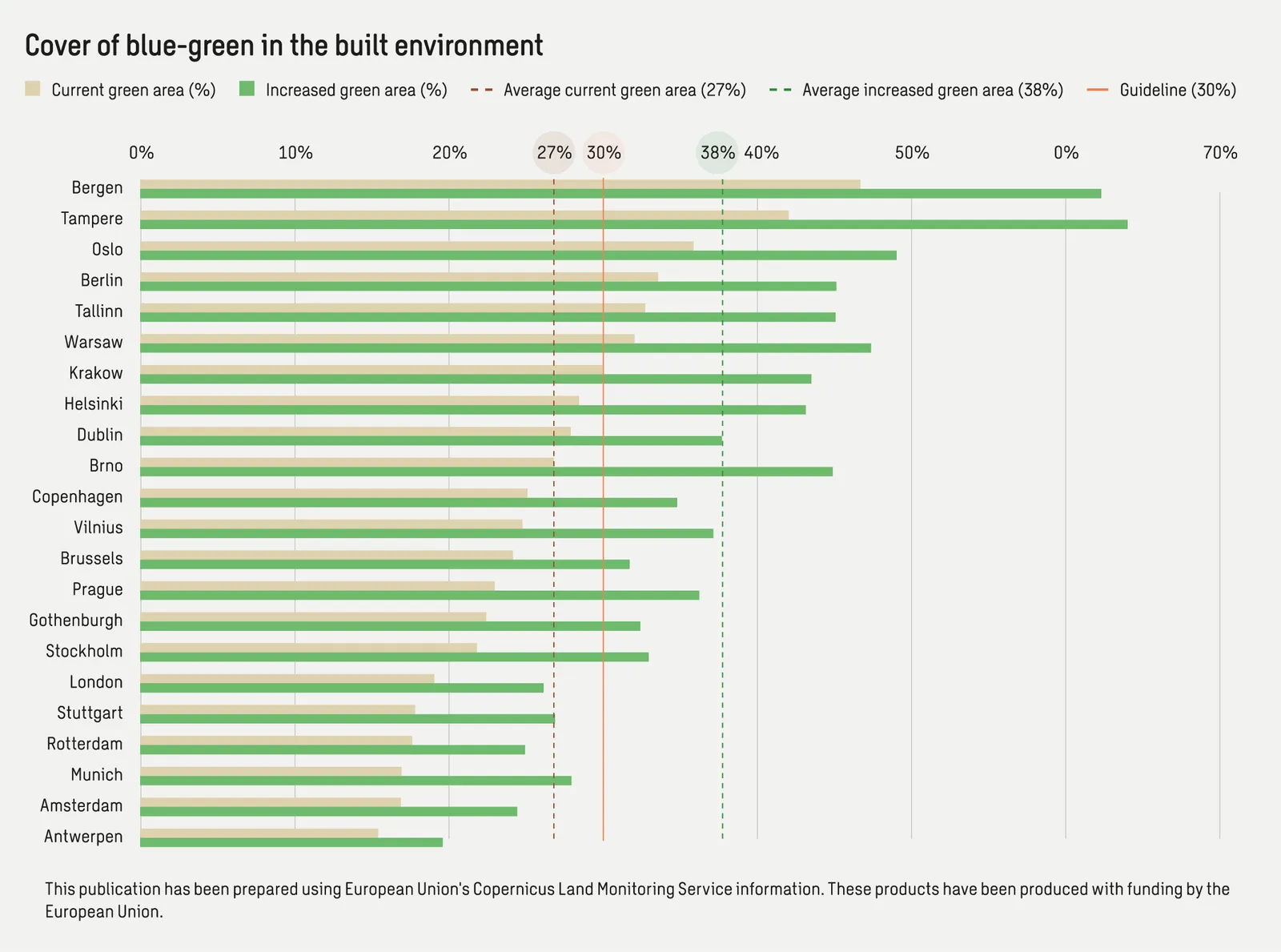
A Sweco study examined green-blue spaces in 22 cities, including Brussels and Antwerp. The analysis, carried out using the Copernicus database of the EU’s Earth observation programme, reveals significant opportunities to expand green infrastructure in these cities.
In Brussels, green-blue space currently covers 25% of the city, below the average of 27%. However, strategic plans could increase this to 32%, well above the 30% guideline.
Antwerp has just 17% green-blue space, one of the lowest proportions among the cities studied. Its potential for growth is limited, with a possible increase to just 19%. This is due to the even distribution of green spaces and the limited built-up area, which means the overall change is less than 1%.
How Mechelen is improving liveability
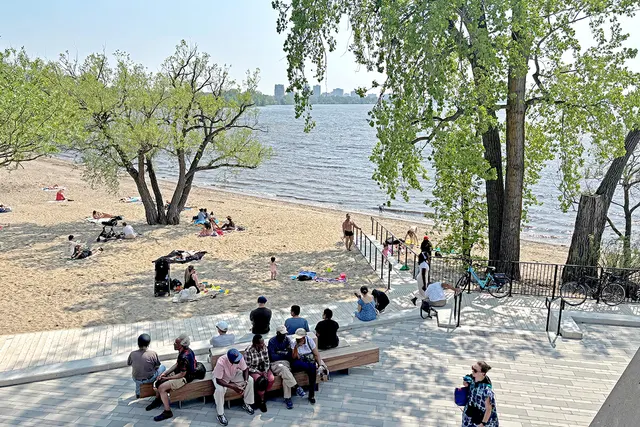
An inspiring example of improved liveability can be found in Mechelen. The city is focusing on recovery by prioritising walking, cycling and public transport. By expanding the area of unpaved green spaces from 2.9 to 6.5 hectares, Mechelen is improving both climate resilience and public health. The city ensures that at least one hectare of accessible green space is available within 300 metres, in line with the recommendations of the World Health Organization.
Nature as the key to healthy cities
The report calls on urban planners and policymakers to prioritise green infrastructure and biodiversity in urban environments.
Diego Luna Quintanilla, Project Manager for Urban Design and Strategic Planning at Sweco, says: “By treating nature as a client when designing cities, we can improve the quality of urban areas, benefiting the health of people, animals and ecosystems.”
Dr. Ragnar Van Acker, project manager for climate adaptation at Sweco, adds: “We must see nature as an integral part of our design process. The future of our cities depends on how we integrate it into our daily lives.”
*Sweco studied 22 cities: Amsterdam, Antwerp, Bergen, Berlin, Brno, Brussels, Copenhagen, Dublin, Gothenburg, Helsinki, Krakow, London, Munich, Oslo, Prague, Rotterdam, Stockholm, Stuttgart, Tallinn, Tampere, Vilnius and Warsaw. As the accompanying chart shows, Tampere, Bergen and Oslo have the potential to become some of Europe’s greenest cities, while other cities in the study need to take additional measures to meet the “30 per cent green rule”.
Sources: based on data from the EU’s Copernicus service. See the report for the full list of references.
Question about this story? Ask your question
Keep following this
Get an email when a new story is published. No account needed.
- ThemeSpace for water and green infrastructure
- SubjectPublic space