The jet grouting, micropile and ground anchor specialists
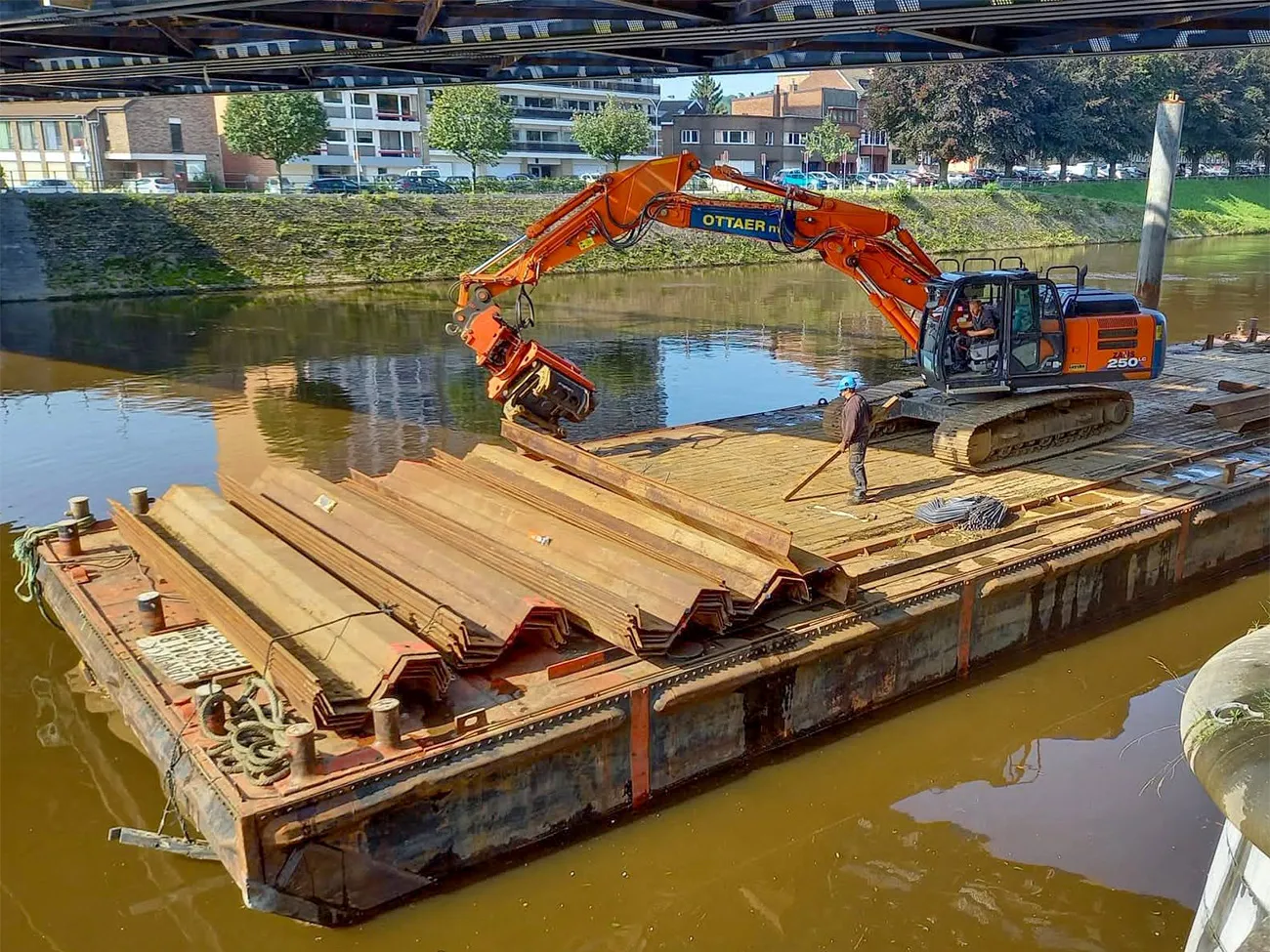
Ottaer has more than 20 years’ experience in specialist foundation techniques. It was even one of the pioneers of jet grouting in Belgium. The company, run by managing director Tom Fransen from Oud-Turnhout, also specialises in installing micropiles and ground anchors. For these techniques, it is an independent and flexible partner to several reputable foundation companies.
Ottaer is a specialist family business with its own in-house design office, where craftsmanship remains at the heart of everything it does. The company operates in Belgium and the south of the Netherlands, working both as a subcontractor to other foundation companies and directly for professional clients: main contractors on large and small construction projects, port companies, railway companies, civil engineering contractors …
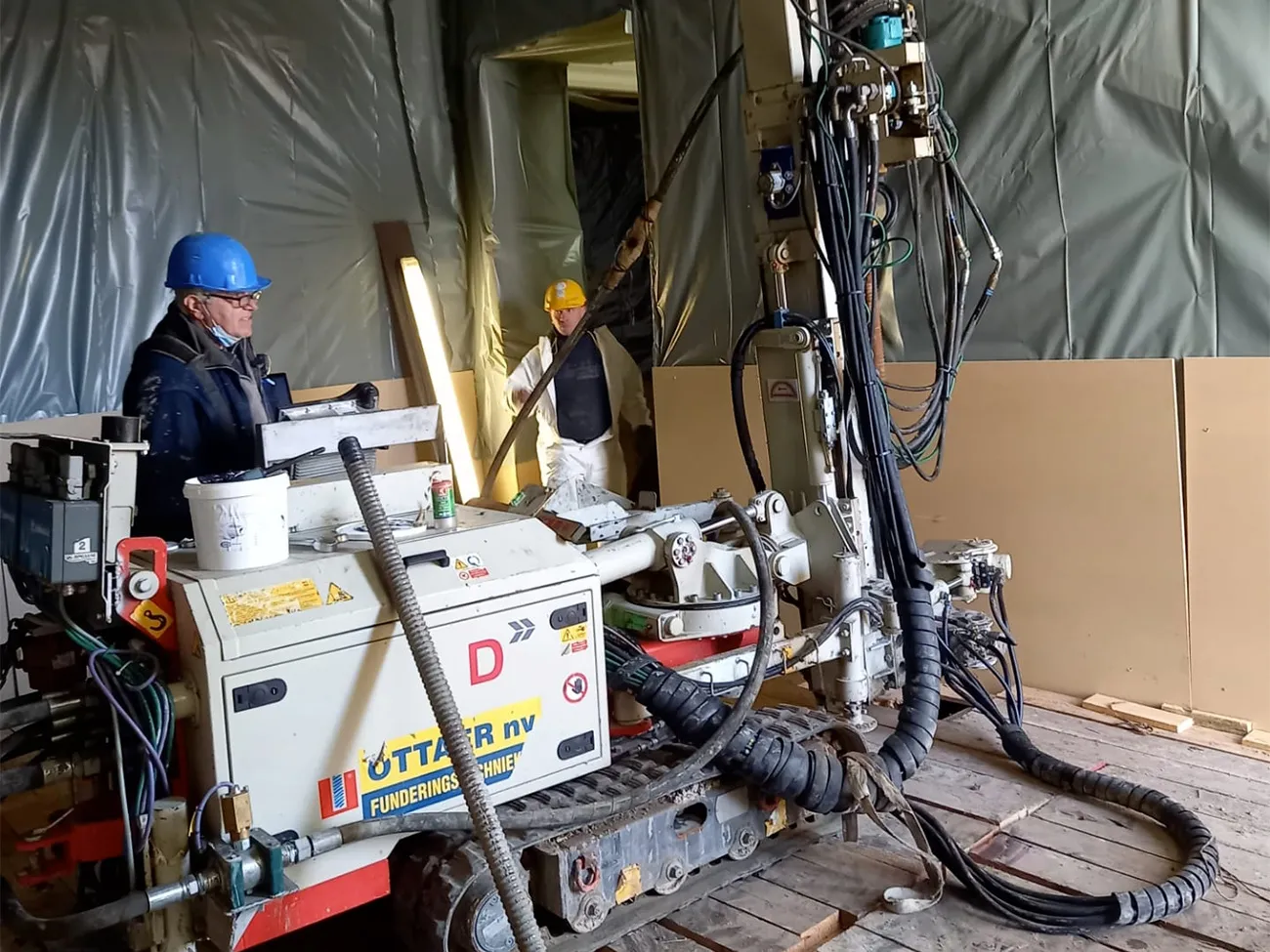
One of the pioneers of jet grouting in Belgium
Ottaer is one of the pioneers of jet grouting in Belgium, a foundation and earth-retaining technique in which grout columns are formed by injecting a water-cement mixture (grout) into the ground. Proper use of this technique can serve various purposes: creating vertical foundation piles, strengthening existing foundations, supporting excavations, and installing a vertical or horizontal groundwater cut-off barrier …
Tim Horemans, Ottaer’s managing director: “By injecting at high pressure, we mix a water-cement mixture with the soil in situ. This forms grout columns in the ground. Once the mixture has hardened, the columns can serve as foundation piles, retaining structures, anchors or a waterproofing layer beneath an excavation. Foundation piles or retaining structures created using jet grouting provide very high load-bearing capacity.”
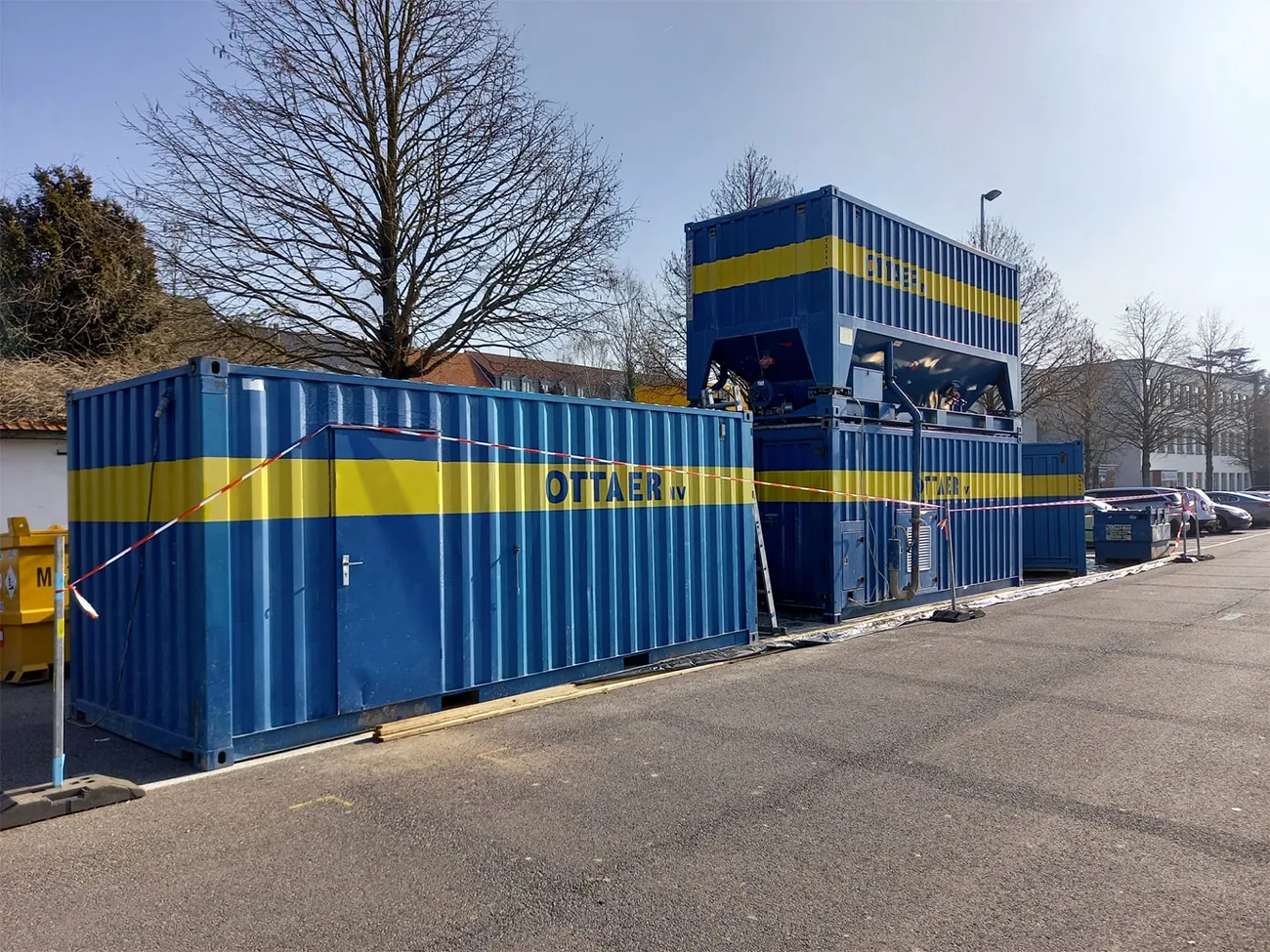
Micropiles, including in confined spaces and locations with difficult access
Ottaer specialises in drilling micropiles to withstand the required compressive and tensile loads. This foundation technique is often used to strengthen existing foundations where there are stability problems, or in connection with extensions and renovations. Ottaer has a compact machine for drilling micropiles in confined spaces and locations with difficult access. It can pass through doorways with a minimum width of 90 cm.
Tim Horemans: “Micropiles are a flexible foundation technique that can be used in almost any type of soil. They offer a wide range of applications, combining high load-bearing capacity with a small diameter. The final diameter depends on the intended application. Uses include strengthening existing building foundations following settlement or increased loads, creating foundations in hard-to-reach locations and restricted indoor spaces, carrying loads with varying compressive forces, constructing railway infrastructure, and acting as tension piles to prevent groundwater pressure from lifting basement floors.
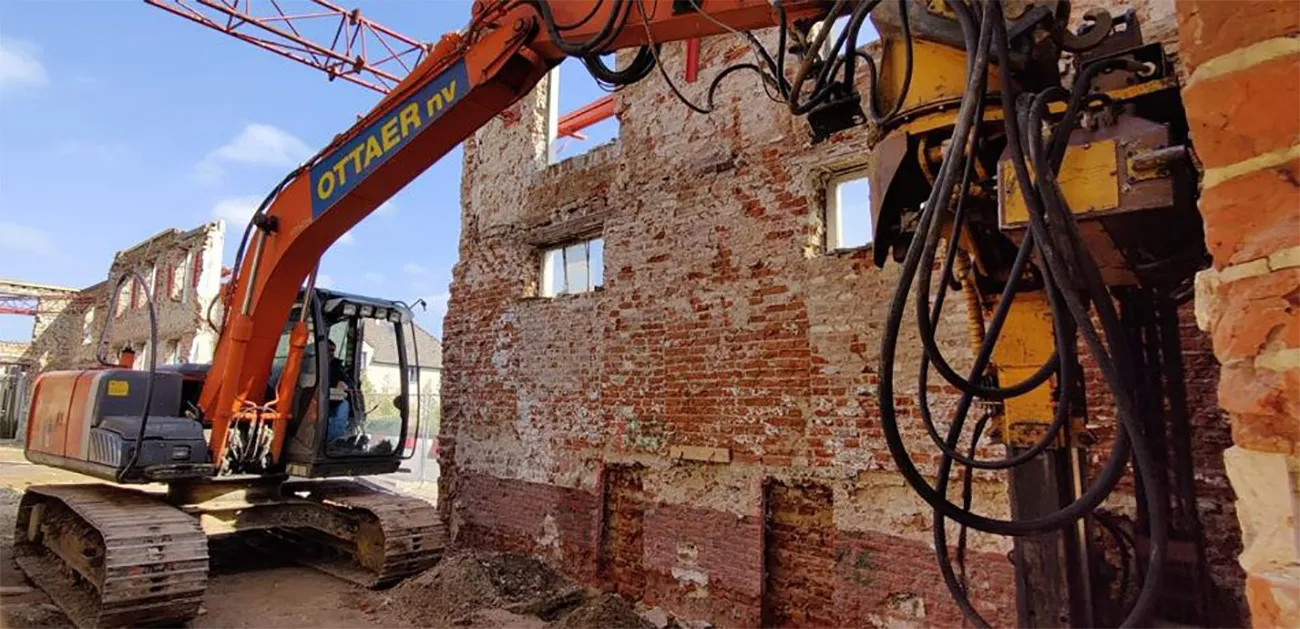
Installing prestressed ground anchors
Over the past two decades, Ottaer has built up extensive experience in installing and anchoring ground anchors. These anchors are used for various purposes, including securing supported excavations against horizontal forces. The technique can be used with various types of excavation support, including Berlin walls, grout walls and underpinning … Ottaer is also brought in to install ground anchors to strengthen quay walls, sheet pile walls, bridge abutments and riverbanks …
Tim Horemans: “Anchors secure excavation support against the horizontal pressure exerted by the adjacent soil or neighbouring buildings. Ground anchors are particularly necessary for excavations with several basement levels. To provide this stabilising function, the threaded anchors use tensile stress in the stable soil mass further away. To secure the excavation support with ground anchors, the supported excavation must first be dug to a certain depth. This allows us to install the ground anchors through the excavation support at a sufficient depth, so that they provide the required reinforcement. The excavation can then be continued without risk.”
Question about this story? Ask your question
Keep following this
Get an email when a new story is published. No account needed.
- ThemeUsing and protecting the subsurface
- SubjectYearbook