“Our goal? A strong, reliable and future-proof waterway network”
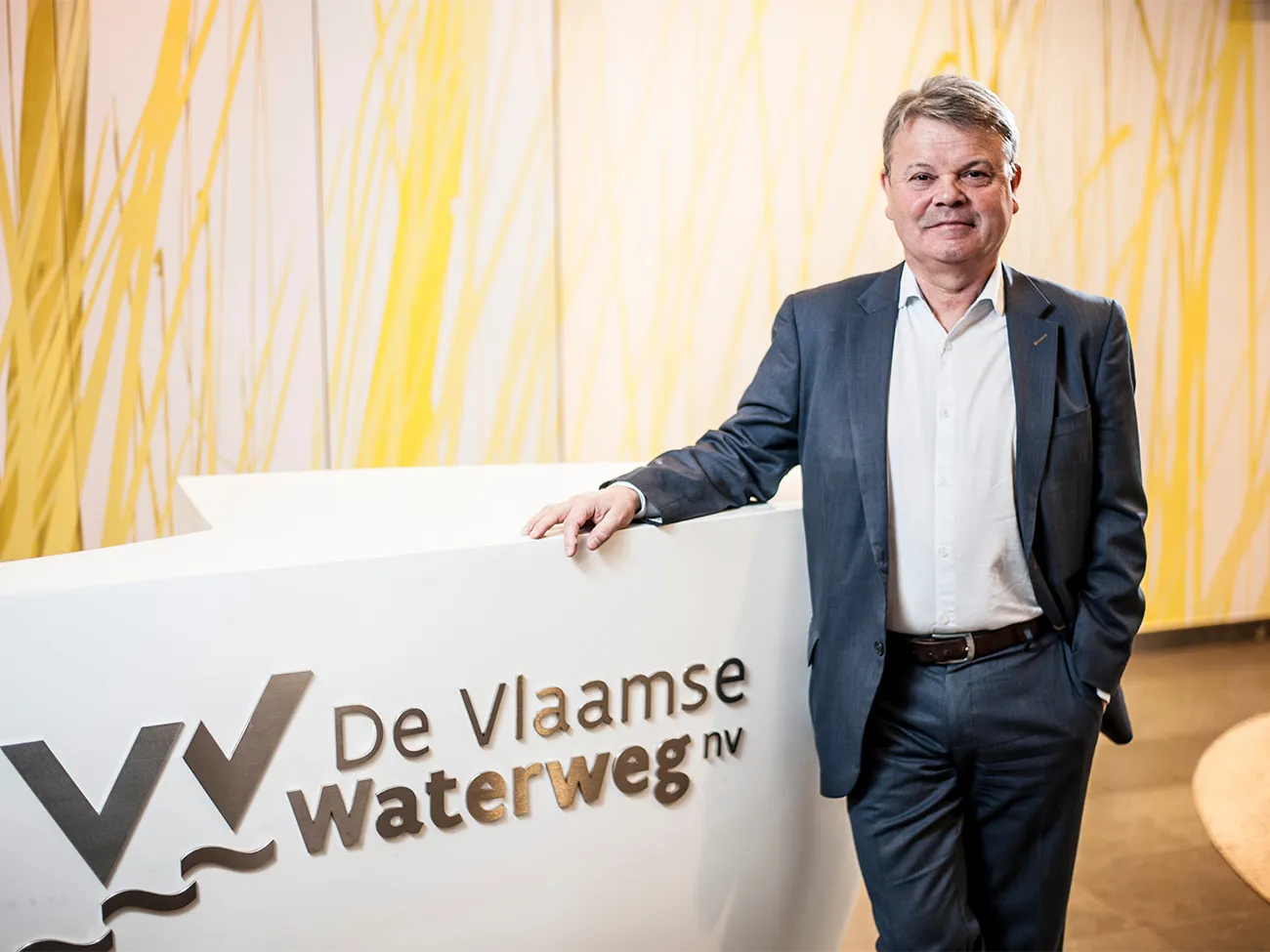
Ensuring a strong and safe network, while also encouraging transport on the waterways. These are the challenges De Vlaamse Waterweg nv works on every day. “We want not only to strengthen the economic role of our waterways and make them more resilient to water, but also to ensure that they fit into their surroundings as well as possible, for the benefit of society and the public,” says managing director Chris Danckaerts.
Today and in the future, De Vlaamse Waterweg nv is focusing on three pillars. The first is a strong, reliable and future-proof network. “It is our responsibility to ensure that our Flemish waterways function well and are properly maintained,” the organisation says. The second priority is water management. “Climate change means that dealing even more effectively with flooding and water shortages is high on our agenda.” Finally, there is the challenge of persuading even more businesses to make the move to the waterways and inland shipping.
Far-reaching automation
De Vlaamse Waterweg nv is turning its ambitious objectives into concrete projects. For example, the organisation is working on the far-reaching automation of bridges and locks, which will increase the efficiency of the waterways. At present, around 100 of the 427 movable structures on the Flemish waterways are already operated remotely from local control centres. By 2032, De Vlaamse Waterweg aims to operate all 427 structures, from bridges and locks to weirs and pumping stations, remotely from three control centres.
Upgrading the waterway network
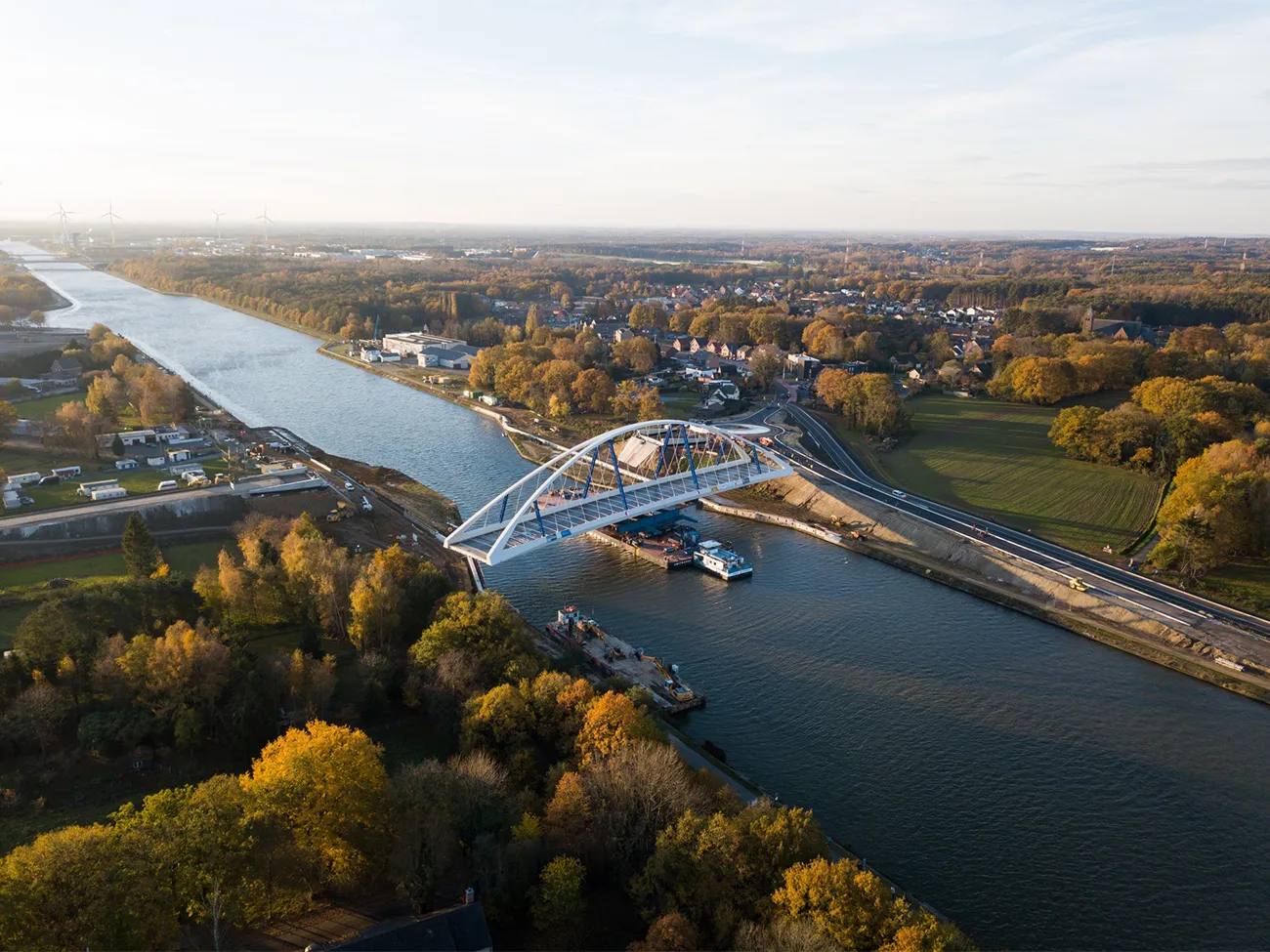
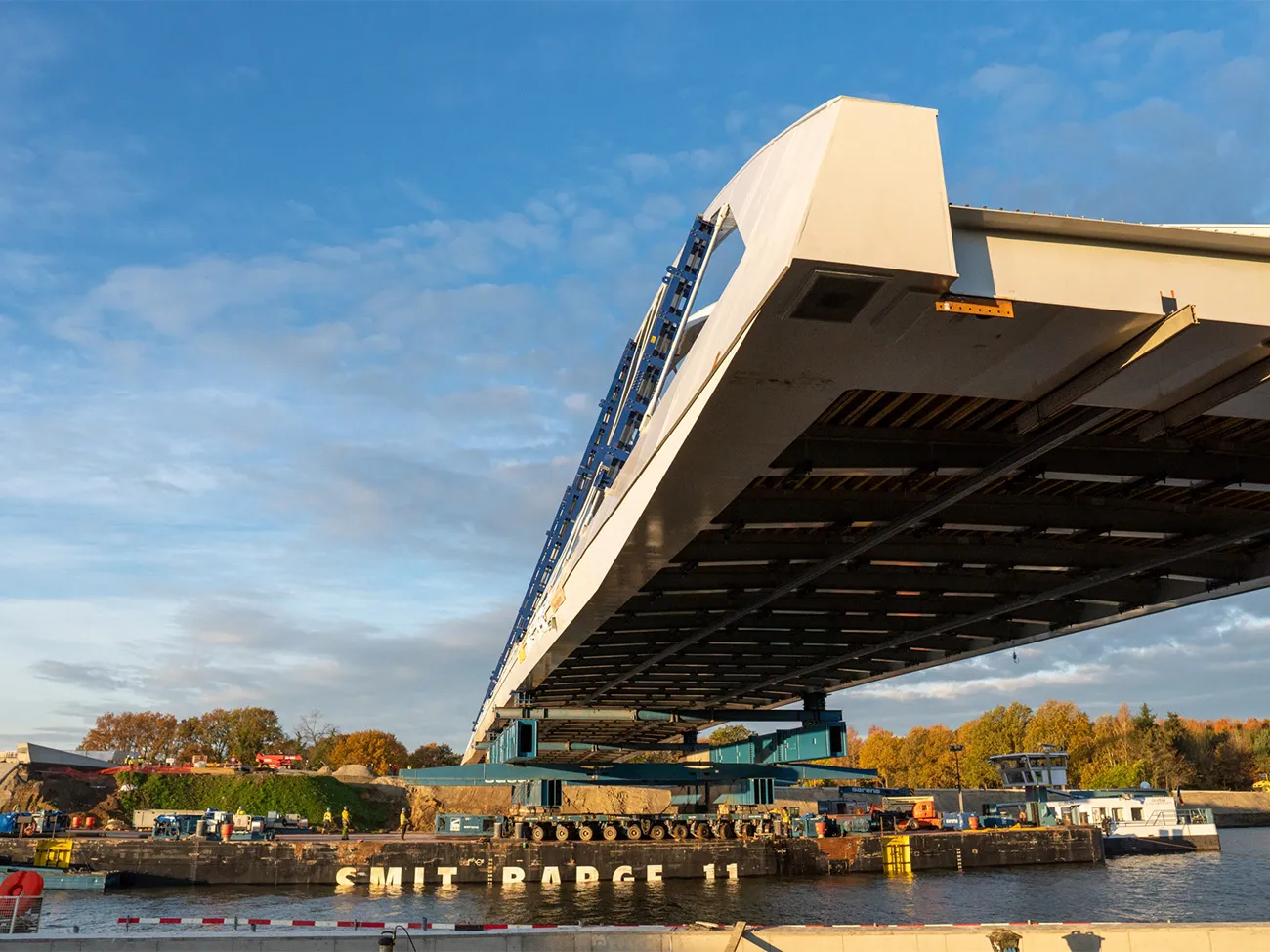
De Vlaamse Waterweg’s commitment to ensuring that inland shipping has every opportunity to thrive in the future is reflected on the ground in a number of strategic multi-year projects. For around ten years, De Vlaamse Waterweg has been making significant investments to raise the bridges over the Albert Canal to provide a navigable clearance of 9,10m. Chris Danckaerts says: “By now, 52 of the 62 bridges have this clearance, 7 projects are under way and the final 3 have been put out to tender. The last bridge will be raised in 2023, making it possible to carry four layers of containers.”
Work on the Seine-Scheldt link in Flanders is progressing well. The initial focus is on upgrading the Leie corridor between Ghent and the French border. The aim is to make this route, around 70km long, navigable for vessels with a carrying capacity of up to 4.500 tonnes (the so-called CEMT class Vb) and for inland vessels carrying 3 layers of containers, dramatically increasing the transport capacity on this waterway. In line with the European implementing decision on Seine-Scheldt, the Leie upgrade will be completed by the end of 2027, dovetailing with the completion of the new Seine-Nord Europe canal in France, scheduled for the end of 2028. “Alongside upgrading the Leie corridor, we are also working to upgrade the Roeselare-Leie Canal and the Bossuit-Kortrijk Canal, as well as improving inland shipping access to the port of Zeebrugge,” adds Chris Danckaerts.
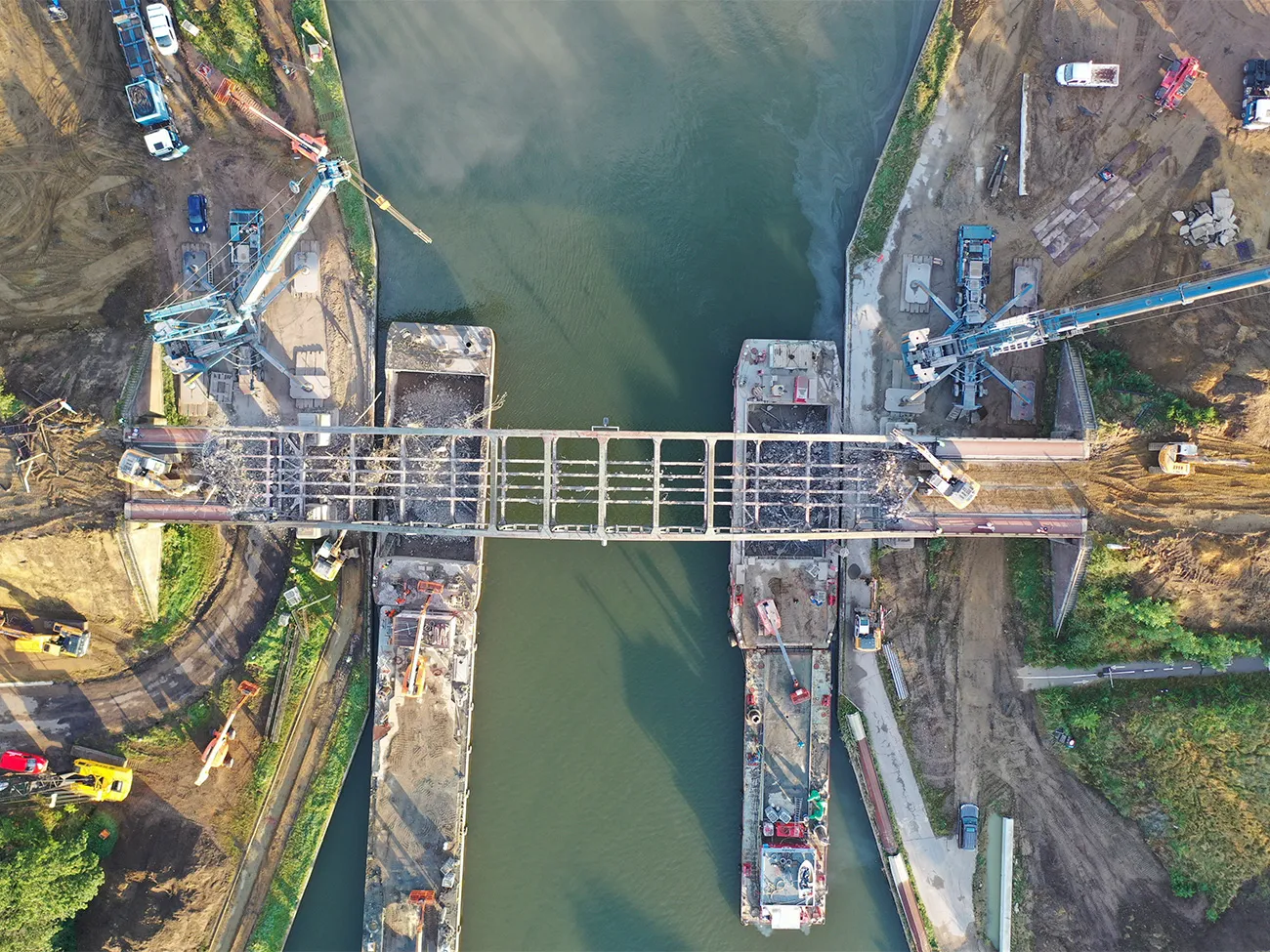
As it rebuilds a number of bridges, De Vlaamse Waterweg is also progressively upgrading the Canal to Charleroi, with 2035 as the target date. Chris Danckaerts says: “Together with the local authorities, we also want to use the works to improve the quality of life and mobility around the canal, with attractive promenades and cycle paths along the banks, natural banks, better water management and more space for development along the waterfront.”
Accelerating investment in water management
For several decades, De Vlaamse Waterweg has been investing in improving flood protection along the Maas and the Scheldt and its tributaries. The extensive implementation of the Sigma Plan and the widening of the Maas’s winter bed have already significantly improved flood safety. Through these projects, De Vlaamse Waterweg is strengthening the resilience of the waterway network with targeted investments designed to limit the impact of drought and/or flooding in the long term. At the same time, the projects are being used to enhance the natural value of the river corridors and promote enjoyment of the water and nature.
“The unprecedented flooding recently seen in Wallonia and Flanders, as well as the periods of drought in recent years, make it clear that our waterways are vulnerable to flooding and water shortages,” says Chris Danckaerts. “More and faster investment in making our rivers and canals resilient to water is needed to manage the effects of climate change.”
This includes further implementation of the Sigma Plan, the renewal of the weirs on the Dender, flood protection measures in the northern sector of the Maas and a number of structural interventions along canals in West and East Flanders. De Vlaamse Waterweg nv is also taking action against water shortages as part of the Flemish Government’s Blue Deal: building pumping installations on waterways affected by water shortages can help safeguard water supplies for shipping, industry, drinking water companies and agriculture during prolonged droughts. Strengthening the water resilience of river valleys is also high on the agenda. This increases their capacity to store water, helping to tackle flooding, while also rewetting the river valleys to address drought.
More inland shipping: good for mobility and the climate
“Smooth mobility is one of businesses’ main concerns. The authorities, together with all the parties involved, need to provide solutions to the growing mobility problem. We translate multimodal thinking into a well-functioning system in which the waterways are a fully-fledged and reliable transport mode. In economically important regions, we are working to develop multimodal transhipment hubs and ensure an adequate supply of water-bound business parks. We are also investing in quay walls together with businesses. All this is aimed at substantially increasing the share of inland shipping in freight transport,” says Chris Danckaerts.
“More inland shipping also helps us achieve our climate targets. That does not change the fact that improving sustainability in the inland shipping sector will be a major challenge for the future. Through all these concrete projects, we are working every day with all stakeholders to build a strong, future-proof waterway network,” concludes Chris Danckaerts.
Question about this story? Ask your question
Keep following this
Get an email when a new story is published. No account needed.
- ThemeStrengthening waterways and coastlines
- SubjectYearbook