Aertssen Group: a multidisciplinary construction family with a clear, sustainable vision for the future
Text Niels Rouvrois Beeld Aertssen Group
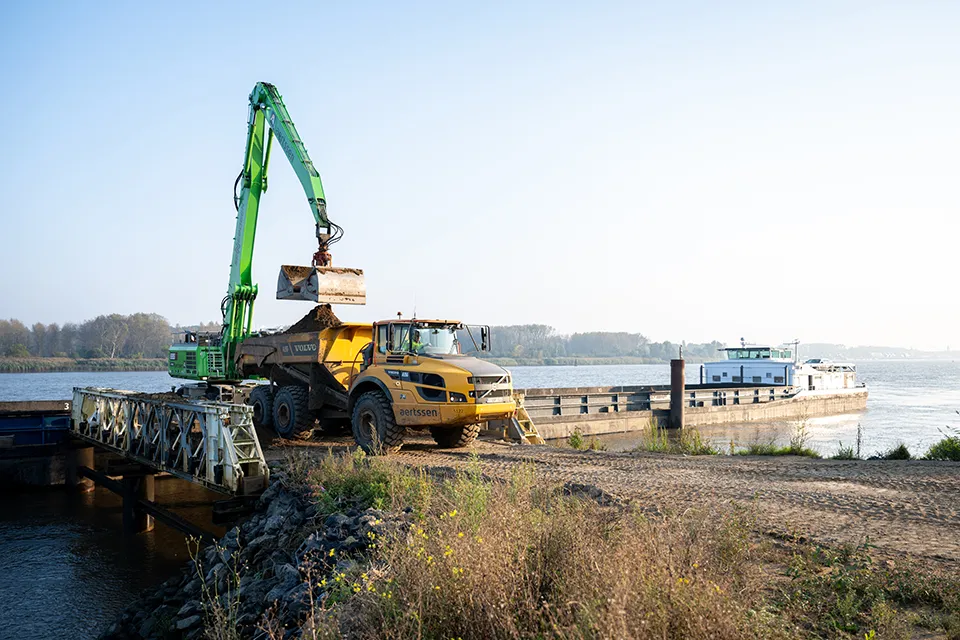
From infrastructure, dewatering, foundations and lifting operations to transport & logistics, machinery trading, project development and green energy, Aertssen Group is a jack-of-all-trades in the construction sector. With turnover of 400 million euros and almost 2,500 employees worldwide, Aertssen Group is still expanding rapidly, with innovation and sustainability part of its DNA. Aertssen Infra, one of the group’s four business units, draws on a wealth of experience and expertise and, above all, an integrated, multidisciplinary approach, supported by direct links with subsidiaries such as Smeyers and Van Rooy.
With four solid pillars, infrastructure, cranes, trading and transport & logistics, Aertssen Group is firmly committed to an integrated, multidisciplinary approach, with an unwavering focus on growth, innovation, sustainability and the transition to a circular economy. This applies at project level, in partnerships and in its internal operations.
Aertssen Infra
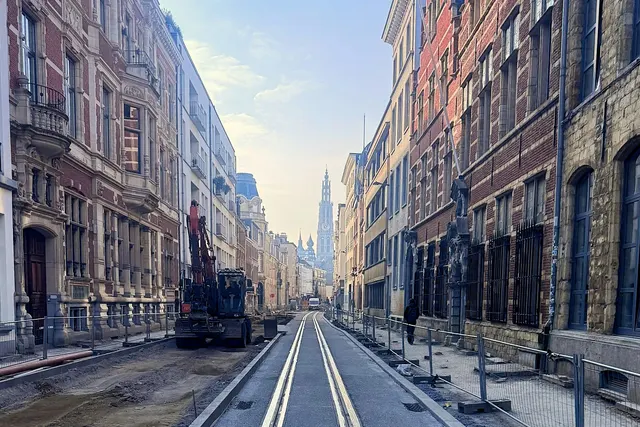
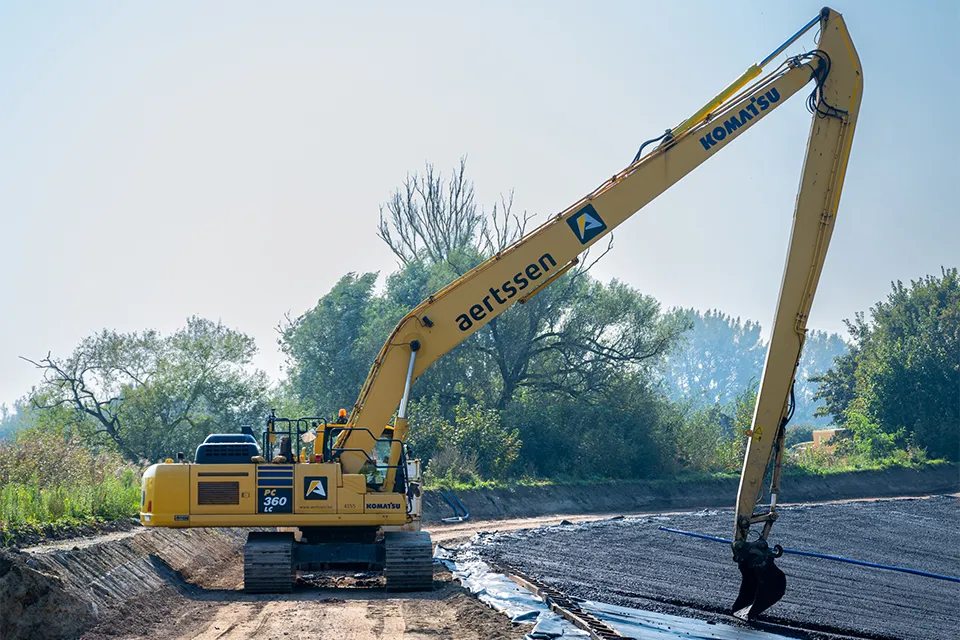
One of the business units putting all these capabilities into practice is Aertssen Infra, which positions itself as a one-stop partner for every challenge involving earthworks, road and sewer works, water engineering, demolition, environmental works, asbestos removal, soil remediation, quarrying, infrastructure works and plant hire. A close-knit team of well-trained employees takes projects from start to finish, backed by an extensive, state-of-the-art fleet of machinery and many years of experience.
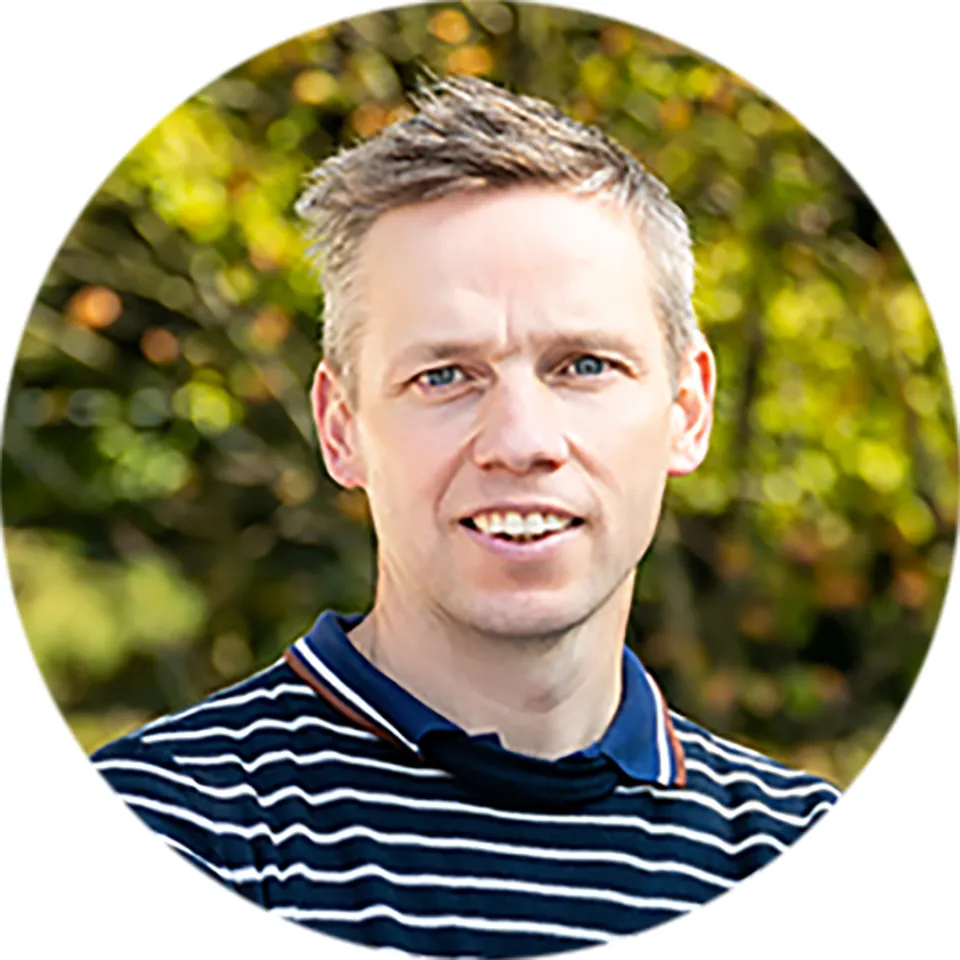
Aertssen Infra operates from Stabroek and Hermalle-sous-Huy, as well as several satellite offices elsewhere in the country. As Business Unit Manager, Gert Mennes leads the divisions in Flanders and Wallonia, as well as the subsidiaries, including Van Rooy and Smeyers. Gert Mennes: “The focus is on overall management and strategic planning. Each business unit has a number of Discipline Managers who oversee the different divisions, ensuring a clear and efficient structure. Together, we are always looking for opportunities to improve and optimise so that we can achieve Aertssen Infra’s objectives.”
Multidisciplinarity is a key principle at Aertssen Group. This applies not only across the group’s business units, for example, the synergies between Aertssen Infra & Aertssen Kranen, but also within the units themselves, where expertise is pooled. Gert Mennes: “A good example of a multidisciplinary project at business-unit level is the redevelopment of the Slachthuiswijk, in the area around the future Kalverwei and the slaughterhouse halls in Antwerp. Aertssen Infra installed a large 60-tonne rainwater tank there, calling on Aertssen Kranen for the lifting work. This allows us to take as much as possible off the client’s hands and provide a single point of contact. It also makes it much easier to coordinate schedules.”
At business-unit level, Ineos’s Project ONE is an impressive project that Aertssen Infra is helping to deliver in a joint venture with Mourik. Gert Mennes: “Aertssen Infra carried out the preparatory earthworks and drew on the in-house expertise of Van Rooy for the foundation works and Smeyers for dewatering. At a later stage, we also took care of the roads and sewerage.”
Van Rooy
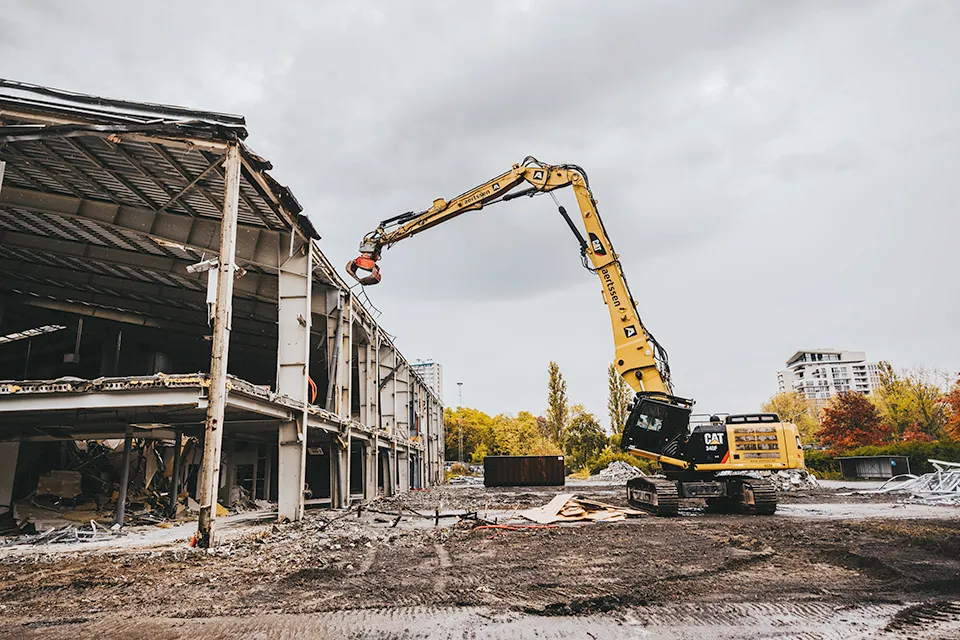
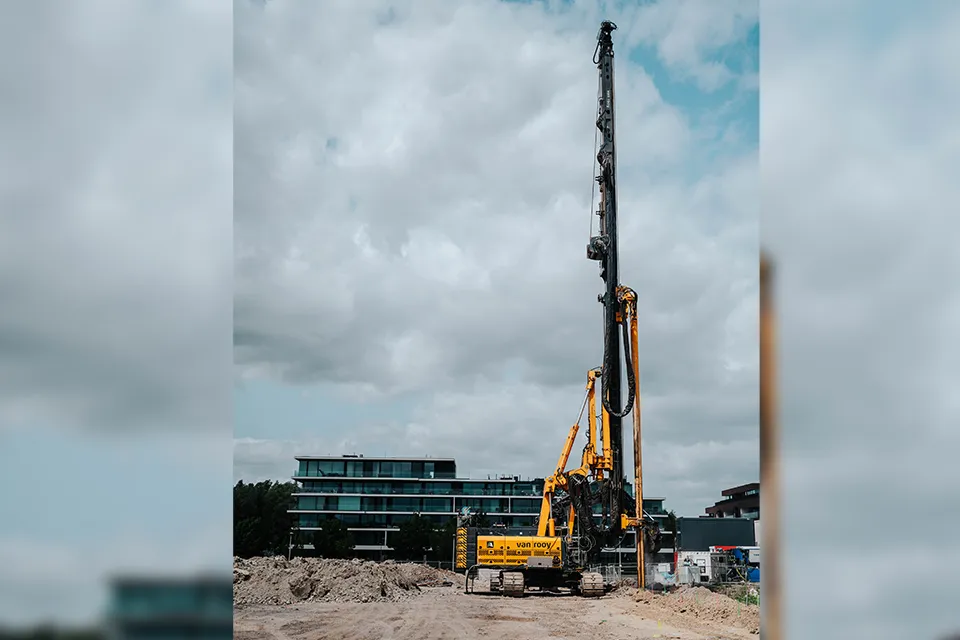
The acquisition of Van Rooy is a recent development in the history of Aertssen Group. To facilitate integration and synergy, Kris Van Den Eynde was appointed Discipline Manager at Van Rooy. “I have been working at Aertssen Infra since 2006,” says Kris Van Den Eynde. “As Aertssen Infra continued to grow, the role of Discipline Manager was introduced in 2018 to lead a division within the business unit. I first oversaw the demolition division and recently became Discipline Manager at Van Rooy, a renowned specialist in shoring, foundation works and basement construction. My focus is mainly on shoring and foundations.”
Kris Van Den Eynde is the key link between Van Rooy and Business Unit Manager Gert Mennes: “I report directly to Gert, which should help integrate Van Rooy into the Aertssen family. It is not a process you can force. Van Rooy is a specialist construction company with its own history and way of working. You cannot change that overnight, but the aim is to make processes lean, digitise where possible and optimise the business as a whole, without losing sight of what makes Van Rooy distinctive and strong.
It is certainly a challenge. Change is generally not easy, but there is now much more consultation between all the departments, and that communication is very important.”
Greater integration of Van Rooy into Aertssen Group will undoubtedly also have a positive impact on synergies at project level. Kris Van Den Eynde: “That is naturally what we are aiming for, but it is not a given. We find that clients still like to shop around among subcontractors and are guided by price. Yet it is a major advantage to be a one-stop shop, with just one point of contact, a more flexible way of working and, therefore, greater assurance of completing a successful project on time and within budget. If we identify opportunities for synergy at project level, we will certainly try to seize them. Van Rooy still has its own portfolio, of course, but the aim is to promote the Aertssen Group philosophy.”
Smeyers
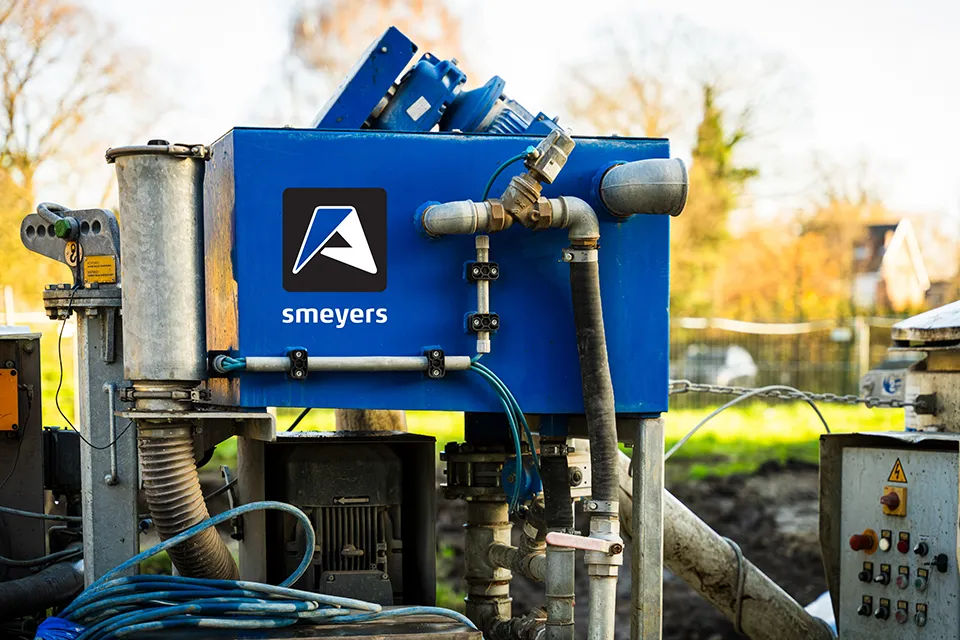
Like Van Rooy, Smeyers has specialist knowledge and experience that further strengthens Aertssen Infra’s capabilities. “Dewatering is Smeyers’ core business,” says Bert Creve, Discipline Manager for wellpoint and return-flow dewatering at Smeyers. “Naturally, we aim to be the best in our field and manage the entire process, from design through to delivery and monitoring. We have our own design team and all the latest technology for accurate monitoring in-house. That makes us quite unique, as does our drive to optimise processes. We are always looking for the most energy-efficient way to carry out our work. For example, we have developed several control systems that automatically stop dewatering when groundwater lowering is no longer required. Return-flow dewatering also has a positive impact on a project’s duration and efficiency, as a Class 3 or Class 2 permit is sufficient. If you have to discharge large volumes of water, you quickly need a Class 1 permit, with many requirements and obligations.”
Geothermal energy
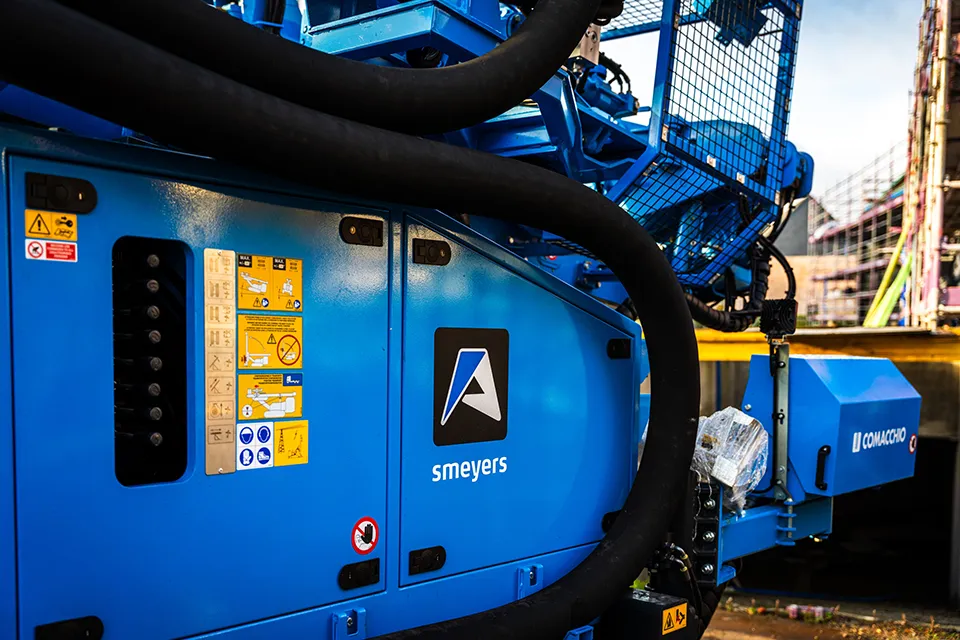
Another, more recent, specialism at Smeyers is geothermal energy. “This division was launched in 2021,” says Jeffrey Beens, Discipline Manager for geothermal energy at Smeyers. “There is some overlap between our dewatering projects and geothermal contracts, but we treat them as two fully fledged disciplines within Smeyers. Geothermal drilling taps into heat beneath the Earth’s surface to generate electricity or provide heat to buildings. Smeyers offers shallow geothermal energy, with boreholes up to 150 metres deep.”
This source of heat provides a steady supply of warmth in winter. Jeffrey Beens: “In summer, the source has a cooling effect, and heat can be captured underground in the BEO field (Boorgat Energie Opslag), a network of horizontal pipes where energy can be stored. Smeyers installs this network too. Installing the network and carrying out the various boreholes on large BEO fields can be a major undertaking. In other words, you need specialist expertise to deliver this kind of project, and Smeyers has it. Strict procedures must be followed to meet the required quality standards.”
As with dewatering, Smeyers can also be brought in during the design phase for geothermal solutions. Jeffrey Beens: “This allows us to anticipate potential problems later on, such as pressure losses or other constraints. Every project is unique and calls for a specific approach and solution. The closed-loop systems we offer provide a particularly sustainable way of supplying buildings with energy. And it is not only geothermal energy itself that is sustainable: we also aim to optimise the way we install the systems. For example, on larger BEO fields we use our decanter system to reinfiltrate drilling water, minimising the use of mains water during drilling. This technology is currently unique in Flanders.”
Greater capacity
Smeyers’ recent addition to the Aertssen Group is set to benefit the dewatering and geothermal specialist. “We now have access to a wider range of projects, including larger ones, and can also benefit from synergies,” says Bert Creve. “Like Smeyers, Aertssen Infra has innovation and development in its blood. Being part of a larger group will strengthen our capacity and ability to deliver in this area. That gives us even more resources and opportunities to find the most efficient and, above all, sustainable processes in our specialist field.”
Smeyers has also recently boosted its capacity with new sites in Aalter and Hoeselt. This expansion reinforces Smeyers’ leading position in the market and marks an important step in the company’s ambitious growth strategy, with a strong focus on innovation and regional development. Jeffrey Beens: “We opened the Aalter site at the end of 2023, where around eight employees currently work. The geothermal division is the hub of this new location. Shortly before the 2024 construction holiday, we also moved into the Hoeselt site, alongside our colleagues at Aertssen Infra. And, of course, there is also the head office in Zandhoven. This spread of locations means we can now serve the whole of Flanders more easily and deploy our employees regionally.”
Sustainability
One word has already come up several times: sustainability. It is an unmistakable feature of Aertssen Group’s philosophy. “Sustainability is in our DNA and is an integral part of everything we do,” says Sustainability Manager Alex De Broe. “By focusing fully on sustainability, the environment and circularity, we are rising to the social, economic and environmental challenges currently facing us.”
In 2023, the carbon footprint of all Aertssen Group’s mobile plant and machinery totalled 32,704 tonnes of CO2-eq, well below the target of 34,572 tonnes. Alex De Broe says: “If we want to reduce our carbon footprint to zero by 2050, we need to invest in carbon-neutral vehicles. Our first priority is vehicles, followed by lorries and ultimately our entire fleet of plant and machinery.”
“We continue to focus on optimising our electricity consumption and maximising our own generation of green electricity at our sites,” Alex De Broe continues. “The energy we cannot generate ourselves is sourced locally and from green suppliers. Total electricity consumption in 2023 was 3,669 MWh, and we generated 2,620 MWh of our own green electricity.”
Circularity
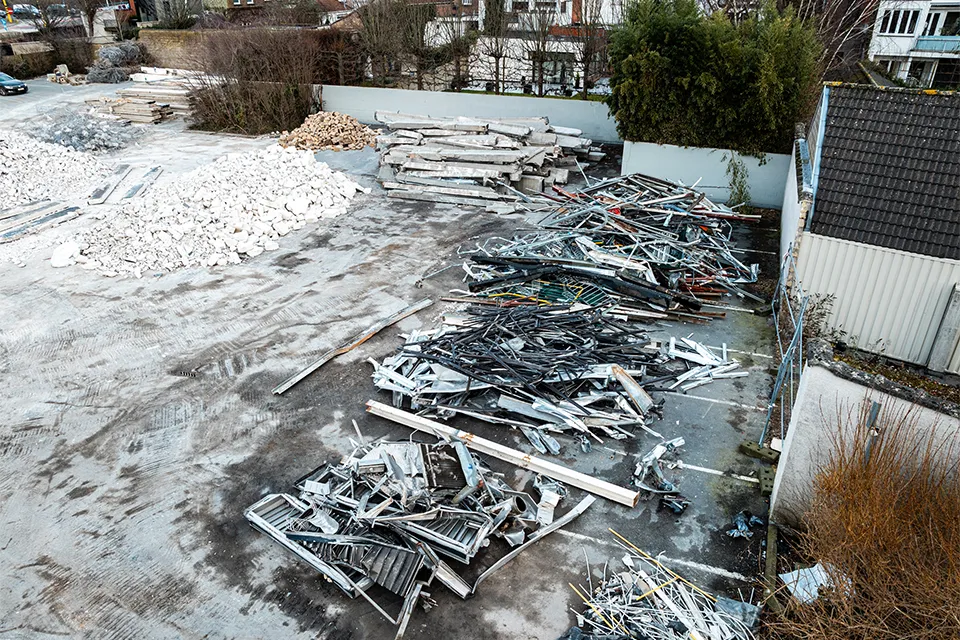
A key driver behind Aertssen’s demolition philosophy is the ambition to achieve a circular economy. Alex De Broe says: “We firmly believe in reusing and recycling materials to minimise waste and promote sustainable practices. Thorough preparation is essential when carrying out circular demolition projects. This involves identifying reusable materials, developing strategies for reuse and high-quality recycling, and implementing environmentally friendly demolition methods. Our network of trusted contacts plays a crucial role, enabling us to give demolished materials a second life and find new applications for them.”
Aertssen Infra employees receive in-house training to master the techniques of circular demolition. Alex De Broe says: “Circular demolition requires a different approach and mindset from traditional demolition, but the sustainability and cost-saving benefits are substantial. The aim is to reuse or recycle to the highest possible standard more than 95% of demolition waste on large projects.”
Practice what you preach
The in-house training on circular demolition is a good example of how Aertssen Group wants to make its people more aware of the importance of sustainable working practices. The company also employs staff who train all machine operators and drivers every day in the efficient, CO2-conscious use of their equipment. Measures including reducing engine idling have cut CO2 emissions by more than a fifth in recent years, despite an increase in the number of machines in use. In 2022, Aertssen Group decided to lease only fully electric models for commuting. By the end of 2023, 20% of its fleet was already fully electric. In time, Aertssen Group will move away entirely from fossil fuels and hybrid solutions.
Buildings and infrastructure are designed to make maximum use of energy-efficient technologies and green energy. Rainwater is used for sanitary facilities and to wash machinery. The company is also further reducing air travel and promoting car-sharing. Employees can work flexibly and are provided with electric bicycles to help them avoid traffic jams.
Overall, in line with Sustainable Development Goal (SDG) 13, Aertssen Group is committed to achieving climate-neutral operations in the longer term, with an interim review in 2030 targeting a carbon footprint of less than 100 grams of CO2 per euro of revenue in Europe. Aertssen Group aims to have an integrated CO2 management system in place across all business units by 2025, which can then be audited under the CO2 Performance Ladder or other initiatives, depending on requirements. Aertssen Group’s mission is clear: to close the entire loop with sustainable products and services.
Een zakelijke vraag aan Smeyers nv? Get in touch
Companies in this story
Keep following this
Get an email when a new story is published. No account needed.
- ThemeUsing and protecting the subsurface
- SubjectYearbook
- CompanySmeyers nv