









Successful recharge well dewatering under challenging conditions
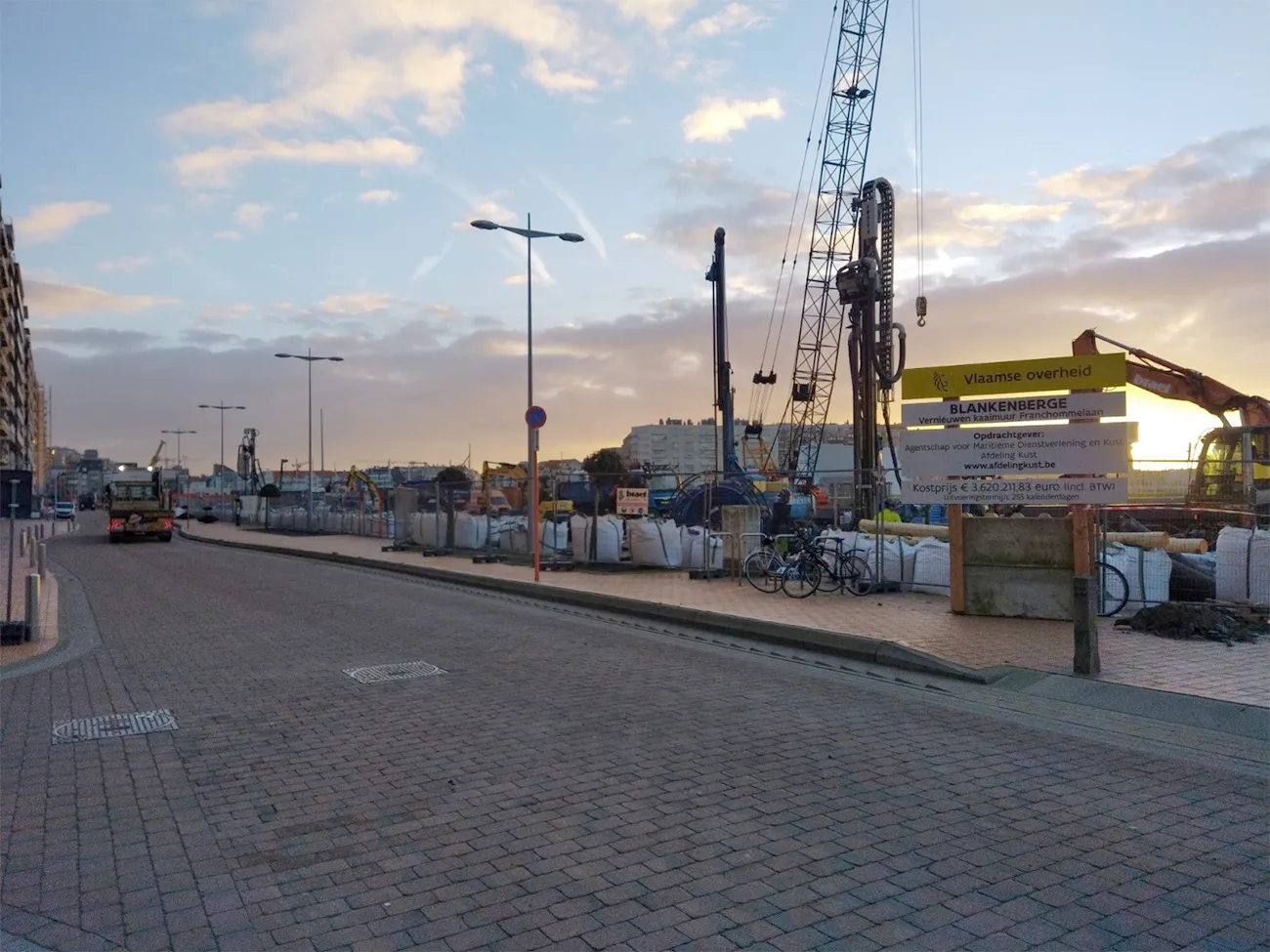
The second phase of the new quay wall at the marina on the Franchommelaan side is being built in Blankenberge, commissioned by the Agency for Maritime and Coastal Services. The works form part of ongoing efforts to protect the centre of Blankenberge from storm surges from the sea. G. Smeyers, based in Zandhoven, was brought in to carry out the challenging dewatering works.
The project was awarded to Braet of Nieuwpoort. The works mainly involve constructing a temporary protective wall in the marina, demolishing the existing quay wall, including extracting its existing pile foundations, and building a new quay wall consisting of an anchored sheet-pile wall. The new quay wall is being built in the same location as the old one.
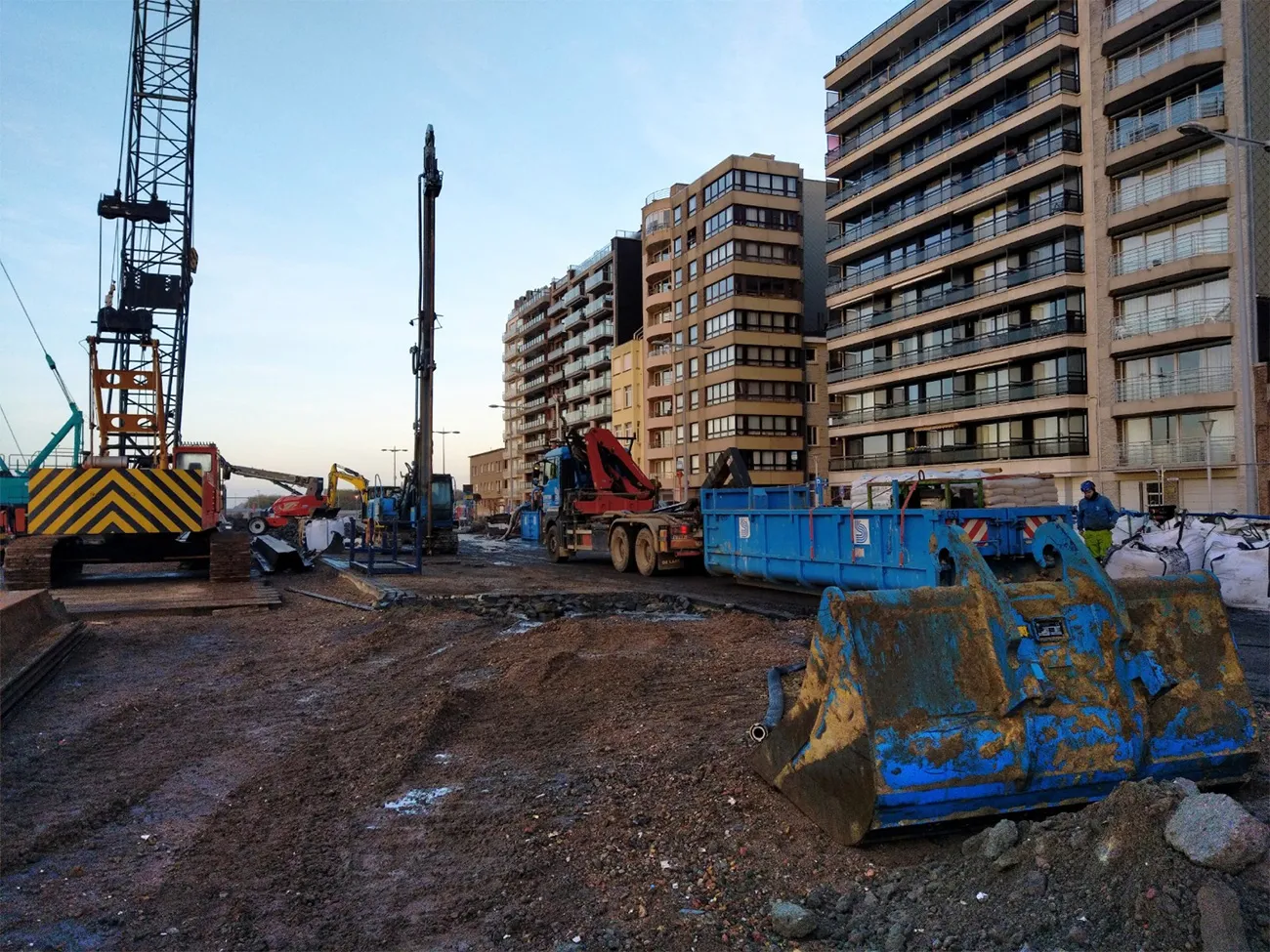
The existing quay wall had to be demolished and the existing foundation piles extracted in dry conditions, which required groundwater lowering. The specifications stated that the contractor was responsible for both the dewatering study and the application for the necessary dewatering permit. As soon as the works were awarded to Braet, the company contacted G. Smeyers to handle all the dewatering works, from preparing the dewatering study and submitting the permit application to carrying out the dewatering itself.
The excavation was designed as a half-open pit and was excavated on a slope towards the land side. For demolition of the existing quay wall and extraction of the foundation piles, the groundwater had to be lowered to level 0.00 TAW. An initial preliminary study quickly identified a number of issues: groundwater levels are affected by the tides, fluctuating between +4.00 TAW at high tide and +1.50 TAW at low tide.
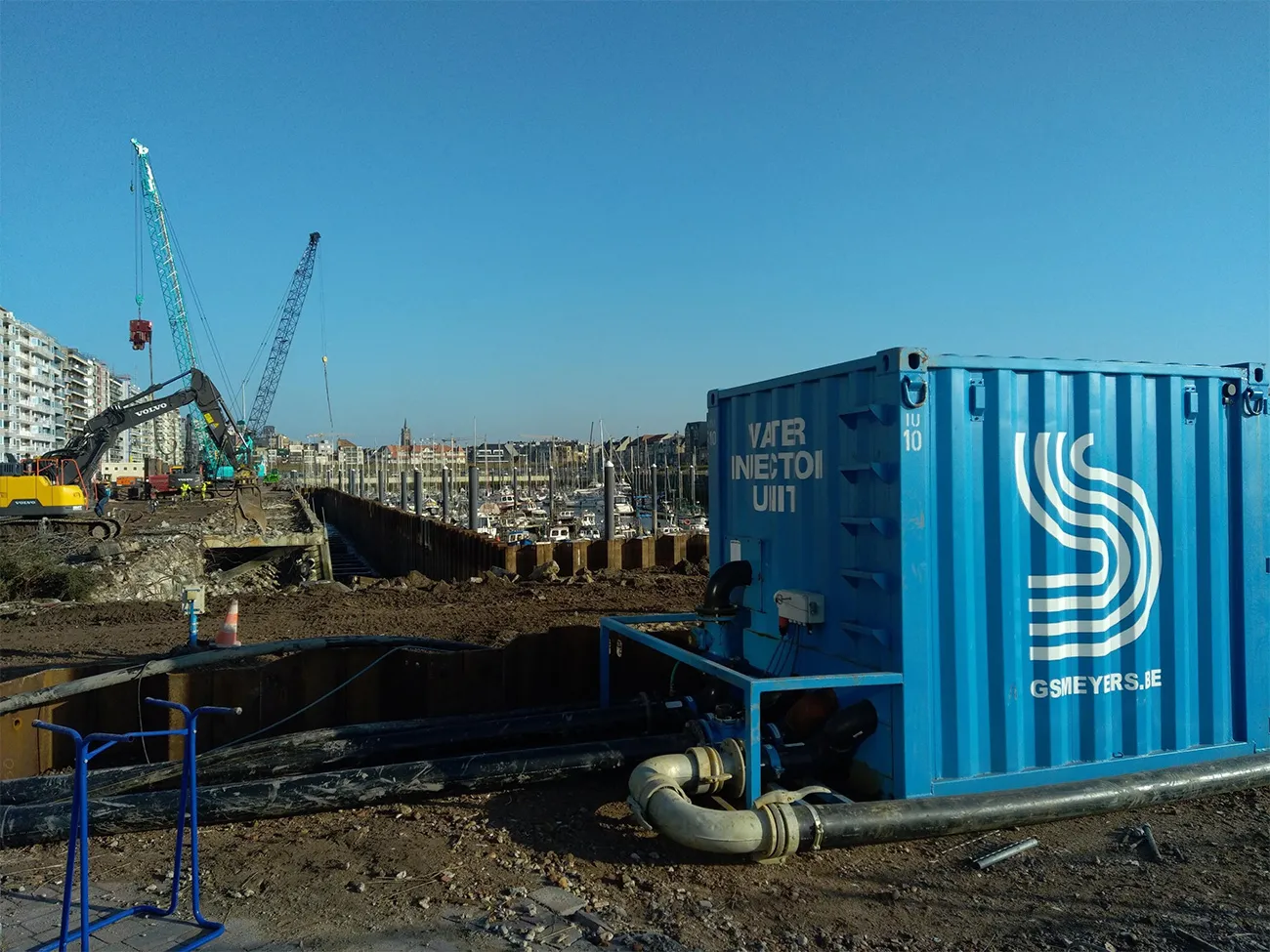
“This is clearly a case of confined aquifer dewatering, which is expected to have a considerable radius of influence on the surrounding area,” says G. Smeyers. Settlement calculations showed that lowering the groundwater to 0.00 TAW could cause settlement of 5 to 12 cm in the excavation area, with settlement of up to 2 cm expected as far as 200 m from the excavation. There was also a known groundwater contamination site within the dewatering zone of influence.
A class 2 permit is normally required for this type of dewatering. Following discussions with the client and in consultation with contractor Braet, G. Smeyers developed an alternative construction method with the following additional measures:
The excavation was enclosed around its entire perimeter. On the land side, an additional sheet-pile screen was driven to level -12.00 TAW, the same depth as the sheet-pile screen planned in the marina to protect the excavation.
Dewatering within the fully enclosed excavation was provided by shallow abstraction wells, needed to keep the excavation dry, but configured so that groundwater could be pumped without aeration.
In addition, a recharge well screen was installed alongside and parallel to the Francommelaan, ensuring that the groundwater level outside the excavation, near the buildings, never fell below the low-tide level.
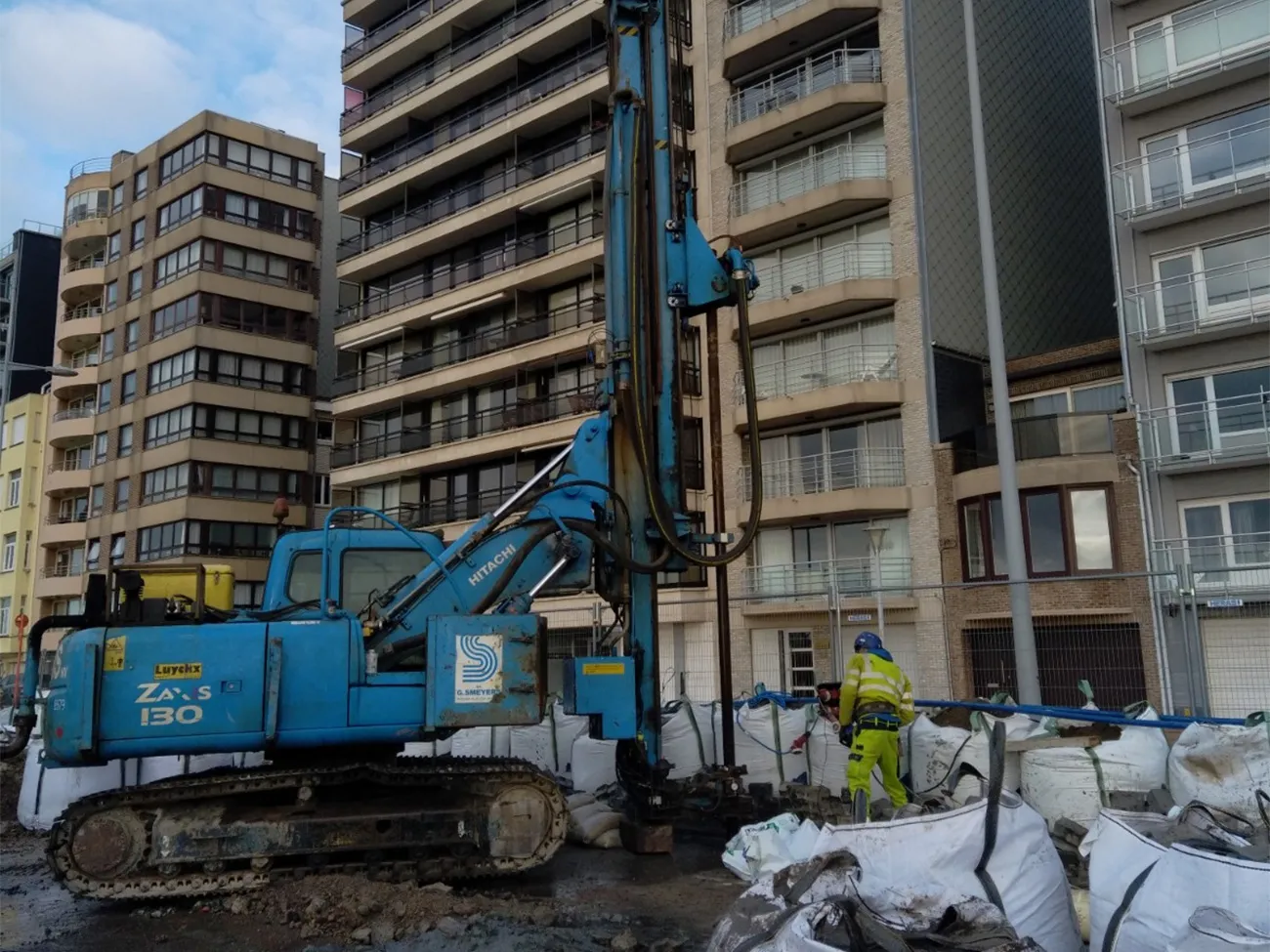
An extensive monitoring system is in place, continuously recording water levels both inside and outside the excavation and the volumes pumped. All this data is available online to everyone involved.
This construction method greatly reduced the impact of dewatering on the surrounding area through groundwater recharge, substantially lowering the risk of damage to neighbouring buildings, or even reducing it to zero. Recharge also significantly reduced the net pumping rate, meaning the works could be authorised under a class 3 notification, requiring only straightforward registration. This delivered significant time savings, and the dewatering system could be commissioned soon after work began.
The dewatering system is now operational and is comfortably achieving the intended results. The Blankenberge Franchommelaan site is an important reference project for G. Smeyers, as it is the first time a large-scale recharge dewatering system has been successfully used in a tide-sensitive groundwater layer. “This was the first project on which G. Smeyers worked with Braet. The entire process, from design and the dewatering study through to carrying out the works, took place in a very constructive and pleasant spirit of cooperation,” the company says.
Een zakelijke vraag aan Smeyers nv? Get in touch
Companies in this story

Keep following this
Get an email when a new story is published. No account needed.
- ThemeStrengthening waterways and coastlines
- SubjectGeneral
- CompanySmeyers nv







