Total supplier and developer of rail systems for rail applications
Text Niels RouvroisImage Technorail
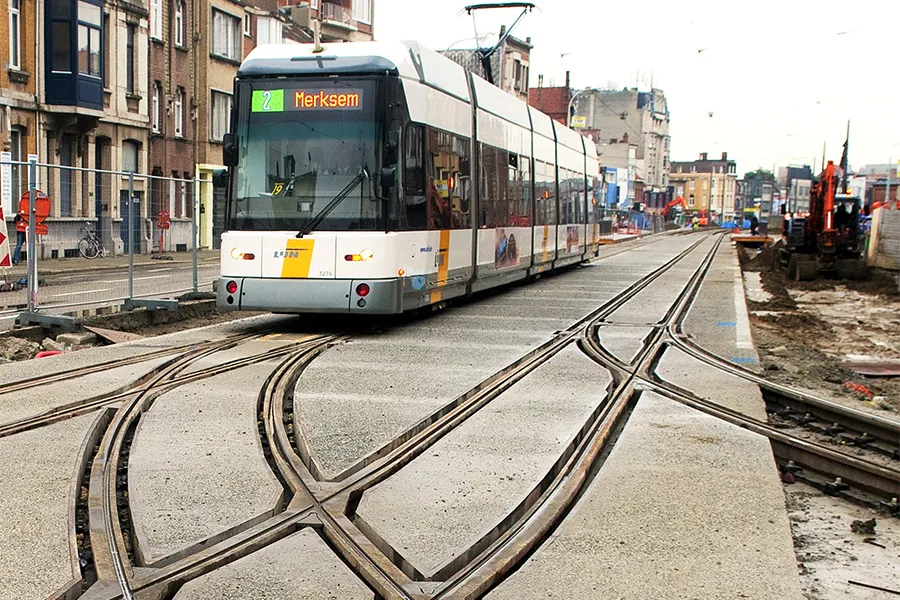
For more than 30 years, Technorail has established itself as a specialist in rail systems for a wide range of rail applications. The renowned company from Boom supplies standardised rail systems, while also developing new and bespoke rail systems in-house. A good example is the hybrid rail fastening system TRA, which combines a discreet fastening system with a rail channel filled with a rubber flowable mortar. “The fourth generation of this system is now on the market, and it is becoming ever more sustainable,” says Nathalie Rotthier, Managing Director of Technorail.
Technorail has long positioned itself as a reliable and experienced partner for railway construction projects, supplying regular customers, including rail contractors and tram operators, at home and abroad for many years. It works with each customer to find a suitable and efficient solution for building safe, reliable and sustainable rail infrastructure. Nathalie Rotthier says: “A solution-oriented approach and fast service are always our priorities. Our extensive technical expertise, many years of experience and large stock of rail and tram fastening materials enable us to deliver on that promise. Our customers include operators such as De Lijn, MIVB and TEC, as well as a whole host of rail contractors. Materials are always purchased directly from us.”
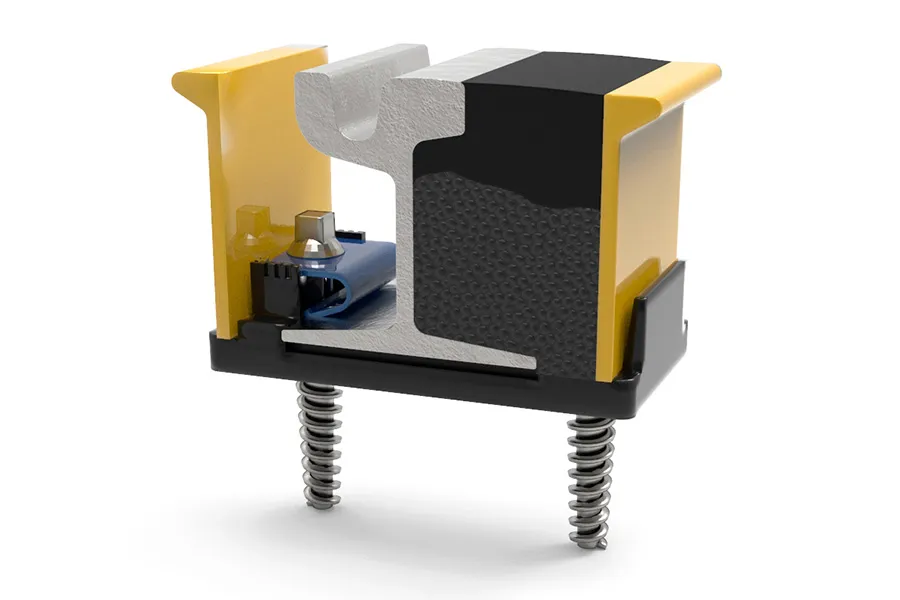
Rubber flowable mortar
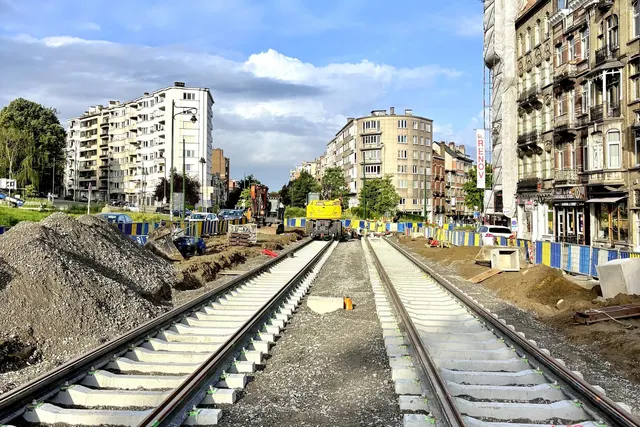
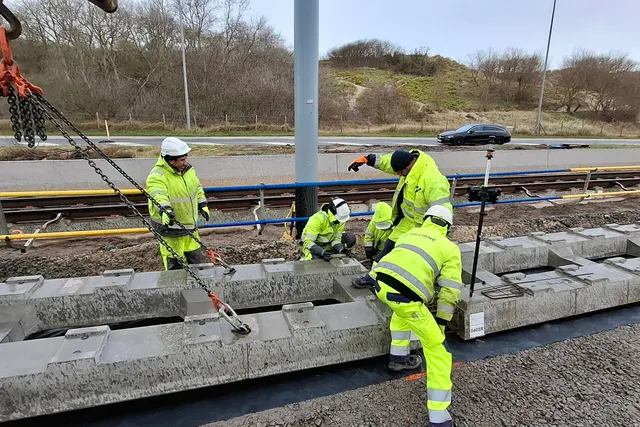
Technorail’s extensive range includes both well-known rail systems, such as Pandrole, and systems developed in-house. Nathalie Rotthier says: “We stand out from the competition by collaborating, innovating and developing. In 2002, we developed the patented hybrid system TRA, a tram fastening system in which the grooves in the rail fastening are filled with rubber flowable mortar. This system offers significant benefits. It substantially reduces vibration and ambient noise, which is very important in urban areas. Both the rubber flowable mortar and the plastic plate also prevent stray current, protecting the sleepers and underground pipes from damage. The system can be installed and replaced without breaking up the road, and is electrically insulating and durable. It can be installed in situ, on sleepers or in prefabricated elements. It is also suitable for a wide range of applications, including green track, concrete, asphalt and natural stone surfacing.”
The first generation of the TRA system was laid on the Antwerp Leien. Nathalie Rotthier says: “Around 100 km of the hybrid rail fastening system is now installed in Belgium, and the system is also specified in our customers’ tender documents. It is becoming increasingly well known beyond our borders, too. For example, we developed the fourth-generation TRA specifically for the French market. We have now supplied 1.5 km of TRA4 for Semitan, the transport operator in Nantes, with which we have also signed a framework contract. A further 12 km of the same system has been installed in Luxembourg City for tram operator Luxtram. We have also supplied the system in Bilbao, Spain.”
Increasingly sustainable
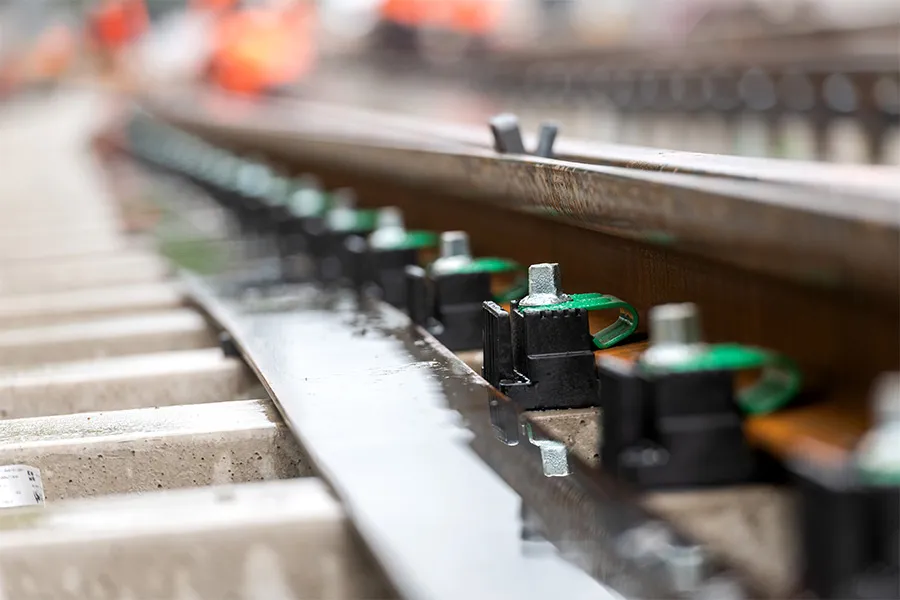
The hybrid system is now in its fourth generation, and is becoming increasingly sustainable as a result. Nathalie Rotthier says: “Where possible, we have replaced steel components with plastic alternatives. The first hybrid systems were installed on steel plates. Today, plastic plates are used instead, because their production is more sustainable and they provide insulation. The rubber compound is made from recycled car tyres. We therefore aim to keep the environmental impact of our materials as low as possible. Our systems are also durable over time. A rail typically lasts 20 years, while an elastic clip has a limited service life, but can be replaced without breaking up the road.”
Driving innovation
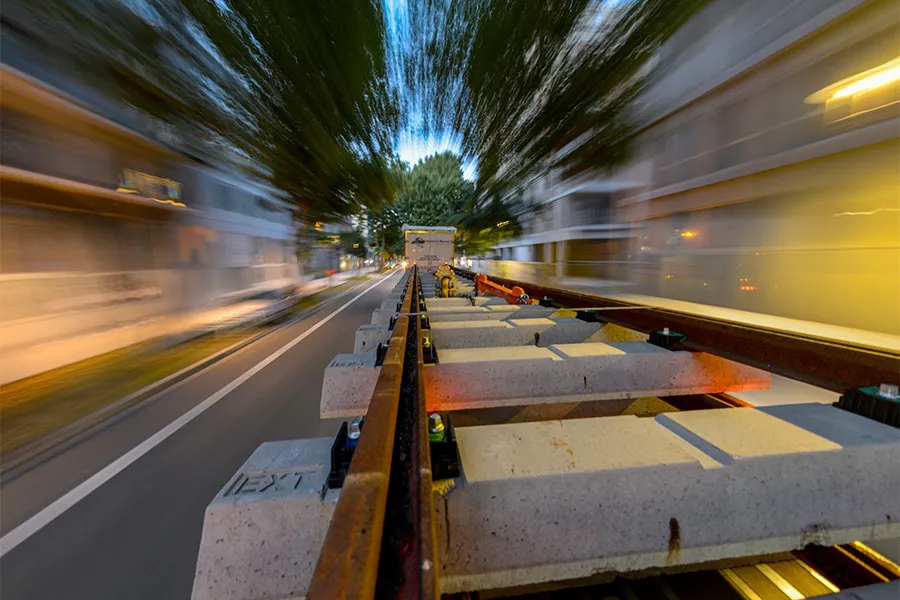
The many advantages of the hybrid system raise the question of whether more traditional systems still have a future. “Absolutely. Those systems are still specified, too. In some locations, traditional systems continue to offer significant benefits. But of course, we do our best to get our hybrid systems included in tender specifications through contractors. They are very easy to install, especially as we integrate as many components as possible to minimise the risk of installation errors. By continually focusing on innovation, we aim to contribute our ideas and do our bit to help create a mobile, sustainable and liveable city,” concludes Nathalie Rotthier. ■
Question about this story? Ask your question
Keep following this
Get an email when a new story is published. No account needed.
- SubjectRail engineering