Railway engineering specialist completes prestigious projects in Flanders and Wallonia
Text Wouter PolspoelImage De Witte- Vandecaveye
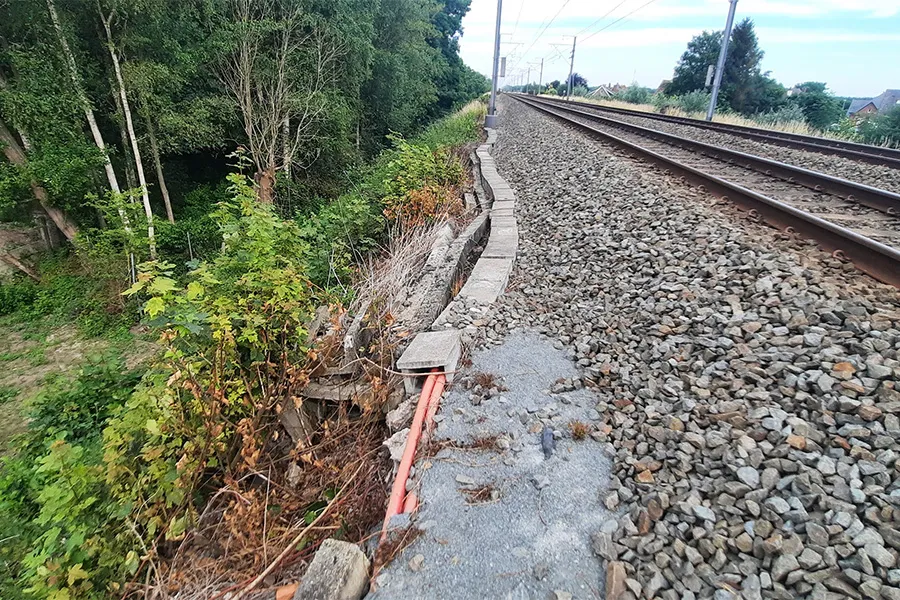
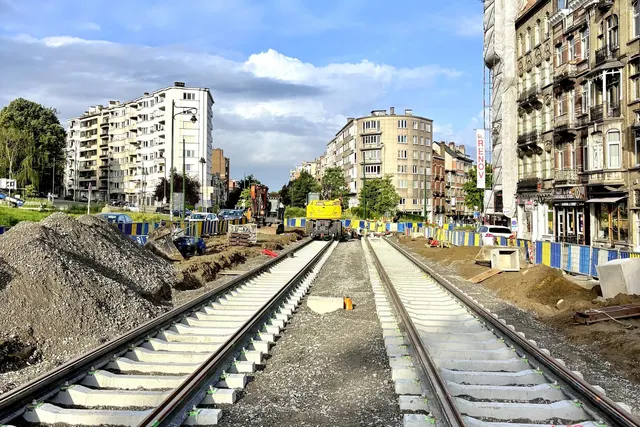
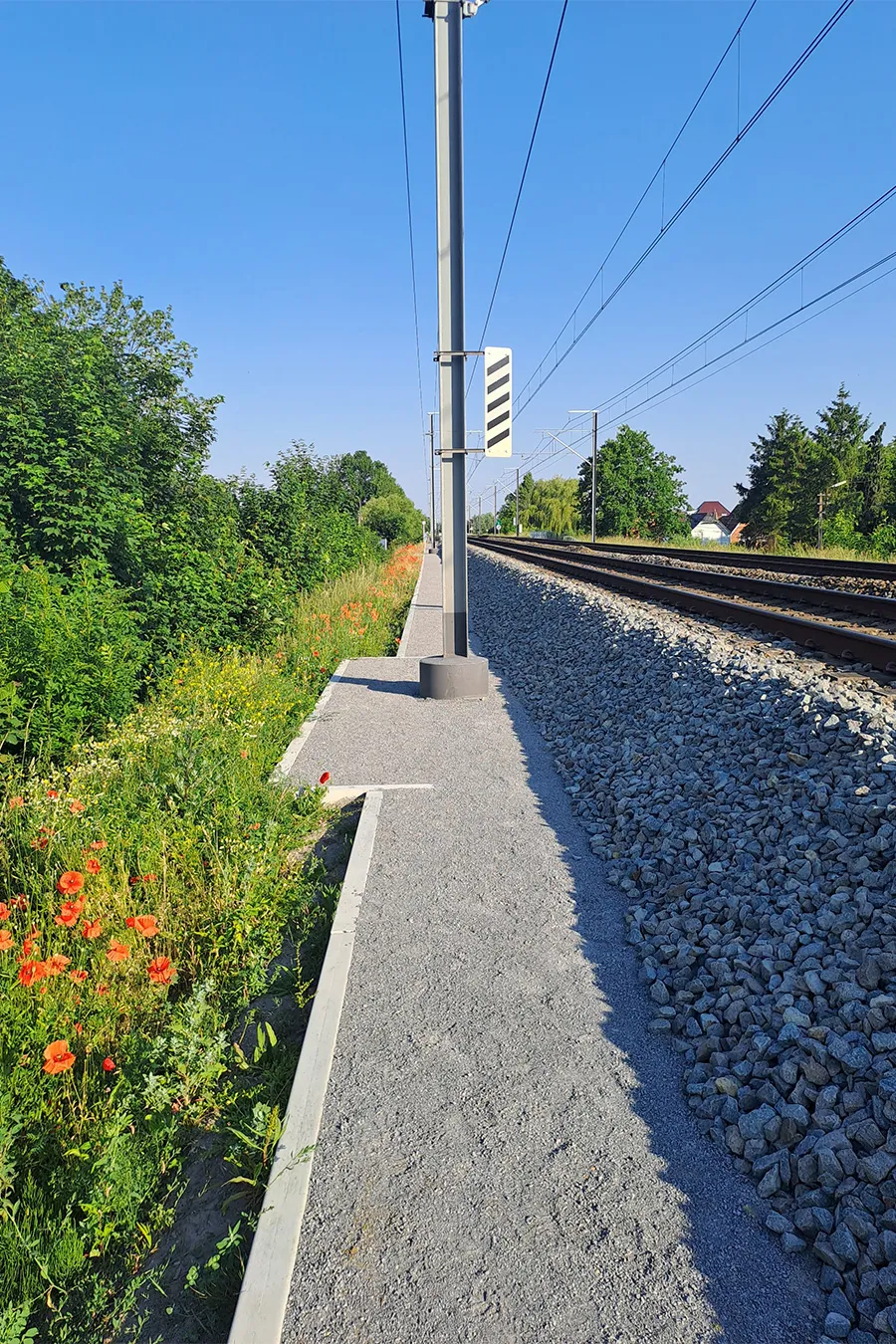
Having delivered two prestigious projects for Infrabel to the highest standard, De Witte-Vandecaveye, a specialist in electrical works and railway engineering, among other areas, went into the annual construction shutdown more than satisfied. Along railway line 50A, the Wingene-based company built a new maintenance walkway along a 1.75-kilometre stretch between Ghent and Wetteren. The embankments were reinforced and retaining walls were installed along 1.25 km. In Visé, meanwhile, it renewed the sleepers and rails on one of the two tracks on a railway bridge over the Albert Canal.
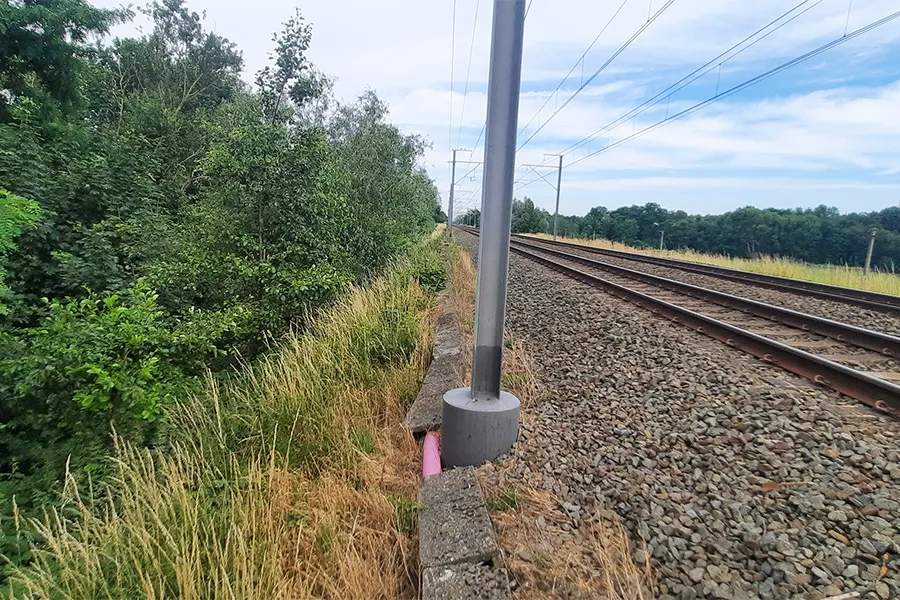
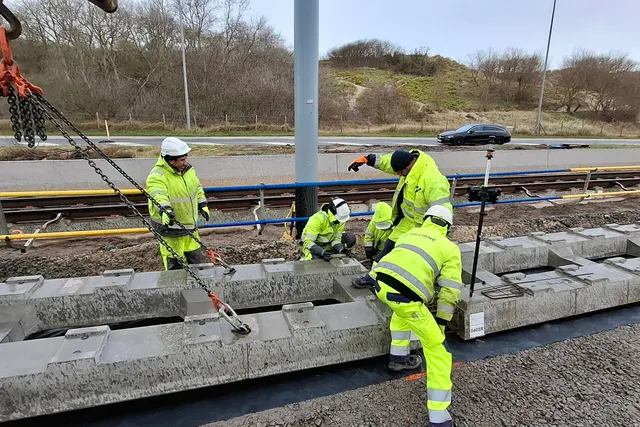
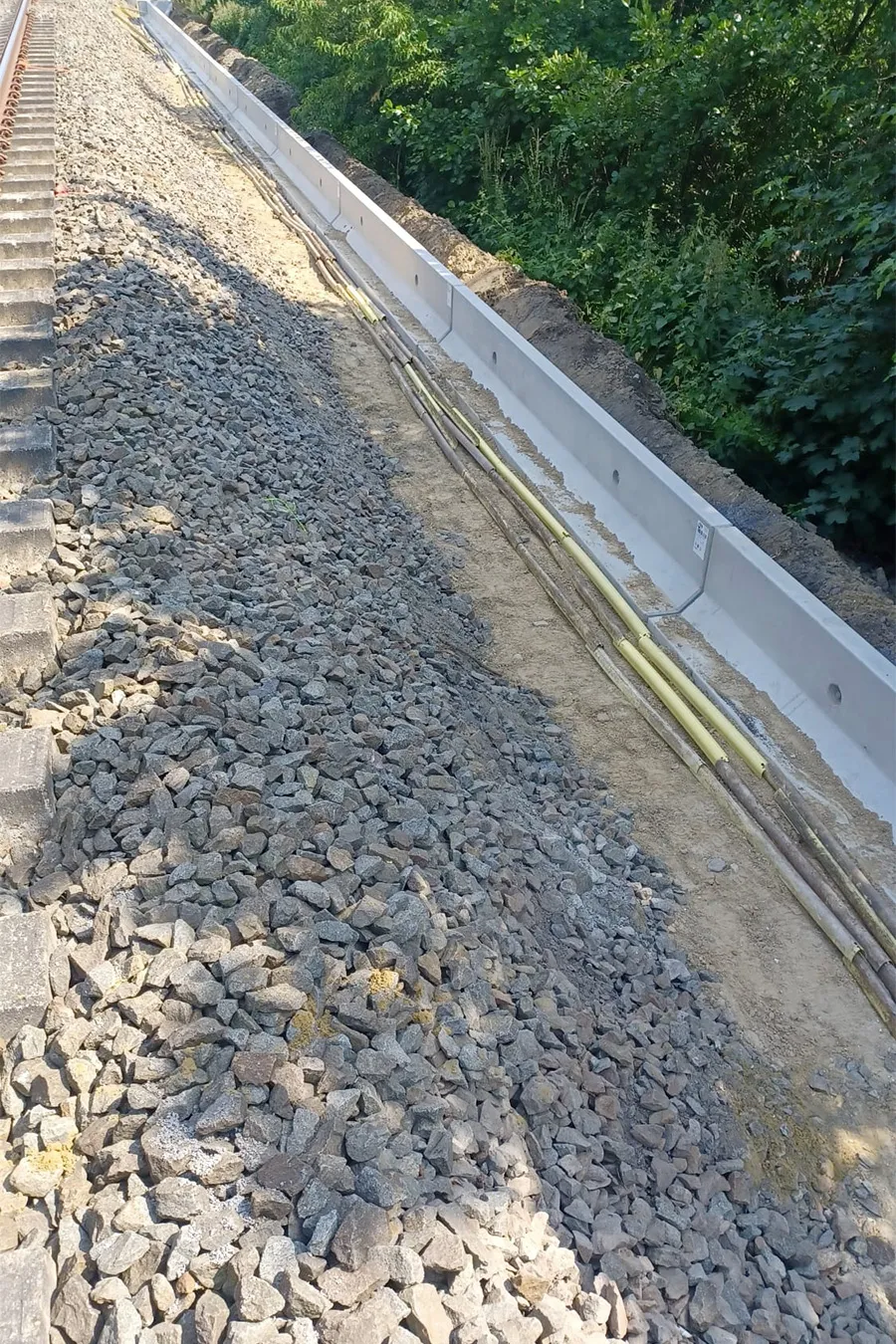
The project along railway line 50A, which runs from Brussels to Ostend, consists of several phases. “In the first phase, we removed the signalling, power supply and fibre-optic cables from the old cable trenches, then removed those trenches along an 800-metre stretch. Where necessary, we also reinforced the embankment with L-shaped retaining walls, covering a total length of 450 metres. Finally, we built a new maintenance walkway,” explain project managers Matthias Broucke and Nico Desmet. “That first phase took place in November and December 2022. We worked every night for around ten weeks, as well as for two full weekends. Train services in the work zone were suspended throughout the works.”
De Witte-Vandecaveye completed the second phase of the works just before the annual construction shutdown. “This involved a 950-metre stretch, where we had to reinforce 600 metres of embankment with L-shaped retaining walls. The second phase lasted about as long as the first, with the same working schedule.”
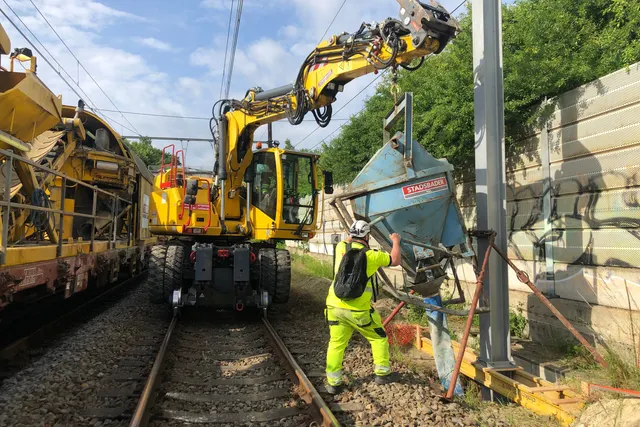
The second phase was completed much more quickly by taking a slightly different approach. “At the end of last year, we used rail trolleys to remove the concrete waste from demolishing the 800-metre cable trench, then stored it in an area beside the track. It was only taken away at the weekend by work train and transferred to lorries, which transported it to a processing plant,” the project managers explain. “This time, we arranged to have a work train available immediately during the night-time demolition works, so that we could unload it during the day. That approach saved a great deal of time.”
At the end of this year and in 2024, De Witte-Vandecaveye will renew a further 2 kilometres of railway line 50A in the same way.
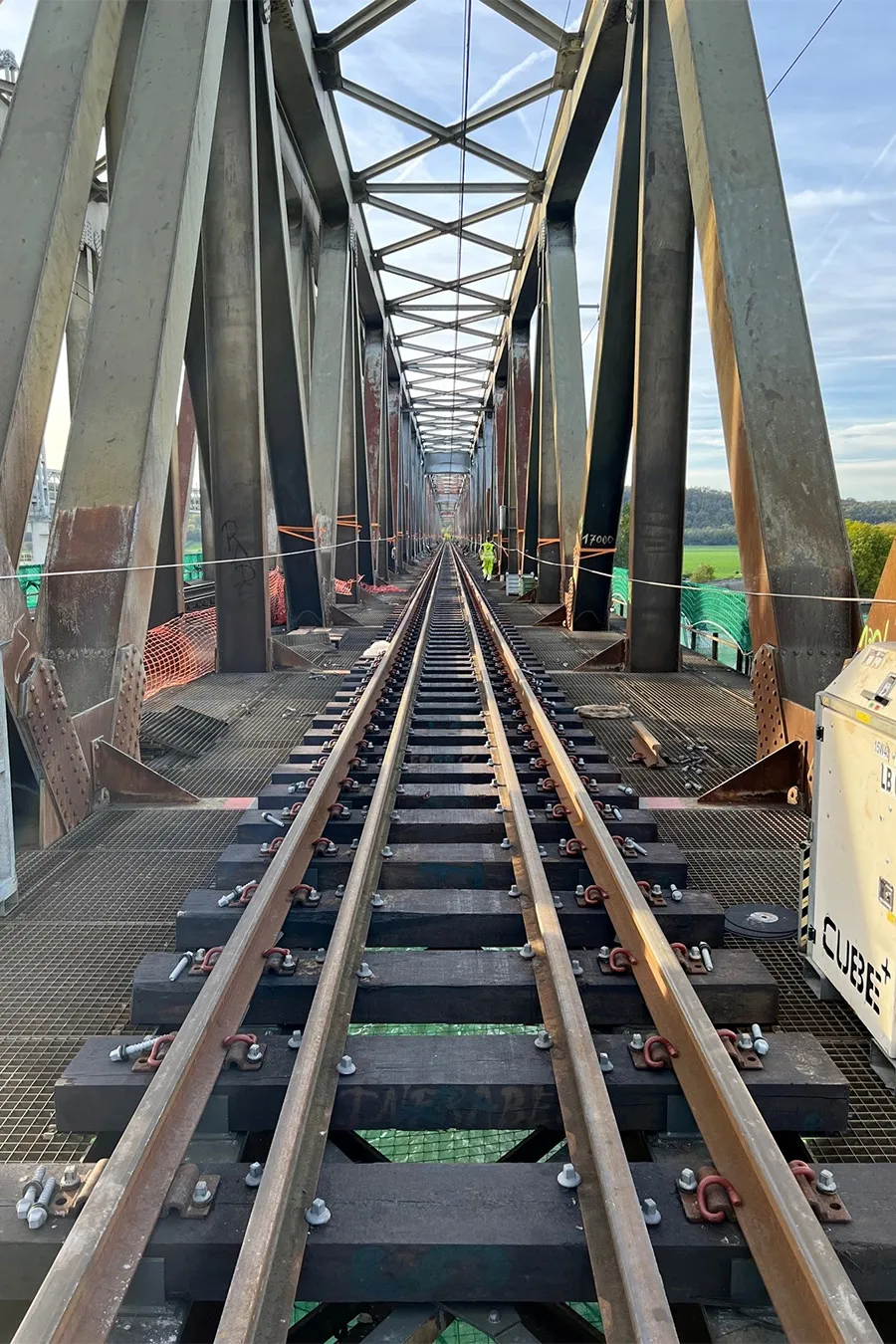
Railway bridge presented a host of challenges
“The railway bridge, with a total length of 420 metres, is part of a freight-only line. We renewed the sleepers and rails on one of its two tracks,” explains project manager Jonas Baecke about the project in Visé, which also included sandblasting and repainting the bridge. “Track laid at ground level is normally built on ballast. On many railway bridges in Belgium, rails can be laid in the same way, thanks to a trough beneath the bridge that is filled with ballast. The situation in Visé was different, however: the sleepers were fixed directly to the metal structure, which made the work particularly challenging. The metal pillars between the two tracks on the bridge posed another challenge. This meant we could not dismantle the track in the usual way from the adjacent track, nor could we use that track to bring in materials. Trains continued to run on it throughout.”
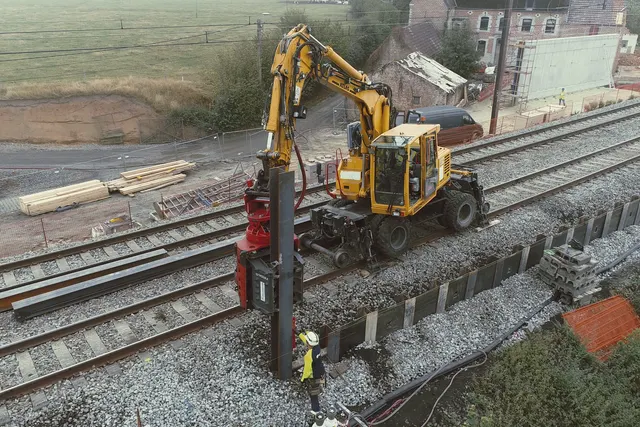
The solution was to build panels measuring 6 metres long and 2.5 metres wide, fitted with wooden sleepers and two rails to form short track sections that the rail crane could run on. “We made them in our workshop in Wingene and then transported them to Visé,” Baecke explains. “After removing the old rails and sleepers, we laid the panels end to end on the bridge. This created a track we could work from. The rail-mounted grab then worked backwards along the narrow track, removing the short rails panel by panel. We slid the new rails, each 300 m long, over the new sleepers until we had laid a new 420 m-long track.”
“The project was also unusual for several other reasons. Our staff stayed in a hotel in Verviers throughout, rather than having to drive 2.5 hours back to West Flanders every day. A subcontractor installed nets beneath the bridge to protect passing ships from any falling tools, and our workers had to wear harnesses at all times because they were working at a height of 30 metres.”
Work on the site in Visé was completed in mid-June. It took ten weeks in total, spread over the period from autumn 2022 to mid-June 2023. Two weeks were needed for dismantling, five for sandblasting and painting the bridge, which was carried out by another company, and three weeks for laying the new track.
Thinking outside the box
Asked how they would describe De Witte-Vandecaveye’s added value on projects like these, Broucke, Desmet and Baecke all give the same answer: “With our own engineering department, experience in signalling, railway and civil engineering works, and an extensive fleet of our own machinery, we can handle every aspect of projects like these ourselves and are not dependent on external parties. We also think outside the box, as demonstrated by the panel system we developed for the project in Visé.” ■
Question about this story? Ask your question
Keep following this
Get an email when a new story is published. No account needed.
- ThemeFuture-proofing roads and railways
- SubjectRail engineering