‘Green rails’ make railways even more environmentally friendly
Text and images Infrabel
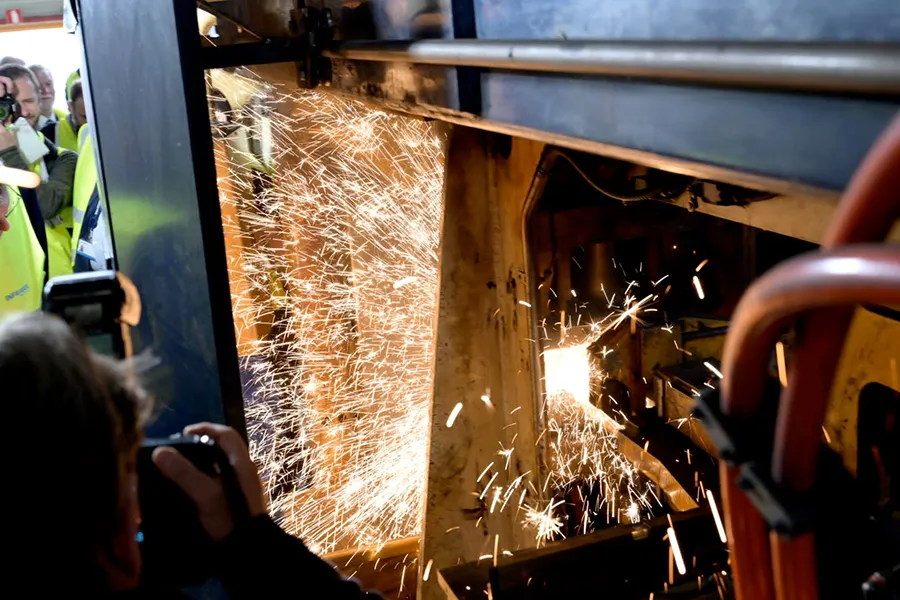
The first kilometres of these ‘new-generation’ rails were laid on the
Belgian railway network last summer. This follows a €200 million public contract awarded by Infrabel to Saarstahl Rail and its French production facilities. As the rails are produced in electric furnaces rather than coal-fired blast furnaces, and recycled materials are used, their carbon footprint is reduced by around 70% … while their durability is guaranteed, at a competitive price.
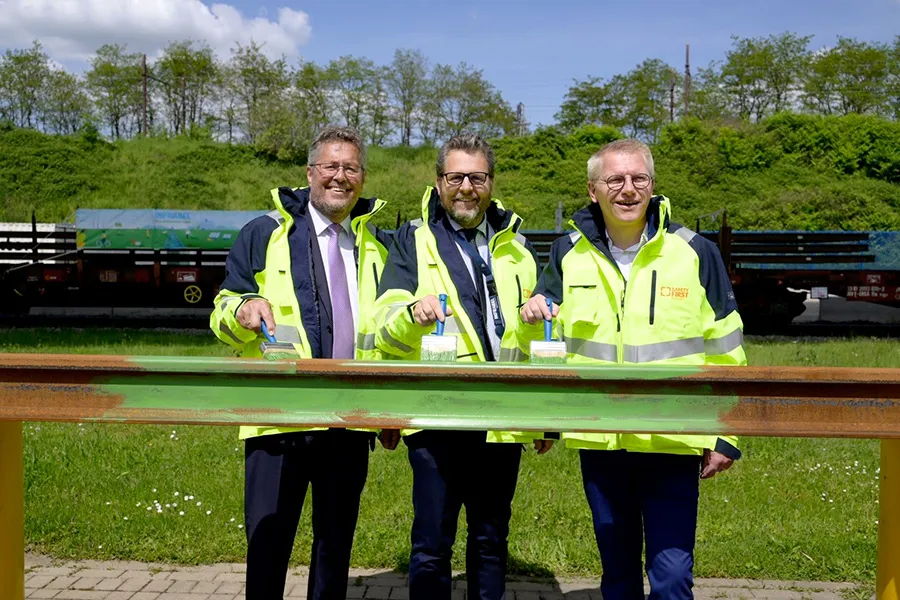
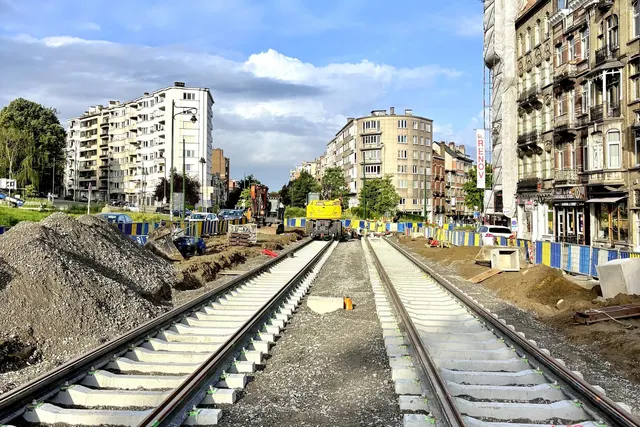
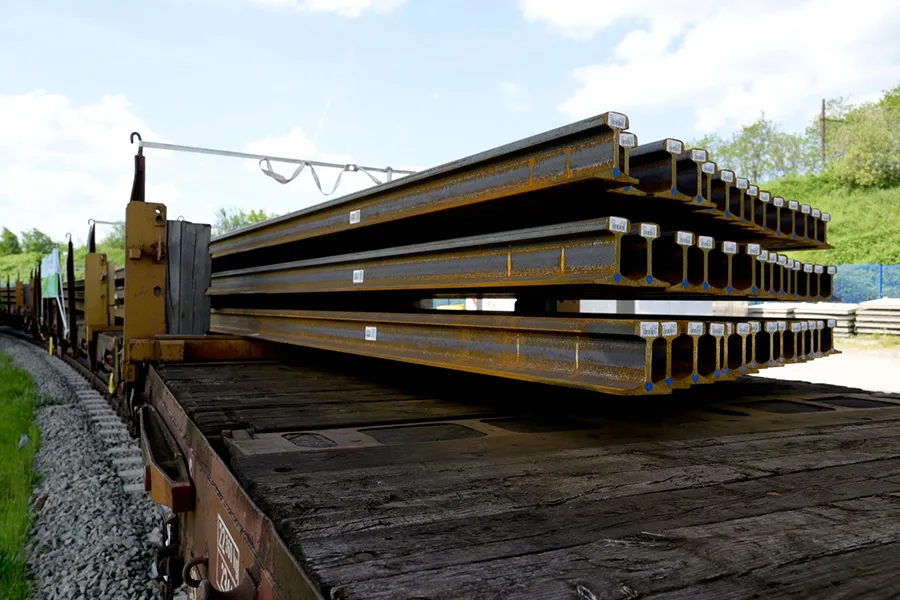
At first glance, there is nothing to distinguish these ‘green’ rails from those currently laid on the Belgian rail network: they have the same characteristics in terms of appearance, weight and durability, and are also transported in short lengths to Schaerbeek in international rail convoys. There, at Infrabel’s workshop, they are assembled using highly precise welding techniques into 300-metre rails, ready to be laid in the track.
The train that arrived directly from the rail-rolling site in Hayange, France (in the Moselle department) in mid-May represents a small revolution in the railway sector. The 480-metre-long train carries 900 tonnes of rails, among the first of a new generation to be supplied in Belgium. The innovation lies in the manufacturing process, which requires no coke, a fuel produced by heating coal to a very high temperature. Instead, the steel is produced using electric furnaces. Another environmentally beneficial development is the use of scrap as the raw material, making it a recycled material. This production line reduces the carbon footprint of the rails by around 70%.
Specifically, over the next 4 years Saarstahl Rail will supply Infrabel with up to 2,800 km of these ‘green rails’, cutting CO2 emissions by around 224,000 tonnes, equivalent to the annual carbon footprint of 9,000 average households. The contract is worth €200 million.
Continuous renewal
Rail infrastructure is continually being renewed in Belgium, with between 450 and 500 km of rails laid on the Belgian railway network each year. To secure the best prices and continuity of supply, Infrabel works with several suppliers. This public contract, which began at the end of 2022, did not yet include environmental criteria, but Saarstahl Rail’s bid proved to be the most competitive and also included this innovative type of ‘green rail’. To limit the use of raw materials and reduce greenhouse gas emissions in its procurement chain, Infrabel already applies environmental and social criteria in certain procurement processes, in accordance with the provisions of public procurement law. Benoît Gilson, CEO of Infrabel: “Saarstahl’s example shows that the market is moving towards innovative, more sustainable and competitive solutions. Infrabel is closely monitoring developments and will continue to incorporate them into its procurement policy, thereby encouraging innovation and contributing to a sustainable rail sector.”
Developed by Saarstahl Rail
Saarstahl Rail contributes to the circular economy by reusing old rails and recycling them into new products for its customers. The electric steelworks Saarstahl Ascoval recycles scrap from the Saarstahl Rail steelworks in Hayange and from railway tracks, melting it down in its electric arc furnace to produce high-quality steel. This is supplied to the Hayange plant in the form of blooms or steel billets. The billets are rolled to make new green rails. The entire production process for these green rails is particularly environmentally friendly, generating 70% less CO2 than the traditional process, which uses iron ore and coal as raw materials.
Dr Karl-Ulrich Köhler, Chairman of the Supervisory Board of SHS-Stahl-Holding-Saar and Chairman of Saarstahl’s Management Board: “As a manufacturer of rail infrastructure components, Saarstahl Rail is committed to sustainability and superior quality. For our customers with a strong commitment to the environment, we have developed a unique product in Europe: green rails made from low-CO2 steel.”
262,000 tonnes of rails
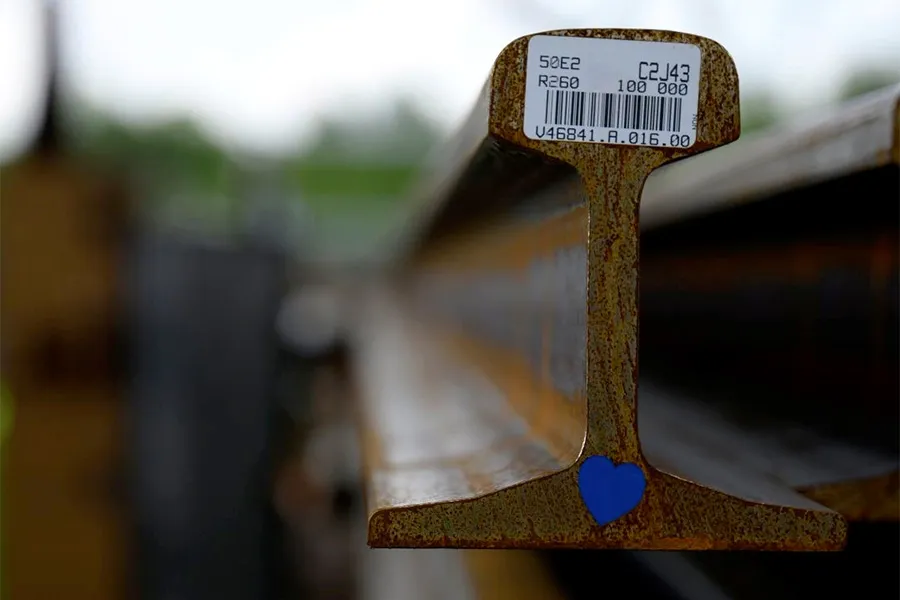
In total, 262,000 tonnes of rails were supplied from Hayange in 2022, of which 227,000 tonnes were green rails, saving a total of 415,000 tonnes of CO2 emissions. Green rails are used across the entire rail network, including on high-speed lines, heavily loaded tracks and tracks used for public transport. Since August 2021, Saarstahl Rail, based in Hayange, France, has been owned by the German group SHS-Stahl-Holding-Saar and its subsidiary Saarstahl.
Georges Gilkinet, Federal Minister for Mobility: “The train is already the most sustainable means of transport, but we can make it even better, particularly by reducing the carbon footprint of rail infrastructure. The new management contract gives Infrabel the resources to fulfil its ambitions. And with Saarstahl’s innovative solution, we are showing that an environmentally friendly, circular approach can also be the most cost-effective. I am very pleased that we can lay these low-carbon rails across our network. The train is the backbone of our mobility, and it will be even more so tomorrow, with a greener and more efficient rail network!” ■
Question about this story? Ask your question
Keep following this
Get an email when a new story is published. No account needed.
- ThemeFuture-proofing roads and railways
- SubjectRail engineering