









Nieuwe Sluis Terneuzen: an impressive example of Flemish-Dutch cooperation
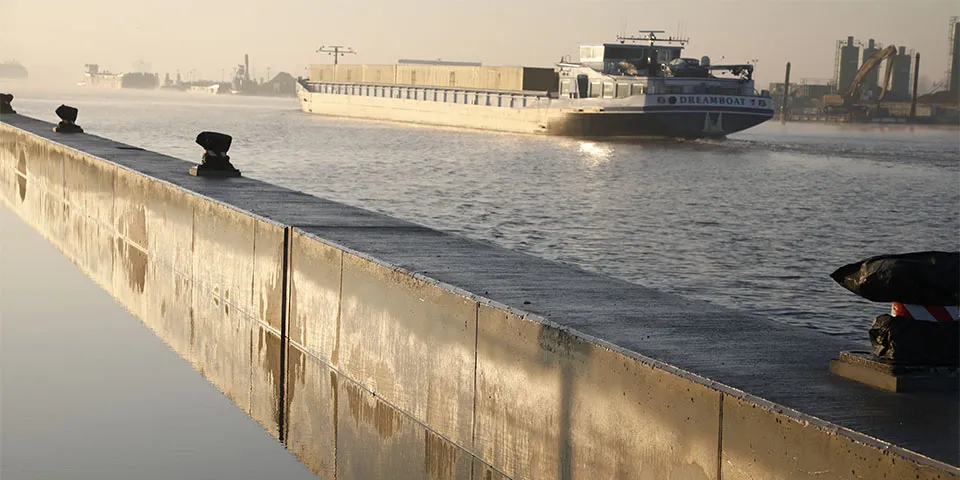
Under the watchful eye of client the Flemish-Dutch Scheldt Commission (VNSC), work on Nieuwe Sluis Terneuzen (NST) is progressing at pace under the direction of contractor consortium Sassevaart. This major project is a shining example of Flemish-Dutch cooperation. “The differences can sometimes make working together complex and particularly challenging, but they are also very interesting and instructive,” says Koen De Winne, quality manager at the Flemish-Dutch Scheldt Commission.
At regular intervals during the project, time is set aside to reflect on various aspects of the collaboration.
The new lock will allow larger seagoing vessels to reach the port of Ghent via the Ghent-Terneuzen Canal. Lock capacity will also increase, reducing waiting times for inland vessels. The first vessel is due to pass through the new lock in 2022. The client is the Flemish-Dutch Scheldt Commission. Nieuwe Sluis is being built by contractor consortium Sassevaart, comprising BAM (the Dutch and Belgian sister companies BAM Infra and BAM Contractors), DEME (DEME Infra Marine Contractors B.V. and Dredging International N.V.) and Belgian construction company Algemene Aannemingen Van Laere N.V.
Both client and contractor are represented by a Flemish-Dutch project team.
Flemish-Dutch project team
Both client and contractor are represented by a Flemish-Dutch project team. Various other parties are also involved in building the new lock, including those responsible for the roads, the lock complex and the ports. Koen De Winne says: “This is one of the projects under the VNSC umbrella, a treaty-based organisation in which the Netherlands and Flanders participate as equal partners. One example of a completed VNSC project is the deepening of the Western Scheldt to enable tide-independent navigation, giving vessels with a draught of up to 13,10 metres access to the port of Antwerp at any time.”
The Flemish-Dutch Scheldt Commission consists of several bodies. First and foremost, there is the political college, comprising the two ministers. There is also an administrative college and a permanent secretariat. Projects are overseen by a steering group. Koen De Winne says: “The steering group has six members, split equally between Flanders and the Netherlands. Around 80% of the team members are from the Netherlands and 20% from Flanders. The funding split is the reverse. Around 20% of the budget was allocated as a fixed amount by the Netherlands. Flanders covers the actual project costs, which will therefore amount to around 80% or more. We largely follow Dutch procedures and methods, as set out in Rijkswaterstaat’s Working Method for Construction and Maintenance. Flanders mainly contributes technical expertise and experience from previous lock projects, such as Kieldrechtsluis.”
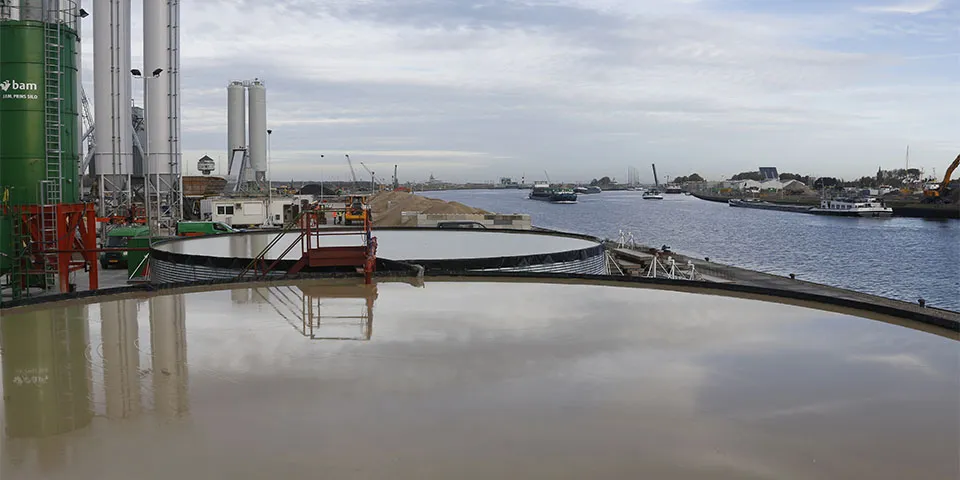
The new lock will allow larger seagoing vessels to reach the port of Ghent via the Ghent-Terneuzen Canal.
‘Best for project’
When building locks, the preparation and construction processes can differ considerably between Flanders and the Netherlands. In very broad terms, projects in the Netherlands always start with the preparation of an approach plan, with a preference for blueprints and standard solutions. In Flanders, the emphasis is often on pragmatic flexibility and the expertise of individual project staff. “But here, too, the exceptions prove the rule,” says Koen De Winne. “For several years now, we have been following a ‘best for project’ approach. We favour tailored, bespoke solutions to identify the most suitable working methods. For example, we use system-based contract management based on the Dutch model. Site supervision and monitoring, on the other hand, follow the Flemish model.”
One major challenge lies in the cultural differences. These are not just differences between the Dutch and the Flemish, but also between the parent organisations, Rijkswaterstaat and the Flemish government. There are also personal differences between Dutch and Flemish project staff. “The differences can sometimes make working together complex and particularly challenging, but they are also very interesting and instructive,” says Koen De Winne.
The detailed designs are expected to be largely complete by the middle of this year.
Cooperation
Considerable efforts are being made to ensure that the collaboration between client (VNSC) and contractor (Sassevaart) runs as smoothly and pleasantly as possible. At regular intervals during the project, time is set aside to reflect on various aspects of the collaboration. This may take the form of follow-up sessions or discussions as part of the regular quality meetings between client and contractor, for example. Koen De Winne says: “There are, of course, daily discussions between client and contractor on a complex project like this. Their interests do not always align. But the Netherlands has a good saying for this too: friction creates shine. We aim to address differences in opinion and interpretation as effectively as possible and prevent them from escalating.”
“We address potential disagreements promptly. For example, we discuss observations from construction work every week at a site managers’ meeting attended by all Sassevaart lead contractors and VNSC’s site monitors. At the start of the project, we also agreed on a few ground rules that we do our best to follow. Finally, we always take the human aspects of our day-to-day work into account, even when negotiations over design choices, construction quality or additional costs become heated.”
Current status
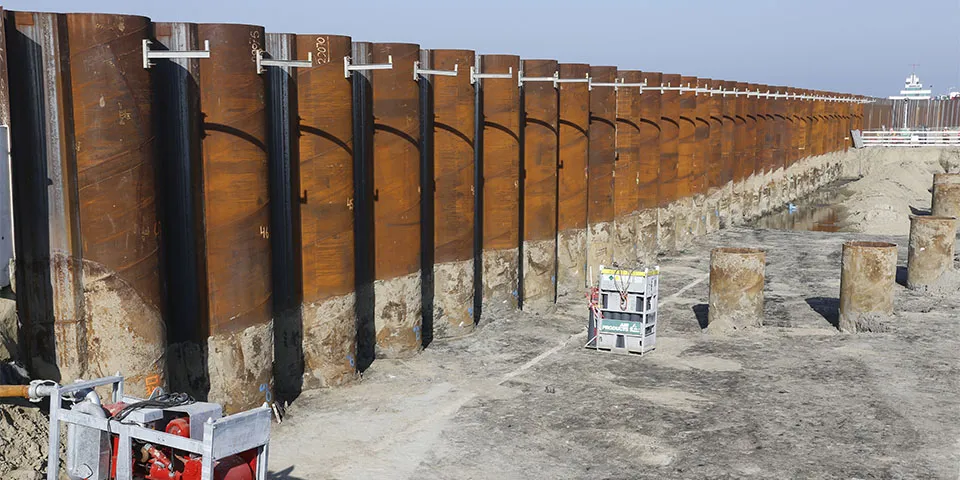
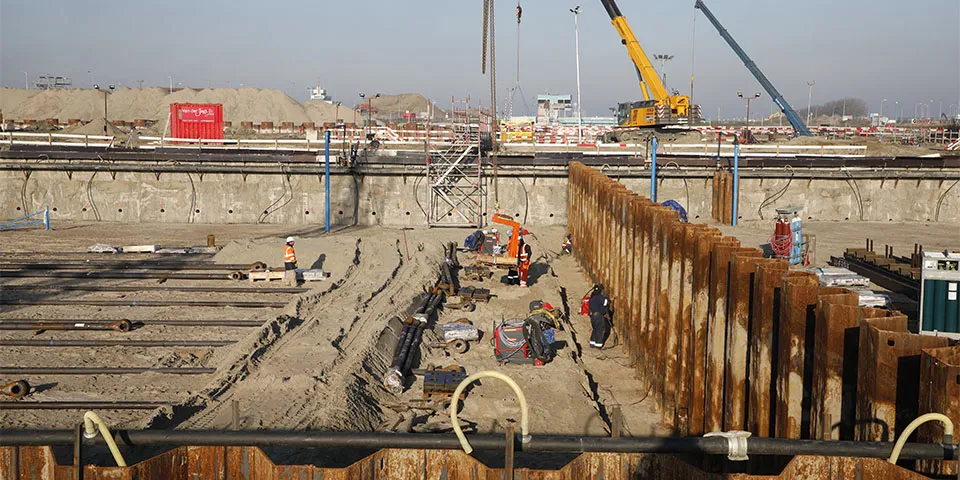
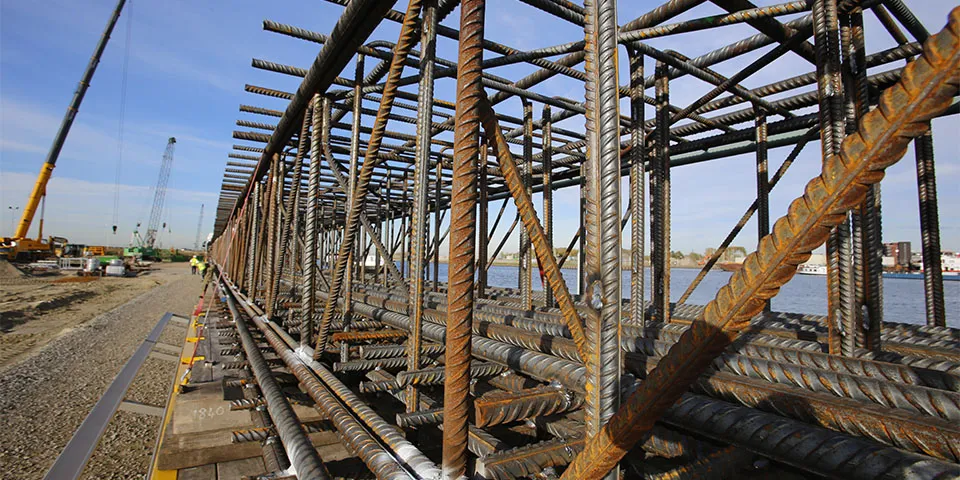
Construction work on site is now in full swing. The diaphragm walls for the lock chamber are complete, as is the sand fill for the future lock platform. The next steps include building the cofferdam for the bottom grids, excavating the outer lock head and constructing the quays for the service harbour … “So there is plenty of activity on site. The detailed designs are expected to be largely complete by the middle of this year. After that, the design work will wind down,” concludes Koen De Winne.
Question about this story? Ask your question
Keep following this
Get an email when a new story is published. No account needed.
- ThemeStrengthening waterways and coastlines
- SubjectGeneral







