Smart bacterial wastewater treatment
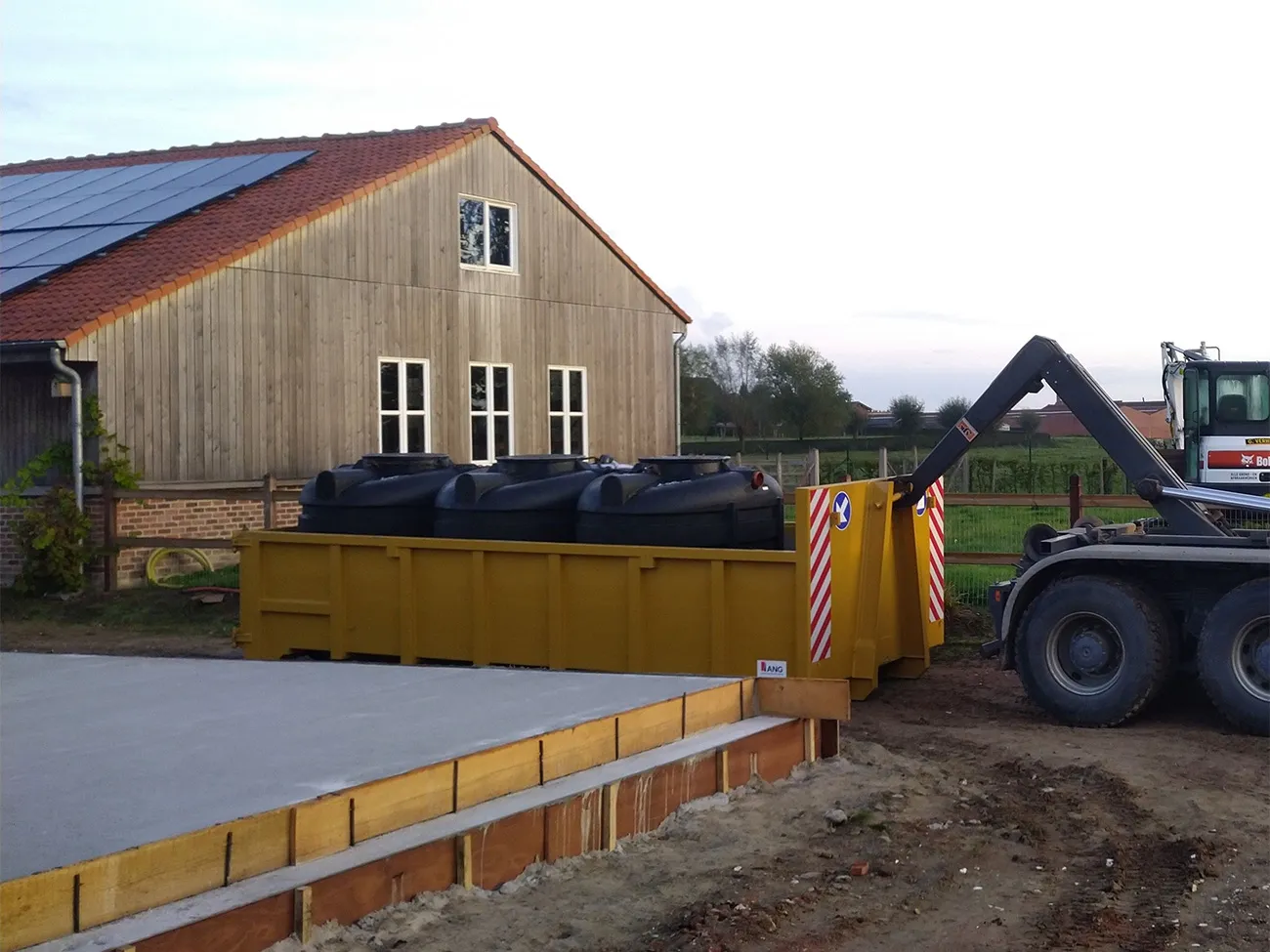
With the BioClear Premium wastewater treatment plant from DS Plastics, a specialist in the treatment of domestic and industrial wastewater, DS Plastics Watertight Solutions has added a new gem to its range. The prefabricated polyethylene tanks, with no submerged joints, stand out for their ease of installation, use and maintenance, and operate on the principle of smart bacterial treatment. The plant naturally also complies with all the latest standards, and the system has received SPW approval (Service Public de Wallonie).
Water is a precious resource, essential to all life on Earth. We take it so much for granted that we assume it is inexhaustible. Make no mistake: if the natural balance is disturbed, both shortages and excesses threaten. That is why DS Plastics Watertight Solutions is committed to managing, treating and draining water sustainably. Population growth, rising water consumption and extreme weather conditions are all a wake-up call. We urgently need to rethink our water policy and manage water more intelligently and sustainably to safeguard it for the future. “DS Plastics Watertight Solutions offers a range of solutions that help create a better environment and a better life,” says managing director Tom Henneman.
Bacterial treatment
DS Plastics Watertight Solutions focuses on six pillars: rainwater management, water treatment, prefabricated drainage & bespoke structures, cable & pipe penetration, heating oil & storage tanks, and DS Construction tools & storage. In the field of water treatment, the Lokeren-based specialist has recently added the BioClear Premium wastewater treatment plant to its range. The BioClear plant is designed to treat domestic wastewater from households with a population equivalent of 5 to 20.
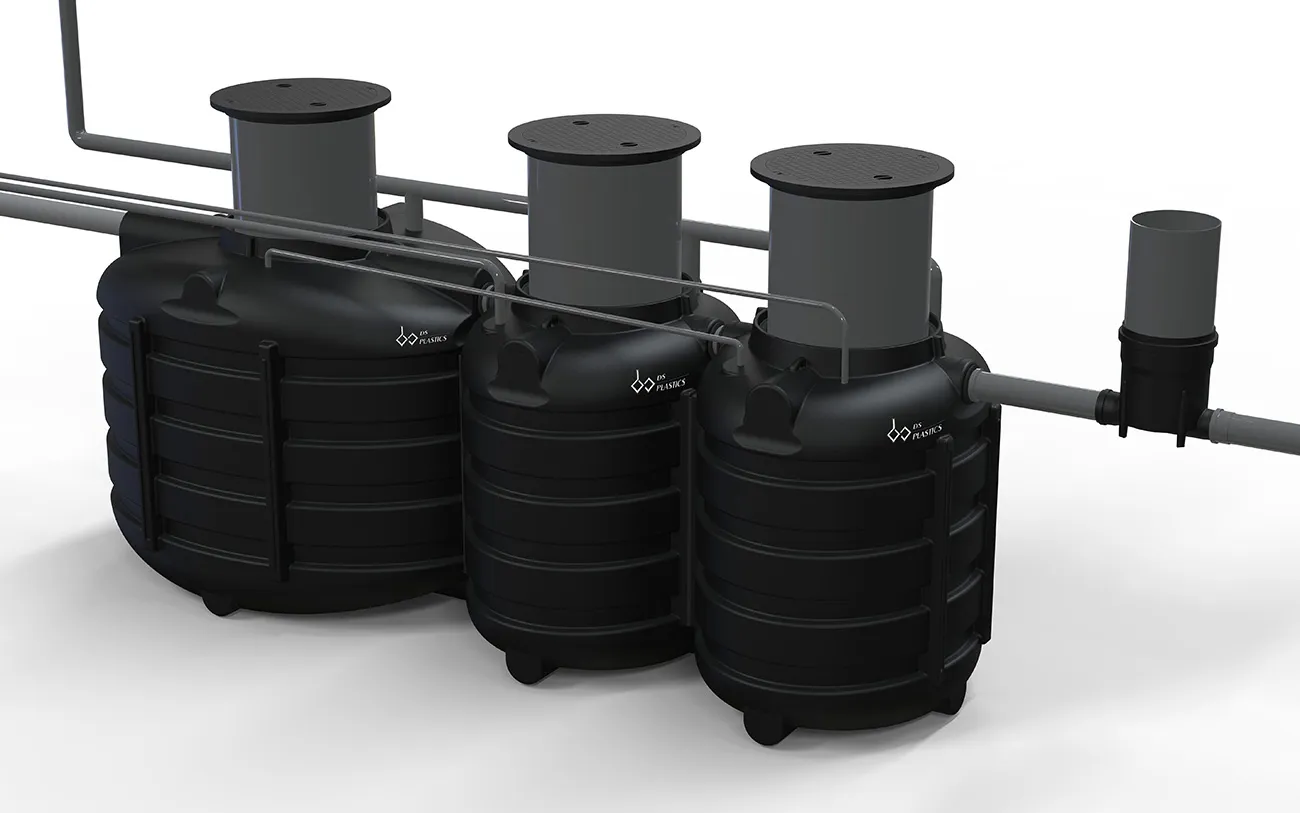
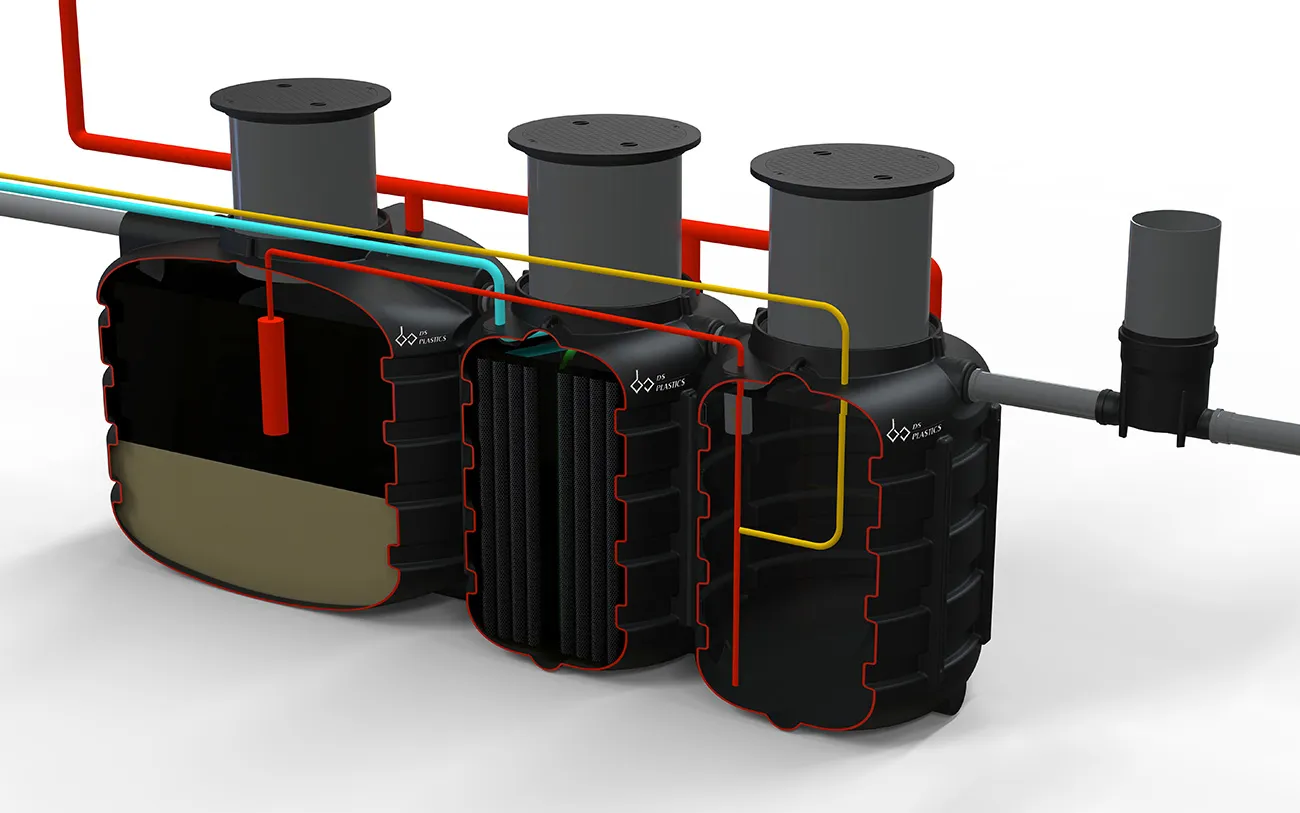
The BioClear range from Belgian manufacturer DS Plastics is designed to treat domestic wastewater, excluding rainwater and runoff. Thanks to their design and the technology used, BioClear systems are also ideally suited to intermittent use and can accommodate long periods out of operation. This successful process draws on more than 30 years of experience and national and international references. To treat domestic wastewater, DS Plastics, in collaboration with EPUR, offers aerobic biological treatment using a submerged fixed bacterial bed. The biomass is immobilised on a fixed support in the reactor, enabling an efficient bacterial flora to be selected that can optimally break down biodegradable pollutants.
Low production of waste sludge
The support’s large specific surface area and geometric properties ensure excellent biofilm adhesion, a well-distributed and homogeneous oxygen supply, and zero risk of clogging. Depending on the wastewater treatment system’s design capacity, the reactor configuration allows the right bacterial population to be selected for the type and load of pollution. The reactors’ key feature is their particularly low production of waste sludge, far less than the volume left behind by all other methods.
The BioClear 5 W01 also offers numerous benefits in terms of materials, installation, operation and maintenance. The tanks are made entirely of polyethylene, have no submerged joints and therefore ensure reliable operation. The compact system minimises excavation work and makes installation quick and easy. In terms of maintenance and operation, the low noise level and low production of secondary sludge are among its major advantages.
The importance of an IBA
Some buildings are too far away to be connected to the sewer network. In due course, these buildings will need an individual wastewater treatment plant (IBA). An IBA is designed to treat both greywater and blackwater. Rainwater must therefore be disconnected from the wastewater pipes whenever an IBA is connected. In new-build properties, an IBA must be installed immediately. For existing buildings, the municipality or sewerage manager will notify the owner when an IBA needs to be installed.
Installing an IBA is primarily the responsibility of the property owner, although in some municipalities the sewerage manager contributes. This may take the form of a municipal grant or the full provision of installation and maintenance. Under the so-called collective approach, the municipality or sewerage manager purchases, installs and maintains the IBA as a service to residents. Ideally, residents pay a similar fee for this service to that paid by other residents connected to the sewer network. A one-off connection charge may therefore be payable. If an IBA treats your wastewater, you logically do not pay the supra-municipal sanitation charge on your water bill.
Een zakelijke vraag aan DS Plastics Watertight Solutions? Get in touch
Companies in this story

Keep following this
Get an email when a new story is published. No account needed.
- ThemeRenewing pipelines and sewers
- SubjectMachines & equipment
- CompanyDS Plastics Watertight Solutions