









Inland shipping and waterways remain operational for freight transport
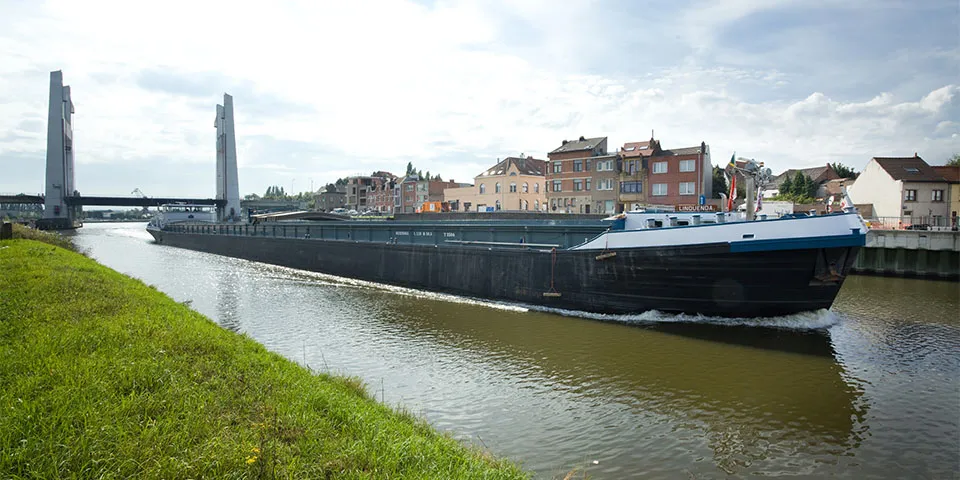
Ensuring the transport of goods is an essential service in the interests of society and the public. Inland shipping and waterways are therefore fully operational, helping to sustain economic activity in Flanders by ensuring the smooth supply of goods by water. “In these uncertain times, waterways are more than ever an essential link in the logistics chain”, say De Vlaamse Waterweg nv and the Kenniscentrum Binnenvaart Vlaanderen (KBV).
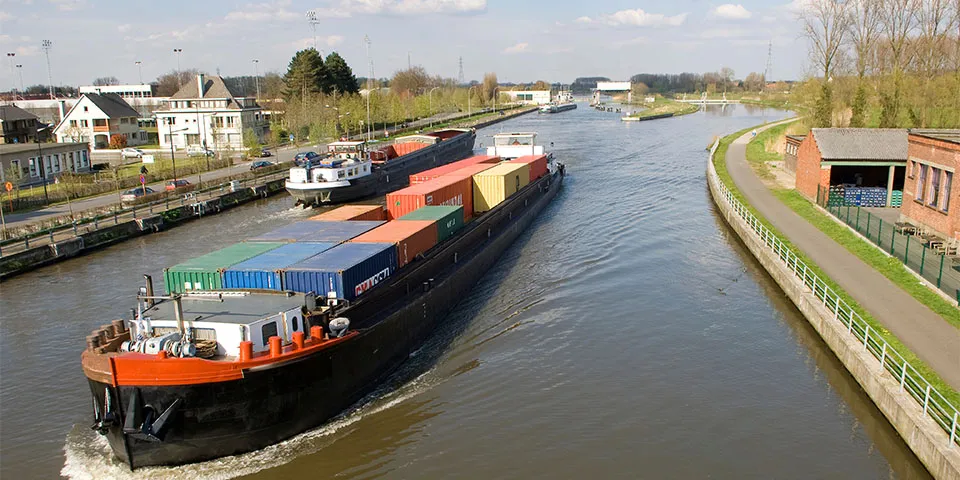
The normal operating hours of locks and bridges on Flemish waterways remain unchanged for the time being.
A range of measures have been in force since 13 March to limit the spread of COVID-19. The transport sector is nevertheless a crucial sector, providing essential services that must be maintained in the interests of Flanders, its economy and its citizens. “Some 72 million tonnes of goods and almost 1 million container units are currently transported on Flemish waterways each year”, says Chris Danckaerts, managing director of De Vlaamse Waterweg nv. “That accounts for around 15% of freight transport in Flanders in total, making inland shipping one of the key players in freight transport. What is more, the more goods are transported by water, the better it is for mobility and the climate. That is why Flanders is doing everything it can to increase that share further. It is therefore absolutely essential to ensure that inland shipping retains its capacity and reputation during this crisis, including in the eyes of all the contractors who also rely on the waterways continuing to function.”
Inland shipping keeps moving
“As waterway manager, we share responsibility for keeping the logistics chain running, and we are maintaining our services to enable companies to continue their economic activities”, Chris Danckaerts continues. “Thanks to the sustained efforts of inland shipping operators and our employees, inland shipping and waterways remain operational. And, of course, this is not just down to our efforts: the entire nautical chain remains highly active during this crisis.” Gisèle Maes, chair of the KBV, is equally clear: “Flemish inland shipping operators remain on standby to meet all transport needs and keep the waterways operational during the coronavirus crisis.”
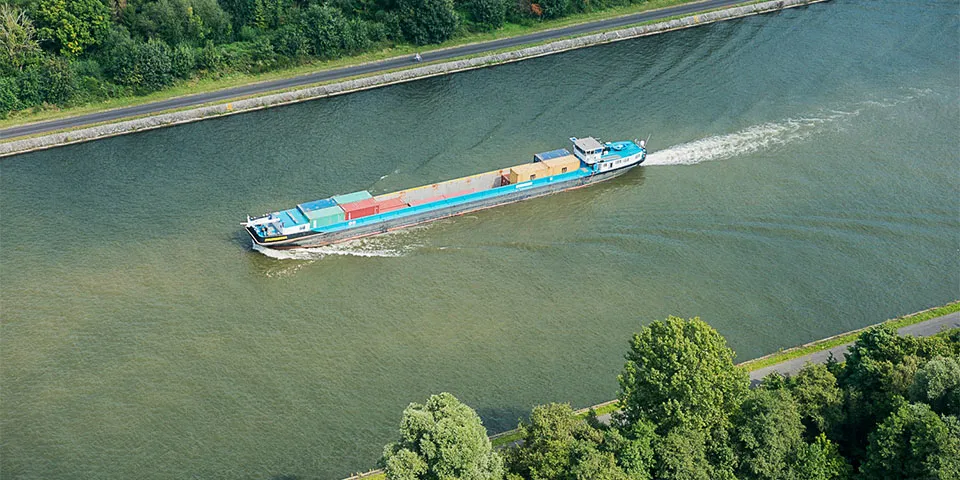
“Thanks to the sustained efforts of inland shipping operators and our employees, inland shipping and waterways remain operational.”
De Vlaamse Waterweg nv and the KBV endorse the measures to combat COVID-19. “Exceptional times call for exceptional measures. We are strictly following the decisions taken by the federal and Flemish governments and are implementing a range of measures”, says Jo Van Duynslaeger, secretary-general of the KBV. “We are putting the safety, wellbeing and health of all our employees and stakeholders first, while continuing to ensure safe and smooth inland shipping.”
Safety comes first
The KBV is calling on companies throughout the inland shipping chain to put the health of people on board and at loading and unloading sites first, including by excluding the physical presence on board of anyone who is not a crew member. Jo Van Duynslaeger says: “With mutual understanding and flexibility, we can work together to keep the economic impact on companies manageable. It is heart-warming to see all our colleagues in and around inland shipping taking responsibility on such a large scale. Together, we will ensure that inland shipping can continue to operate.”
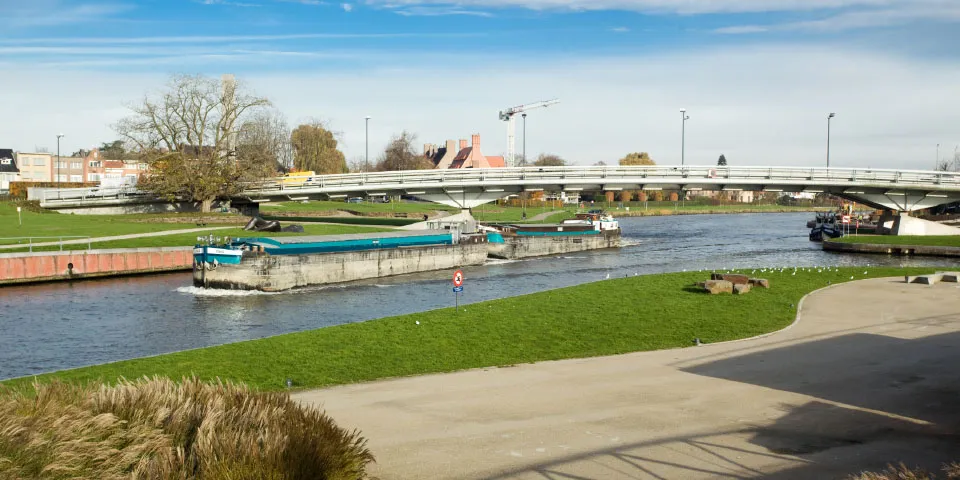
De Vlaamse Waterweg is ensuring that the measures imposed to limit the spread are
strictly followed.
Safety also comes first at De Vlaamse Waterweg. Chris Danckaerts says: “To begin with, we are ensuring that the measures imposed to limit the spread are strictly followed. This means making maximum use of working from home, which is no problem at all for most administrative roles. We also have many people working in the field, such as lock operators and enforcement officers … They too must be able to work in safe conditions. Physical distancing is being applied wherever possible, and the necessary disinfectants have been available since the measures were first introduced. Most of our workplaces are arranged in such a way that physical distancing poses no obstacle. There is also only one person in the control tower of each lock. At our staffed counters, we have digitised the process to avoid physical contact between customers and counter staff.
Our approach is currently resulting in very few absences. This is also because we are doing enough to encourage our people to follow the measures.”
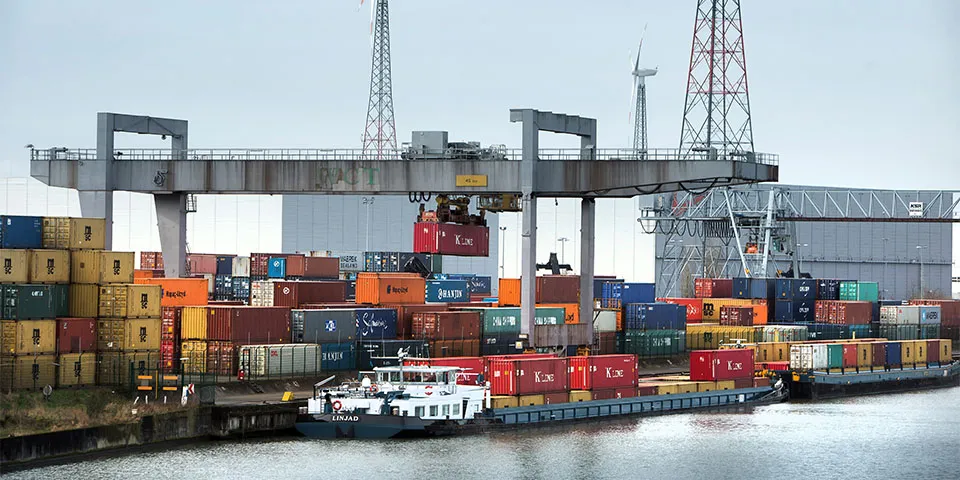
“Some 72 million tonnes of goods and almost 1 million container units are currently transported on Flemish waterways each year.”
Locks and bridges remain operational
The normal operating hours of locks and bridges on Flemish waterways remain unchanged for the time being. “If staffing problems arise, services will be gradually scaled back”, says Chris Danckaerts. “In any case, we want to limit the impact as much as possible, and so far we are doing very well. What we cannot control is the impact of the coronavirus crisis on the volume of goods transported. We monitor these figures daily, and so far the decline has also remained limited, at around 5% of total traffic.”
The high priority given to safeguarding freight transport via waterways is also evident from an emergency measure approved by the Flemish government in early April. Chris Danckaerts says: “As waterway manager, we have been granted the authority to allow certain deviations from the regulations. For example, inland vessels have to apply for new certificates at certain times. This is a physical process, which is not possible in the current circumstances. We have therefore been authorised to extend a certificate for a period of three months. In addition, a memorandum has been agreed at government level covering the construction, road construction and water construction sectors. This memorandum allows us to work with contractors to determine how best to continue and start up sites, while taking all necessary measures into account.”
Flemish Minister for Mobility and Public Works Lydia Peeters welcomes the efforts of the sector and the waterway manager. “Flanders intends to make prominent use of inland shipping as an alternative to road transport. The fact that the sector is proving resilient even in difficult circumstances shows that inland shipping really is a fully fledged alternative”, she says with conviction.
Question about this story? Ask your question
Keep following this
Get an email when a new story is published. No account needed.
- ThemeStrengthening waterways and coastlines
- SubjectGeneral







