









Flanders promotes greater use of inland waterways
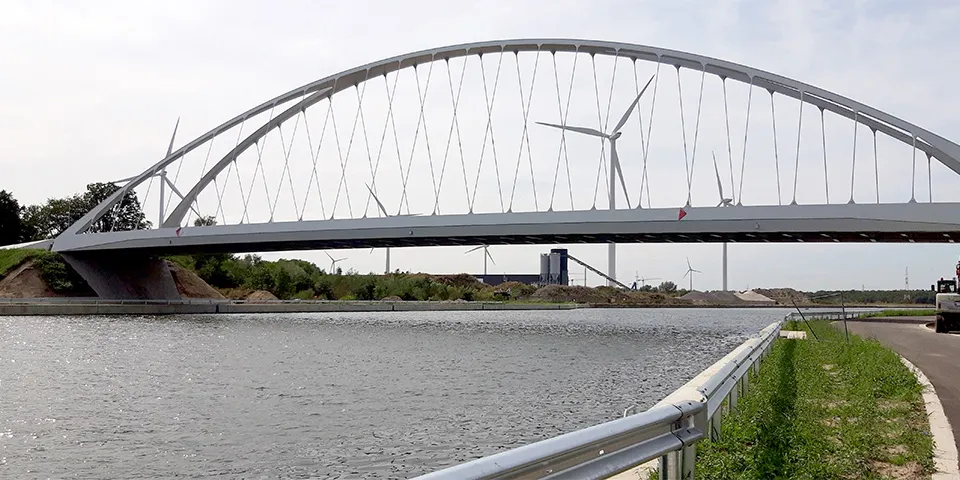
Moving more goods along our Flemish waterways is a boon for mobility and the climate. De Vlaamse Waterweg nv works every day to promote transport by water. Recent examples include extending lock operations on the Albert Canal to 24/7, innovations in unmanned navigation and the launch of a second cluster to rebuild a series of bridges over the Albert Canal.
De Vlaamse Waterweg nv is responsible for investing in and managing around 1,100 km of navigable waterways, with the ambition of providing reliable, future-proof, smart and innovative waterways. A strong offering must persuade even more businesses to choose inland waterway transport. De Vlaamse Waterweg is therefore investing significantly in developing our waterway network. Two major strategic projects are the Seine-Scheldt project and raising the bridges over the Albert Canal to a minimum of 9.10 metres. The increased clearance improves the efficiency of inland shipping in general and provides an additional boost to container shipping in particular. The project is well under way. “So far, 42 of the 62 bridges have been raised and work on a further 14 bridges is under way. The entire project is due to be completed by the end of 2022, making the Albert Canal more than ever Flanders’ most important waterway,” says ir. Chris Danckaerts, chief executive of De Vlaamse Waterweg nv. “
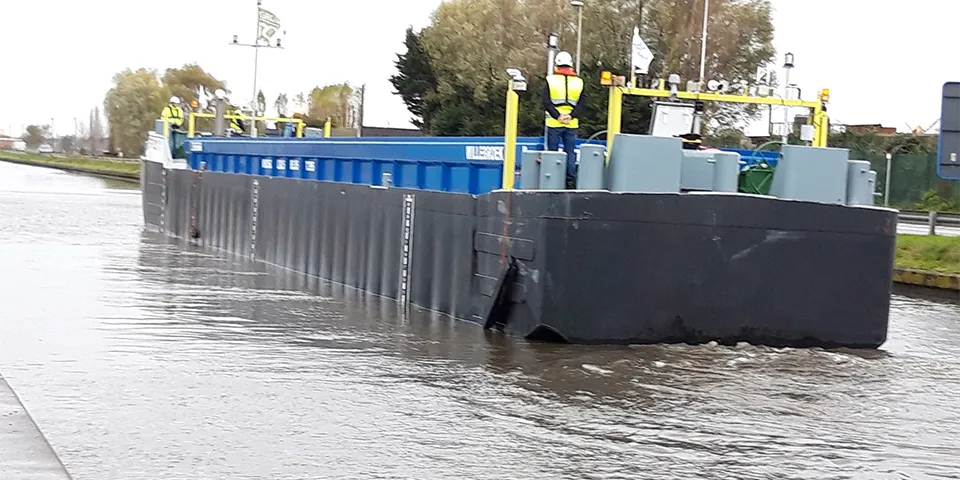
De Vlaamse Waterweg introduced amended regulations making it possible to grant permission for trials of unmanned navigation.
The Seine-Scheldt project is also well under way, with the initial focus on upgrading the Ringvaart around Ghent and the Leie. “The recent French decision on funding the construction of the new Canal Seine-Nord Europe, which will link the Seine basin with the Belgian waterway network, is welcome news and places our works firmly in a European context.”
A first for unmanned navigation
Investing in the development of the waterway network is one thing, but perhaps the biggest challenge for Flanders and De Vlaamse Waterweg nv is persuading more businesses to turn to waterways and inland shipping. De Vlaamse Waterweg is doing everything it can to make this easier, by offering businesses water-connected industrial sites and building quay walls through public-private partnerships. It is also innovating itself and encouraging innovation on and alongside the water. For example, De Vlaamse Waterweg introduced amended regulations making it possible to grant permission for trials of unmanned navigation. For a year, a remotely controlled unmanned pusher barge will carry soil on the Ieper-IJzer Canal and the Plassendale-Nieuwpoort Canal. Trials began on 13 November, a world first of its kind.
A Watertruck+ pusher barge without a wheelhouse, named Watertruck+ ‘X’, will carry soil from Diksmuide to Oostende. The route has little other traffic, making it an ideal test case. Chris Danckaerts: “De Vlaamse Waterweg nv is convinced that innovations in automation and digitalisation can help the sector move forward. That is why it launched the Smart Shipping programme, to give regulation, traffic management and ship technology every opportunity to develop, in collaboration with all stakeholders. The new technology now being deployed puts inland shipping more firmly on the map as a green, safe and competitive alternative to road transport.”
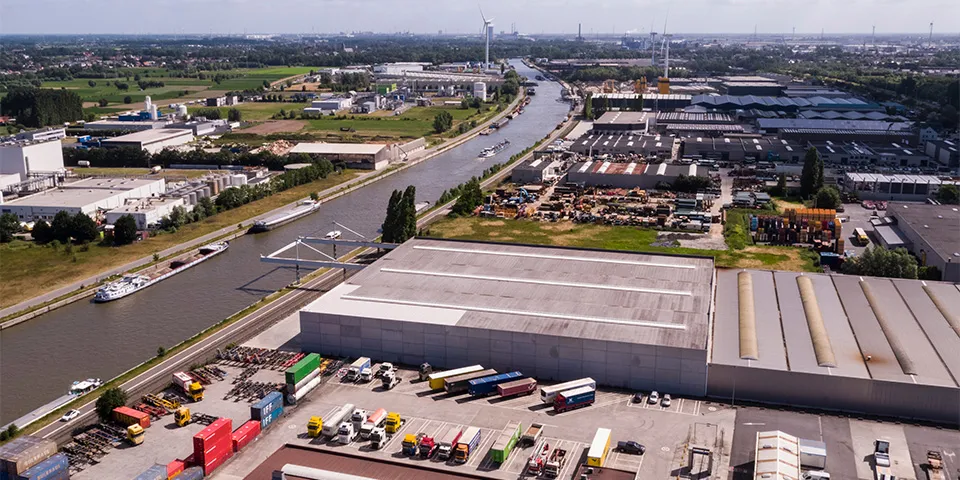
Perhaps the biggest challenge for Flanders and De Vlaamse Waterweg nv is persuading more businesses to turn to waterways and inland shipping.
Albert Canal locks open 24/7!
In its coalition agreement, the Flemish Government set out its ambition to make inland shipping a prominent, fully fledged and attractive mode of transport. The decision to operate the locks on the Albert Canal 24/7 from 2 January 2020, at no extra charge, gives this commitment real force. It was also decided to stop charging for Sunday lock operations elsewhere on the Flemish waterway network. These are the locks in East and West Flanders on the Ringvaart (Evergem), the Leie (Sint-Baafs-Vijve, Harelbeke, including the Buda Bridge, Kortrijk and Menen), the Upper Scheldt (Asper, Oudenaarde, including the lifting bridge, and Kerkhove) and the Roeselare-Leie Canal at Ooigem.
Chair Frieda Brepoels and chief executive Chris Danckaerts of De Vlaamse Waterweg nv stress the importance of this historic decision, which has the backing of the various stakeholders. “Over the years, the Albert Canal has already undergone a major facelift to accommodate growing traffic. By operating the Albert Canal locks 24/7, we are giving businesses even more opportunities and flexibility to use inland shipping as an alternative to road transport,” says Chris Danckaerts. In this way, inland shipping helps tackle traffic congestion in Flanders, while De Vlaamse Waterweg is preparing for the major roadworks due to begin in the Antwerp region.
De Vlaamse Waterweg NV
Havenstraat 44, 3500 Hasselt
T +32 11 29 84 00
www.vlaamsewaterweg.be
Question about this story? Ask your question
Keep following this
Get an email when a new story is published. No account needed.
- ThemeStrengthening waterways and coastlines
- SubjectGeneral







