









Environmental impact assessment using TOTEM extends to road construction
OCW and WTCB recently worked together on a study into the possibility of extending the TOTEM tool, which calculates the environmental impact of buildings, to road construction.
The study found that this is indeed possible, but that important additions are still needed before it can be implemented in practice in a future version of the tool. For example, additional scenarios specific to this type of infrastructure project would need to be defined for transport, end of life, etc., along with default values for items such as the reference service life.
Construction works such as buildings and infrastructure have a significant impact on the environment because of their (operational) energy consumption and the use of construction materials. In 2018, the TOTEM calculation tool (Tool to Optimise the Total Environmental impact of Materials) was launched online to calculate and optimise this environmental impact by selecting alternative solutions during the design phase. The tool focuses on the situation in Belgium and can be used for buildings such as homes, office buildings and schools. Given its importance across Belgium, the three regional public authorities (OVAM, Leefmilieu Brussel and SPW) are working together to develop it further. In this context, WTCB and OCW recently worked together on the TOTEM Potential Study, which explores its application to road construction.
Two objectives
The study has two main objectives. The first is to estimate the potential to reduce the environmental impact of buildings by using the TOTEM tool during the design phase, and thereby assess TOTEM’s potential to help achieve certain policy objectives (Part 1). The second is to estimate the potential to improve the environmental performance of construction works other than buildings, particularly infrastructure projects (Part 2). For Part 2, the study analyses specific aspects and considerations involved in assessing the environmental impact of infrastructure projects, drawing on a literature review and case study analysis of several types of road. Based on these findings, it discusses the potential for extending the TOTEM tool to other subsectors of construction and makes specific recommendations for the further development of the tool.
The literature review focuses on ongoing developments in standards and regulations, existing studies and research projects, and international experience with the environmental performance of infrastructure projects. It shows that standards and regulations in this area are still being developed and lag behind developments in the wider construction sector. Standards originally drawn up for buildings are now serving as a source of inspiration for extending the approach to infrastructure projects, adapted to the specific characteristics of this type of work. The review also shows that environmental impact is not calculated consistently: different service lives, system boundaries, methods, scenarios, etc. are used, making study results incomparable.
Life cycle assessment
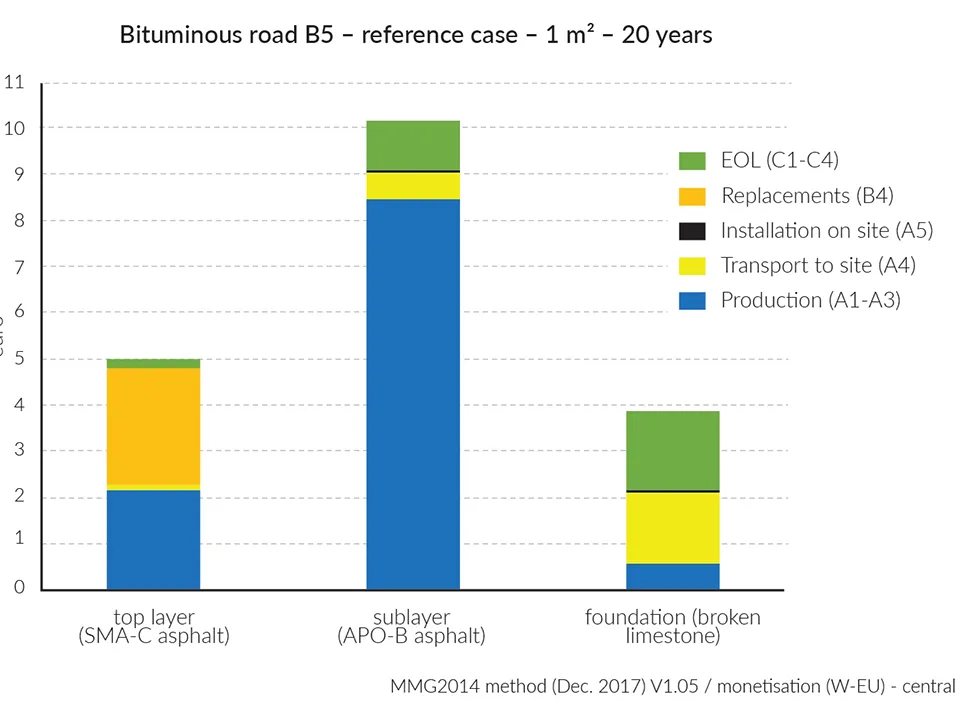
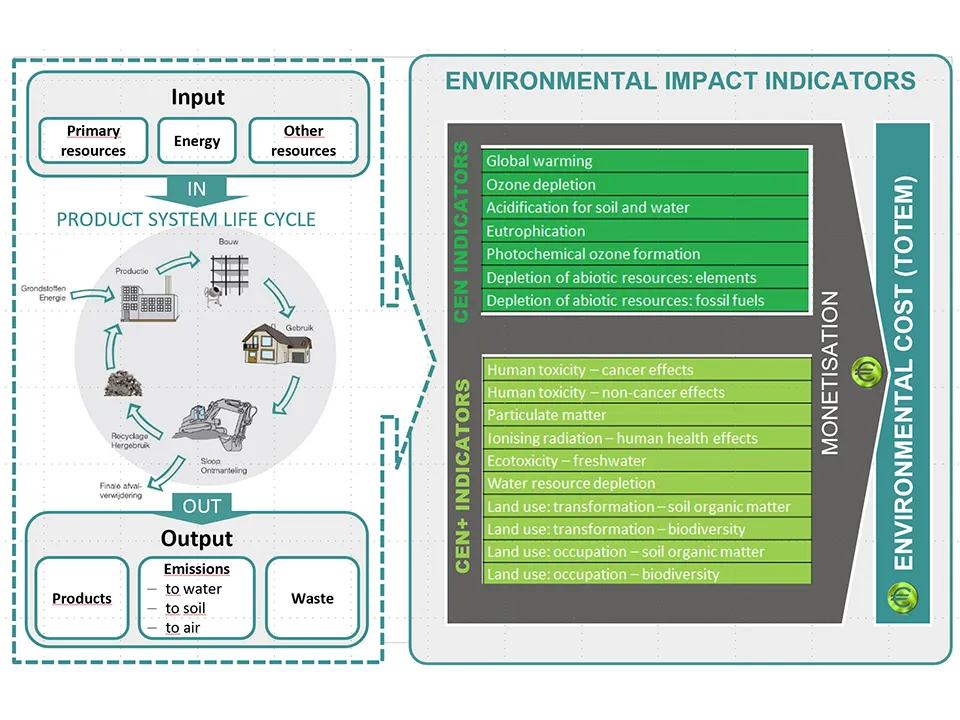
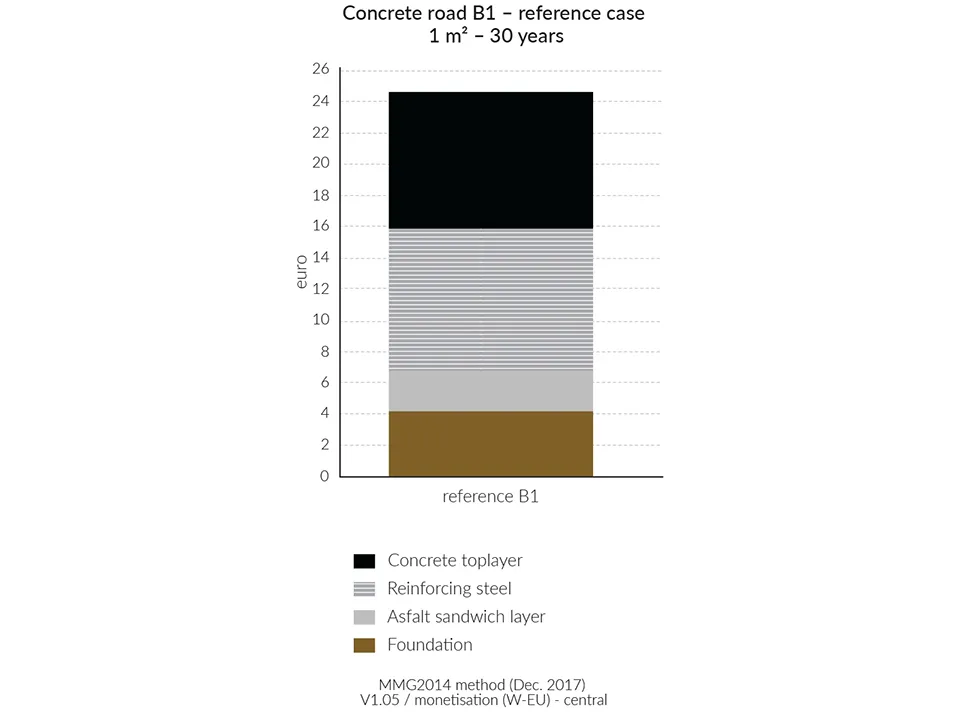
The study examines whether the TOTEM method can be used in practice for construction works other than buildings, in this case roads. “We do this by assessing the environmental impact of two road variants using a so-called life cycle assessment (LCA), in accordance with the MMG method, which provides the scientific basis for the calculations in TOTEM,” says OCW. Specifically, life cycle assessments were carried out for an asphalt road and a concrete road, designed and constructed in line with current practice in Belgium, taking account of seventeen environmental impact indicators.
Conclusions
The study concludes that the general TOTEM method could potentially be used to assess the environmental performance of construction works other than buildings. However, this is not yet possible in practice, and a number of important additions are needed before it can be implemented in a future version of the tool. Additional scenarios, for example for transport or end of life, and default values, for example for the reference service life, would need to be defined specifically for these types of construction work. The materials and processes library would also need to be expanded, and it would be necessary to allow or support changes at material level. Finally, the study shows that additional modelling options or tools could be developed to improve the assessment and optimisation of the impact of the construction phase (construction activities).
More information about the study is available in OCW Communications 125 at www.ocw.be and on the TOTEM website, www.totem-building.be.
Question about this story? Ask your question
Companies in this story

Keep following this
Get an email when a new story is published. No account needed.
- ThemeFuture-proofing roads and railways
- SubjectGeneral
- CompanyOVAM







