









Ecological disaster on the Scheldt averted
Since last week, De Vlaamse Waterweg nv has been tackling pollution in the Scheldt together with Natuur en Bos of the Flemish government and the Flemish Environment Agency. A breach in the dike at a French sugar refinery near Cambrai caused polluted water to enter the Scheldt. The pollution is depleting the water of oxygen on a massive scale, reducing oxygen levels to zero, with serious consequences for aquatic life.
Mass fish deaths averted in Flanders
The effects of the pollution on aquatic life, including fish and other aquatic organisms, in France and Wallonia have been dramatic. Almost the entire fish population in the Scheldt in France and Wallonia has died. In Flanders, every effort was made to protect the vulnerable, ecologically valuable water systems along the pollution’s path. And it seems to have worked. “Thanks to the coordination by De Vlaamse Waterweg nv and the large-scale deployment of staff and resources by Natuur en Bos, the Flemish Environment Agency, the Research Institute for Nature and Forest, Civil Protection, the local Fluvia, Vlaamse Ardennen and Centrum fire and rescue zones, the ESI fire service, Aquafin and Air Liquide, we were able to save almost the entire fish population in Flanders and successfully carry out the largest ecological rescue operation ever on our waterways,” said Lydia Peeters, Minister for Mobility and Public Works.
Pollution diluted by adding oxygen to the Upper Scheldt
To determine where the pollution is and how quickly it is moving, the Flemish Environment Agency continuously monitors oxygen levels. Manual measurements are also taken daily. Flemish Environment Minister Zuhal Demir said: “The Flemish Environment Agency installed monitoring probes at several strategic locations along the Upper Scheldt at very short notice. They continuously monitored oxygen levels in the water. Combined with daily manual measurements, this gave us a highly detailed picture of how quickly the pollution was moving through the Upper Scheldt, enabling us to take targeted action. A disaster was averted thanks to the outstanding work and dedication of our services and the many volunteers. Flanders clearly has a heart for nature.”
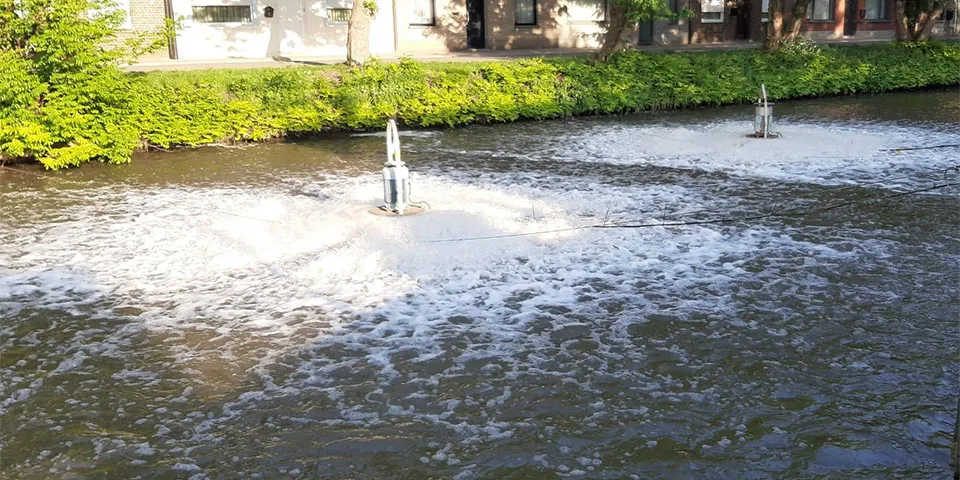
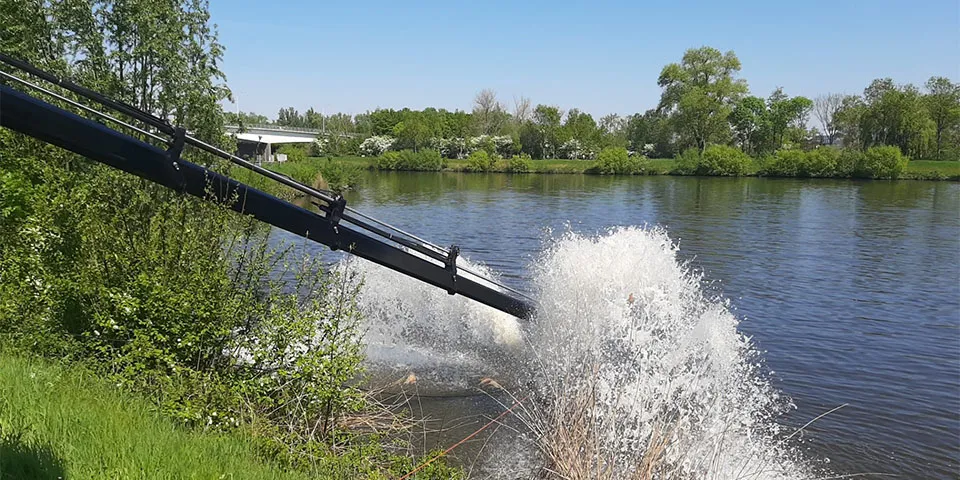
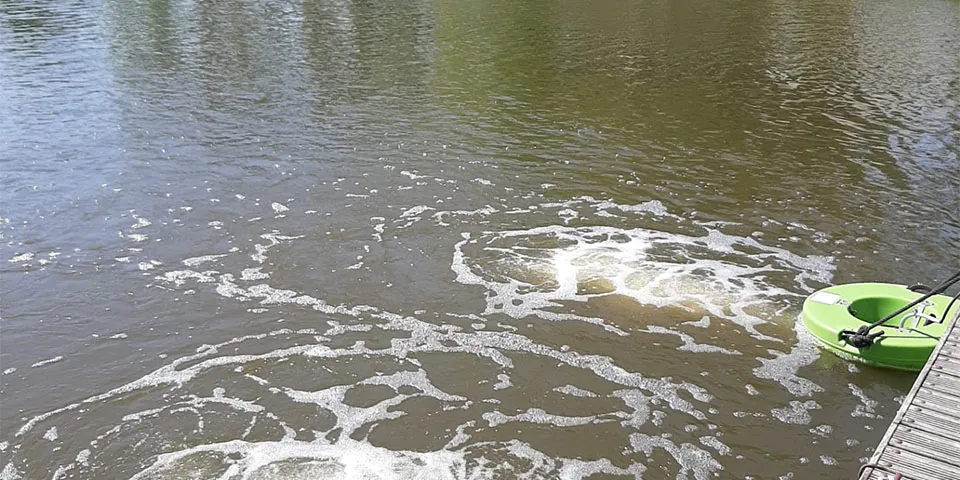
Since the beginning of last week, aerators have been installed at a number of strategic locations in the water. These aerators pump oxygen back into the water. In cooperation with Civil Protection and Aquafin, additional large aerators were deployed. Aquafin’s water treatment plant in Eine (Oudenaarde) was also brought into operation to pump and treat polluted water from the Upper Scheldt. Air Liquide provided further assistance by injecting pure oxygen directly into the Upper Scheldt to raise oxygen levels in the water. De Vlaamse Waterweg nv also relied on the rapid deployment of water engineering contractors such as Ghent Dredging and De Brandt. Natuur en Bos in turn brought in a professional fishing company to catch fish and move them to a more oxygen-rich part of the Scheldt at the few locations where they had got into difficulty. At Spiere, on the border between Wallonia and Flanders, the Flemish Environment Agency, working with De Vlaamse Waterweg nv and Société Publique de Wallonie, also moved fish in distress to unpolluted water.
Where possible, oxygen-rich water was held back in tributaries so that it could mix with the oxygen-depleted water of the Upper Scheldt. Extra water was pumped into the Bossuit-Kortrijk Canal in advance and released into the polluted Upper Scheldt through the locks. The Flemish Environment Agency also stored extra water in the Zwalm.
The widespread deployment of aerators, the treatment of polluted water and the addition of extra water have all helped to dilute the pollution.
Ecologically sensitive areas protected through smart water management
The polluted water is being further diluted with stored water from the Leie. By strategically operating weirs and locks on the Ringvaart around Ghent, the pollution is being kept away from Ghent city centre, the Upper Sea Scheldt and the Tourist Leie. The pollution is being discharged via the Ringvaart around Ghent and the Ghent-Terneuzen Canal into the Western Scheldt. To make this possible, De Vlaamse Waterweg nv is working closely with Rijkswaterstaat, the Dutch waterway authority, and North Sea Port.
Removing dead fish
The intensive response means that only a limited number of fish have had to be removed from waterways in Flanders. However, fish that died in the French and Walloon sections of the Scheldt are being carried downstream into Flanders. At Spiere, on the border between Wallonia and Flanders, De Vlaamse Waterweg nv is removing the dead fish in coordination with Société Publique de Wallonie. These clean-up operations may continue over the coming days.
Question about this story? Ask your question
Keep following this
Get an email when a new story is published. No account needed.
- ThemeStrengthening waterways and coastlines
- SubjectGeneral







