









De Bunt in Hamme becomes a controlled flood area thanks to targeted hydraulic engineering works
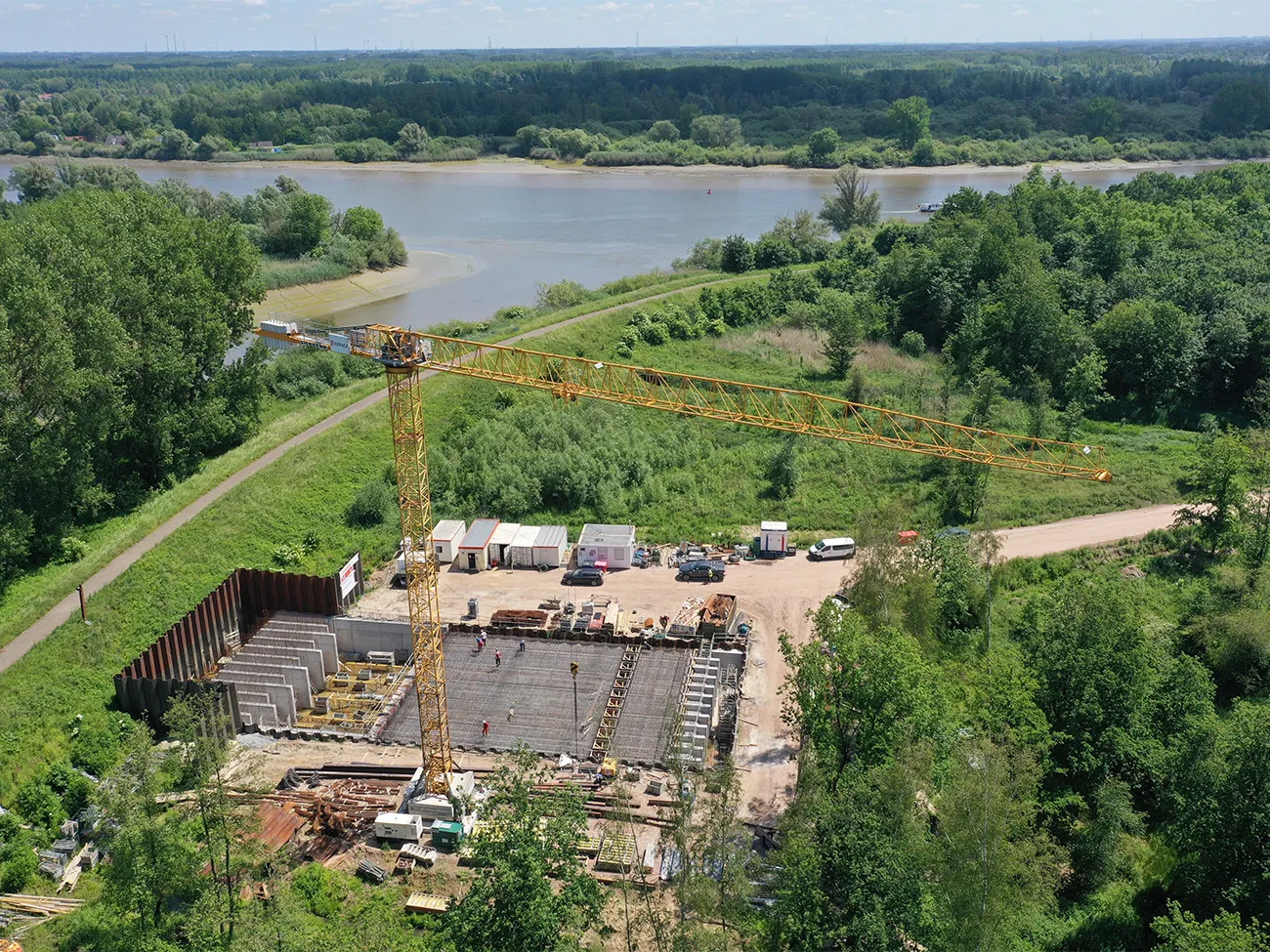
Work on the two new sluices in De Bunt nature reserve in Hamme is nearing completion. Specialist Herbosch-Kiere is carrying out the works on behalf of De Vlaamse Waterweg. Following the construction of a ring dike in the first phase, work is now being completed on the inlet and outlet sluice in the Durmedijk. “When water levels are high enough to pose a risk of flooding, the sluices can be opened selectively so that water flows into the site under controlled conditions,” says Stefaan Dhooghe, site manager at Herbosch-Kiere.
In view of the recent severe flooding, the works at De Bunt are essential to combat flood risk in the area. Stefaan Dhooghe explains: “High water levels that persist for a long time can cause dikes to burst, leading to major floods. The same applies in Hamme. You cannot keep raising and widening the dikes, as this would bring them ever closer to residential areas. The decision was therefore made to install sluices at two strategic locations. When water levels are high enough to pose a risk of flooding, the sluices can be opened selectively so that water flows into the site under controlled conditions, contained by the ring dike. The water that flows in can then settle for days or weeks, until water levels return to normal. The site is then drained again. This is an example of a controlled flood area (GOG).”
Protective ring dike
De Bunt will therefore store river water, helping to protect the Scheldt and Durme valleys from flooding. At the same time, unique freshwater tidal habitats will develop. The area will thus serve as a climate buffer. The first phase of the works was completed some time ago: a ring dike was built around the nature reserve to protect the areas behind it from flooding when De Bunt begins operating as a flood area. Stefaan Dhooghe says: “The ring dike is fully complete, except, of course, where we still need access to the site. Once our works are fully complete, the final section of the ring dike will be closed.”
Two sluices
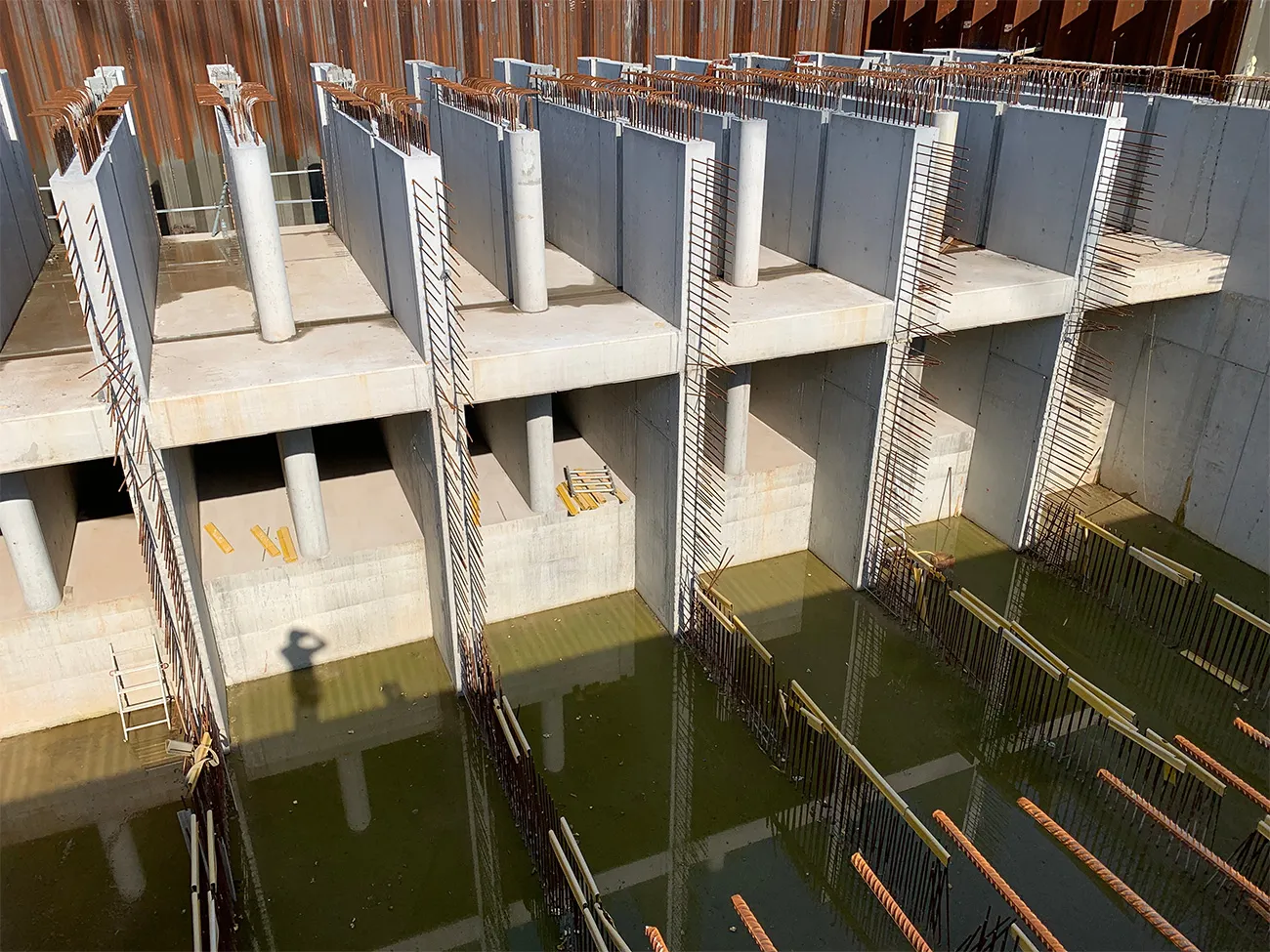
The second phase involved building two sluices: an outlet sluice in the Scheldedijk and an inlet and outlet sluice in the Durmedijk. Both sluices are integrated into the existing dike. These works marked a new phase in the transformation of the area into a controlled flood area with a reduced tidal range. Stefaan Dhooghe explains: “The southern sluice discharges into the Scheldt. This meant we had to take the Scheldt tides into account throughout its construction. So we carried out part of the work in the water, in the Scheldt, and part on dry land. This brought its own challenges. By contrast, the northern sluice is being built to connect the water to the Durme. It was constructed using conventional dry construction methods in a cofferdam with dewatering.”
Twice a day, in time with the tides, river water flows into and out of the area through the inlet and outlet sluice. This will create mudflats and salt marshes with reed beds and willow floodplain forest at De Bunt. “This is a very interesting project for us not only from a construction point of view, but also because of its environmental impact. Climate change, prolonged periods of high or low groundwater levels, and the risk of flooding are all topical issues. These measures will certainly help address them. When water is let in, the groundwater level will rise. In the past, the thinking was that every drop of rain should be drained as quickly as possible into watercourses and the sea. Now we are trying to let every drop seep into the ground. When the site remains under water for longer periods, this will also have a positive effect on biodiversity in the nature reserve. That is an excellent outcome too.”
This is exactly the kind of project Herbosch-Kiere is well suited to. Projects involving significant technical complexity or logistical challenges are assessed by its in-house engineering department, which develops safe, innovative and technically and economically viable solutions. “We manage these assignments down to the last detail. We will complete this project to a high standard too. The southern sluice is now complete and operational, and cyclists and pedestrians can once again continue safely along the newly built towpath. We are now nearing completion of the concrete works for the northern sluice. The remaining work includes building the access channel, lined with gabions, and installing the non-return valves, trash screens and vertical gates,” concludes Stefaan Dhooghe.
Een zakelijke vraag aan Herbosch-Kiere? Get in touch
Companies in this story

Keep following this
Get an email when a new story is published. No account needed.
- ProjectDe Bunt
- ThemeStrengthening waterways and coastlines
- SubjectGeneral
- CompanyHerbosch-Kiere







