









Turnhout also opts for climate-resilient road construction
Text and images Lithobeton NV
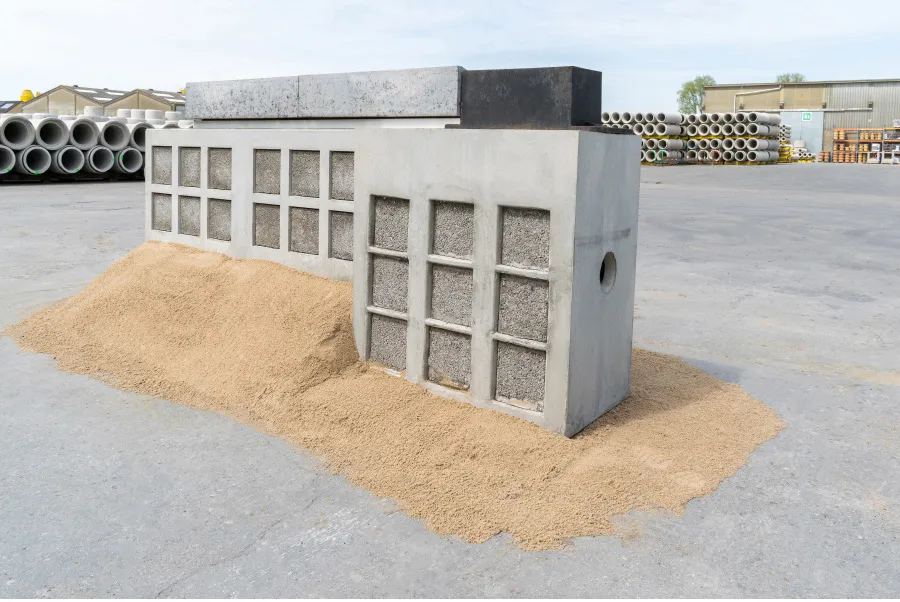
As part of the renovation of the sewer system, several streets are being renewed. The historic centre of Turnhout was built on a hill, so water levels rise as you approach the ring road and the associated waterways. Conventional road construction, surface infiltration and the use of infiltration pipes can no longer provide a solution that ensures sufficient infiltration in line with the new GSV, particularly during (sudden) flooding. The city of Turnhout, too, sought and found solutions in the form of climate-resilient road construction.
CLIMATE-RESILIENT ROAD CONSTRUCTION ON THE RISE
Steven Mateusen, roads and sewers coordinator for the City of Turnhout: “After this innovative system was installed in Driezenstraat, a street in a flood-prone area, Oude Beersebaan and Stoktsestraat are now being renovated.”
“Because soil types vary from one street to another, it is always necessary to carry out a soil analysis and determine the groundwater level first. In Oude Beersebaan, the groundwater level is fairly high, so infiltration into the ground has to be achieved through climate-resilient road construction. Water flows from the road surface into a large infiltration gully, which acts as a pre-filter. The filtered water then flows through new porous units from LITHOBETON into the sub-base, where it can continue to infiltrate. This project therefore involves no discharge of rainwater into the sewer system. The Province of Antwerp has agreed to allow excess rainwater to be discharged into the lower-lying Visbeek via a flow-control outlet. Contractor Bruggeman-Maes will carry out the project.”
PROVEN EFFECTIVENESS
Rik Debusschere, project manager at Aquafin, is also full of praise for the climate-resilient road construction system: “This system, which builds in sufficient safety margins in the calculation models, has proved its effectiveness on several occasions. It uses the sub-base as a temporary buffer, allowing rainwater from heavy downpours to remain there until it has fully infiltrated into the ground. Using the entire road surface as an infiltration area gives you a very large infiltration surface. As a result, even during heavy summer storms, this system allows a very large proportion of rainwater to infiltrate. Measurements taken over many years at the pilot project in Slijpestraat in Staden show, among other things, that the actual figures are well below the values initially calculated.”
NEW INFILTRATION UNITS
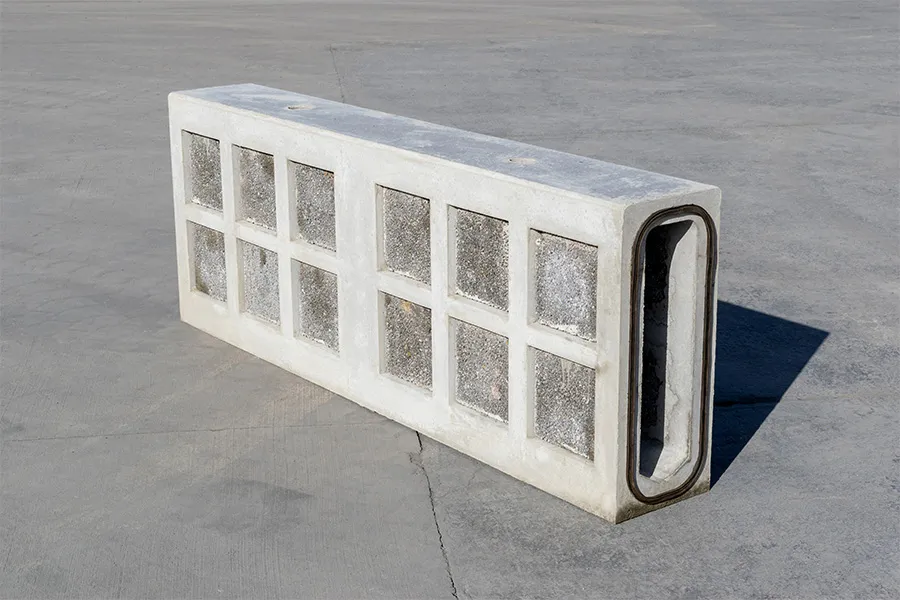
Alongside the infiltration gullies, the new infiltration units from LITHOBETON are also being used. These units are an improved version of the infiltration U-channels used in previous projects. Their main advantage is that they are now manufactured as a single piece, significantly reducing installation time. LITHOBETON continues to improve its products to meet its customers’ needs. ■
Een zakelijke vraag aan Lithobeton NV? Get in touch
Companies in this story

Keep following this
Get an email when a new story is published. No account needed.
- SubjectConcrete
- CompanyLithobeton NV







