









The Belgian cement industry, between concern about the coronavirus crisis and confidence in the future…
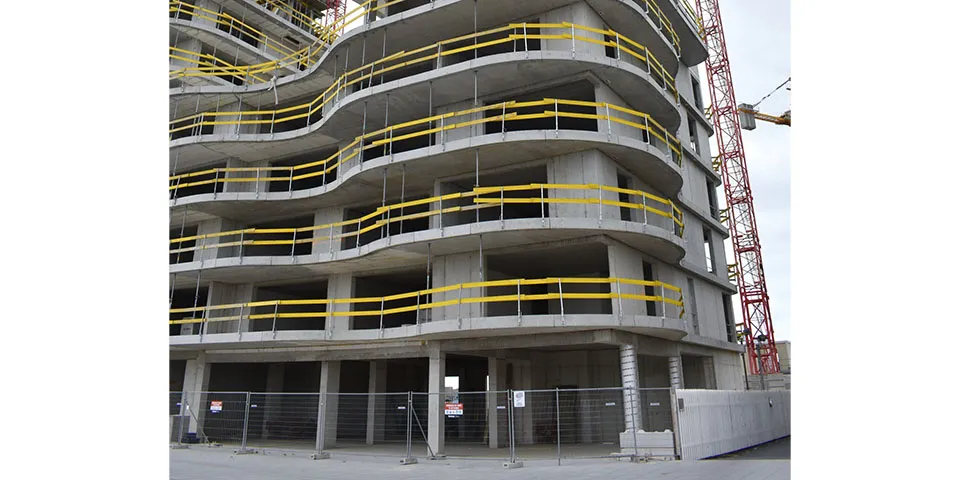
On 3 June 2020, FEBELCEM, the Federation of the Belgian Cement Industry, held its General Assembly. The Federation’s annual report is published on this occasion. In accordance with the European ‘compliance’ rules to which the cement industry is subject, figures for cement consumption in Belgium are published with a one-year delay. This means that this year, in the 2019 annual report, the industry is publishing figures for 2018.
Cement imports on the rise
Consumption of grey cement in Belgium amounted to 6,302,943 tonnes in 2018, compared with 6,148,312 tonnes in 2017, an increase of 2.5%. By way of reminder, 2017 saw a slight fall of 1% compared with 2016. Although 2018 was a good year for cement consumption, it was nevertheless marked by a very significant increase (+16.5%) in imports by non-members. Another notable feature was the strength of members’ own exports, which rose by 10.1%. At the start of 2019, the estimate was for cement consumption to increase by around 1.6%, but the slowdown in the second half of the year led the latest estimates to point to consumption remaining stable or even falling slightly. In any case, we will have to wait until 2021 to find out exactly how much cement was consumed in Belgium in 2019.
The construction market in 2020
It goes without saying that there is considerable uncertainty surrounding the coronavirus crisis. 2020 will therefore be an exceptional year, with results depending on the type of recovery now taking shape. It is worth remembering that, at the height of the crisis, barely 20% of contractors continued to operate at a normal level of activity. According to BNP Paribas Fortis, the impact on the sector was 21% in March and 52% in April.
While 80% of companies were active again in early May, the Confederation Construction now estimates that the sector will see a sharp drop in activity. Robert de Mûelenaere, managing director, even claims that “only a recovery from the third quarter onwards will be able to limit the fall our sector will suffer this year to 10%”. These are very bleak prospects, which can be explained by the fact that the market has truly collapsed since the start of the health crisis: home sales are down 47%, again according to the Confederation Construction.
It is therefore clear that the construction sector as a whole urgently needs a large-scale recovery plan, focused first and foremost on supporting investment by households, businesses and public authorities. The starting point must be an ambitious fiscal policy on property. Building and renovation need to become more attractive from a tax perspective!
In the short term, many construction companies are discussing changes to the length and/or timing of the summer holiday in order to maintain the recovery’s momentum and potentially make up for some of the delays incurred. In any case, FEBELCEM members’ plants will operate at full capacity, even during the summer period, to provide effective support to construction contractors.
Outlook for the cement sector
At the start of the year, the Confederation Construction forecast cement consumption growth of around 2.6% in 2020 and 1.9% in 2021. Based on the latest forecasts, the negative impact of the crisis on residential and non-residential construction will be tempered by civil engineering. This segment was expected to grow by around 7.5%, thanks to major flagship projects such as the construction of the tram in Liège, the Oosterweel connection in Antwerp, the metro works in Brussels, the GEN works … These projects should be able to continue at their current pace or even gather momentum.
In the longer term, the Belgian cement industry remains firmly positive. Cement consumption is underpinned by solid fundamentals (‘Bouwshift’, nearly zero-energy homes, essential infrastructure, etc.), which should enable FEBELCEM’s members to look to the future with a degree of optimism. Mr Eddy Fostier, chairman of FEBELCEM, expresses his confidence in the future of the cement and concrete sector: “The needs in the construction world are enormous, and a revolution is under way there too. The challenge is to find the best compromise between the needs of a growing population, energy-neutral homes and putting a stop to urban sprawl: challenges that can only be met successfully by integrating every stage into a circular process, from design to the reuse or recycling of a building. Cement and concrete undoubtedly fit into this approach. More than that, they are essential players in it.”
Question about this story? Ask your question
Keep following this
Get an email when a new story is published. No account needed.
- ThemeMaterials with a lower environmental impact
- SubjectConcrete







