









Synthetic fibre reinforcement for even stronger concrete
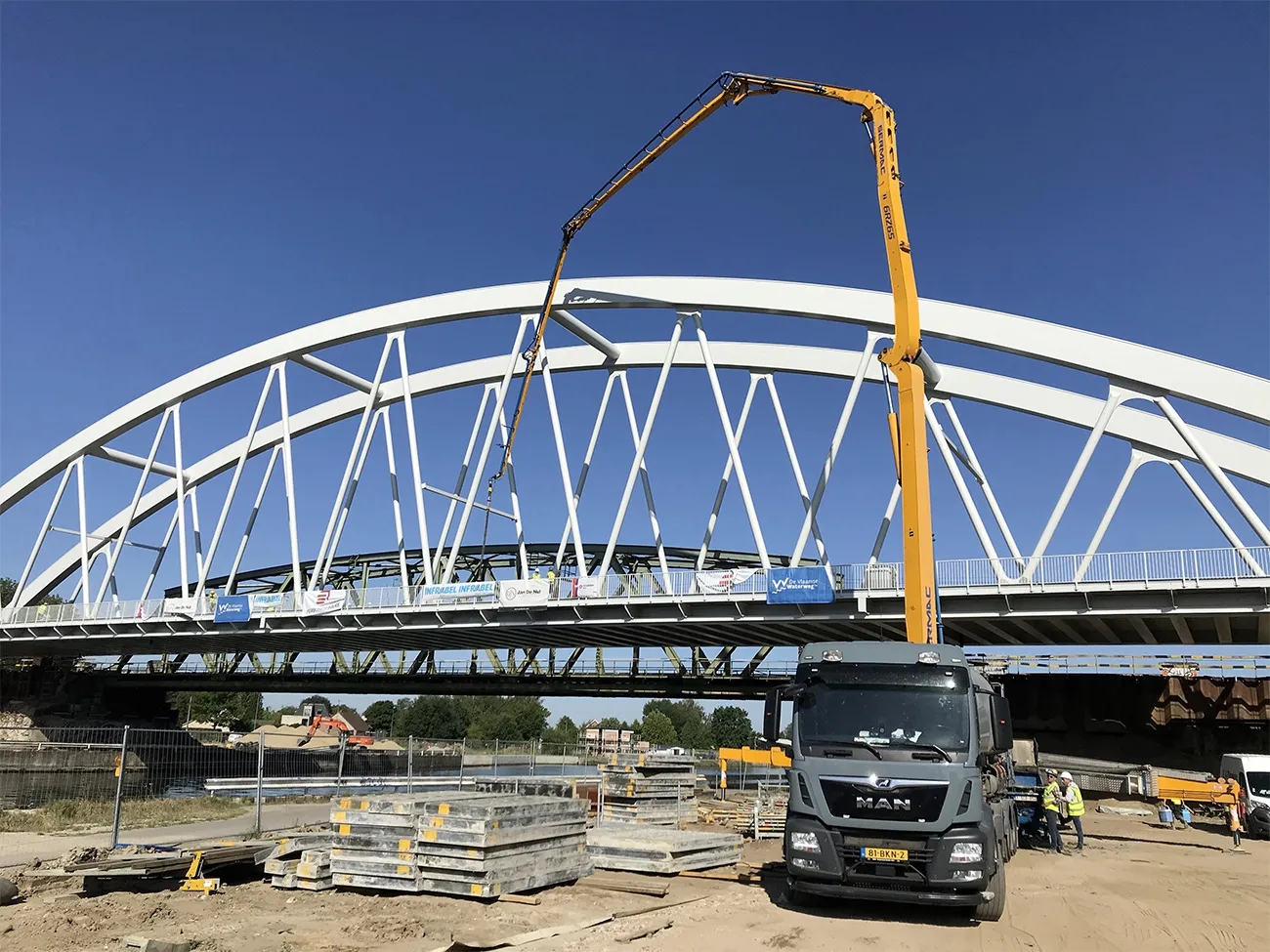
The use of macro- and microsynthetic fibre reinforcement as an alternative to steel reinforcement in concrete is gradually gaining popularity.
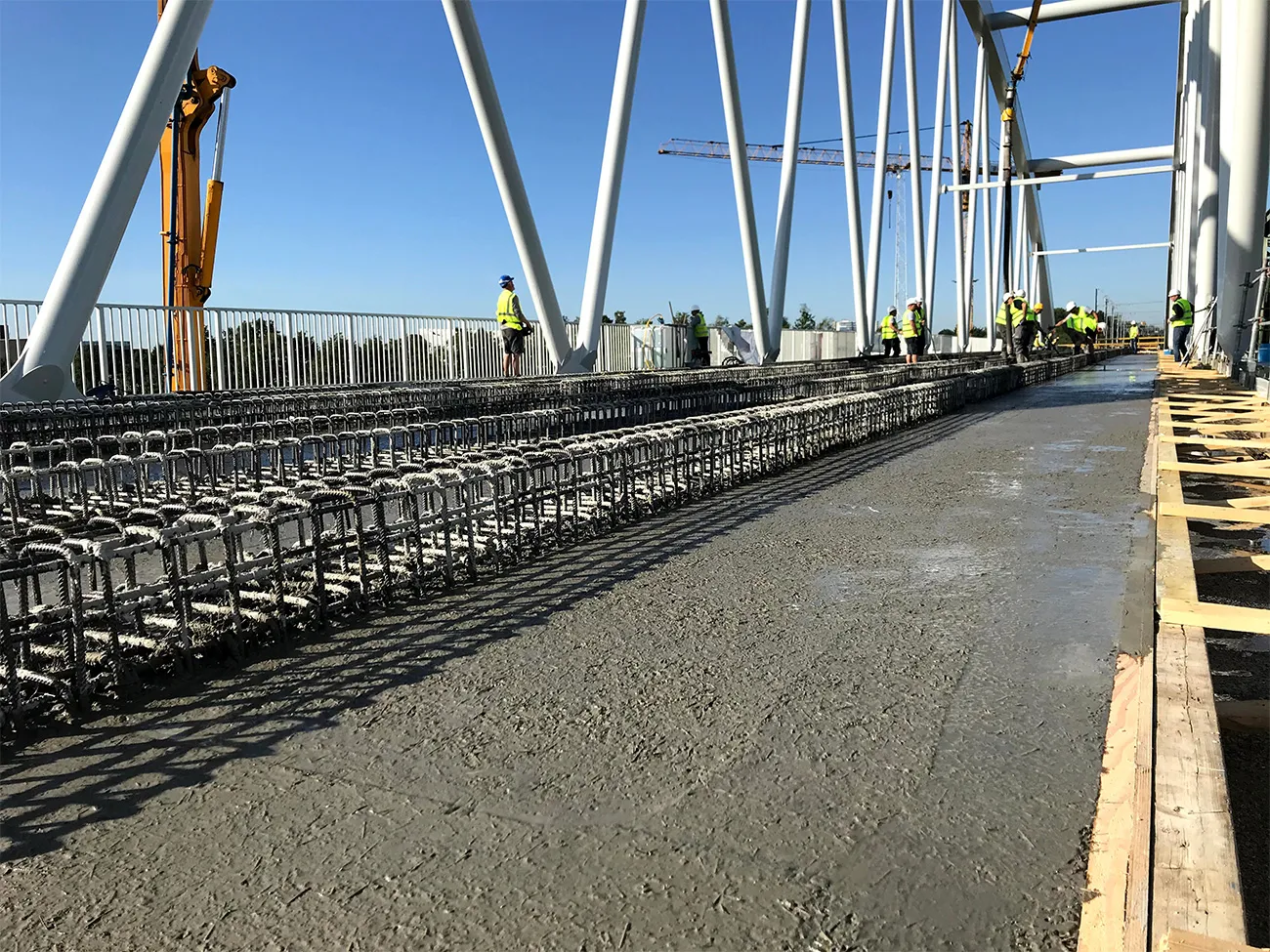
For example, the elevated bridges over the Albert Canal are being given a fibre-reinforced concrete layer containing macrosynthetic fibres from producer Adfil. “By using our synthetic, rust-proof and chemically inert fibres, we save time and costs while making a strong contribution to sustainability and environmental performance,” says Jeroen Smet, technical sales director at Adfil.
Adfil, with offices and a production facility in Zele, develops and manufactures high-performance fibres for reinforcing ready-mixed concrete, sprayed concrete and precast elements. Adfil’s macro- and microsynthetic fibres, Durus EasyFinish (ATG-certified since 2018) and Crackstop, are increasingly being used as a durable, rust-proof alternative to and/or complement for steel reinforcement. This delivers significant cost and time savings during construction. The fibres also make a substantial contribution to significantly improving the carbon footprint, as demonstrated by the Environmental Product Declaration (EPD) certification that Adfil has held since early 2020.
Market leader
Jeroen Smet: “Obtaining EPD certification was a costly and lengthy process, but it is a crucial part of our development plan. And we did not limit ourselves to the production process. The EPD covers the entire chain, including demolition and reprocessing of the material. Adfil is now the world’s leading producer of synthetic fibres for concrete reinforcement. The development took time, but that was also the purpose of the process we undertook with Centexbel, the competence centre for textiles and plastics. Our range now includes macrosynthetic fibres with a strength of 600 MPa, compared with around 500 MPa for steel reinforcement. The microsynthetic fibres, in turn, are used to control plastic shrinkage.”
Adfil is currently the only player on the market with ATG certification for synthetic fibre reinforcement. This certification makes it possible to incorporate the fibres in public contracts, where BENOR certification is required for concrete. And you can only retain the BENOR mark if you work with ATG-certified products. “That is how we are trying to make sure everyone thinks of us when fibre reinforcement is mentioned,” says Wim Ronsse, technical sales manager at Adfil. “Since obtaining ATG certification, we have become much better known in the market. We are now well known among all concrete batching plants, our direct customers. From there, we also reach contractors, engineers, architects … Development is now complete, and it is time to win over the market.”
Fibres protect steel
In Belgium, Adfil’s fibres have already been used on projects for Infrabel, among others, and De Vlaamse Waterweg has also turned to Zele for the bridges in Kuringen and Genk. “The benefits of our product for reinforcing concrete are considerable,” says Jeroen Smet. “The fibres have a major impact on the structure of the concrete. When concrete cracks and water reaches the steel reinforcement, the steel expands and the concrete eventually spalls off. Our polymer fibres are activated as soon as a crack appears, holding the concrete together to prevent more serious problems. The fibres also keep water out, protecting the steel. Steel and fibre reinforcement can therefore strengthen one another and form a highly durable whole. Steel reinforcement is very useful for increasing concrete’s tensile strength, but it does so by carrying point loads. You cannot fill concrete completely with steel. Adding fibres drastically reduces the amount of steel, while also protecting the minimum amount of steel that is still needed.”

Design with guarantees
To calculate the amount of fibre reinforcement required for a particular type of concrete, Adfil always calls on three independent engineers. Jeroen Smet: “Their calculations are based on our tests at WTCB, where we carried out various flexural tensile strength tests on different concrete strengths and with different dosages, to gain a clear understanding of the expected post-cracking behaviour. For the bridges over the Albert Canal, the concrete was grade C30/37, with a compressive strength of around 40 N/mm². We link this to the post-cracking behaviour, and the engineers start their calculations based on that information. The major advantage is that they provide a design with guaranteed performance.”
Fibre reinforcement is proving to be a highly efficient alternative not only for ready-mixed concrete, but also for sprayed concrete, for example in tunnel construction. “Our fibres were used in the construction of the Brenner Base Tunnel, which connects Austria and Italy. Sprayed concrete is applied at high pressure, and our fibres reinforce the concrete immediately. Without fibres, steel reinforcement has to be installed first, but sprayed concrete cannot bond around the reinforcement through 360 degrees, which is a disadvantage. Sprayed concrete with fibre reinforcement is therefore a highly efficient product for building tunnels,” concludes Jeroen Smet.
Question about this story? Ask your question
Keep following this
Get an email when a new story is published. No account needed.
- ThemeMaterials with a lower environmental impact
- SubjectConcrete







