









Precast concrete delivers major benefits in Ghent urban project
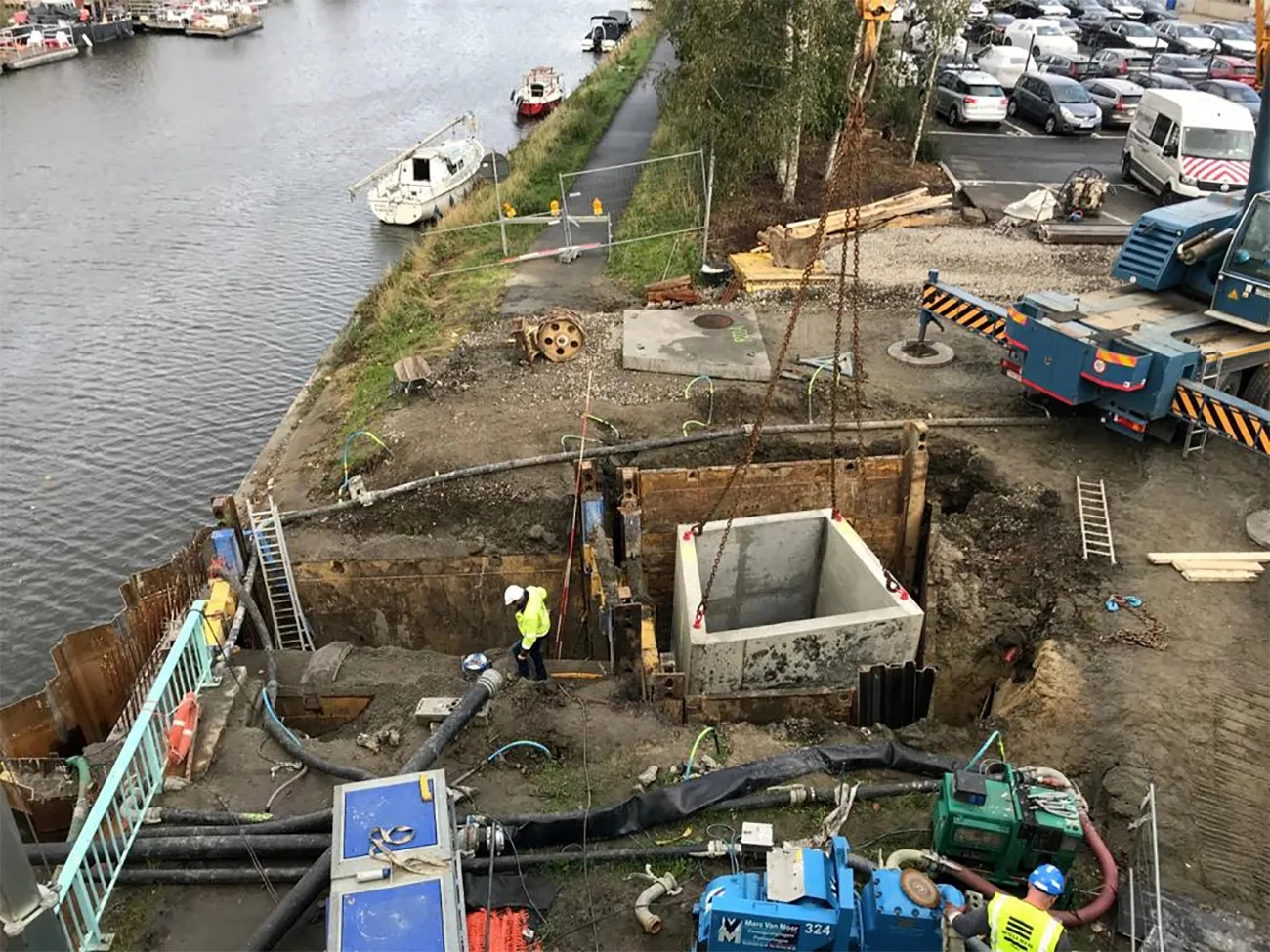
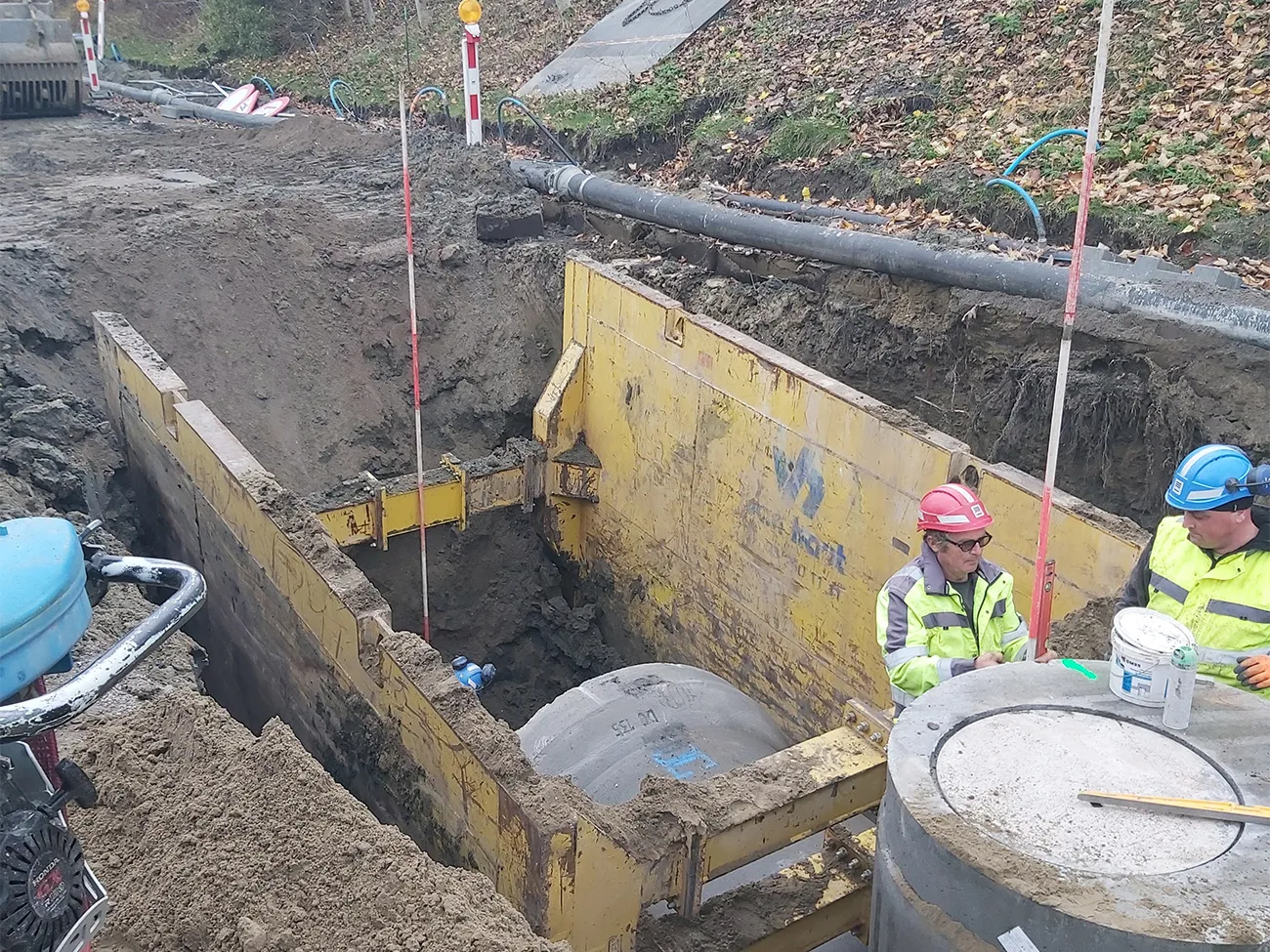
Commissioned by Stad Gent and Farys, part of Burggravenlaan, Achilles Heyndrickxlaan and the surrounding area in Ghent underwent a complete street redevelopment. A new separate sewer system was installed to carry rainwater and wastewater separately. The road infrastructure was also upgraded. For the precast concrete sewer, main contractor Willemen Infra called on precast concrete specialist Beton De Clercq, a member of FEBELCO.
FEBE is the recognised trade association for manufacturers of precast concrete products and represents the interests of the sector. The Belgian concrete industry produces a wide range of precast elements for construction and roadbuilding, from simple, unreinforced products such as masonry blocks and paving stones to large structural elements such as bridge beams. Within FEBE, FEBELCO brings together manufacturers of concrete pipes and fittings. The trade association represents all manufacturers of concrete products required for the collection, transport, treatment, storage and infiltration of water.
Around a year and a half after work began on the major project in Ghent, it is now virtually complete. Burggravenlaan and Achilles Heyndrickxlaan have been completely remodelled, making them safer for all road users. Cyclists now have separate, raised cycle tracks in red asphalt along the entire route. “We removed the old sewers and road infrastructure, installed a new separate sewer system made of precast concrete, then connected the existing sewers to our new system. The road infrastructure was also renewed to make traffic safer here. The work is effectively complete, and we are just waiting for better weather to carry out the final work on the bridge renovation.”
Partnership
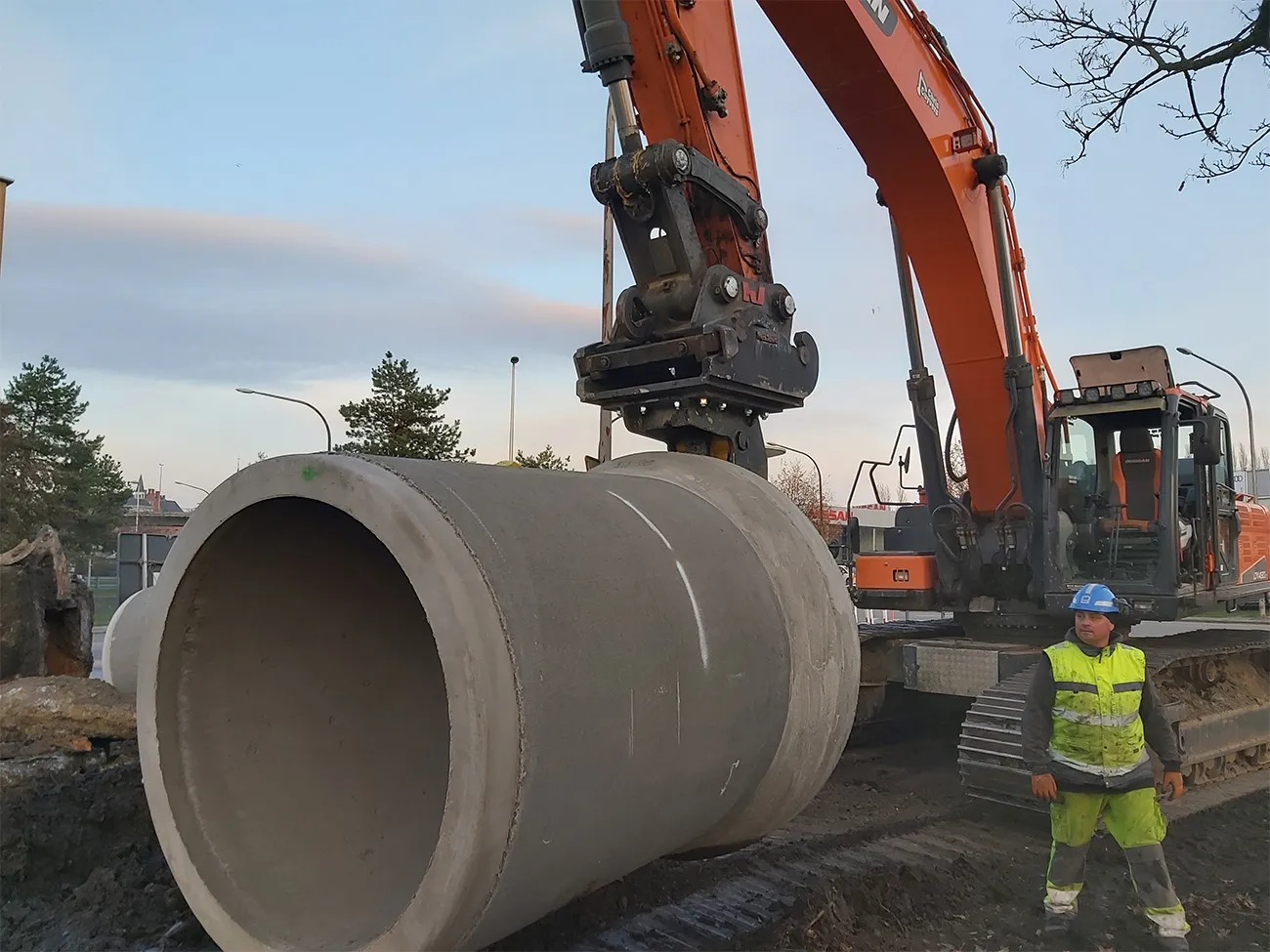
For the precast concrete sewer, Willemen Infra teamed up with its trusted partner Beton De Clercq, which specialises in quality precast concrete products for roadbuilding, industry & public spaces. “We prefer to talk about a partnership rather than a traditional customer-supplier relationship,” says Louis Vancanneyt of Beton De Clercq. “For this project, we produced and supplied a wide range of products: pipes with diameters of 400, 500 and 600, as well as, in particular, larger pipes with diameters of 800, 900, 1,000 and 1,600. The manholes also involved a great deal of bespoke work, alongside our standard manholes.”
Challenges
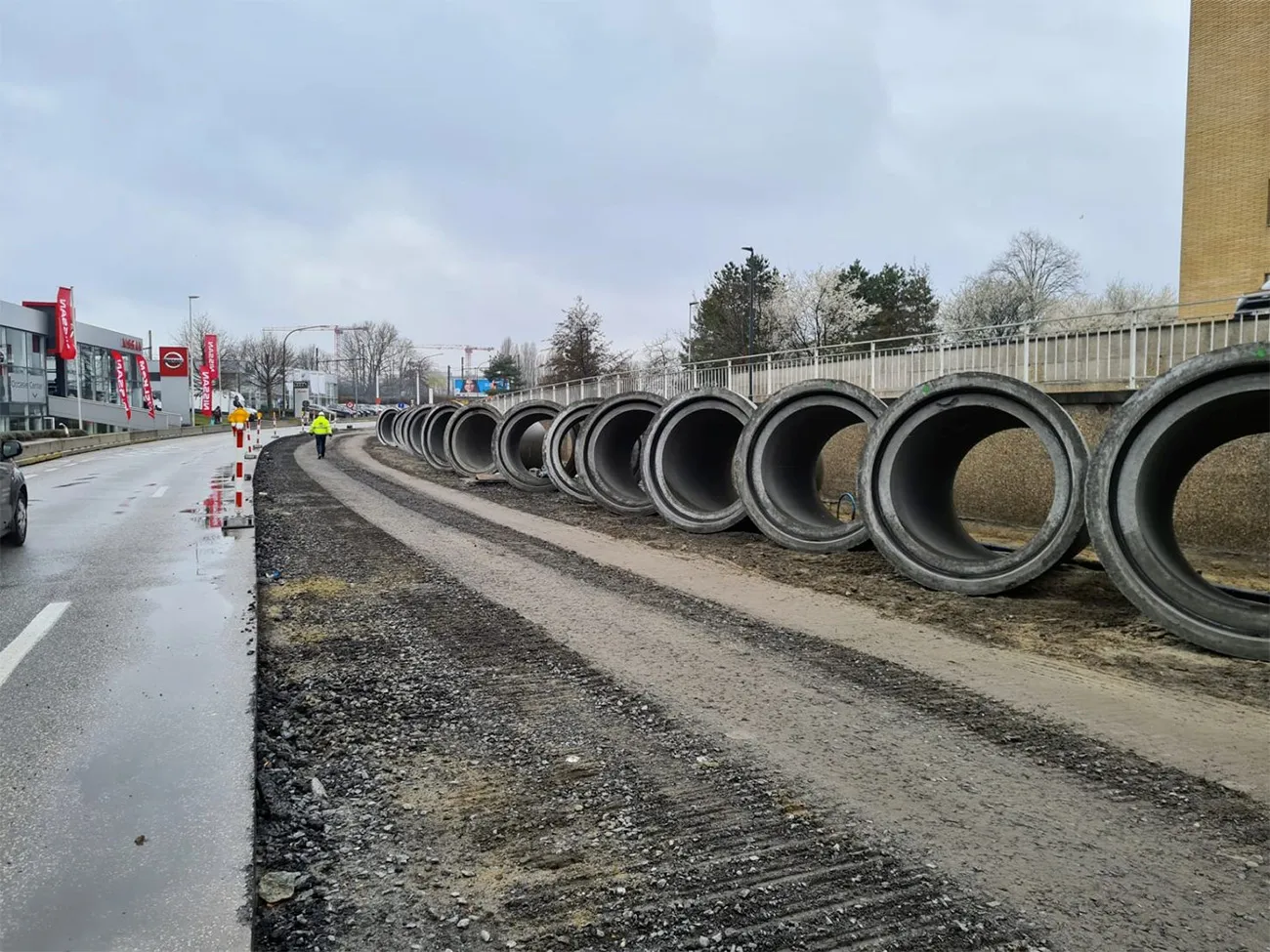
The scale of the project, the timeframe and the amount of bespoke work made it a particularly challenging project for Beton De Clercq. Louis Vancanneyt says: “It had been a long time since we had supplied such a large batch of these bigger pipes, in particular those with a diameter of 1,600. The overall scale also made it a challenging project. The logistics required careful planning: to maximise productivity on site, Willemen Infra asked us to deliver around 400 metres of pipe with a diameter of 1,600 within a two-week period.”
Bespoke work is always complex, but Beton De Clercq now has considerable experience. Louis Vancanneyt says: “We are constantly working to optimise our production process and finishing, and to improve what we do. We are currently seeing a major shift from small to large diameters. Where 400 used to be the target pipe diameter, the trend is now towards 600. Demand for diameters such as 1,400 and 1,600 has also risen sharply. It is important for us to keep our finger on the pulse and invest where necessary. We recently invested in a new tilting table and a table for erecting formwork.”
Guaranteed quality
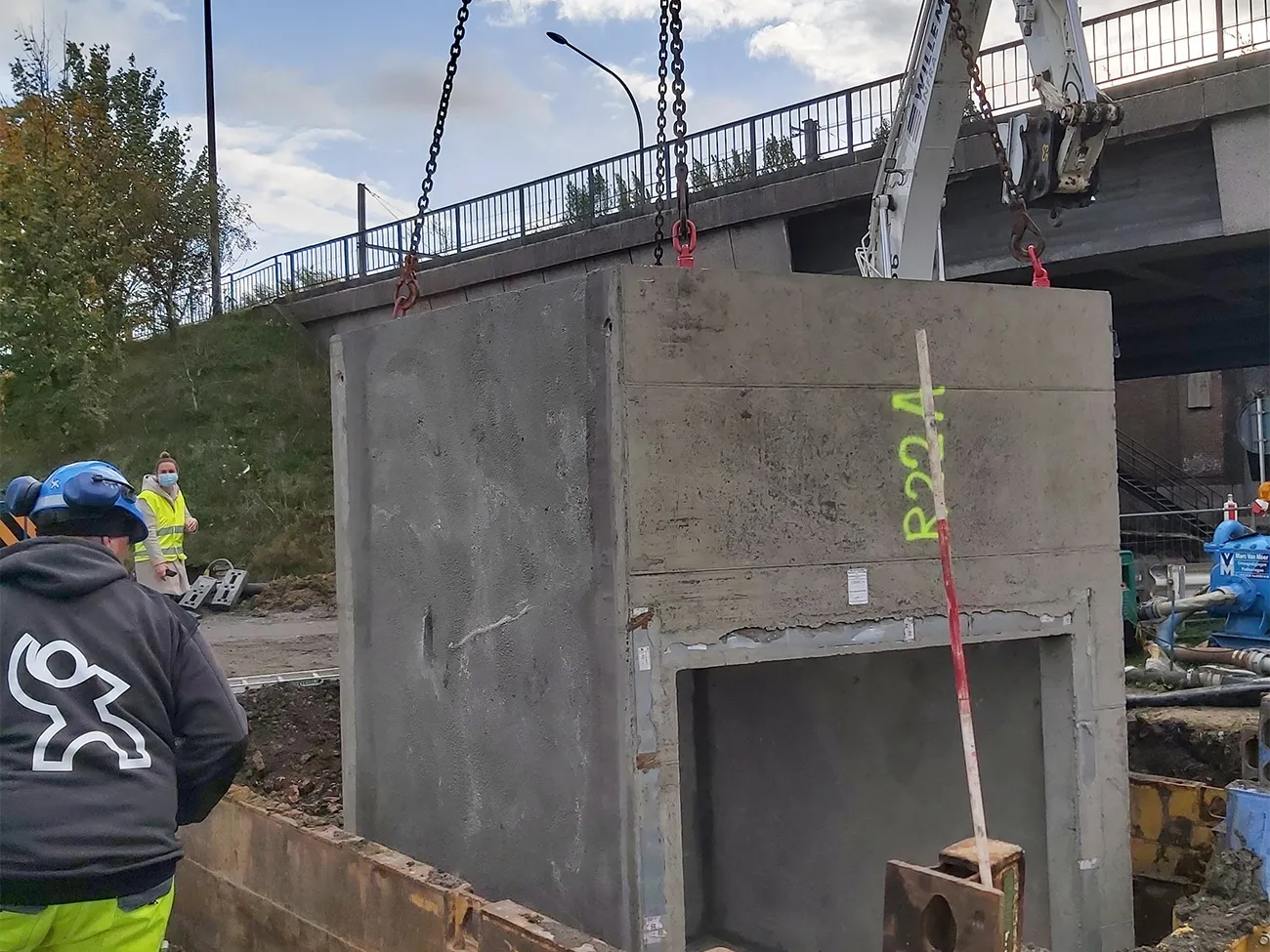
A partner such as Beton De Clercq is very valuable to Willemen Infra. Dieter Somers says: “We know each other, which of course helps. Clear communication and good preparation are very important on projects like this. Delivering the materials within two weeks was important, both to minimise disruption for local residents and to maintain our own productivity. That is another major advantage of precast concrete. It is delivered on the day, lifted off the lorry with its crane and placed in the excavation. Cast-in-place concrete takes longer, which means more disruption. We will always prefer precast concrete for sewer projects, where possible.”
“Of course, roads still have to be dug up and neighbourhoods are temporarily disrupted,” adds Louis Vancanneyt. “Precast concrete cannot eliminate this problem entirely, but it can significantly shorten the period of disruption. That is especially true when all parties agree in advance on what is needed on site and when. Another major advantage of precast concrete is the optimal conditions in the production hall. You can work much more cleanly and have everything prepared in advance. Precast concrete offers optimal production conditions and guaranteed quality.”
Question about this story? Ask your question
Keep following this
Get an email when a new story is published. No account needed.
- ThemeMaterials with a lower environmental impact
- SubjectConcrete







