









On the way to a cement-free generation
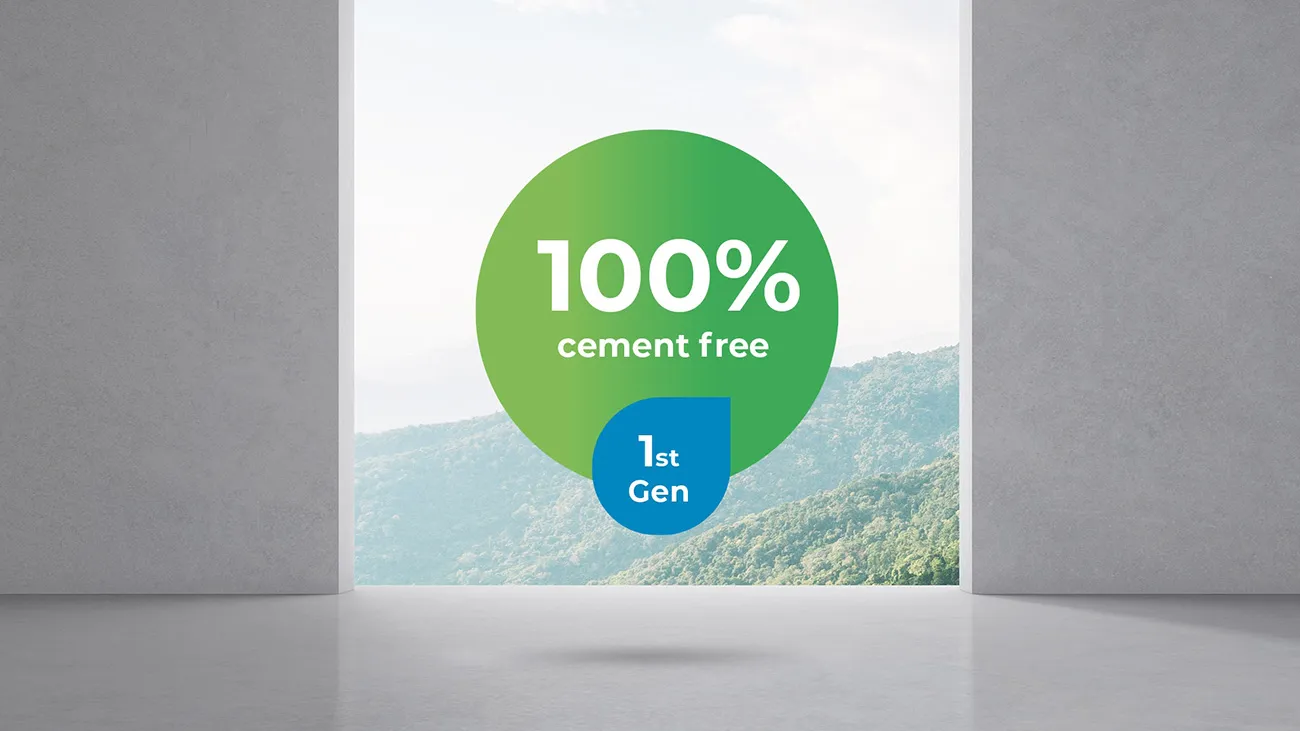
Bosch Beton believes the sustainability transition needs to happen now. “We want to keep working towards a cement-free generation of retaining walls in 5 steps. Cement-free production is therefore our ultimate goal,” it says with conviction.
What are the steps?
In the coming years, Bosch Beton will continue to develop a more advanced hybrid version, in which the cement content can be reduced further. The ultimate aim is to make a cement-free generation the standard for production. And according to CEO Brechtje Van den Beuken, that cement-free version has already been ‘born’. “We have already produced the first cement-free geopolymer retaining walls. They are now being monitored in trial gardens. New pilot projects will also get under way in the coming period. We are open to customers and clients keen to innovate and improve sustainability, whether or not as part of a pilot. Intermediate versions or custom mixes incorporating more sustainable aggregates, such as crushed concrete or eco-aggregate, are also among the options available from Bosch Beton, and can already be supplied on request.”
In recent years, Bosch Beton has invested heavily in expanding its concrete batching plant. This has enabled it to deliver a number of bespoke projects with an improved environmental cost indicator (ECI).
Where are we now?
The next step towards a cement-free generation has been achieved: Bosch Beton has now introduced its 3rd-generation concrete mix, with a cement reduction of no less than 50%. Since 1 February 2023, this mix has been the new standard for all infrastructure applications.
“We are proud to take this further step for our customers, especially as we are not charging them anything extra for it,” says Brechtje van den Beuken. “We want to show that sustainability is achievable and affordable with the right intrinsic motivation. Sustainability often has an image of being ‘expensive’ because it is used as a ‘margin tool’ rather than as a goal. But we want to shift the focus to the ‘samen’ in sustainability, making it happen together. And that is what we are doing!”

Reducing the use of raw materials
“We want to give our customers not only the assurance that the retaining walls they buy can remain structurally sound for fifty to a hundred years, but also that they can be easily reused afterwards because we work with clean raw materials,” Brechtje van den Beuken continues. “This is also a necessity. In Europe, we use around one cubic metre of concrete per person per year. That figure will not fall, given population growth, but the raw materials available will continue to diminish.”
Concrete has excellent structural properties and is an exceptionally reliable building material with a very long service life. This makes it difficult to find good alternatives. Cement is made, among other things, by heating limestone in blast furnaces. This not only takes a huge amount of energy, but also releases a great deal of CO2. An estimated 8% of global CO2 emissions are attributable to cement production. “This is where we can make gains,” says Bosch Beton.
Structural safety
At present, fully cement-free structural retaining walls do not yet fall within the scope of building standards. This complicates the process. Work is continuing under the Betonakkoord to establish the principles for ‘performance-based concrete’. This will make it possible to use structural geopolymer retaining walls in more projects. And according to Bosch Beton, that is essential: “We no longer have thirty years to work out all the standards. We will need to take a more pragmatic approach, seeking new solutions through vision and entrepreneurship. But we must also remain realistic about feasibility and affordability.” Safety will, of course, always come first. “In our own laboratory, the mixes have been extensively tested for compressive and tensile strength and resistance to acid attack. We do give up some compressive strength, but in return we make enormous CO2 savings. We can fully guarantee the structural strength and safety of our retaining walls, because that is what matters in the end: a sustainable product that does what it is meant to do for as long as possible. After all, there is a reason we offer a warranty of up to 20 years on our products,” concludes Brechtje van den Beuken.
A business enquiry for Bosch Beton? Get in touch
Companies in this story
Keep following this
Get an email when a new story is published. No account needed.
- ThemeMaterials with a lower environmental impact
- SubjectConcrete
- CompanyBosch Beton







