









New concrete standard: what impact will it have on site?
The new Belgian concrete standard NBN B15-001 has been in force since 4 July this year. We asked Bram Dooms of the WTCB what impact the changes to the 2012 standard will have on contractors and concrete plants.
Standards are revised periodically to reflect developments in the sector. Concrete is no exception. A new version of the European concrete standard (NBN EN 206) was published in 2014, followed by a minor amendment in 2016. The standards committees in Belgium then set to work on aligning the Belgian standard with it. “A number of provisions in the European standard were amended and added, and the aim is to tailor these to Belgium. This may involve amendments as well as additions. The European standard leaves certain matters open for Member States to decide for themselves,” explains Bram Dooms, Deputy Head of the Concrete Technology Laboratory at the WTCB.
The new concrete standard, which replaces the 2012 version, can be obtained from NBN. WTCB members can download the new standard, along with many other construction standards, from the WTCB website. Febelcem has also published a useful document bringing together the European and Belgian standards. The foreword to the standard lists all the changes from the previous version. Bram Dooms explains here which changes have the greatest impact on site.
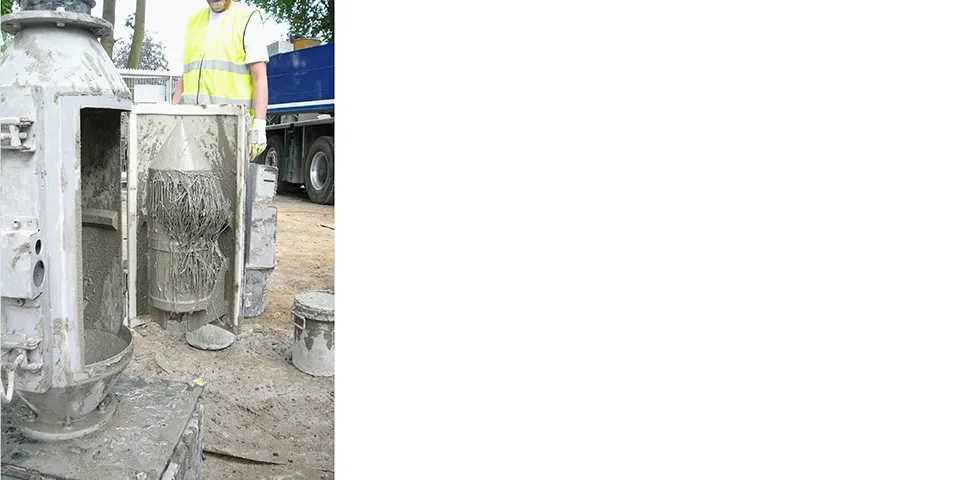
It is now possible to obtain BENOR fibre-reinforced concrete.
Durability
A whole annex on preventing the alkali-silica reaction has been added to the standard. “Prevention and exposure classes are defined, which the contractor must specify in the concrete order as instructed by the client. These classes entail measures that the concrete plant must take to prevent an alkali-silica reaction. The measures are also described in the standard,” says Bram Dooms.
Recycled aggregates
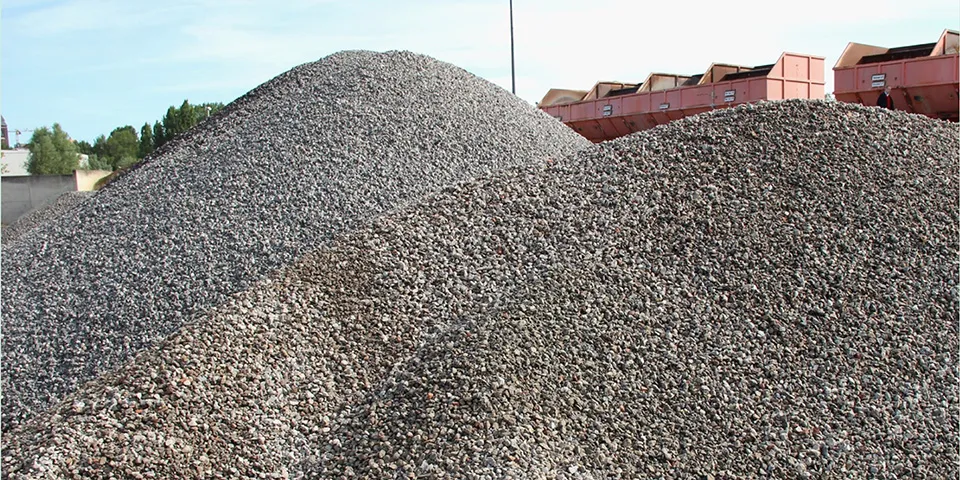
In the previous version of the standard, the use of recycled aggregates was permitted only to a very limited extent. “This has been significantly expanded in the new standard,” says Bram Dooms. “The recycled aggregates must, however, meet certain criteria. There is type A+ recycled concrete aggregate and type B+ mixed recycled aggregate. For reinforced concrete in exposure class EE3 (outdoor environment with frost), for example, we can now replace up to 20% of the coarse aggregate with type A+ recycled concrete aggregate, whereas this was not permitted before. Now that the BENOR regulations have also been amended to reflect this, it is possible to obtain BENOR concrete containing a proportion of recycled aggregates. Circularity and ecological solutions are increasingly in demand on site. The standards are responding to this.”
Fibre-reinforced and self-compacting concrete
Rules for self-compacting concrete were previously set out in a separate standard and have now been incorporated into the concrete standard, along with the rules for the use of fibre-reinforced concrete. The BENOR regulations have also been amended accordingly, making it possible to obtain BENOR-certified self-compacting concrete and BENOR-certified fibre-reinforced concrete. “Please note: the concrete plant can only guarantee a uniform distribution of fibres in the concrete when using fibres with an ATG type 1 technical approval. Fibres with an ATG type 2 approval, in turn, allow the flexural toughness properties of the fibre-reinforced concrete to be guaranteed under the BENOR mark,” stresses Bram Dooms.
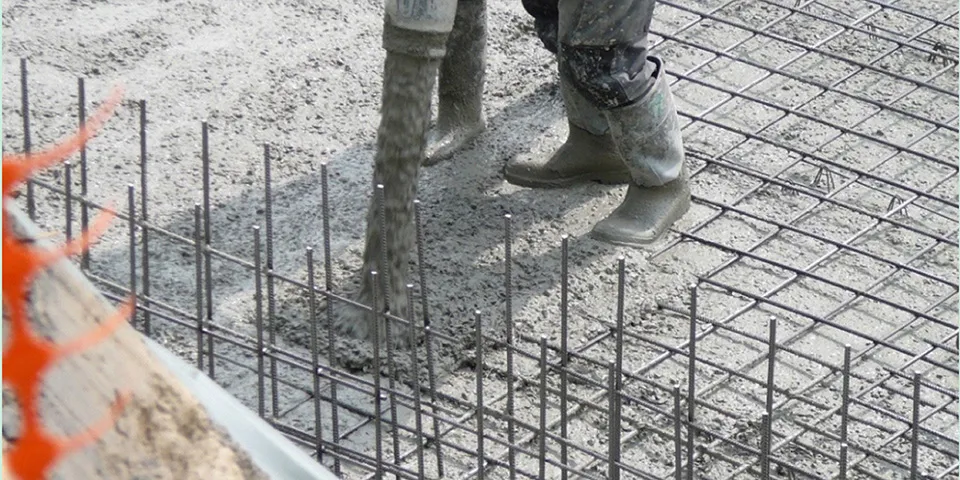
The new Belgian concrete standard replaces the 2012 version.
Concrete for special geotechnical works
Rules for concrete used in special geotechnical works, such as bored piles and diaphragm walls, already existed, but were set out in other standards and were therefore often not followed, causing all sorts of problems. “For diaphragm walls, for example, concrete was ordered as if it were for a conventional application, even though the minimum cement content and fine material content need to be much higher for this type of application,” explains Bram Dooms. “By incorporating these provisions into the general concrete standard, the aim is to ensure that they are followed from now on.”
Suitability of cement for use
Finally, it is also important for concrete plants to note that they may no longer use just any type of cement for any application. The standard sets out suitability provisions that can be used for this purpose.
Question about this story? Ask your question
Keep following this
Get an email when a new story is published. No account needed.
- ThemeMaterials with a lower environmental impact
- SubjectConcrete







