









Lower environmental impact with green concrete
Text Joaquim Dupont Beeld Franki Foundations
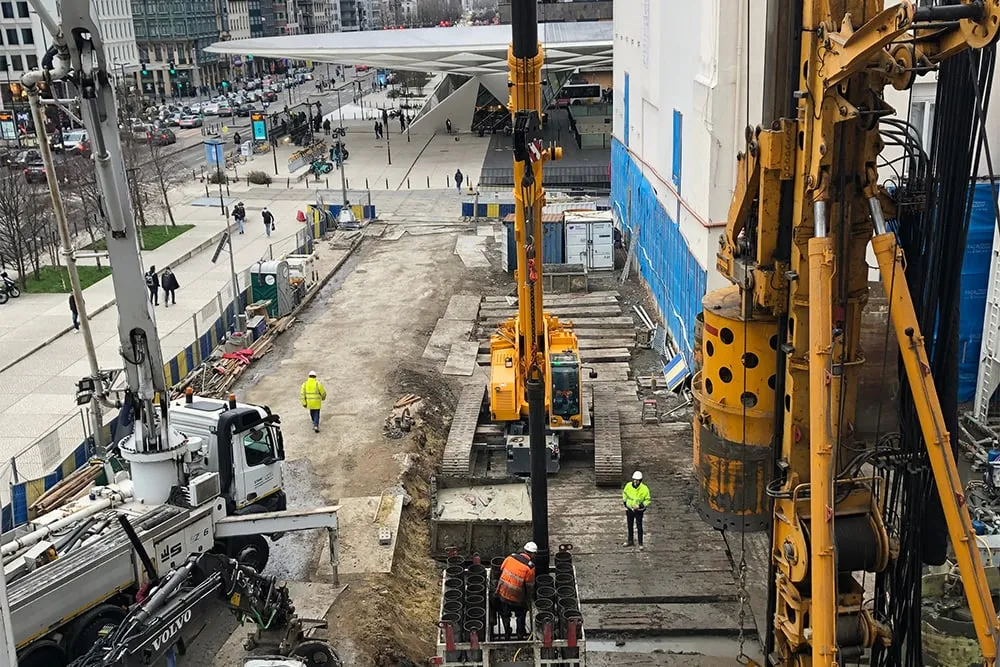
Franki Foundations has been making considerable efforts for several years to drastically reduce its environmental impact. For the foundation specialist, this means reducing CO2 emissions and making a conscious choice to use natural resources. Concrete and cement, which are highly energy-intensive and place heavy demands on raw materials, are naturally a key focus in this effort.
That is why the company uses new ‘green’ types of concrete in its projects, particularly concrete mixes containing recycled aggregates. “Current standards allow the use of concrete containing up to 30% recycled aggregates. These types of concrete are therefore an effective solution in helping us meet our goal of minimising the use of natural resources,” says project manager Adrien Dumont.
Crowne Plaza Hotel, an innovative project
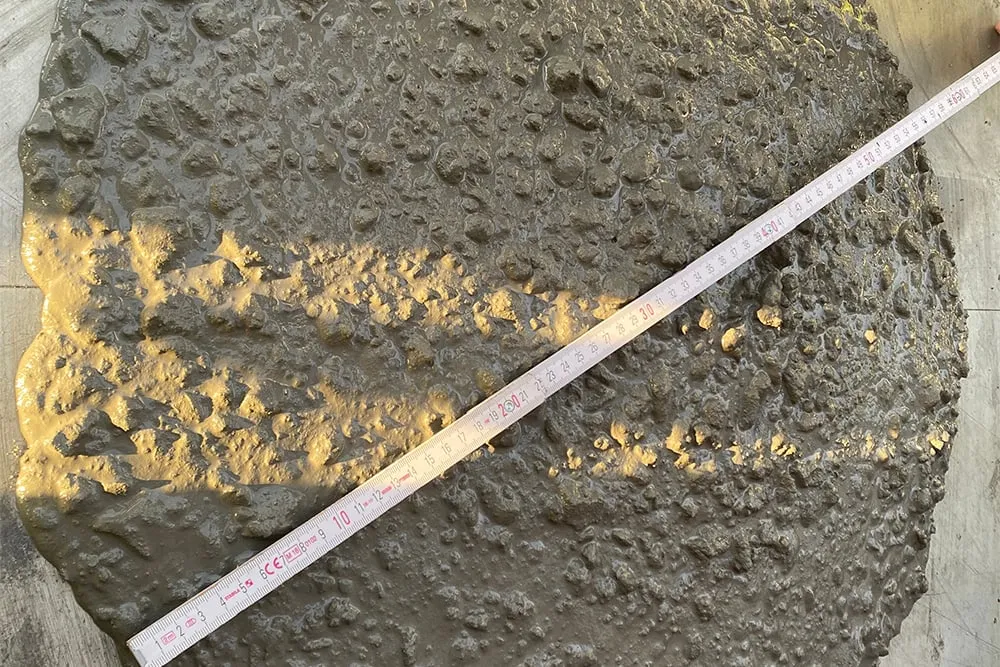
For the Twin Towers project in Brussels’ Northern Quarter, CCB, a partner of Franki Foundations, used several types of concrete containing recycled gravel. This success story prompted the two groups to work together and apply the best practices to another large-scale project, with an even more specific application in mind: “For the prestigious Crowne Plaza project in Brussels, Franki Foundations and CCB worked together to develop a concrete mix containing recycled gravel specifically for constructing large-diameter foundation piles. These piles are 2 metres in diameter and 50 metres deep, a first in Belgium. This enabled us to reduce our need for natural resources, in particular by avoiding the extraction of around 1,000 tonnes of gravel from quarries,” explains Adrien Dumont.
Developing this type of concrete for foundation piles presented a significant technical challenge, he says: “Concrete for foundation piles must have two opposing properties: high fluidity and high stability. These qualities are somewhat harder to achieve with concrete containing recycled gravel, whose quality can vary, making the producer’s job more difficult.”
To further reduce the consumption of natural resources, Franki Foundations’ teams are also working on other trials, such as reusing well water to reduce the use of mains water.
The importance of good preparation
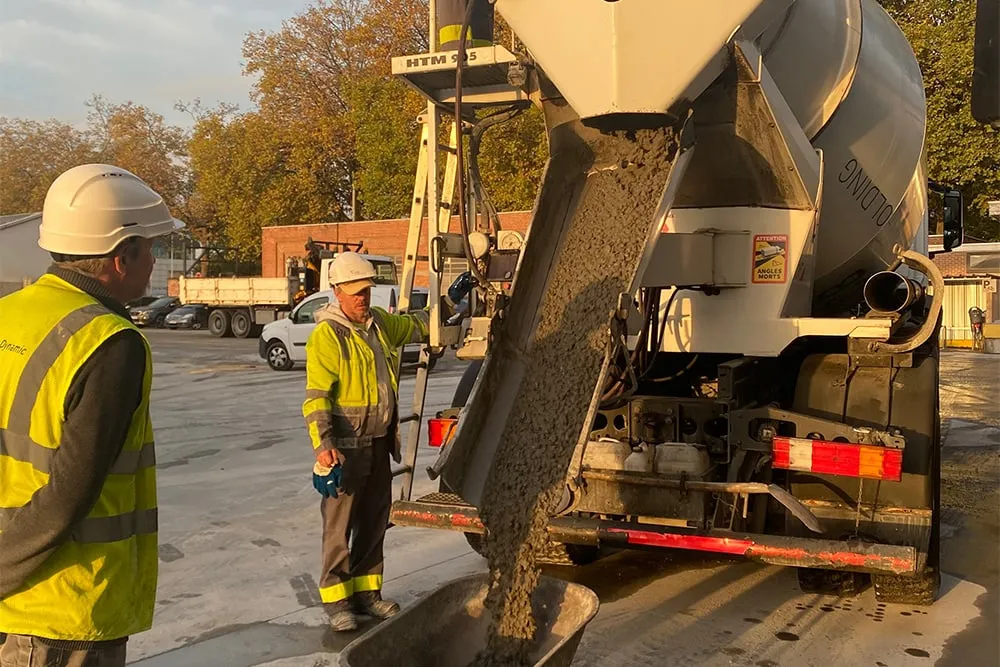
“During the stages leading up to a project, we systematically try to challenge the specifications,” stresses Adrien Dumont. Project specifications sometimes impose concrete requirements that are too high for the intended use. During the preparation phase, Franki Foundations therefore discusses certain points with the various parties and proposes solutions, such as changing the concrete’s exposure class: “When you consider that this can reduce the amount of cement in the concrete by 5 to 15%, and that 1 tonne of cement corresponds to around 1 tonne of CO2 emissions, the environmental impact of changing the concrete’s exposure class on a project scale is not negligible.” The site manager regrets that this proposal is not always taken into account. “Some players are open to discussion today, but others are less so, which is a pity given the challenges facing our sector,” he explains.
He also advocates systematic testing of the soil and groundwater to determine the exposure classes. These are determined by the concentrations of certain chemicals. “But these tests are not often carried out, and the worst-case scenario is generally assumed. As a result, the highest class is selected straight away, which is harmful to the environment. To give an idea of the benefits of these tests, we recently completed a project where the test results allowed us to lower the exposure class from C 35/45 to C 25/30 concrete. This amounts to a reduction of almost 15% in the amount of cement used, directly affecting the project’s CO2 emissions.”
Thorough, efficient and detailed preparation makes it possible to choose the best technical and environmental solutions for a given project. “This preparation phase and all the tests that can be carried out in advance are essential to reducing environmental impact and, more generally, to the ecological transition of the construction sector. They ensure that the right product is used in the right place. But to develop these practices and achieve our goal, namely reducing our overall environmental impact, we need genuine cooperation between all the parties involved in a project,” concludes Adrien Dumont.
Question about this story? Ask your question
Keep following this
Get an email when a new story is published. No account needed.
- ThemeUsing and protecting the subsurface
- SubjectConcrete







