









Green developments in concrete raw materials
“To guarantee the same level of quality as CE-marked cements, BE-CERT is developing a scheme for these products under the BENOR mark,” says Caroline Ladang, Director at BE-CERT.
The standstill is the result of several legal cases concerning the legal scope of harmonised standards. Pending a definitive solution, publication of harmonised standards in the Official Journal of the European Union (OJEU) has been severely curtailed, which also presents BE-CERT with a number of challenges. Caroline Ladang: “In the admixtures sector (pigments), the CE mark is applied on the basis of an old version of the harmonised standard, because the new version has not been published. In the cement sector, committee TC51 decided to draw up a non-harmonised standard, EN 197-5, to enable producers to develop products that form part of the ‘green’ transition. As a result, it is not possible to apply the CE mark to these new products.”
BE-CERT is also actively helping to create a framework for using cements that do carry a CE mark but for which there is little experience on the Belgian market (pozzolanic cements, etc.) in concrete for structural applications, both at the level of technical approval (ATG) and under the BENOR mark. Caroline Ladang: “Natural pozzolans are used widely, particularly in countries around the Mediterranean, understandably, given their availability in more volcanically active regions. Other constituents, such as calcined shale and calcareous fly ash, are used on a very local basis. Other potentially interesting materials are artificial pozzolans, produced by thermally treating certain streams of residual products.”
Additions
Many residual products, whether or not specifically treated, have hydraulic or pozzolanic properties that make them suitable for replacing cement (natural or artificial pozzolans, slags, treated sludge, etc.). Through BUtgb, BE-CERT is actively helping to draw up approval guidelines to enable such products to be used as additions in concrete and mortar. Caroline Ladang: “Certification for these products generally takes place in two stages. In the first stage, a technical approval can be issued, allowing the product to be used, but under controlled conditions. The time this stage takes depends on how much is already known about the product and how much experience there is with it. The executive bureau will evaluate the risks in relation to the application and draw up a suitable test programme.”
Once there is sufficient clarity in this way, product properties can be incorporated into a standard or PTV in a more generic manner, providing a basis for general certification under the BENOR mark. “BE-CERT is also leading the development of normative reference documents that provide guidance on how to assess new products,” explains Caroline Ladang. “The NBN B 15-100 standard for assessing alternative binders is already in place, and the project for a parallel standard to assess inert raw materials is almost complete.”
Aggregates
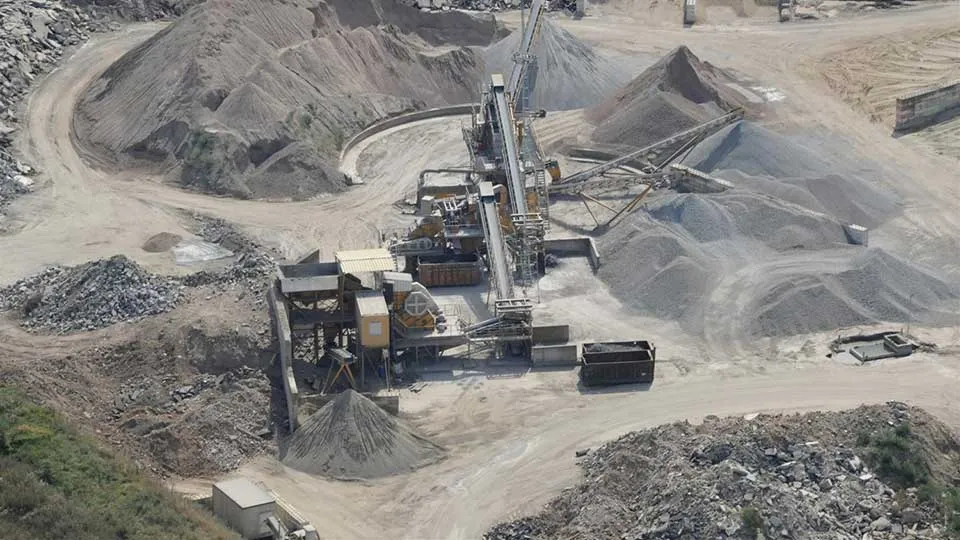
Recycled aggregates made from crushed concrete and brick rubble are already well established in many low-grade applications. From an environmental perspective, however, it is important to use these raw materials at a higher level of quality and quantity. “Using a material in accordance with its properties makes the best use of it. It is therefore advisable to use available alternative raw materials in applications where their mechanical and chemical properties can best be put to use. Recycled aggregates can of course be used as fill material, but there are many other materials of much lower technical quality available for this purpose. Using crushed concrete in new concrete is therefore a much more efficient application. BE-CERT is actively involved in this work through standardisation, the development of the BENOR scheme and projects at regional level (end-of-waste, Circulair betonakkoord Vlaanderen),” concludes Caroline Ladang.
Een zakelijke vraag aan PROCERTUS? Get in touch
Companies in this story
Keep following this
Get an email when a new story is published. No account needed.
- ThemeMaterials with a lower environmental impact
- SubjectConcrete
- CompanyPROCERTUS







