









Green concrete for a better environment
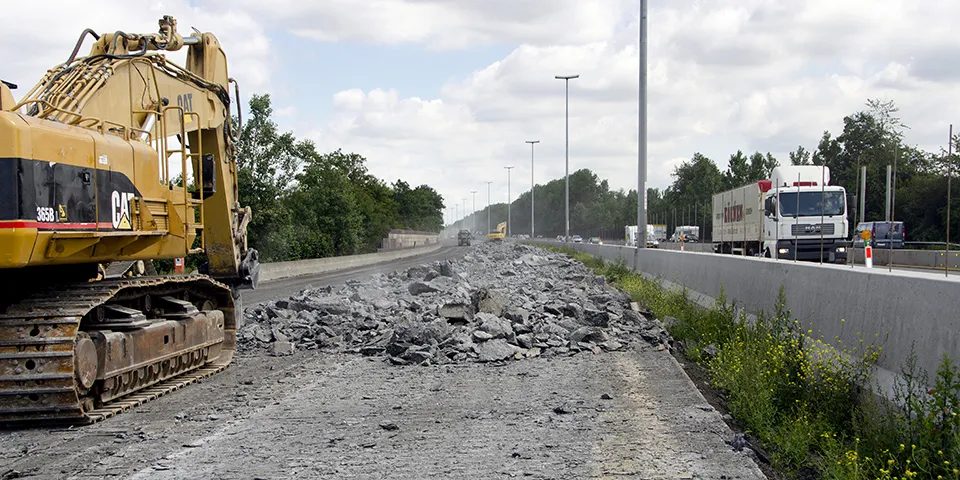
The recycling of demolition rubble has advanced considerably since 1990, and the quality of concrete aggregates has steadily improved. High-quality aggregates have been developed and are being used, but there is still a long way to go. “Ready-mixed concrete still accounts for 4 to 5% of global CO2 emissions. Efforts must and can be made,” says Willy Goossens of the non-profit organisation Groen Beton Vert.
Groen Beton Vert was founded on 19 September 2013. The initiative was taken by several members of the non-profit Federation of Recycling Aggregate Producers (FPRG). “I have been chair of the FPRG since 1990,” says Willy Goosens. “It had been clear for some time that we needed to upgrade aggregates, so several FPRG members and I decided to set up Groen Beton Vert. The use of high-quality concrete aggregates in ready-mixed concrete was a very important priority, and we have already taken many steps in the right direction.”
BENOR certification
The environmental benefit is primarily linked to reducing CO2 emissions from ready-mixed concrete production by using recycled aggregates. This cuts emissions from the aggregate component by 20 to 30%. Willy Goossens: “That is a significant share. It is technically feasible, but customers also need to accept it and be confident in its quality. In Belgium, ready-mixed concrete is certified under the BENOR label. For concrete containing recycled aggregates to receive BENOR certification, the product must also be permitted under the Belgian concrete standard. We made sustained efforts over many years to achieve this, and succeeded. For the most common applications in the construction sector, it is now permitted to replace up to 20% of the coarse aggregates with high-quality concrete aggregates.”
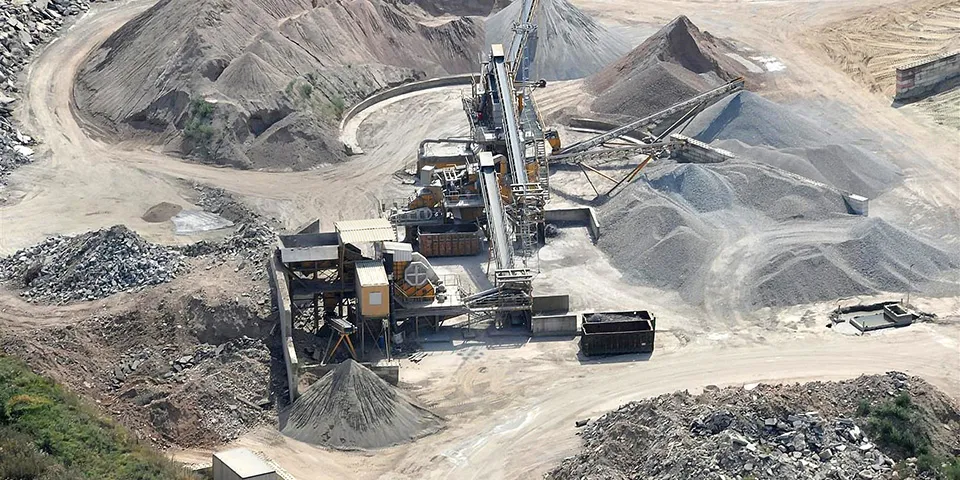
Using recycled aggregates can reduce CO2 emissions from ready-mixed concrete production by up to 30% for the aggregate component.
Alternative binder
High-quality concrete aggregates can make an environmental difference, but cement production accounts for the largest share of concrete’s CO2 emissions. Globally, CO2 emissions from the cement industry account for 8 to 9% of total industrial emissions. By 2030, that figure could rise to as much as 25%. “Producing 1 tonne of cement generates 900 kg of emissions. It is therefore vital to look for alternative binders,” says Willy Goossens. “At Groen Beton Vert, we promote the use of ground granulated blast-furnace slag, fly ash and geopolymers, among other materials. Alternatives are available, but at some point their quality has to be demonstrated, and that is sometimes where the problem lies. This requires considerable effort in terms of trial projects and the like. The WTCB has already included a range of alternatives in its Circular Concrete programme.”
Circular economy
There is a great deal of activity at the research and production stages, but are specifiers also on board? “That too is gradually getting under way. The new standard specification for road construction (SB 250 version 4.1) provides detailed guidance on using high-quality concrete aggregates. Major clients have certainly got the message,” says Willy Goossens, emphasising concrete’s circular credentials. “Concrete allows you to close the loop neatly. A striking example is the circular agricultural road in Veurne, a project by the company De Brabandere from Veurne. Company director Pieter is vice-chair of Groen Beton Vert. An old agricultural road was recycled in its entirety to build the new one. The raw materials were available on site, and processing also took place on site, keeping transport distances to an absolute minimum. This delivers enormous environmental benefits.”
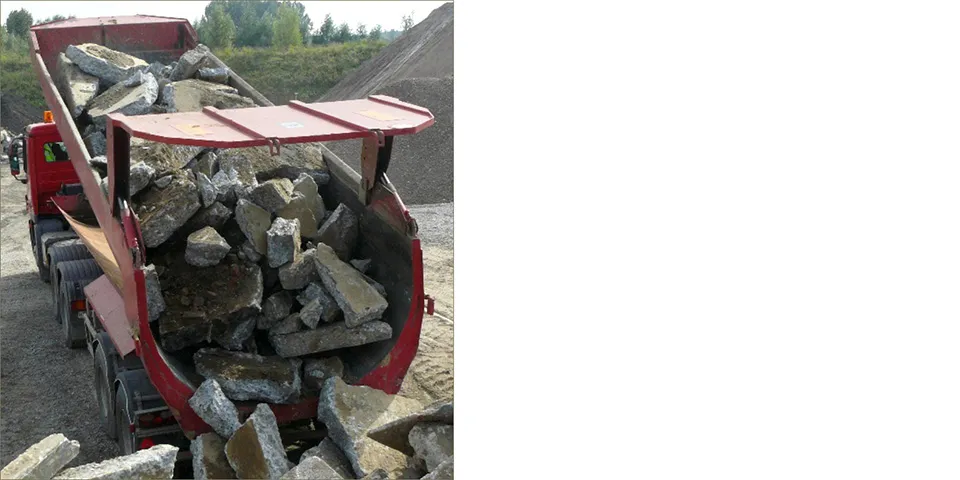
The recycling of demolition rubble has advanced considerably since 1990, and the quality of concrete aggregates has steadily improved.
Green Deal Circular Construction
Together with 230 other participating public and private organisations, Groen Beton Vert signed the Green Deal Circular Construction on 22 February. It is a close collaboration between businesses, public authorities, knowledge institutions and citizens, with the aim of achieving a circular economy in Flanders by 2050. “A positive and important step. It gives many businesses the chance to exchange ideas, and, above all, involves the government. This could potentially help create a political agenda. One possible target could be to recycle all concrete released by 2030 into ready-mixed concrete. This is already happening in the Netherlands.”
Question about this story? Ask your question
Keep following this
Get an email when a new story is published. No account needed.
- ThemeMaterials with a lower environmental impact
- SubjectConcrete







