









Fibre-reinforced concrete for refurbished platforms in Blankenberge
Text Niels RouvroisImage Adfil
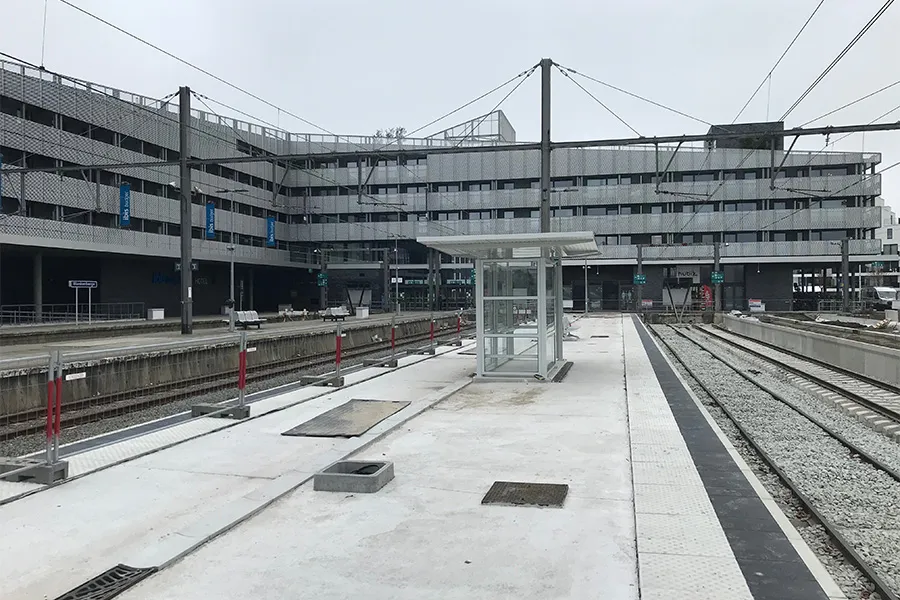
NMBS and Infrabel joined forces to renew and extend the platforms at Blankenberge station. A total of 7 platforms are being refurbished, along with the ballast and sleepers on tracks 5 and 6. Fibre-reinforced concrete was chosen instead of steel-reinforced concrete for the new platform concrete. Adfil, a renowned manufacturer of microfibres and macrofibres, was brought in by main contractor Stadsbader as an expert. “Fixing steel mesh requires a lot of man-hours. If you opt for fibre-reinforced concrete, those hours can be put to more efficient use elsewhere,” says Steven Anseeuw, technical sales manager at Adfil.
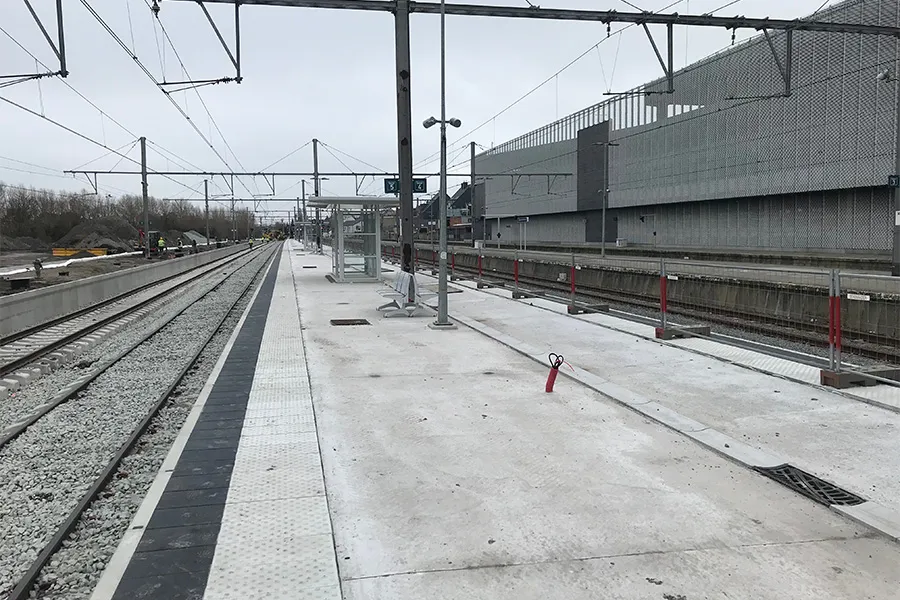
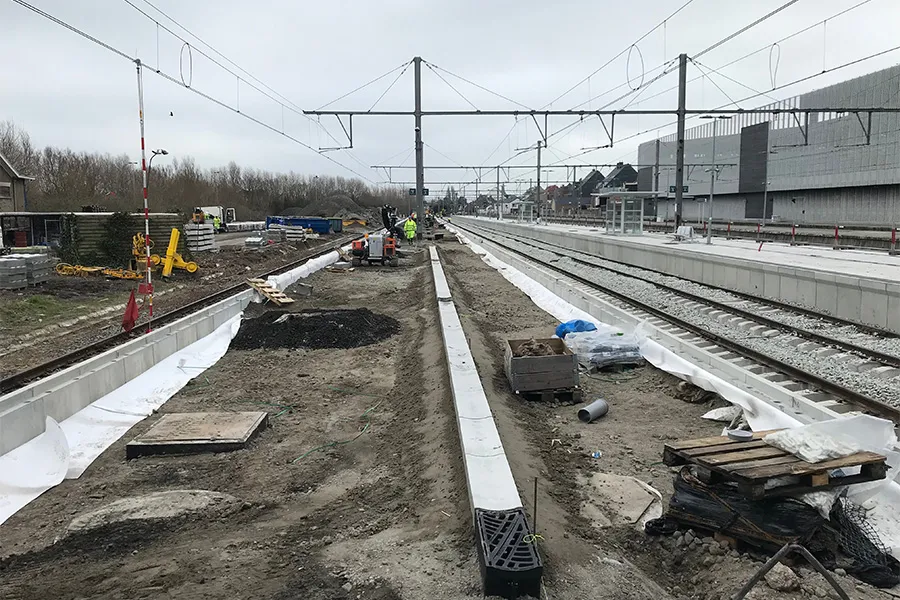
The works began in September 2022 and were scheduled to run until summer 2024. The project is being carried out in phases, with no fewer than 10,000 m² of platform being refurbished in total. The first part of the platform refurbishment was completed before Easter, allowing Blankenberge to welcome passengers back at full capacity during the summer months. Work on the remaining platforms will begin in September.
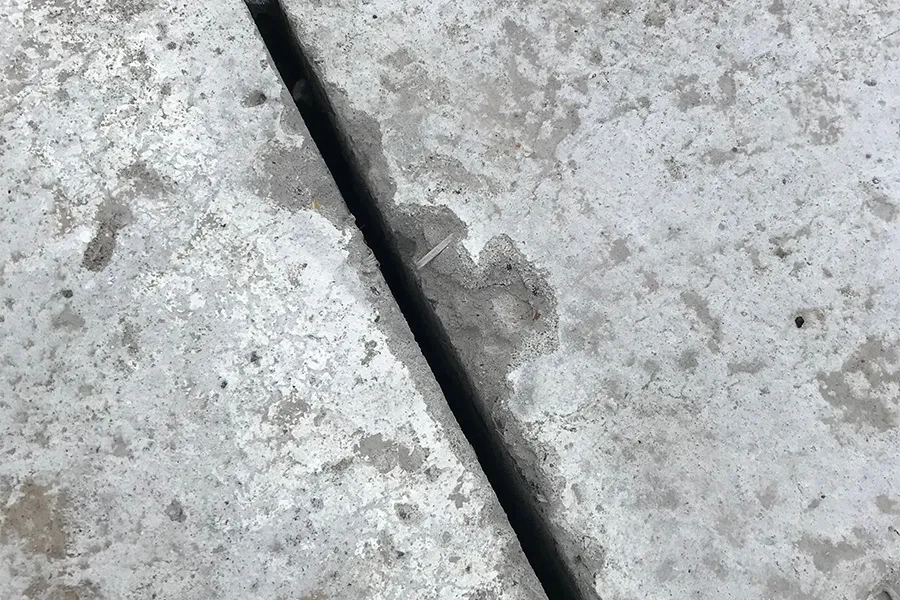
Notably, traditional steel reinforcement was replaced with fibre reinforcement for the concrete in this project. Steven Anseeuw says: “This involves laying a new concrete sub-base, which will then be topped with 3 cm of asphalt. Main contractor Stadsbader has known our fibres for some time, but the clients needed some convincing before moving away from steel reinforcement. We were asked to recalculate the project based on the use of fibres. The study showed that choosing fibre-reinforced concrete would deliver significant benefits.”
Cost-saving, sustainable and more environmentally friendly
Flanders-based Adfil, a developer and manufacturer of high-performance fibres for reinforcing ready-mixed concrete, sprayed concrete and precast elements, has long advocated the use of fibres as a sustainable alternative. Steven Anseeuw says: “The benefits are clear. Fixing steel mesh requires a lot of man-hours. If you opt for fibre-reinforced concrete, those hours can be put to more efficient use elsewhere. Fibres are also cheaper than steel reinforcement as a material, particularly given current steel prices. That means a double saving. Fibre-reinforced concrete also delivers environmental benefits. Choosing fibres instead of steel reinforcement cuts CO2 emissions by 80 per cent. Our fibres have a full cradle-to-grave EPD, covering the entire lifecycle from the production of the fibre through to the recycling of the concrete, when we can filter the fibres out. Finally, the fibres are durable over time, retaining their strength throughout the life of the structure.”
Durus Easyfinish
Durus Easyfinish fibres were used for the platforms in Blankenberge. These polypropylene macro-synthetic fibres from Adfil have revolutionised concrete construction. The macrofibres offer superior performance, cost savings, and health and safety benefits for concrete suppliers, contractors and designers. Durus Easyfinish is very easy to handle and use. The reinforcement is mixed into the concrete ready to use, or can be added on site. This is a major advantage over reinforcement mesh, which can be installed incorrectly. The fibres are not affected by the alkalinity of concrete or by moisture, so they are 100% rustproof. This ensures a long service life. Durus Easyfinish also requires considerably less storage space than steel reinforcement and eliminates the risk of injuries from tripping, falling and cuts associated with steel reinforcement mesh. “These fibres can be used in many applications. In another project, we will soon replace a double layer of 8 mm steel reinforcement. That means replacing 12 kilos of steel per m² with 3 kilos of Durus Easyfinish. The cost savings on the one hand and the sustainability benefits on the other are enormous,” concludes Steven Anseeuw. ■
Question about this story? Ask your question
Keep following this
Get an email when a new story is published. No account needed.
- ThemeMaterials with a lower environmental impact
- SubjectConcrete







