









European first with ‘green’ sulphur-based concrete sleepers
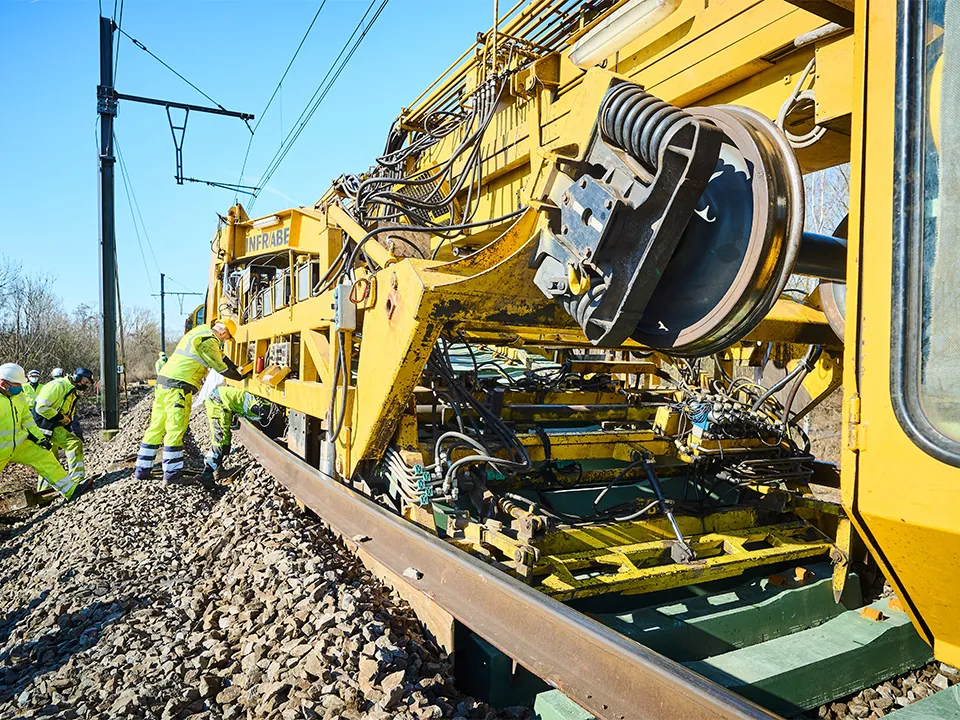
Infrabel will become the first European rail infrastructure manager to make the sleepers across its network ‘green’.
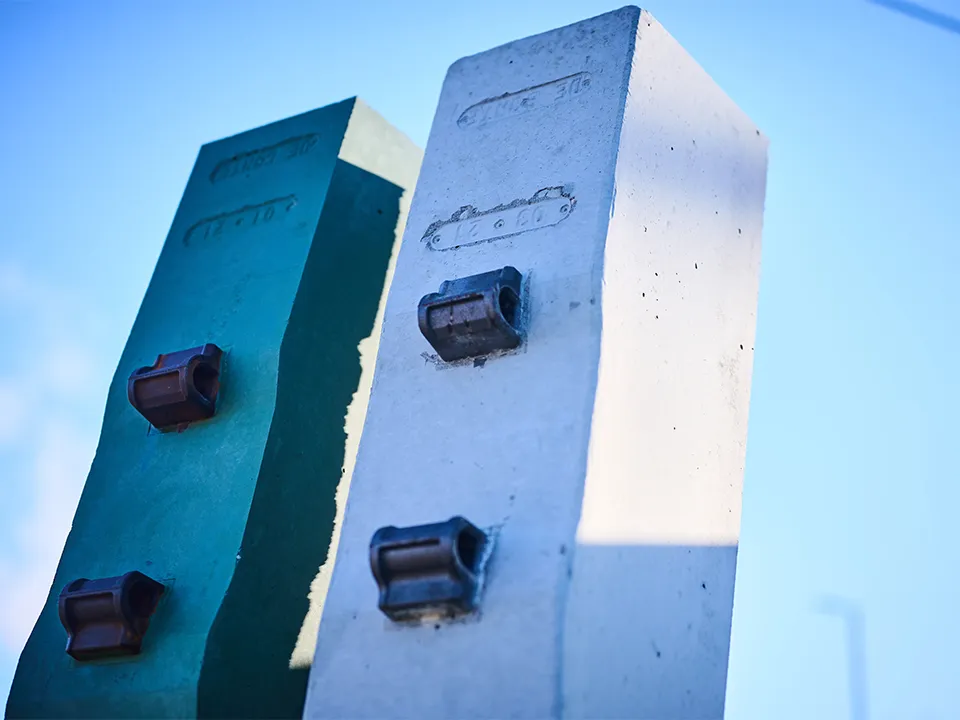
Gradually, cement, the traditional material used to make sleepers, will be partly replaced with sulphur. There are three benefits: the production process emits up to 40% less CO2, the new material is fully recyclable and, finally, sulphur is reused. The first new sleepers, laid between Puurs and Antwerp, are symbolically green in colour.
These new ‘green’ sleepers, the first to be installed in Europe, are made from a revolutionary material: sulphur concrete. In practical terms, this means that the sleepers are no longer made from cement, with sulphur instead used as the binder. There are many benefits. Cement production requires a temperature of 1,400 degrees Celsius, making it highly energy-intensive. With sulphur concrete, a temperature of 114 degrees is enough to mould the sleeper. Cement production also releases large amounts of CO2. Overall, this new manufacturing process reduces CO2 emissions by 40%. In practical terms, that means cutting emissions from 75 kg of CO2 per sleeper to 45 kg of CO2 per unit. This innovation can therefore offset the equivalent of the annual CO2 emissions of 100 households each year.
Fully recyclable
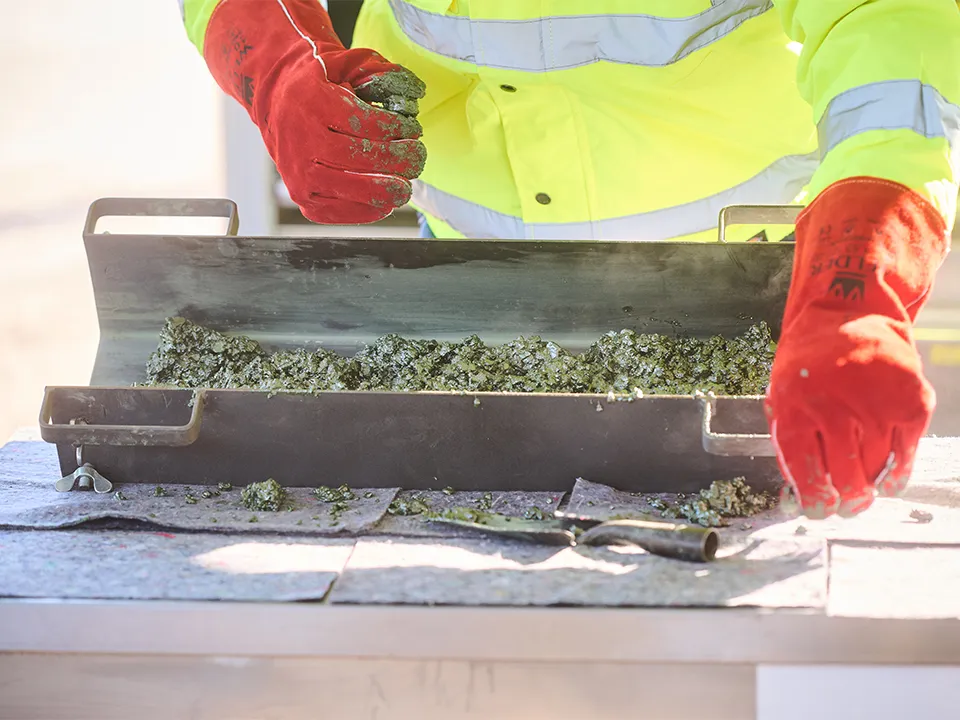
Sulphur concrete is also fully recyclable. This is in contrast to ‘historic’ wooden sleepers, which must be carefully incinerated because they contain a chemical substance. Concrete sleepers that have reached the end of their service life are also not reused optimally. By contrast, sulphur concrete sleepers can be melted down and made into new sleepers. One final benefit is that this material makes it possible to recycle sulphur, a waste product from the oil industry.
Georges Gilkinet, Deputy Prime Minister and Federal Minister for Mobility: “The train is the most environmentally friendly mode of transport. But it can be even better, as shown by these green sleepers made from sulphur concrete. This is a first for Belgium and Europe, and something we can be proud of: a small ecological revolution for our railways. My ambition for the railways is also to support research and develop concrete, sustainable, future-focused and innovative solutions. Infrabel is not resting on its laurels, and I am pleased about that.”
Proactive environmental policy
De Bonte will begin mass-producing these sulphur concrete sleepers in August 2021. This family business has extensive experience in manufacturing concrete products. Last year, De Bonte won a completely new public contract from Infrabel. What made this contract special? The introduction of various environmental criteria in the supplier selection process. In the public sector, price is the only deciding factor when awarding a contract. But because Infrabel wants to reduce its environmental footprint, the infrastructure manager wanted to give an advantage, alongside price, to the supplier and product offering the greatest benefits for the planet.
In this case, reducing CO2 emissions, either during manufacturing or through the transport of materials, and improving the product’s circularity accounted for 40% of the score. Cost accounted for 60%. These criteria, combined with a highly competitive price, gave De Bonte the edge. The green sleepers will be produced over 8 years, at a rate of 25,000 units per year. Production will take place at a site in the Mons region, which until now has specialised in manufacturing sleepers for switches.
Pascal Blommaert, CEO of De Bonte: “Just as the railway once brought about a revolution in society, De Bonte is now revolutionising the railway. With this 100% circular sleeper, we are pioneers in the global market. This project alone will save no less than 6,000 tonnes of CO2. A major step towards a more sustainable future.”
European first
Many European rail infrastructure managers have already expressed interest in this innovative technology. But Infrabel is the first to use it on a large scale. Naturally, certain assurances had to be put in place to reach this point. Various tests showed that sulphur concrete is just as resistant as traditional concrete to the high dynamic loads imposed by trains. It is also less porous than conventional concrete. This means sulphur concrete is less susceptible to infiltration, for example by water. It is therefore also more resistant to chemical attack and wear.
“This project is close to my heart because these sleepers are a product of the future. By once again taking a pioneering role, Infrabel is showing how innovation leads to greater efficiency. At the same time, the environmental impact of industrial activities is kept to a minimum. Sustainable construction is everyone’s concern. It is therefore also the responsibility of the rail infrastructure manager that we are,” concludes Benoît Gilson, CEO of Infrabel.
Question about this story? Ask your question
Keep following this
Get an email when a new story is published. No account needed.
- ThemeFuture-proofing roads and railways
- SubjectConcrete







