









Circular concrete, also covered by BENOR certification
Text Niels Rouvrois Beeld COPRO / PROCERTUS
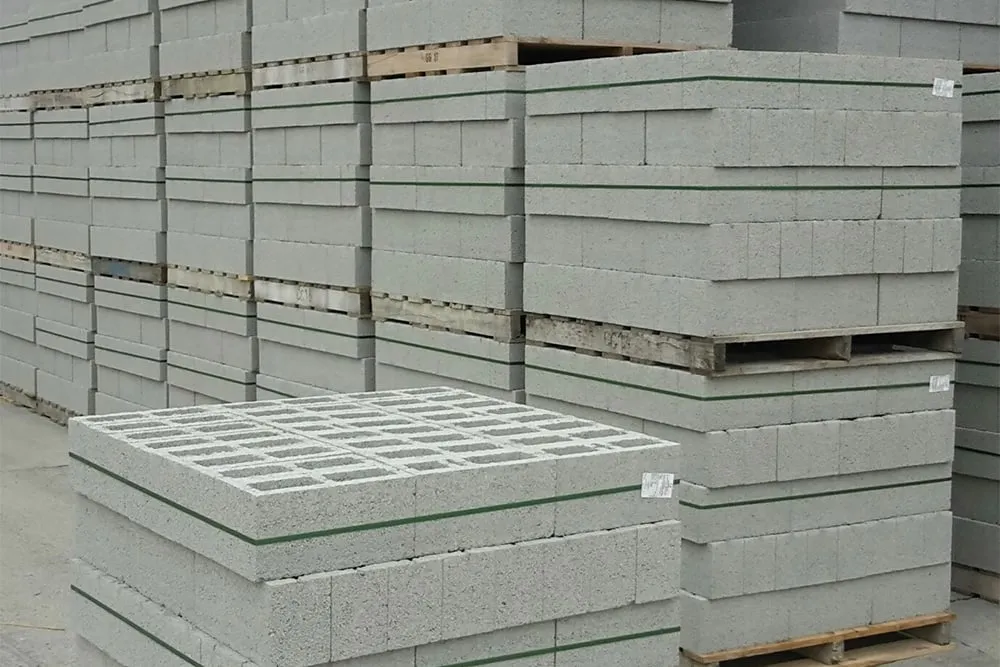
Concrete remains the most widely used construction material in the world, inevitably carrying a cost in terms of CO2 emissions and resource depletion. But the concrete sector is working hard to change this, with an increasingly strong focus on recycling raw materials, alternative binders and circularity … Certification bodies COPRO and PROCERTUS are also making every effort to accommodate these solutions within BENOR certification, thereby safeguarding the quality of these construction products with a low environmental impact.
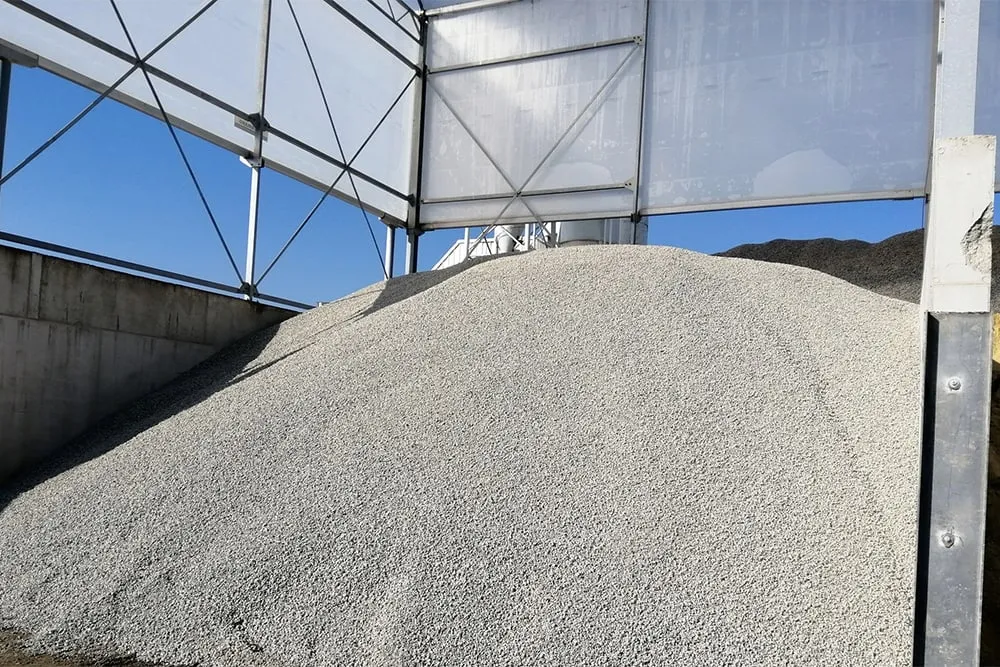
As part of efforts to make concrete more circular, increasing emphasis is being placed on using recycled aggregates to partially replace natural aggregates. “At present, recycled concrete aggregates are used mainly in road sub-base layers. By certifying concrete aggregate A+ and mixed aggregate B+ for use in concrete under BENOR, COPRO provides a clear quality framework for these recycled aggregates and thus encourages their increased use in circular concrete,” says Pieter Keppens, unit manager at COPRO. “We are also seeing a growing shortage of river sand. Concrete crusher sand, a by-product of producing concrete aggregate A+, is being studied in a pre-standardisation project for use as a partial replacement for river sand.”
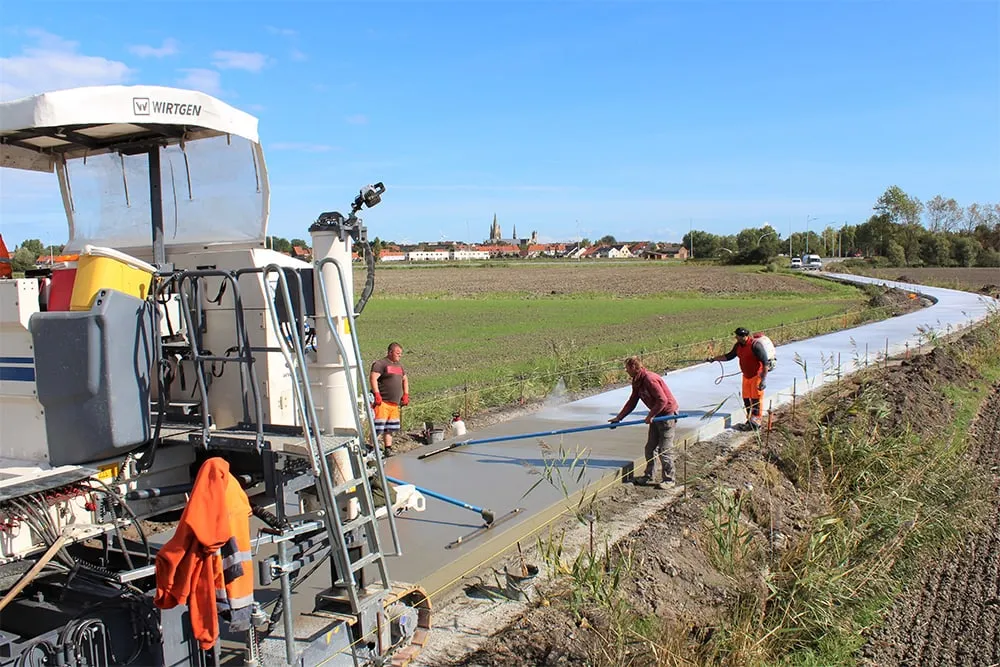
Road concrete
In Flanders, the use of concrete aggregate A+ in road concrete for cycle paths and linear elements has long been permitted under the standard specification type SB 250. These concrete mixes containing concrete aggregate A+ are certified by both COPRO and PROCERTUS under TRA 50, and are regularly used in public works. In Wallonia, the use of concrete aggregate A+ has not yet been formally included, but pilot projects are also building experience in this area.
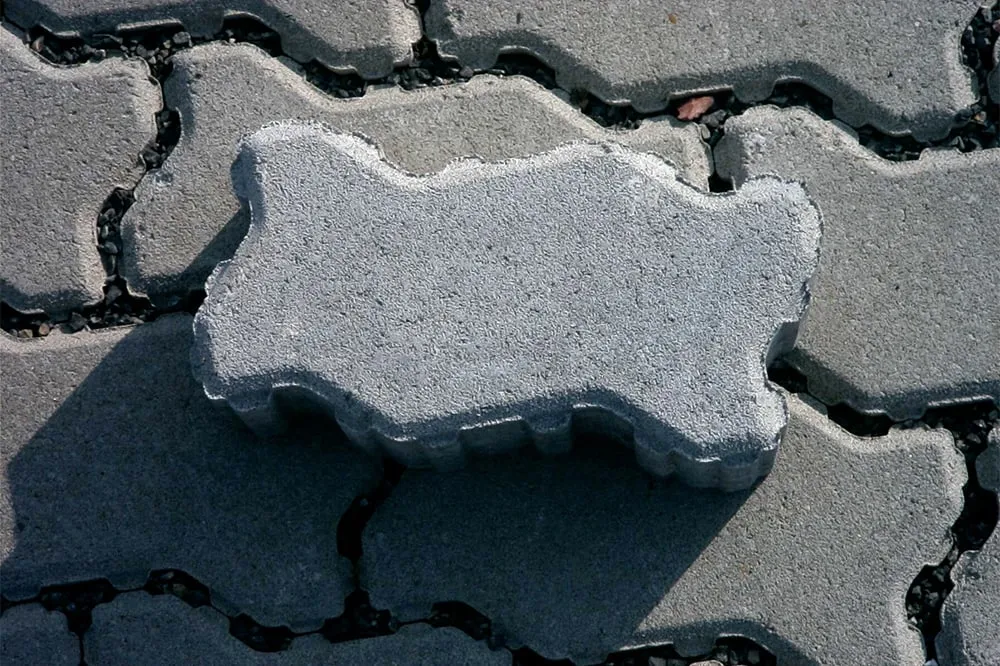
Ready-mixed and precast concrete
PROCERTUS is also seeing growing interest in circular ready-mixed and precast concrete with a lower environmental impact. PROCERTUS made an active contribution to the current version of concrete standard NBN B 15-001, which provides a broad framework for using recycled aggregates in specific exposure classes. In parallel with this development in standardisation, PROCERTUS has introduced specific RS and RD classes for these circular concrete mixes in the BENOR certification scheme for ready-mixed concrete, in collaboration with the sector. Claude Ployaert, certification expert at PROCERTUS, says: “Since 2019, PROCERTUS has issued 20 certificates for the production and supply of BENOR concrete containing recycled aggregates (11 RS and 9 RD).”
Belgian standard NBN B 15-105 was also published in 2022. It focuses on assessing and certifying the suitability of alternative inert raw materials for use in concrete. The standard provides a clear, systematic approach to ensuring high-quality concrete when these alternative inert raw materials are used. In addition, concrete standards distinguish between recycled concrete aggregates and reclaimed aggregates. Claude Ployaert says: “A clear distinction must be made between recycled and reclaimed aggregates,” says Claude Ployaert. “Recycled aggregates come from the demolition of existing structures, which may be buildings or roads. Reclaimed aggregates come from unused ready-mixed concrete or precast elements that have never been used.
The general provisions for precast concrete products are set out in European standard NBN EN 13369. Claude Ployaert says: “Interest is also growing among precast manufacturers, but unfortunately standard NBN EN 13369 does not apply to all concrete products. The European standard therefore lacks a broader perspective in this area. PROCERTUS is working to develop a broader framework that the entire precast sector can support. That means not just structural elements, but also paving, drainage products, masonry units … Of course, the manufacturer will have to demonstrate that product quality is not compromised and that production using these reclaimed aggregates is under control. But the ball is clearly rolling. The use of reclaimed aggregates in ready-mixed concrete and precast concrete products will become a reality.”
Partners in Living Lab Circulair Beton
Pooling resources to promote circular principles is also the driving force behind the VLAIO-funded Living Lab Circulair Beton project. Through this project, various parties, led by Embuild Vlaanderen, Buildwise and GroenBetonVert, are continuing to work together to promote circular concrete and bridge the gap between supply and demand. The causes of this gap include a lack of knowledge and confidence in solutions, insufficient opportunities to scale up, and barriers related to cost and certification.
It is precisely because of that last issue that COPRO and PROCERTUS are also supporting the project. Pieter Keppens says: “We are all pulling in the same direction within this project, which means we can achieve more. The main aim is to tackle problem areas, communicate clearly and, wherever possible, create a clear regulatory framework. Living Lab Circulair Beton is a crucial link in accelerating the transition to circular concrete in Flanders.”
Een zakelijke vraag aan PROCERTUS? Get in touch
Companies in this story
Keep following this
Get an email when a new story is published. No account needed.
- ThemeMaterials with a lower environmental impact
- SubjectConcrete
- CompanyPROCERTUS
- CompanyCopro







