









Cement producers reaffirm their ongoing commitment to the transition to circular, climate-neutral construction
Text and images FEBELCEM
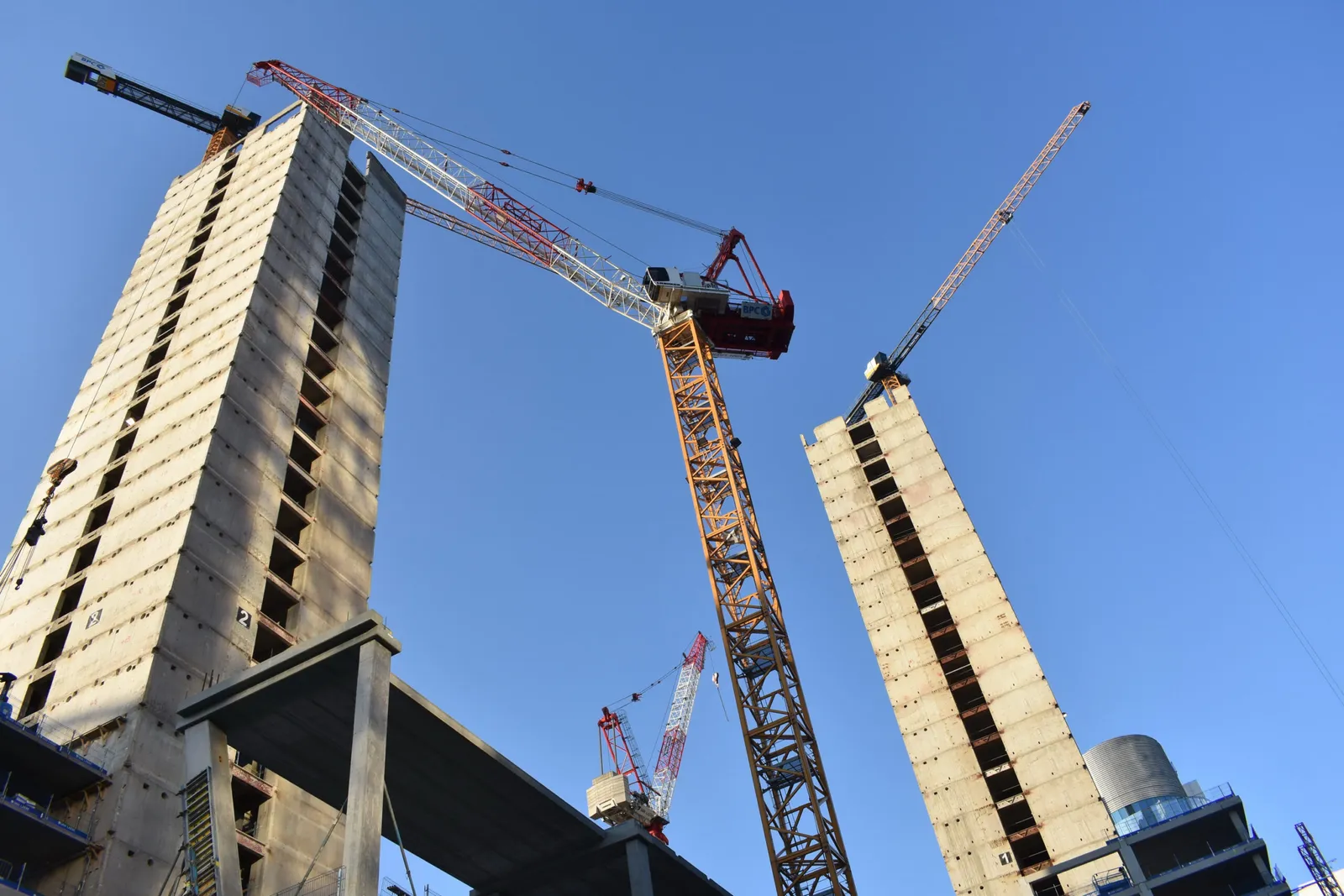
Earlier this year, FEBELCEM published its ‘Net Zero Roadmap’. With this, Belgian cement producers reaffirm their ongoing commitment to the transition to circular, climate-neutral construction. It confirms the acceleration of decarbonisation projects in the cement sector, with the aim of reaching ‘Net Zero’ by 2050 at the latest, and possibly sooner.
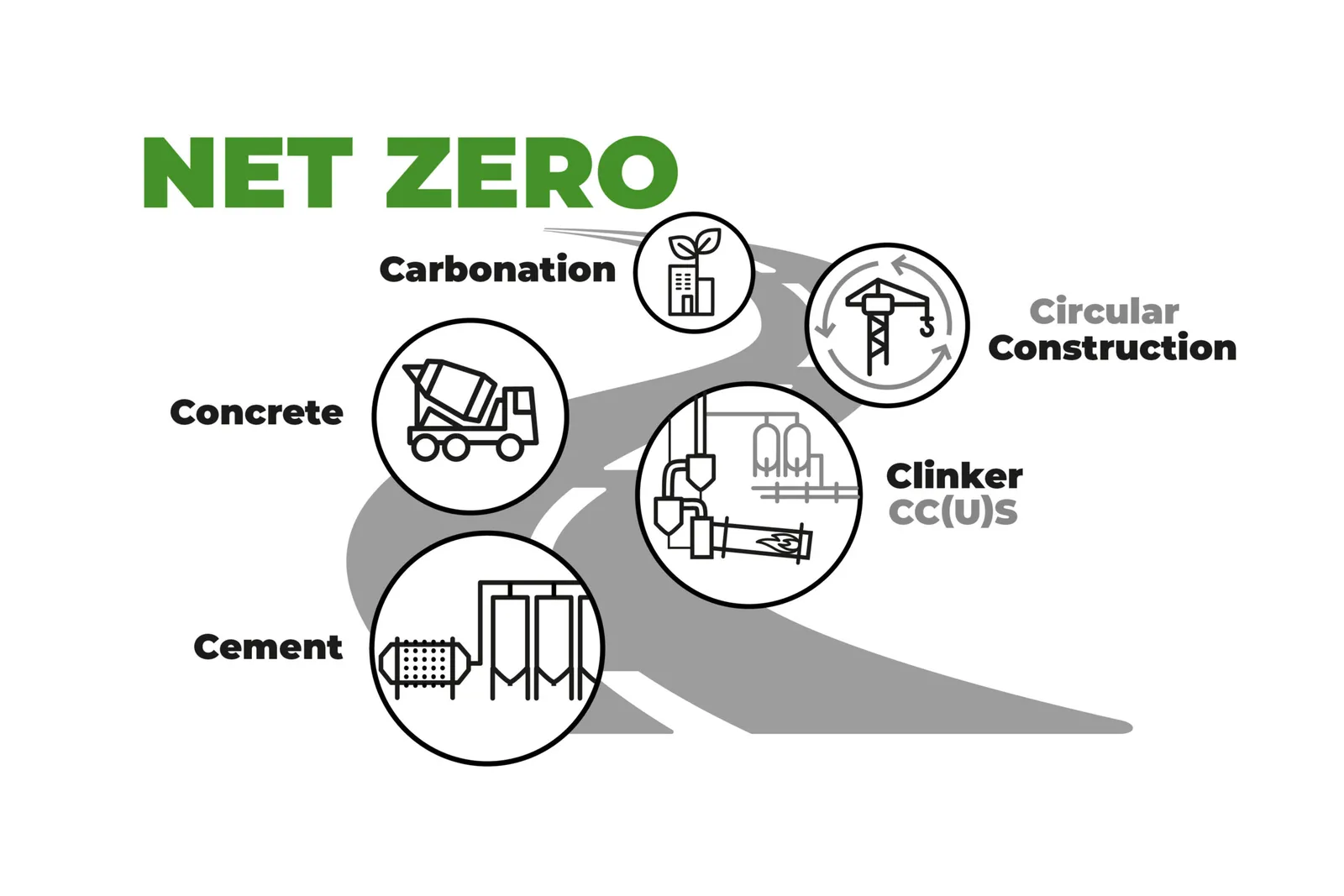
The ‘5Cs’ symbolise the role of cement and concrete in the transition to a more sustainable construction value chain. The five main levers are in the hands of the different actors across the construction value chain, not just cement producers.
- (Circular) Construction: this concerns the responsible use of construction materials, including concrete. An important aspect is the adoption of circular construction practices. Concrete structures are ideally suited to multiple lives, from the reuse of entire structures to the recycling of concrete aggregate.
- Cement: a traditional way of reducing cement’s environmental footprint is to use so-called SCMs (Supplementary Cementitious Materials), such as blast-furnace slag. To anticipate the disappearance of blast-furnace slag in the medium term and further reduce the clinker content of cement, Belgian cement producers have been leading pre-normative research projects since 2020 to demonstrate the specific suitability of cement types containing new constituents, including calcined clay.
- Clinker: this lever covers all the actions taken at kiln level to reduce the impact of clinker production. A distinction is made between traditional measures, such as using decarbonated raw materials, co-processing waste or improving energy efficiency, and breakthrough technologies such as carbon capture and storage (CCS).
- Concrete: sustainability is not just a matter of environmental footprint, but also of service life. Specifying the right concrete mix and ensuring proper execution are the basis for long-lasting concrete structures. The concrete sector also has a number of other levers at its disposal: transport electrification, digitalisation, use of concrete aggregate, and so on.
- (Re)Carbonation: throughout their life cycle, concrete structures reabsorb a significant proportion of the CO2 emitted during clinker production. The global impact of this natural phenomenon was recently quantified, and some projects aim to accelerate the reaction using recycled concrete aggregates.
Over the past thirty years, we have already reduced the average carbon footprint of cement production by 31%, making Belgium a world leader. Of the various decarbonisation levers, CCS implementation accounts for two thirds of the effort. Clearly, developing this new value chain is an absolute priority for the cement sector. It consists mainly of three elements:
- Capture: CO2 in the flue gases is separated and concentrated before it leaves the stack and can enter the atmosphere.
- Transport: the purified CO2 is pressurised and transported by pipeline to a port terminal. The pipeline operator has yet to be appointed by the Flemish and Walloon Regions.
- Permanent storage: the CO2 is injected under pressure and stored deep underground in depleted offshore natural gas fields or deep saline aquifers in the North Sea.
Two large-scale industrial projects are in the pipeline and are due to be operational before 2030: GO4ZERO by Holcim in Obourg (Mons) and Anthemis by Heidelberg Materials in Antoing (Tournai).
With these two projects, the Belgian cement sector is clearly a pioneer in implementing the CCS value chain. This is a unique opportunity for the construction sector and an essential link in developing a carbon-free, competitive industrial fabric in both Wallonia and Flanders.
Question about this story? Ask your question
Keep following this
Get an email when a new story is published. No account needed.
- ThemeMaterials with a lower environmental impact
- SubjectConcrete







