









A giant step towards more sustainable concrete
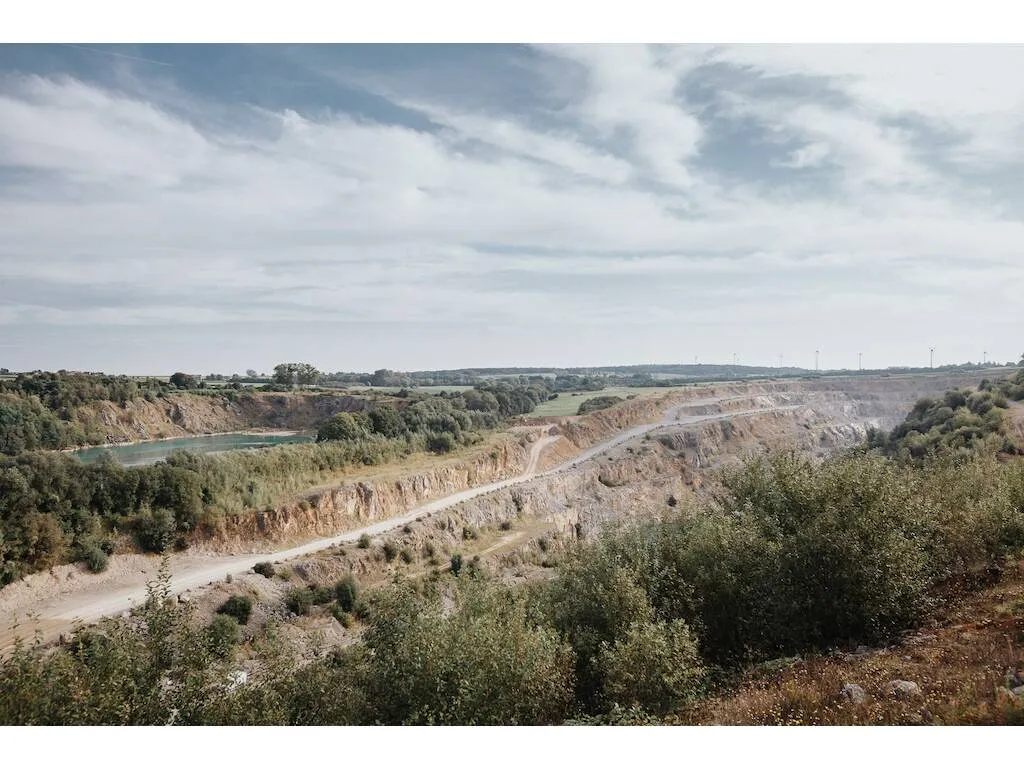
The Carmeuse Group recently commissioned a new limestone filler production unit at its site in Aisemont (Fosses-la-Ville), the largest of its kind in the Benelux. After several years of work, Carmeuse obtained an ATG, enabling concrete producers to replace up to 20 % of the cement in cement-filler combinations for specified exposure classes. Concrete production using this cement substitute is expected to reduce Belgium’s annual CO2 emissions by around 130,000 tonnes.
The Carmeuse Group, headquartered in Louvain-la-Neuve, operates more than ninety production sites in twenty countries across Western and Eastern Europe, North and South America, the Middle East, Asia and Africa. Carmeuse, which employs no fewer than 4,500 people, produces 9 million tonnes of lime and 33 million tonnes of limestone and aggregates worldwide each year.
A replacement product
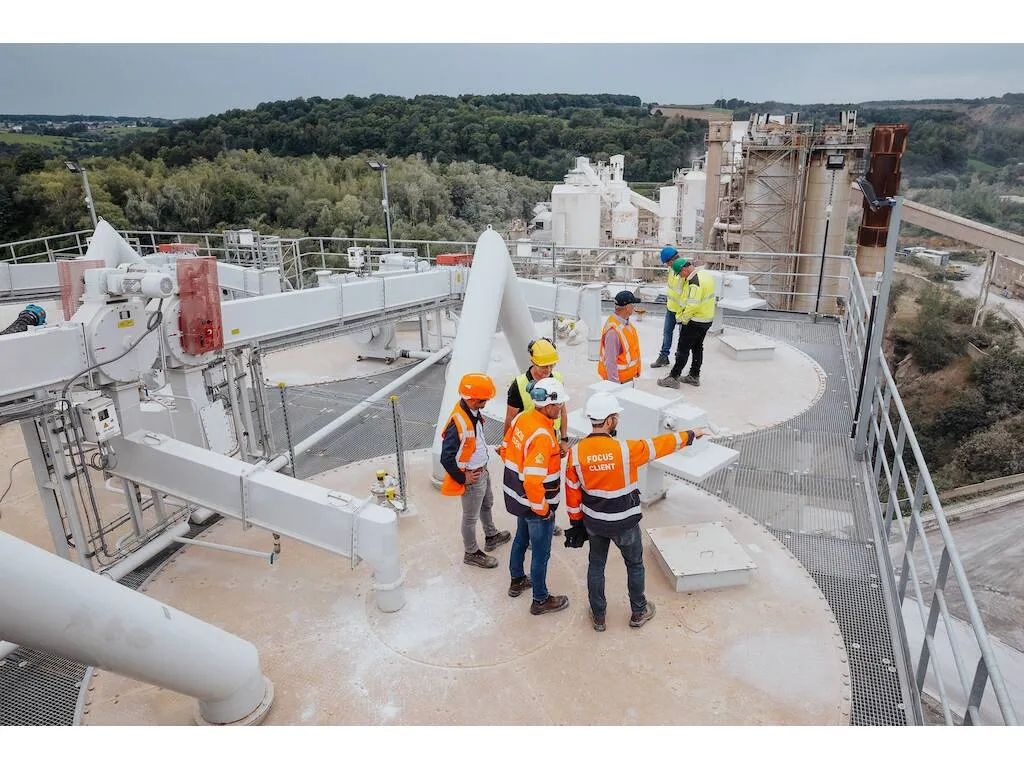
At its Aisemont site, Carmeuse produces not only aggregates but also high-purity limestone, which is used after passing through a lime kiln to produce sugar, glass, steel and other products. The fraction too small for calcination (< 20 mm) is ground to produce limestone filler, known as Calcitec. This product is used in a wide range of applications, particularly in the construction sector: vinyl flooring, bituminous waterproofing, dry mortar, asphalt, facing bricks and, last but not least, concrete. Limestone filler has been used in Belgium for more than two decades as a Type I filler in concrete mixes. The inclusion of the ‘Equivalent Concrete Performance Concept’ (ECPC) in the Belgian concrete standard NBN 15.100 created the theoretical possibility of using high-quality limestone filler to replace cement. The only question was how to do so and within what regulatory framework, which meant obtaining an ATG for the replacement products.
Technical approval opens up new possibilities
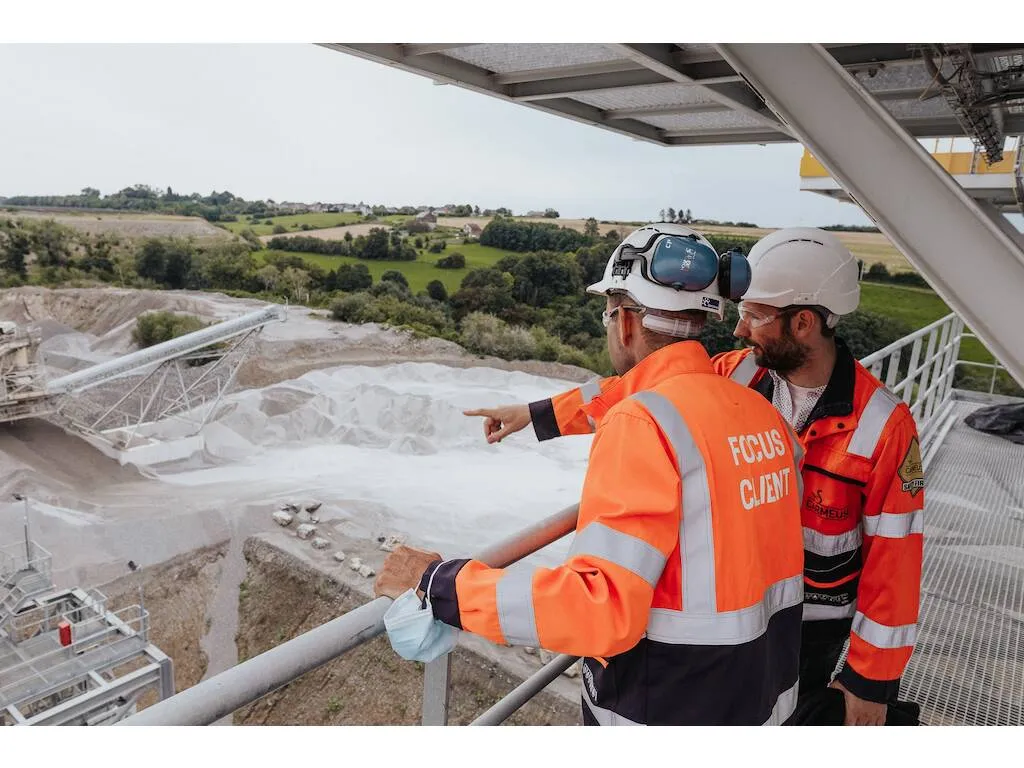
Carmeuse first applied for a technical approval (ATG) for limestone filler eight years ago, then completed all the test procedures using Calcitec CM from the Moha quarry and various types of cement produced in Belgium. The resulting ATG for limestone filler is revolutionary and unique worldwide, as Calcitec CM can replace up to 20 % of the cement in clearly defined cement-filler combinations and exposure classes. Belgium is the second country in the world, after the Netherlands, to have a technical approval for this concept. As more cement-filler combinations are developed, further ATGs will follow, paving the way for concrete variants suited to a wider range of exposure classes and cement types.
Investment of 16.5 million euros
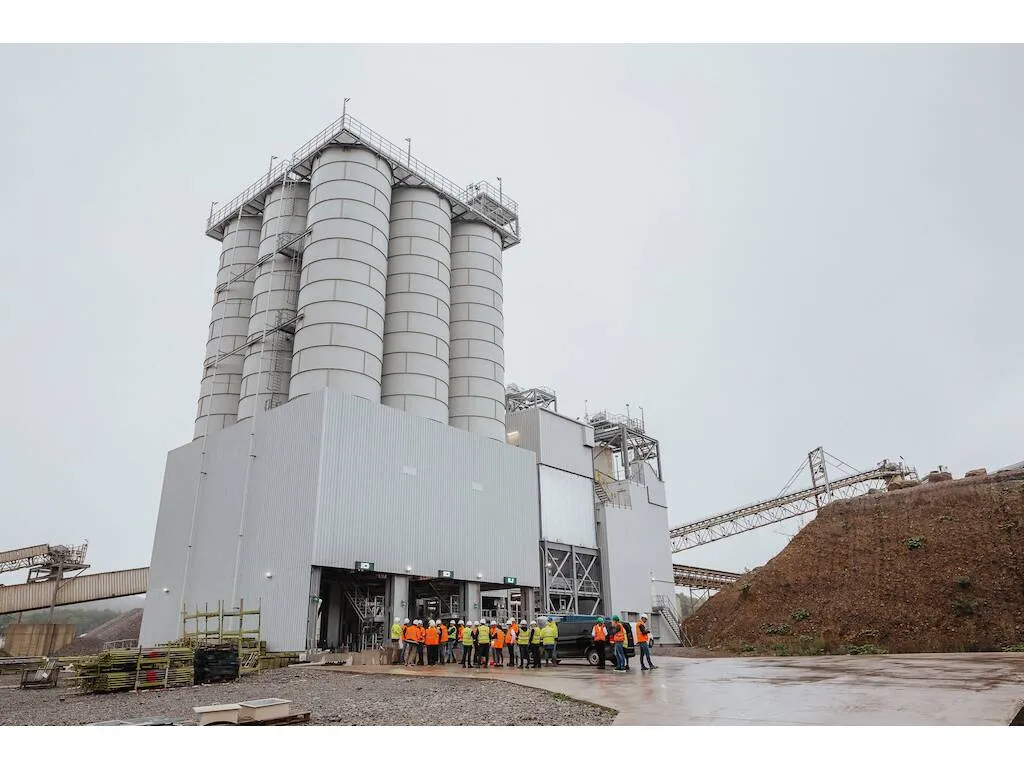
Against this backdrop, Carmeuse recently commissioned a new limestone grinding plant at its Aisemont quarry, with a capacity of 450,000 tonnes a year. This will enable it to keep pace with growing demand from the concrete sector. Christophe Denayer, marketing manager at Carmeuse, said: “This represents an investment of 16.5 million euros. Aisemont is now the largest production unit of its kind in the Benelux. With nine storage silos, each with a capacity of 550 tonnes, and production capacity of 1,300 tonnes a day, we can now supply all our markets continuously.”
Significant contribution to a carbon-neutral Europe
Concrete is responsible for around 8 % of the global CO2 footprint. It is therefore one of the sectors under close scrutiny as Europe strives to become carbon neutral by 2050. Christophe Denayer said: “According to our calculations, Belgian concrete producers can reduce the CO2 footprint of their products by 15 % by using this ATG and our new production capacity in Aisemont. This will result in an annual CO2 reduction of 130,000 tonnes.”
Question about this story? Ask your question
Keep following this
Get an email when a new story is published. No account needed.
- ThemeMaterials with a lower environmental impact
- SubjectConcrete







