









3D milling for an optimal renovation of a Brussels Airport runway
Text Niels Rouvrois Beeld Holgo
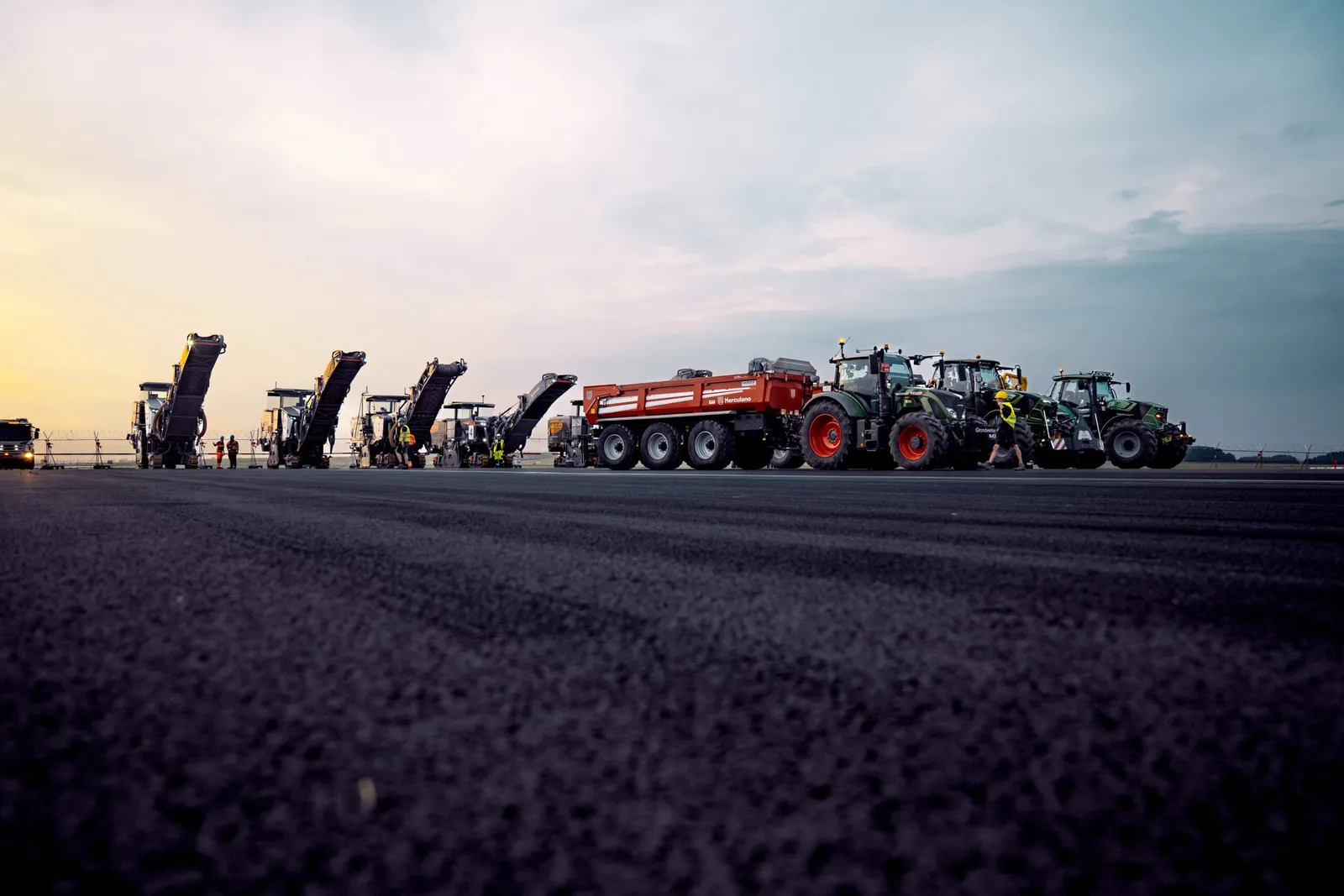
Last summer, one of Brussels Airport’s main runways underwent a full renovation. The southern parallel runway 07R/25L, 60 metres wide and 3.5 kilometres long, received a new asphalt surface, runway lighting and improved drainage. Main contractor Willemen Infra brought in milling specialist Holgo to remove the asphalt layer, carry out concrete breaking works and widen the bends.
The full renovation took place from 12 July to 27 August 2025, during which time the runway was closed to air traffic. The intersection with another runway was also worked on over two weekends. Runway 01/19 was closed from 2 to 12 August for the renovation of its intersection with runway 07R/25L, leaving only runway 07L/25R available. Work continued day and night during this period. To minimise the impact, the work was scheduled during the summer holidays and carried out to a tight timetable. Michiel Verhaeren, managing director of Holgo: “We started our part of the work on 14 July and finished on 5 August. That was four days ahead of schedule, which was, of course, very welcome for the rest of the project.”
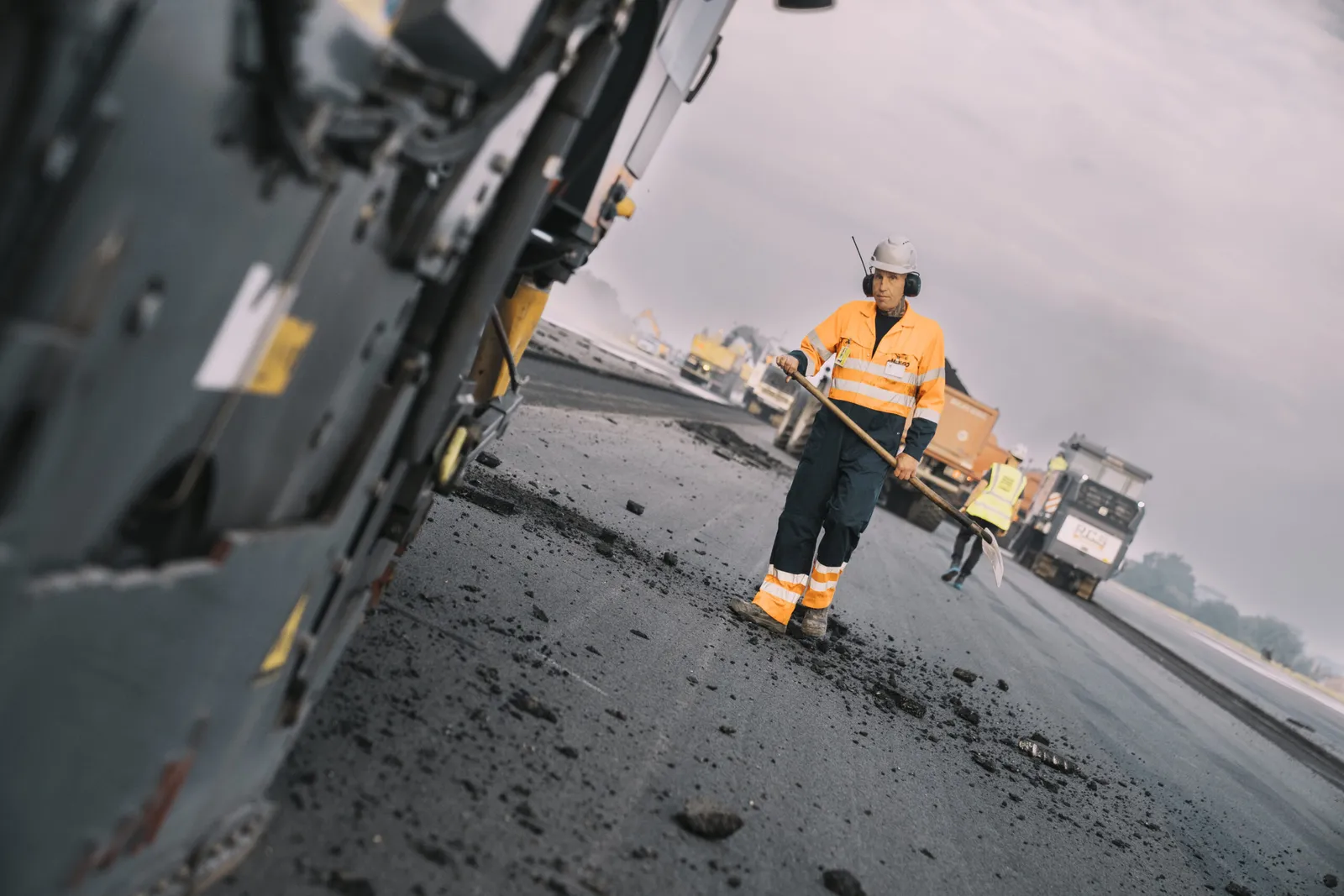
3D milling, in collaboration with Leica
Holgo was responsible for breaking up sections of the concrete pavement, removing the asphalt layer and milling the bends. Michiel Verhaeren: “We decided to mill everything in 3D. With so many lorries, cranes and people on site, getting the 3D operation working properly was certainly a challenge, but it was a very deliberate choice. The aim was to level out the entire surface and lay a new runway to the required depth. Small depressions and irregularities are automatically removed in this way. It is more efficient and, above all, delivers an even more reliable result. This was our third 3D milling project. The technique had previously been used on works at Antwerp Airport and at the athletics track at the Koning Boudewijnstadion. It is not yet a widely adopted technique. That makes it a major asset for us as a milling specialist.”
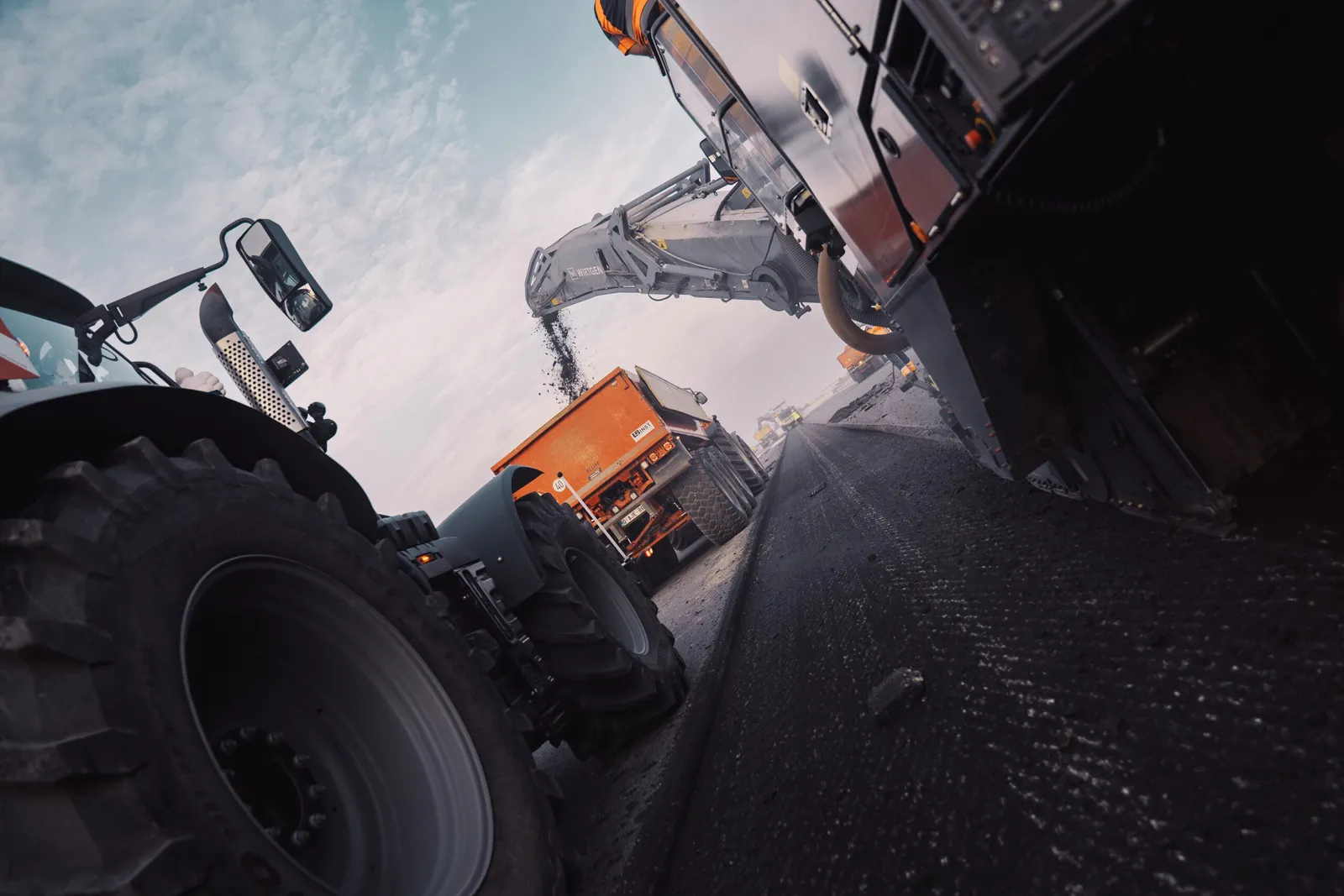
Accuracy and preparation
Using 3D milling requires detailed preparation. For this project, a combination of GPS-guided and total-station milling was chosen. “GPS-guided milling is easier to work with, but requires a clear picture of the existing surface. As there were nets in the central section, we first had to mill to depth, which changed the existing surface. There was also too little time to scan the new surface. As a result, only the sides/shoulders were milled using GPS. The central strip was milled using a total station. Total-station work is extremely accurate, but more susceptible to vibration and passing traffic, which was a point to consider on this site.”
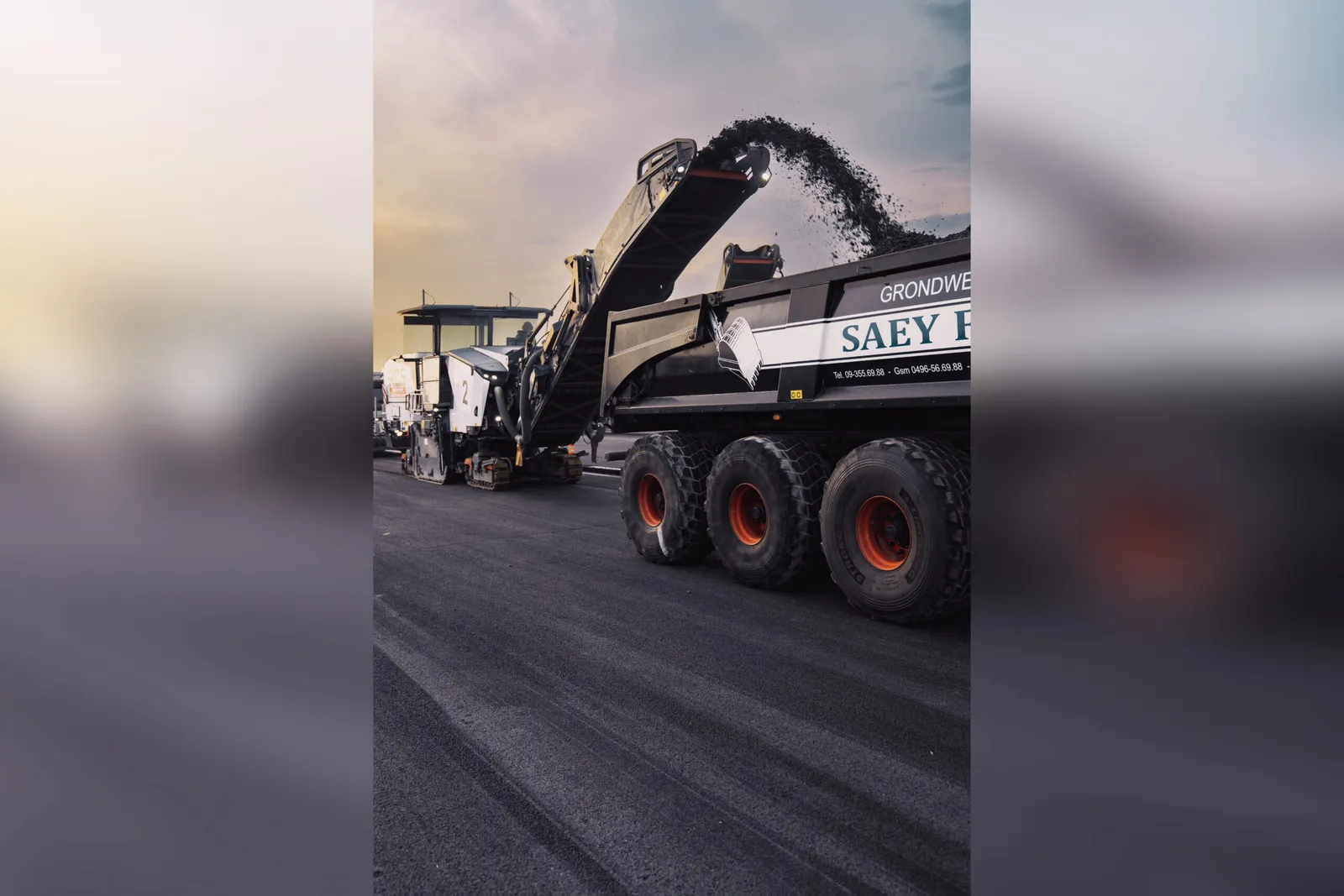
Flexibility and on-site presence
Holgo focuses not only on quality and innovative techniques, but also makes service and flexibility a priority. “A project manager was available at all times, and our mechanics were on site so we could respond quickly to any technical issues. We always had a spare machine ready for the 3D work, so we were never at risk of running out of time. Timing and planning were therefore crucial to this project. Thanks to our sister companies R.C.S. Rabotage & R.C.S. Balayage, main contractor Willemen Infra was also able to bring in sweeper trucks and lime slurry. So you could certainly call us a one-stop shop for milling and leaving the site clean,” says Michiel Verhaeren.
A necessary renovation
The renovation of runway 07R/25L was necessary to ensure the continued safety and efficiency of air traffic. A total of 290,000 m² of asphalt was replaced, an area equivalent to forty football pitches. The works followed earlier large-scale renovations, the last of which took place in 2015.
Een zakelijke vraag aan HOLGO? Get in touch
Companies in this story
Keep following this
Get an email when a new story is published. No account needed.
- ThemeFuture-proofing roads and railways
- SubjectConcrete
- CompanyHOLGO







