









A new wave basin in Flanders to support research and the economy
The construction of a new and unique wave basin, ‘COB’, in Ostend provides a much-needed boost to academic research and strategic support for innovative developments in coastal engineering in Flanders. It also anchors the region’s expertise and knowledge in the field. The new ‘Coastal & Ocean Basin’ (COB) is a wave basin built in the newly constructed Maritime Research Centre at Ostend Science Park. The COB is a joint initiative by Universiteit Gent, KU Leuven and the Waterbouwkundig Laboratorium. It is a state-of-the-art research facility that will be used to strengthen scientific research into tackling climate change and to devise and test innovative, nature-based coastal engineering solutions to protect coastal communities from flooding. It will also enable innovative offshore developments, such as offshore wind turbines and infrastructure for cultivating oysters and mussels, to be developed more effectively, meaning more safely and cost-effectively, with lower investment risks, through extensive testing at the COB.
A wave basin is used to reproduce extreme wave and current conditions at sea on a smaller scale in a tank or basin filled with water, and to test scale models of coastal and offshore structures in these conditions. This experimental modelling technique is a traditional part of coastal engineering, giving both researchers and industry the opportunity to examine the structural behaviour and safe design of these structures in detail. A wave basin also enables them to develop technologies such as marine renewable energy, or to validate numerical models that are also used in design. Construction began in 2017 and, following a long and intensive construction and testing phase, the COB has been operational since early 2023.
A wave basin is not necessarily ‘unique’ in itself: designing coastal engineering structures in a wave basin is a traditional design method. And several new wave basins have been built in Europe over the past decade, including in Spain, Germany and the United Kingdom. Nevertheless, ‘our’ COB is unique in several respects, and our aim is to take a leading role in Europe. Its unique character stems from a number of important features that are not available together anywhere else: (i) waves and currents can be generated in any direction independently of one another, (ii) it has two wave paddles installed along two adjacent sides, allowing short-crested waves to be generated in any direction, (iii) the moving segments of each wave paddle are narrower than usual, resulting in a very accurate, or more realistic, wave field, (iv) the water depth can be adjusted with great flexibility, from 0.30 m to 1.40 m, with an additional local deepening of 3 m in the centre, allowing work in both shallow and deep water, and finally (v) the generated current is also highly accurate and faster than elsewhere.
I also see several important positive side effects for our local water engineering community. The construction of this wave basin in Ostend gives Flemish players in the ‘blue economy’ the opportunity to test and refine their technologies or concepts locally, in their own backyard. Contractors, consultancies, (port) authorities, universities, inventors … can quickly access an essential link in their work. The wave basin is also surrounded by a critical mass of experts in its use, anchoring this crucial knowledge in Flanders and enabling it to be passed on to local students, researchers and entrepreneurs. In this way, the availability of the COB strengthens local research and supports innovation and the economy in Flanders.
It took a lot of hard work to bring the COB to fruition, and keeping all the systems running smoothly for a wide range of applications remains hard work during the operational phase. But we are also eagerly looking forward to the first academic and commercial test projects that can be successfully carried out thanks to the COB and the COB team.
More information: http://cob.ugent.be
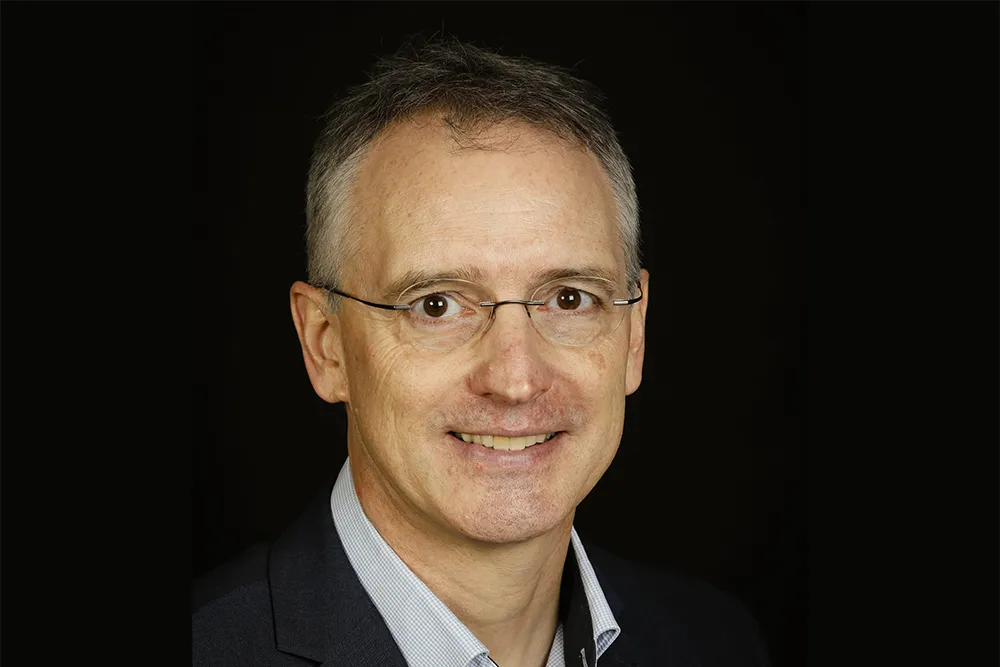
Prof. dr. ir. Peter Troch
Head of Department of Civil Engineering, Universiteit Gent
Question about this story? Ask your question
Wie aan Maritiem onderzoekscentrum in Oostende werkte
- sleepwagenConsmema BVMentioned in Nearly 60-tonne towing carriage arrives in Ostend to enable innovative research
- gezamenlijk initiatiefUniversiteit GentIn this story
- gezamenlijk initiatiefKU LeuvenIn this story
- gezamenlijk initiatiefWaterbouwkundig LaboratoriumIn this story
Keep following this
Get an email when a new story is published. No account needed.
- ProjectMaritiem onderzoekscentrum in Oostende
- SubjectGeneral
- CompanyUniversiteit Gent
- CompanyKU Leuven
- CompanyWaterbouwkundig Laboratorium







