R4WO: Flanders’ second-largest construction site is in full swing
Text Niels Rouvrois Beeld BESIX
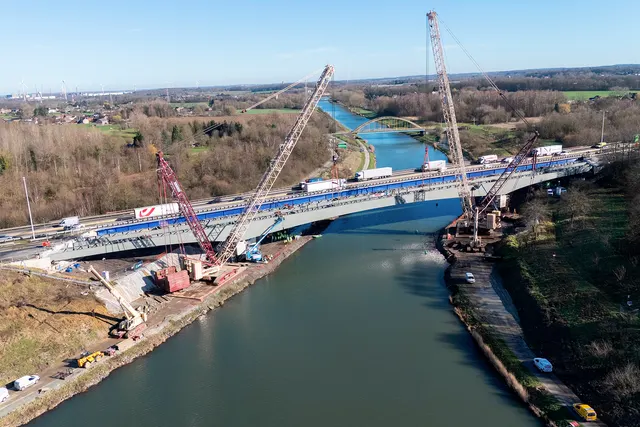
The complete transformation of the R4 West and R4 East between Ghent and the Port of Ghent is now well under way. The project will make traffic on the R4 smoother and safer, while making the surrounding neighbourhoods quieter and easier to reach. Working with De Werkvennootschap, the BRAVO4 consortium, comprising BESIX, EPICo, I4B, The Belgian Infrastructure Fund, RID PPP and Stadsbader, is managing the works. “The relocation of the existing Ringvaart Bridge to a temporary bypass marks our first major milestone,” says BRAVO4 project director Günther Muyshondt of BESIX.
The new R4 will connect the surrounding area, people and nature. Through this upgrade, the Flemish government is investing in smoother, safer car traffic, while maintaining liveable residential areas and providing safe, comfortable cycle paths. New bridges, tunnels and underpasses will allow local traffic to pass beneath or over the R4. This will keep traffic flowing more smoothly and reduce the risk of dangerous situations between road users. It will also make it much safer to travel between residential areas on either side of the R4. The project is a major investment, with a construction cost of €726 million.
Under a DBFM arrangement, BRAVO4 is responsible for upgrading the R4 East and R4 West north of Ghent. The consortium has been entrusted with the integrated delivery of the design, construction and financing, as well as maintenance for 30 years. Günther Muyshondt says: “The consortium is proud to be starting this project with De Werkvennootschap. R4WO is about connection: by ensuring safe traffic, we connect neighbourhoods, communities, people and nature.”
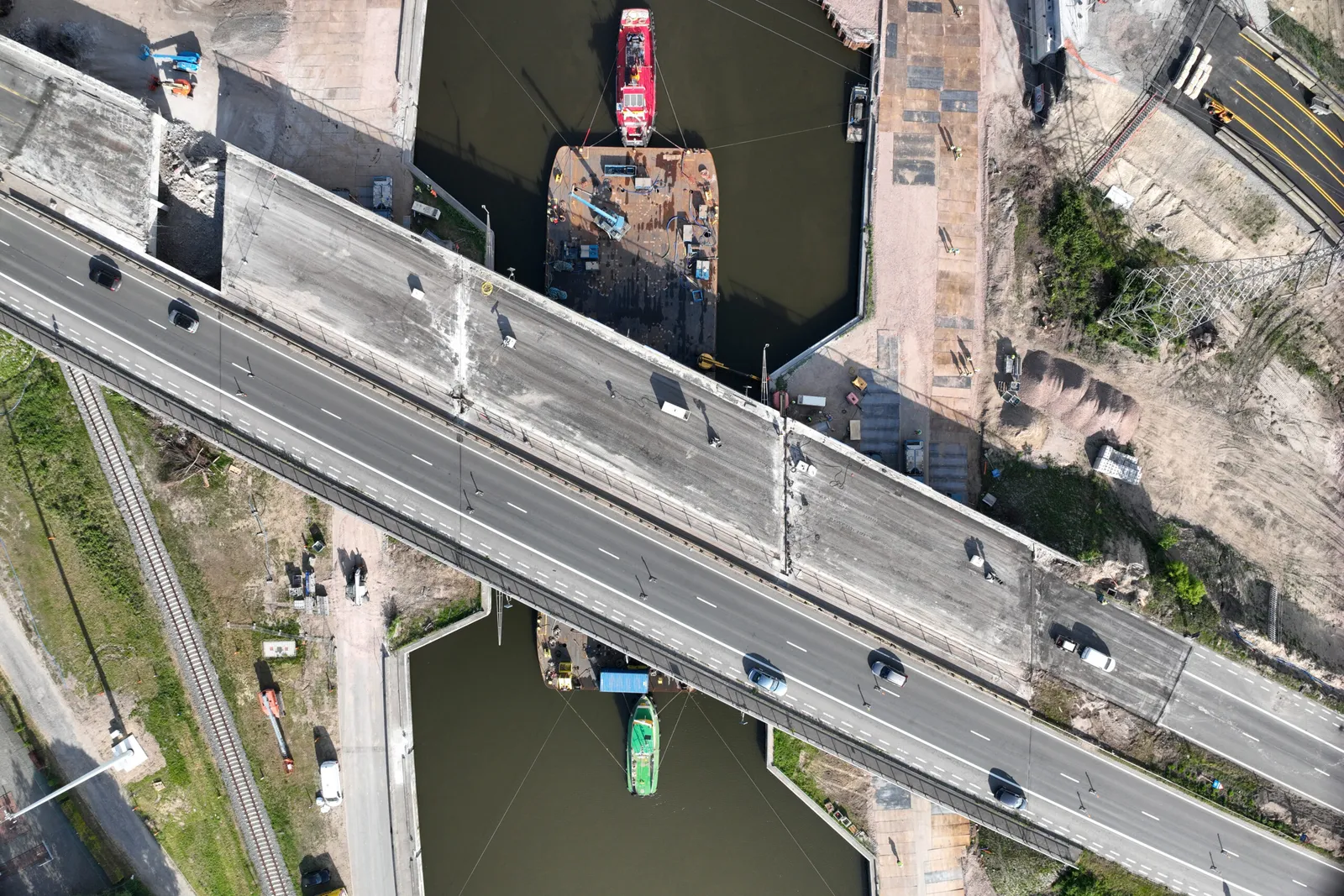
Temporary bypass
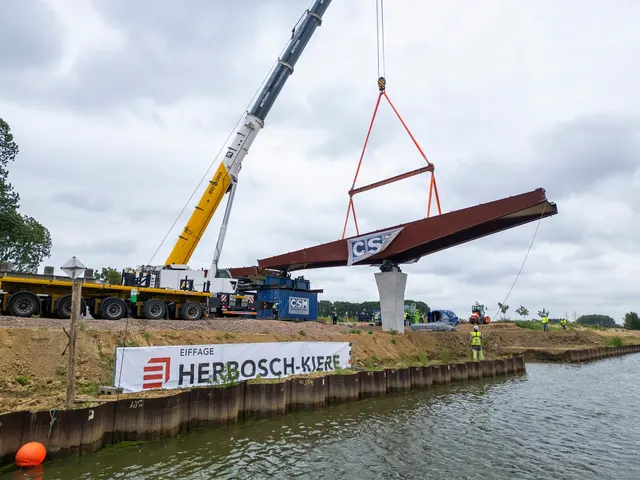
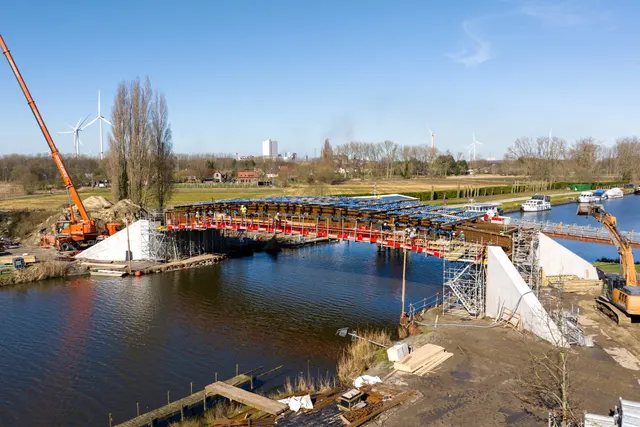
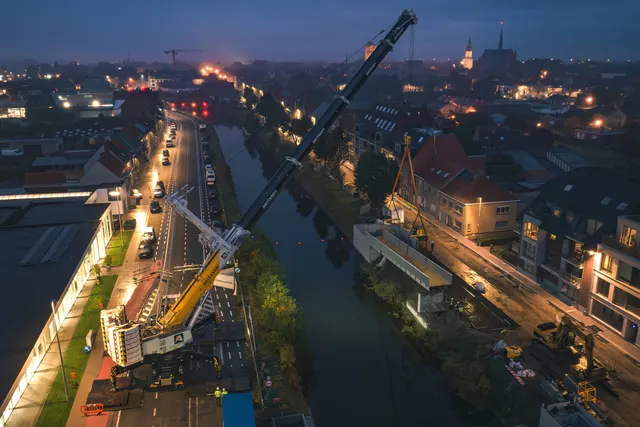
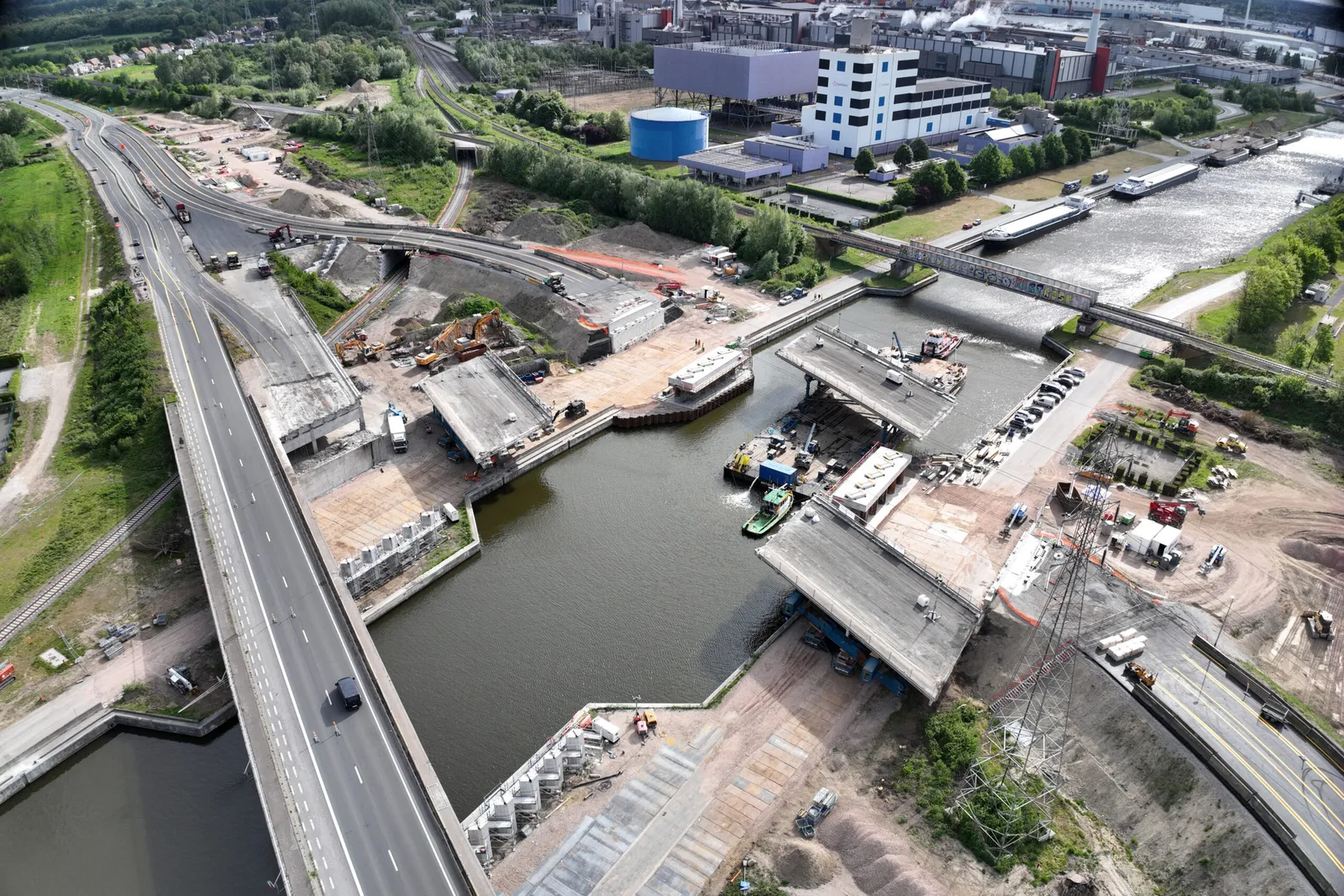
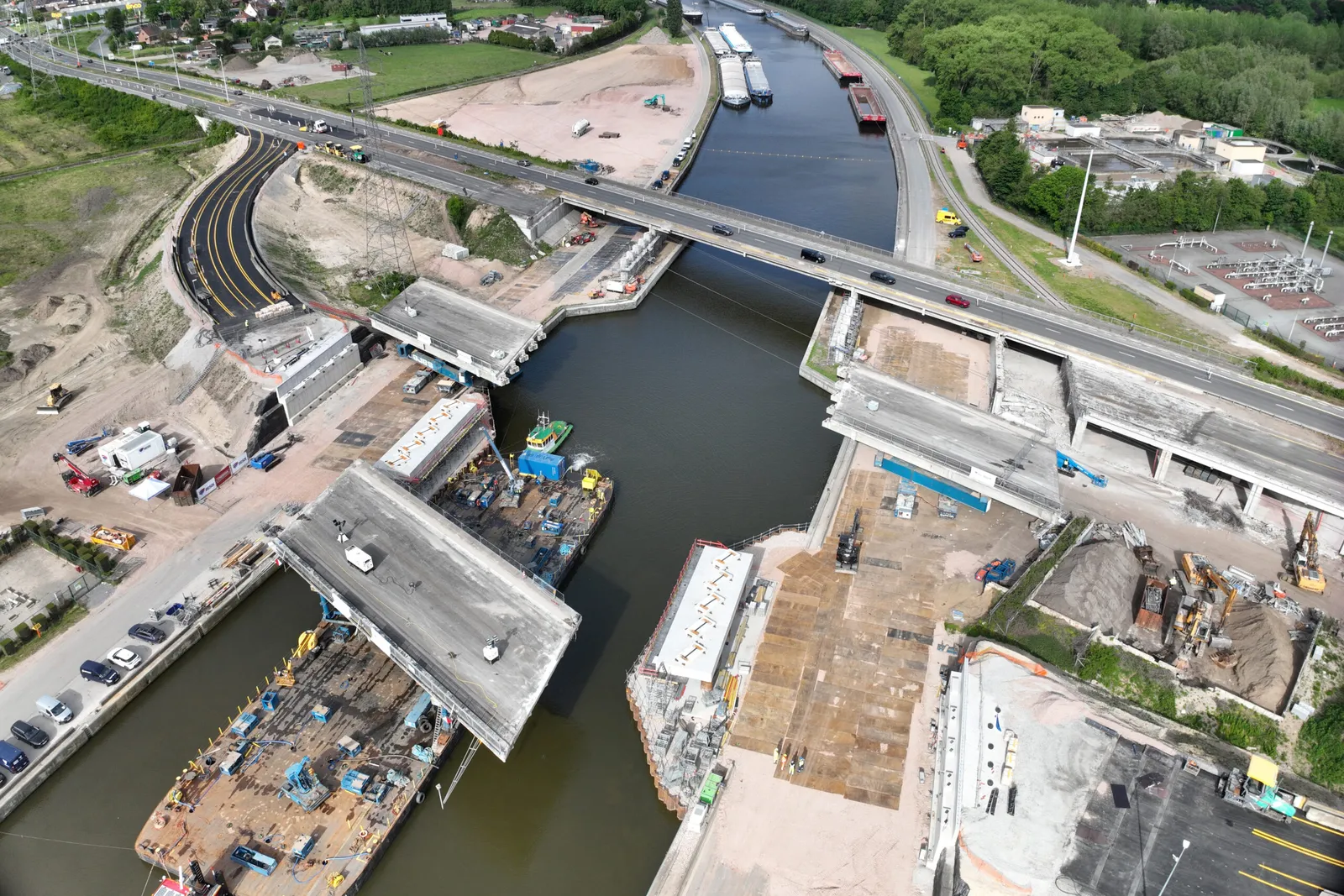
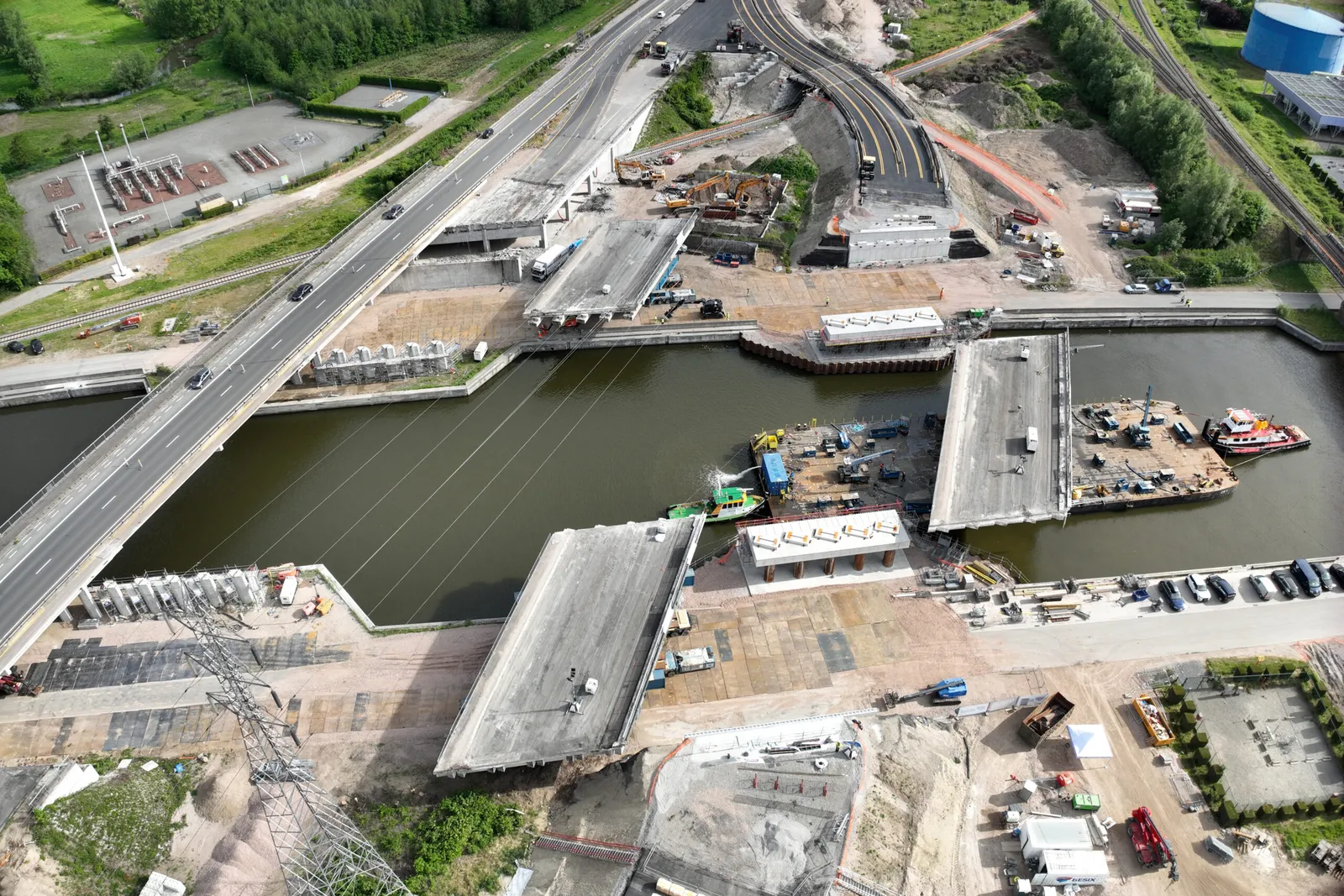
The project was officially launched in May 2024, and a year later it reached its first milestone with the relocation of the Ringvaart Bridge in Evergem, Belgium. The bridge was moved to a temporary bypass, where it will remain for around two years while a new, modern bridge is built. Günther Muyshondt says: “This is civil engineering at its best, made possible by a multidisciplinary team striving for the best result. Every stage of the operation was carried out carefully and in a coordinated way, from precision cutting and lifting to the controlled move and installation. Relocating the bridge was quite a feat, using pontoons and the ancient principle of Archimedes. A remarkable achievement.”
Three phases
The relocation took place in several phases. First, the bridge structure was cut in half, then one half was transported in three large sections. The two outer sections, each weighing around 850 tonnes, were moved using SPMTs (Self-Propelled Modular Transporters). The central section, weighing around 1,150 tonnes, was moved using a pontoon. Once the bridge was around 100 metres away, at its new temporary location, the sections were reconnected, the joints were concreted, a new surface course was laid and the lanes were marked.
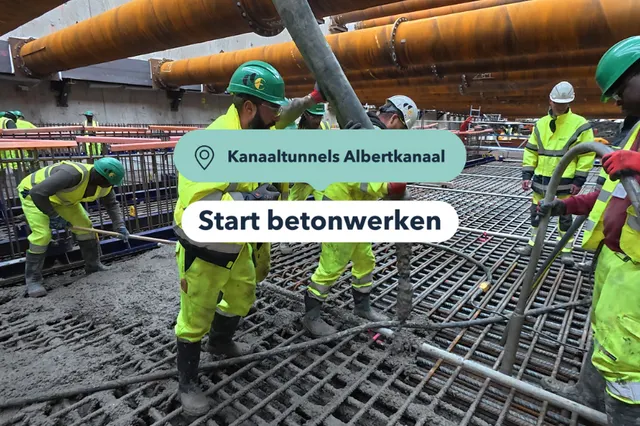
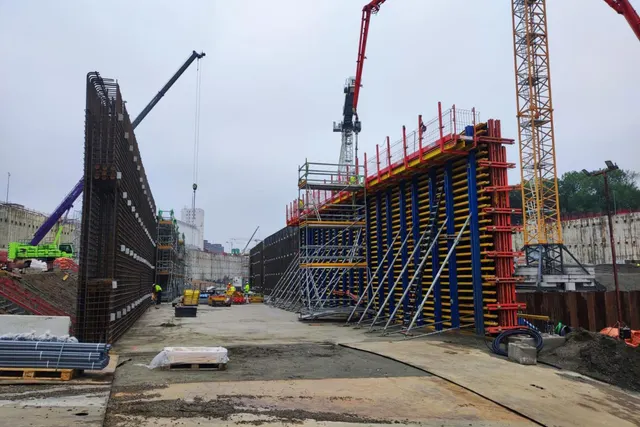
By keeping traffic running on the other half of the bridge, this method helped minimise disruption and ensure safety during the operation. “You can see that a great deal of attention is being paid to minimising disruption,” says Günther Muyshondt. “This autumn, we will start building the tunnel in Wondelgem, and there too, traffic will continue to flow in both directions on two lanes. That is while we build diaphragm walls and carry out works right alongside.”
As big as a football pitch
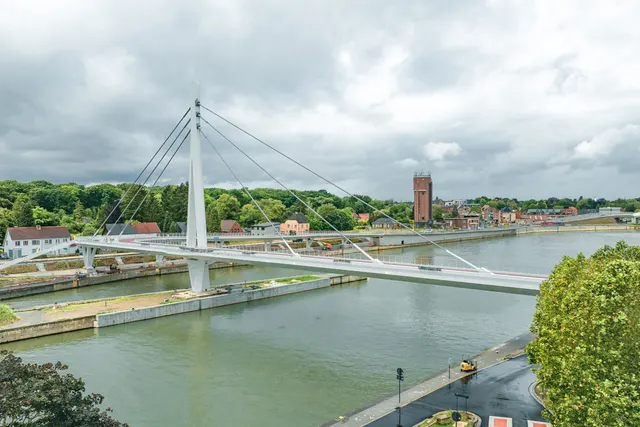
Now that the temporary Ringvaart Bridge is open to traffic, work is also under way on the new bridge. Günther Muyshondt says: “It will be much bigger, measuring 100 m by 50 m, about the size of a football pitch. It will also be 40 m high. We are bringing together a range of techniques for this part of the project too, so it is another major challenge. We call it the pyramid bridge because of its unusual shape. You could describe it as a combination of an arch bridge, with four straight legs set at a fairly sharp angle, and a cable-stayed bridge, with prestressed cables running between them, both in the centre and along the outer sides. The first half of the new bridge will be moved from the steel workshop to the assembly site in August, where it will be assembled further before being floated into position in early February.”
“Projects such as the renovation of the R4 around Ghent give BESIX the opportunity to play a key role in large-scale public infrastructure projects in Belgium and the Netherlands. This project is a perfect fit for BESIX’s expertise, enabling the company to take the lead on initiatives that will have a lasting impact on society. BESIX and its partners are therefore actively contributing to more sustainable, future-focused mobility,” concludes Günther Muyshondt.
Question about this story? Ask your question
Wie aan R4WO werkte
- hoofdaandeelhouderI4BMentioned in I4B announces successful financing of the R4WO project, one of the largest PPPs ever in Belgium
- consortiumBESIXIn this story
- consortiumEPICoIn this story
- consortiumI4B: The Belgian Infrastructure FundIn this story
- consortiumRID PPPIn this story
- consortiumStadsbaderIn this story
Keep following this
Get an email when a new story is published. No account needed.
- ProjectR4WO
- SubjectBridges & tunnels
- CompanyBESIX
- CompanyEPICo
- CompanyI4B – The Belgian Infrastructure Fund
- CompanyRID PPP
- CompanyStadsbader