Impressive Verapaz Bridge taking shape
Text Niels Rouvrois Beeld Denys
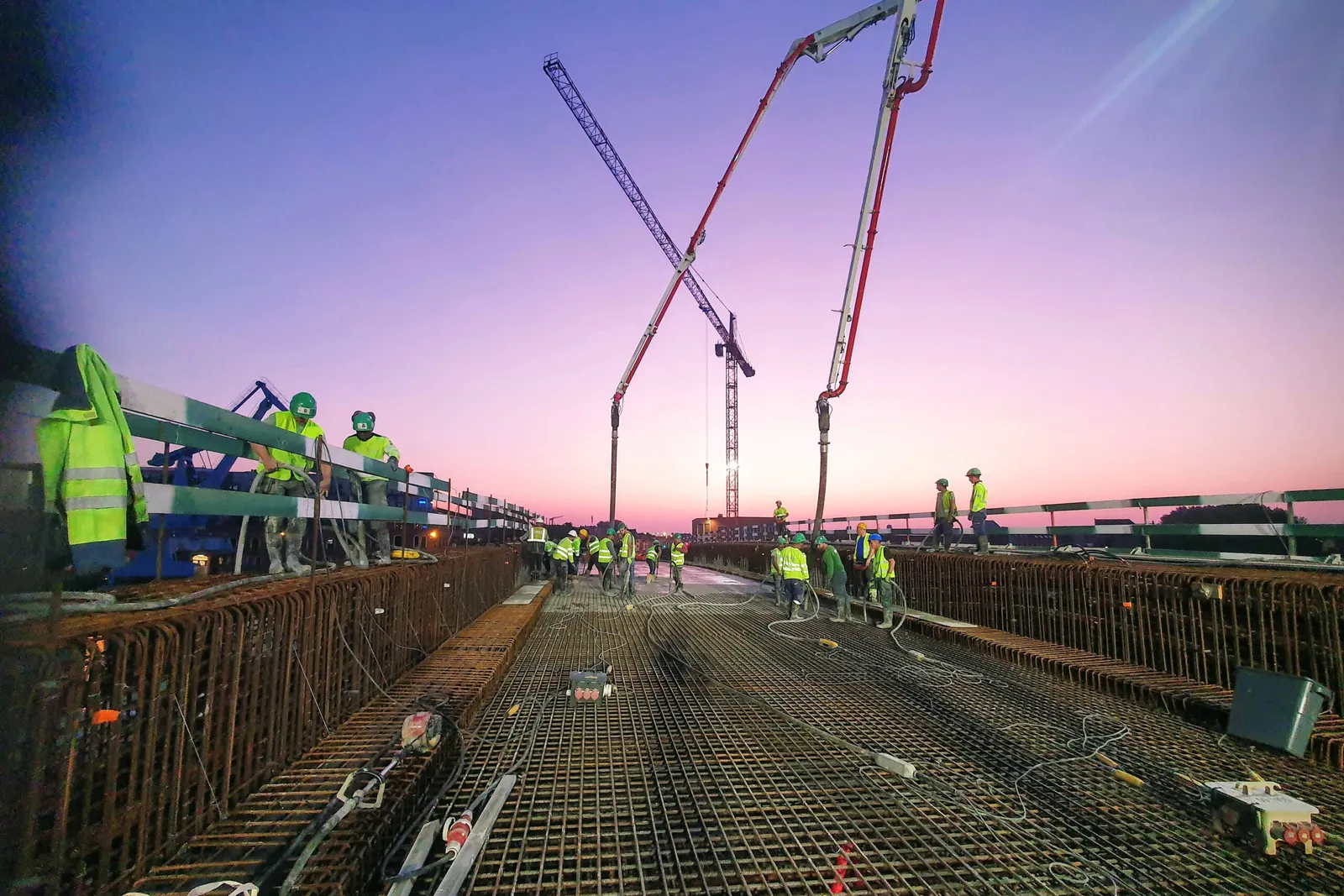
Work on the Verapaz Bridge in Ghent is progressing well. Commissioned by the Agentschap Wegen & Verkeer, Denys, in a temporary joint venture with Verhelst, is working hard to build the new bridge, which will improve mobility and quality of life in the area. “We worked day and night for three days to pour the first bridge deck,” says Brecht Van Compernolle, project manager at Denys.
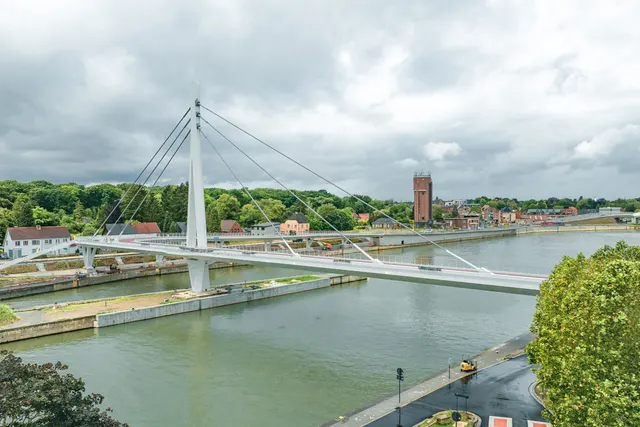
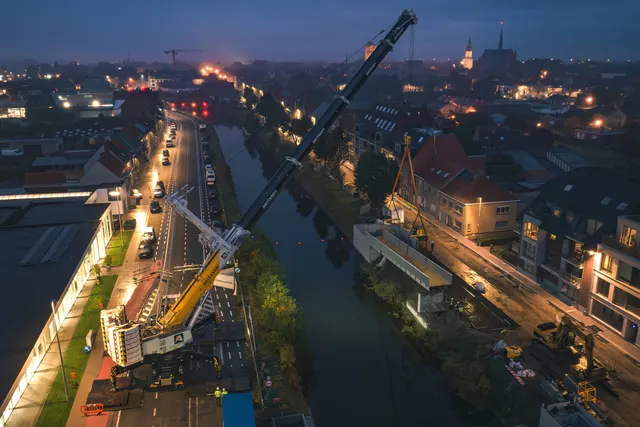
The new bridge will cross the Handelsdok from the Muidelaan to the Afrikalaan. It will have two traffic lanes in each direction, with ample space for cyclists and pedestrians on both sides. The surrounding area is also being made greener, and the quays will provide a comfortable and safe cycling route. The bridge will reroute the city ring road (R40) via the Afrikalaan and Koopvaardijlaan. This will bring several benefits. Traffic flows in the north of the city will change, improving quality of life in the Muide, Meulestede and Dampoort districts.
The new bridge will also ensure easy access to the R4 and the Oude Dokken, which is soon to become a new urban district. Denys is responsible for building and installing the bridge, including the redevelopment of the quays. Within the temporary joint venture, Verhelst is focusing on rebuilding the public roads and public spaces, as well as carrying out sewer works to the east and west of the bridge. Its work also includes rebuilding the Afrikalaan-Koopvaardijlaan junction and carrying out structural maintenance on the Afrikalaan. Brecht Van Compernolle says: “In short, our part of the project involves building two concrete bridges, each with two traffic lanes. We are also providing two 4-metre-wide steel paths along the sides of the bridges for cyclists and pedestrians.”
Eight piers
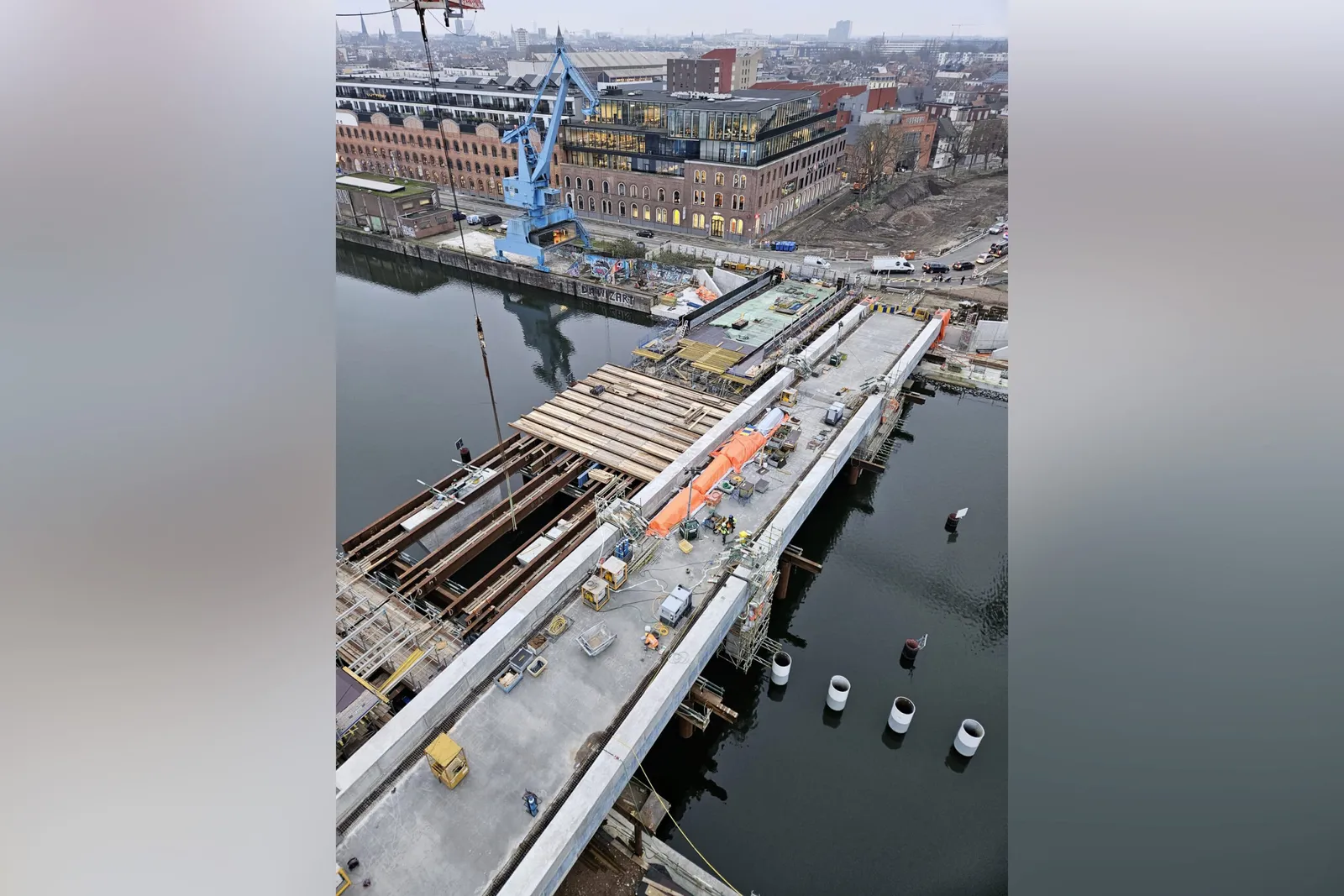
Work began in February 2022. Brecht Van Compernolle says: “First, we installed the piled foundations for both bridges. On the banks, the bridge abutments are supported by displacement screw piles. In the canal, we installed driven piles and micropiles from a pontoon. We used sheet piles to create a dry cofferdam in the water, allowing us to pour the concrete bases for the piers about 6 to 7 metres below the water surface. The two bridges will ultimately be supported by eight piers, each 1.2 metres thick. The largest pier is about 10 metres long. On the west bank, on the Dok Noord side, we first demolished the old gravel hoppers, which were partly suspended above the water. We then built a sheet-pile cofferdam there too, filling it with sand so we could install the displacement screw piles for the abutment and quay.”
Giant structures
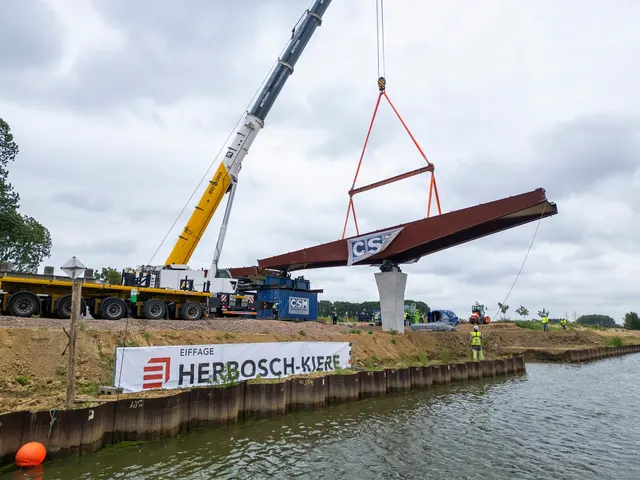
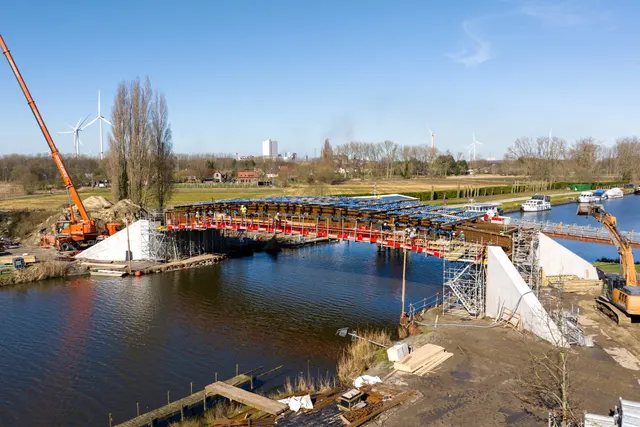
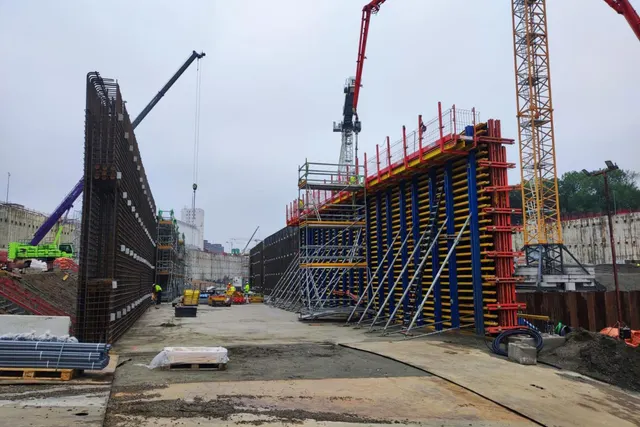
All the concrete works supporting the new bridges were completed before the 2024 summer construction holiday. “Since then, the focus has been on the bridge decks,” says Brecht Van Compernolle. “One bridge is 100 metres long, the other 115 metres. Both are about 12 metres wide. We began formwork for the first bridge deck at the end of May 2024, and poured it in September. Because these are enormous bridges, we built a kind of steel ‘support bridge’ from HEB 1000 sections, on which we could erect the formwork and pour the concrete bridge deck. The minimum required navigational clearance is 4.8 metres, and the permanent bridges have been designed accordingly. However, because the formwork takes up 1.9 metres, the bridge is built at a greater height.
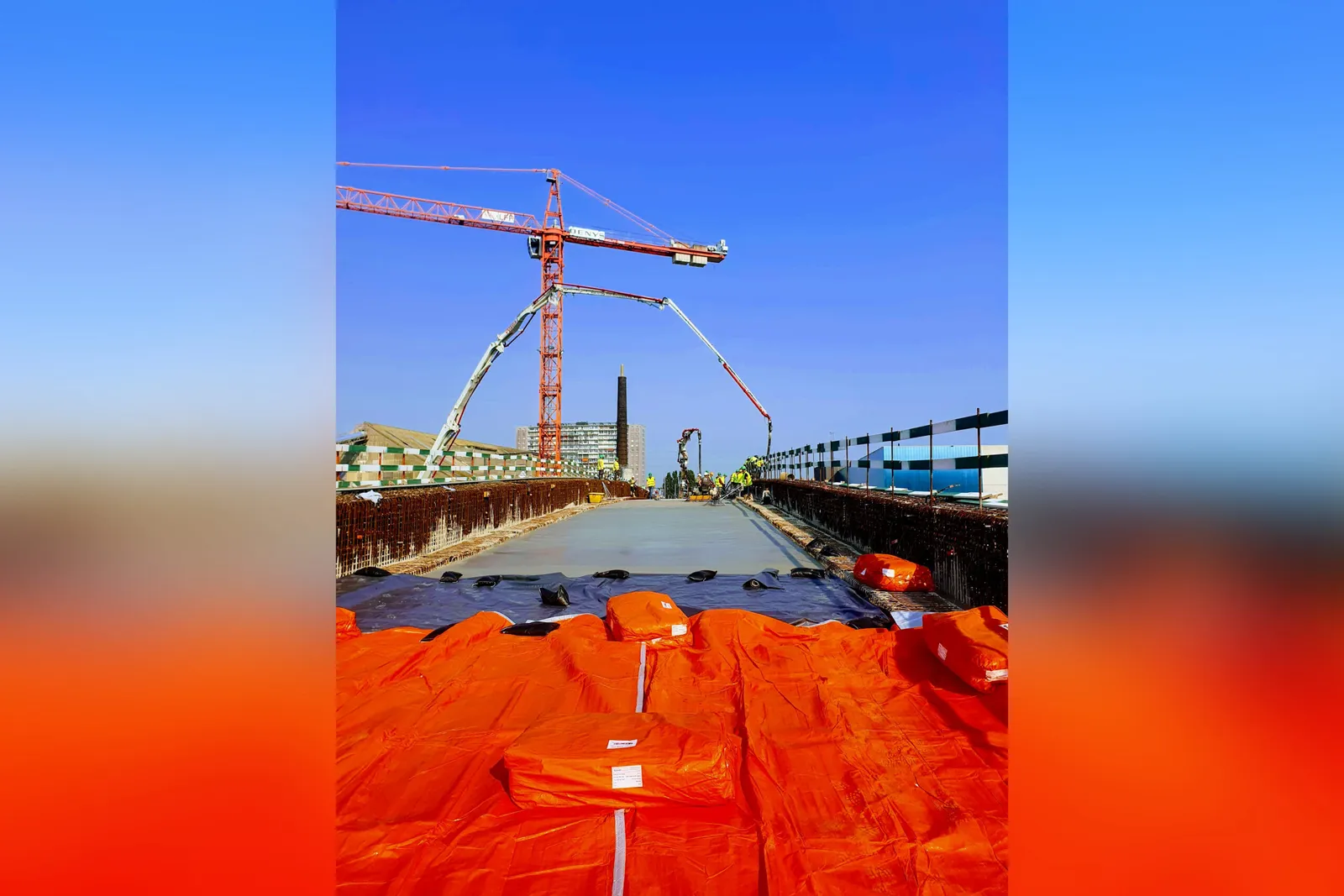
After the concrete was poured in September, the bridge deck had to cure and be post-tensioned. We were then able to dismantle part of the formwork and move it to bridge two, which will be built using the same method as the first. The project reached a milestone in December, when we lowered the first bridge by 1.9 metres into its final position.”
Complex project
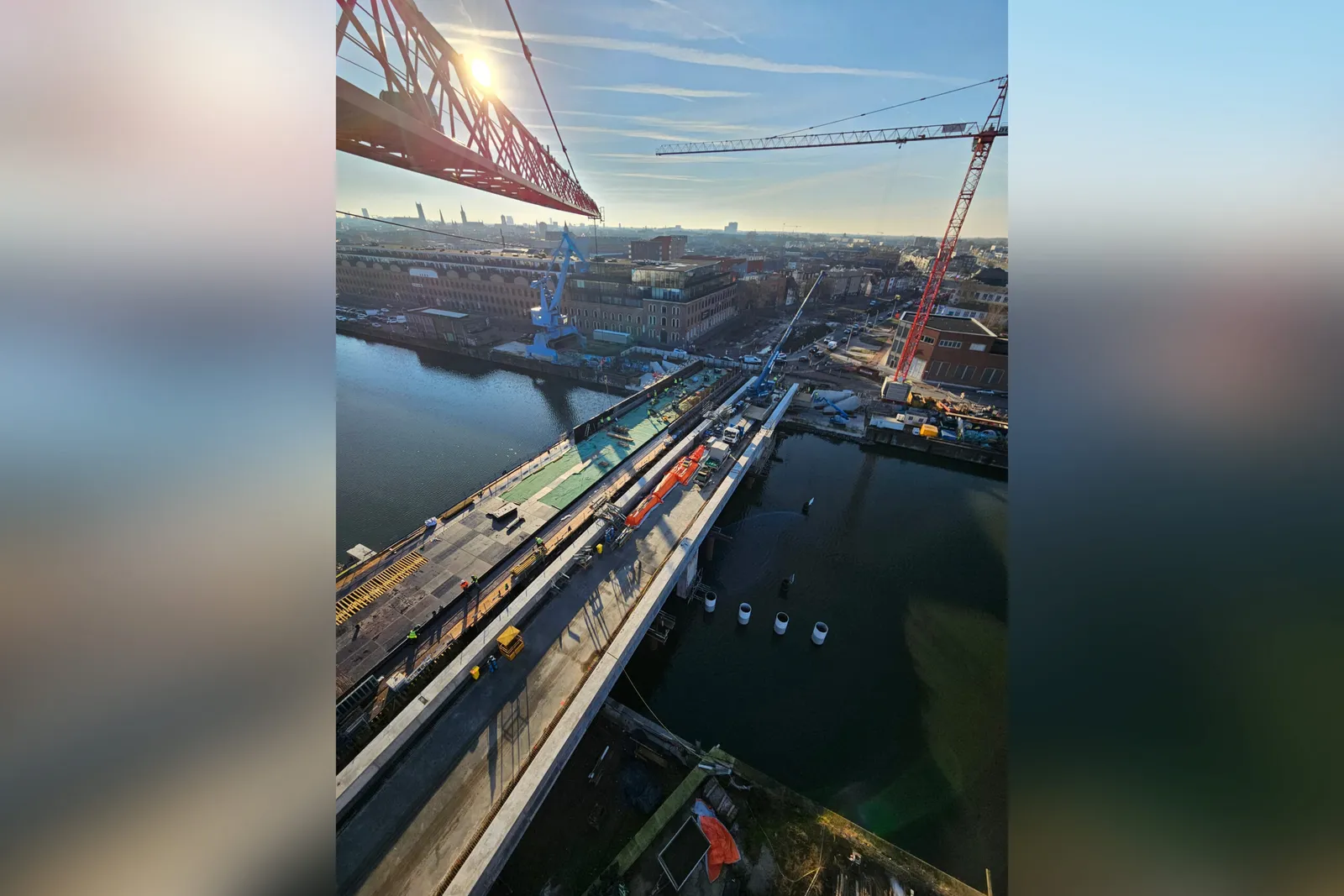
Although Denys is used to projects of a certain scale and complexity, the Verapaz Bridge has presented its own challenges. Brecht Van Compernolle says: “Removing the steel formwork used to pour the bridges is certainly no everyday task. Some of the HEB 1000 sections are 20 metres long, and after the concrete has been poured, you still have to find a way to get them out from underneath the bridge. That is why we used a rolling technique. The idea is to roll heavy loads out from under the concreted bridge until they are within reach of the tower crane, which can then hook onto and lift the section. However, some sections were stuck and could not be rolled out from under the bridge. To solve this, we cast lifting eyes into the bridge. We could then attach lifting equipment to hoist those sections up to the water surface and place them on a pontoon. This is a genuinely complex project that requires a great deal of thought and preparation.”
Dedicated team
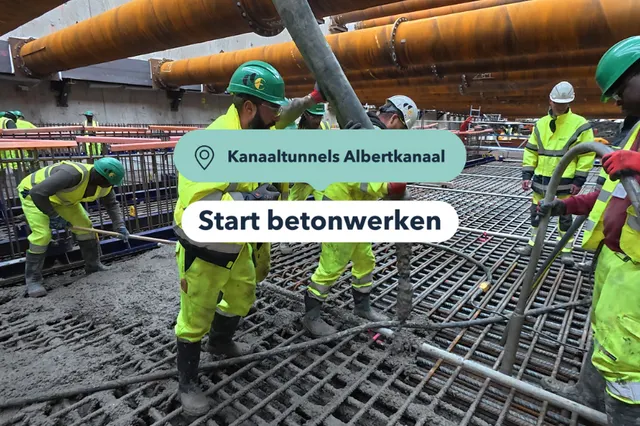
According to the current schedule, both bridges will be open to traffic by the end of 2025. “That is, if the weather is on our side. For the northern bridge, we poured 1,500 m³ of concrete: about 1,000 m³ on day one and 500 m³ on day three. On day two, we installed an additional 300 metres of formwork. Dry weather is essential, as is a dedicated team. We worked in shifts for three days, almost around the clock. On the first day, we worked for 21 hours with two 65-metre pumps, in two shifts with a total of 50 people. That dedication, combined with our expertise in this kind of complex work, is certainly one of Denys’s major strengths on projects like this,” concludes Brecht Van Compernolle.
Question about this story? Ask your question
Wie aan Verapazbrug werkte
- engineering consultancyWitteveen+BosMentioned in Verapaz Bridge to enhance neighbourhood around Ghent’s Handelsdok
- architectMarie-José Van HeeMentioned in Verapaz Bridge to enhance neighbourhood around Ghent’s Handelsdok
- architectMAAT OntwerpersMentioned in Verapaz Bridge to enhance neighbourhood around Ghent’s Handelsdok
- tijdelijke maatschapDenysIn this story
- tijdelijke maatschapVerhelstIn this story
Keep following this
Get an email when a new story is published. No account needed.
- ProjectVerapazbrug
- ThemeExtending the life of bridges and tunnels
- SubjectBridges & tunnels
- CompanyDenys
- CompanyVerhelst