Danube utility tunnel brings resources together
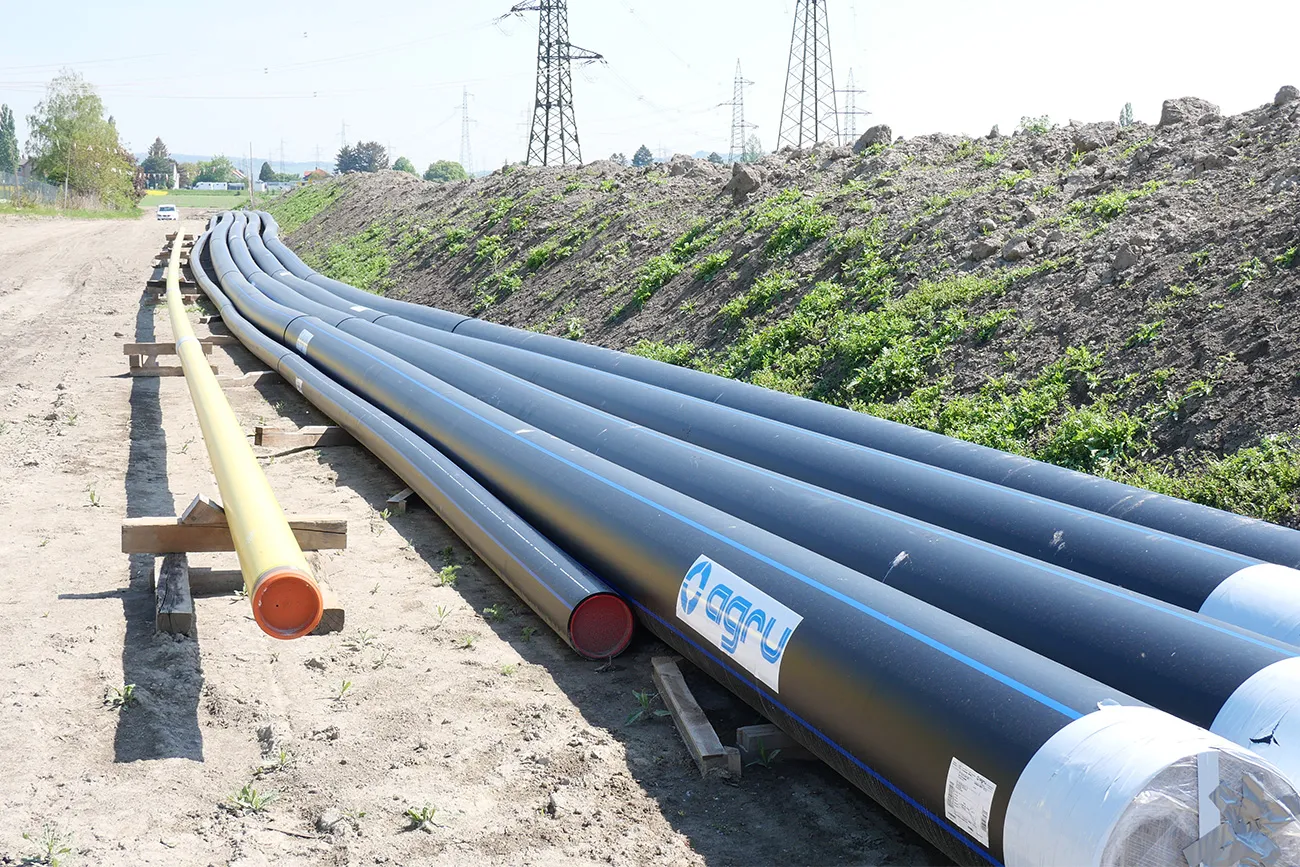
Klosterneuburg and Korneuburg are two municipalities in Lower Austria, situated directly opposite each other on the banks of the Danube. A microtunnel beneath the riverbed has linked the utility networks of the two municipalities. EVN has invested around €10 million in tunnelling beneath the Danube and installing pipelines for drinking water, natural heat, internet, electricity and gas. This is intended to improve security of supply in the region and further promote the expansion of sustainable energy supply.
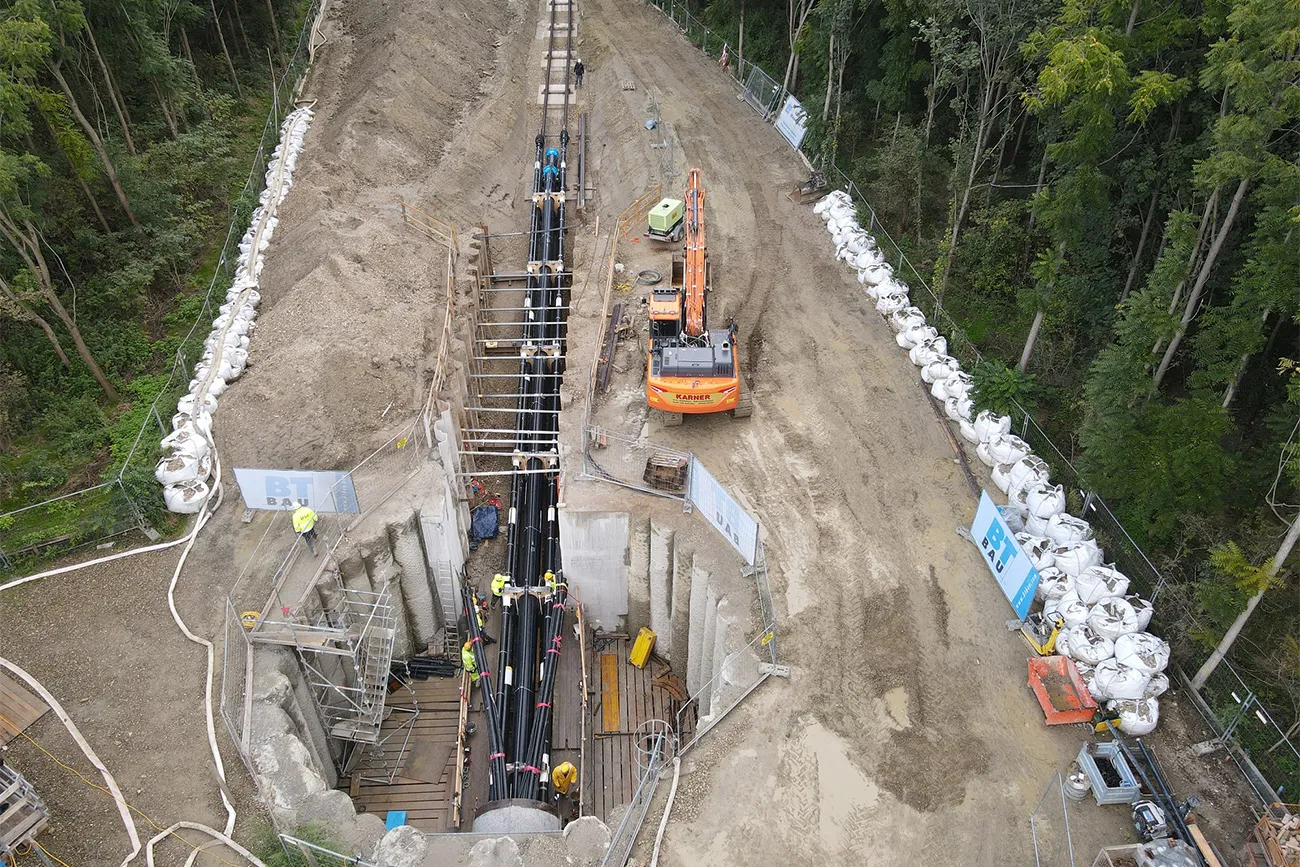
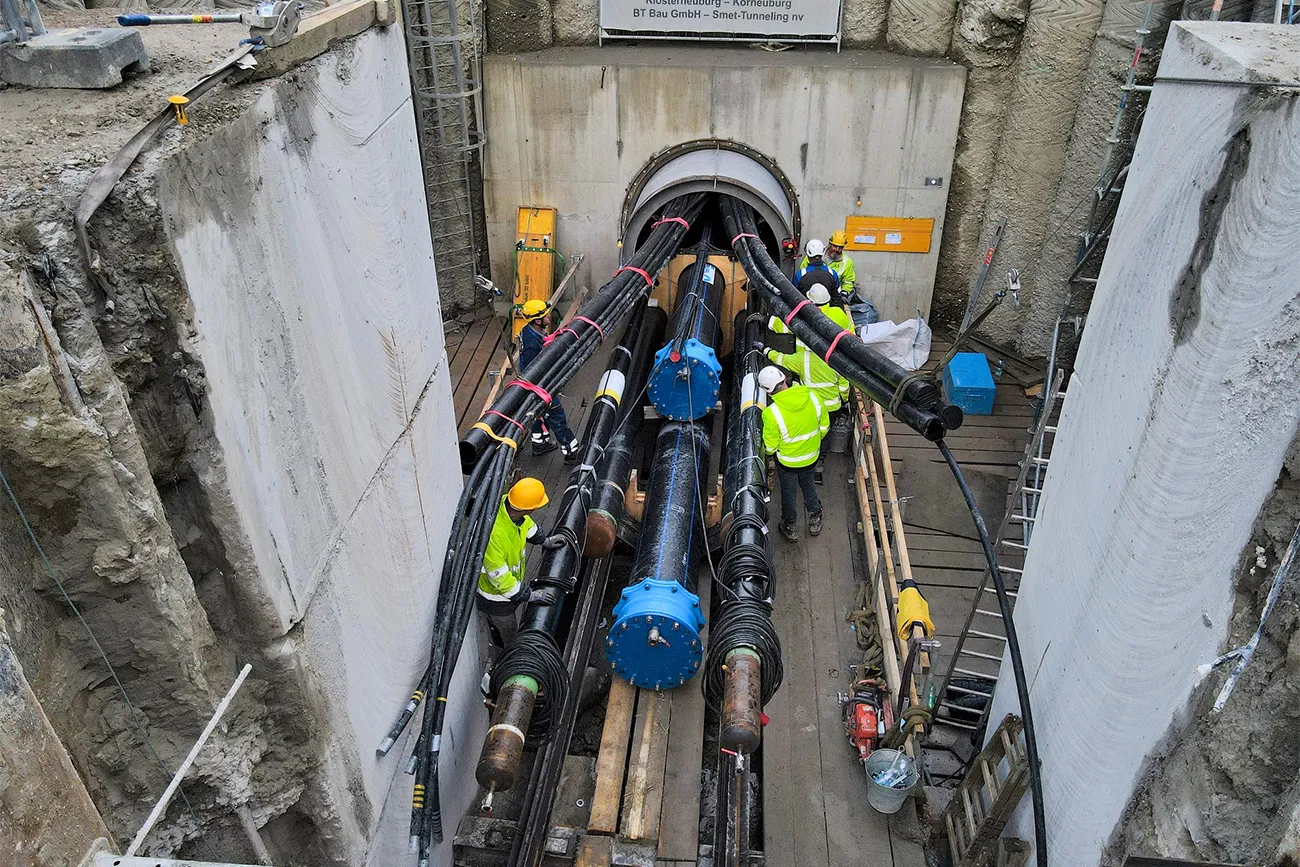
To connect the gas, water and district heating pipelines of the two municipalities, EVN commissioned the construction of a 460-metre-long microtunnel with a diameter of two metres beneath the Danube. Built using pipe jacking, the tunnel houses the Korneuburg-Klosterneuburg high-pressure steel natural gas pipeline and two AGRULINE drinking water pipelines made from high-performance PE 100-RC, with an outside diameter of 560 mm and an SDR of 11, designed for an operating pressure of up to 16 bar. AGRU Kunststofftechnik GmbH supplied more than 1,000 m of PE 100-RC pipes and fittings in total. As a precaution, two district heating pipelines and a reserve high-pressure steel gas pipeline were also installed in the Danube tunnel, along with 16 plastic cable protection ducts for electricity and optical fibre cables. AGRU Kunststofftechnik GmbH supplied a total of 2,880 m of PE 100-RC pipe and fittings, with an outside diameter of 160 mm and an SDR of 21, for the cable protection ducts.
Trenchless pipeline construction for infrastructure
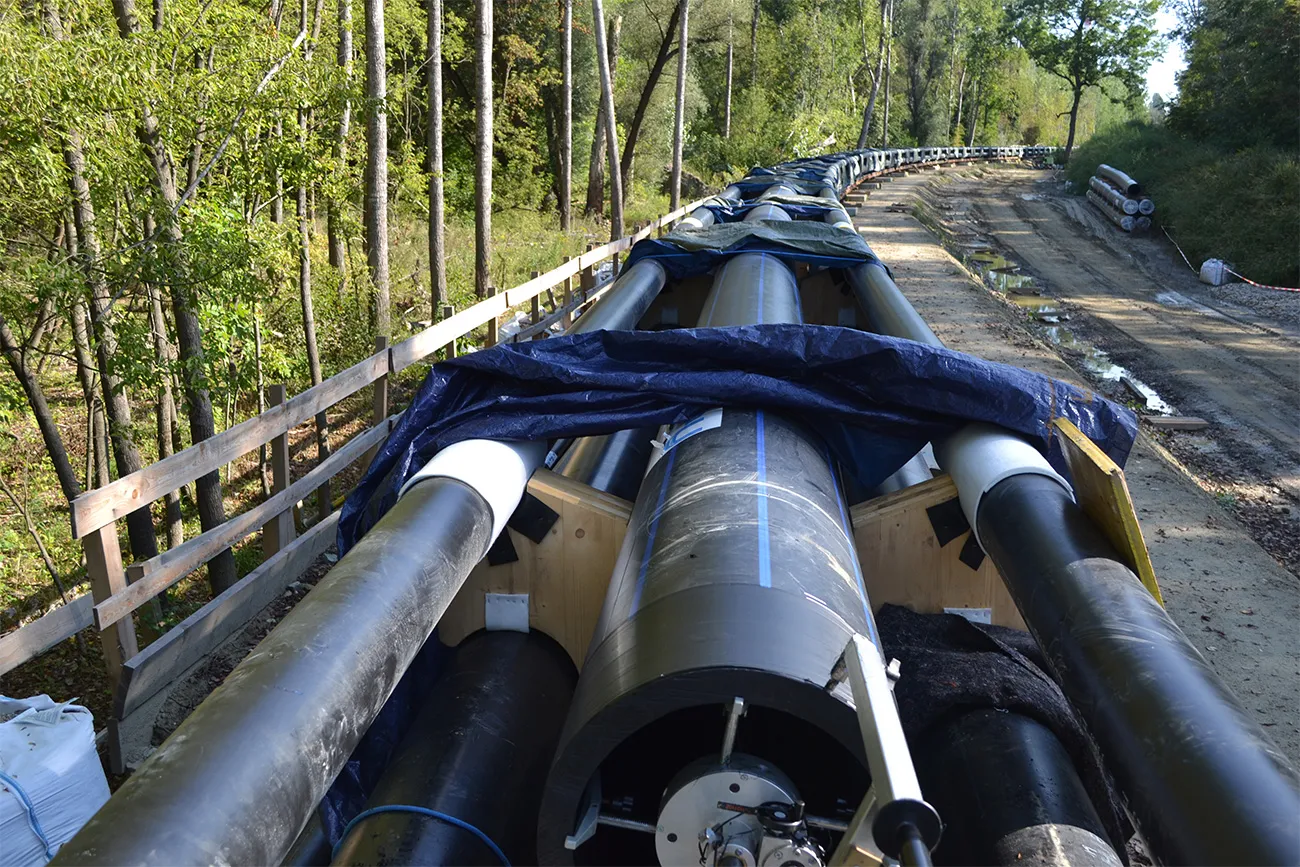
The 460 m-long Danube crossing starts on the Klosterneuburg side, at the northern edge of the Rollfährensiedlung, and ends at Tuttendörfl on the Korneuburg side. It was bored using the pipe jacking method, with a 40-tonne boring head, and lined with concrete pipes. The tunnel route is not straight, but follows a radius of 1,600 metres. This “banana shape” results in varying cover depths beneath the Danube bed, from around 5 m in the bank area to a maximum of 11 m in the middle of the river. The trenchless construction method enabled the Danube to be crossed safely and the concrete pipe, with an internal diameter of 2 m, to be installed efficiently. The pipelines for drinking water, natural heat and internet were welded, positioned on a carriage and pulled into the tunnel using a rail system. AGRU supplied extra-long 18 m lengths of PE 100-RC pipe with an outside diameter of 560 mm, significantly reducing the amount of welding required. Mechanically manufactured electrofusion couplers were used at the connection points.
The tunnel was then sealed at both ends and filled with water, and the pipelines were checked for any defects. “After the inspection was completed successfully, the tunnel was filled with a concrete slurry and permanently sealed, with no maintenance required,” explains EVN company spokesperson Stefan Zach.
District heating and drinking water network
On the Korneuburg side, pipelines were laid from the EVN power station site and a well field to a point just short of the Danube bank. The necessary tunnelling work was also carried out beneath the railway line and the A22. In 2015, EVN added a biomass heating plant to the Korneuburg thermal power station. It converts wood chips from the region into sustainably produced, environmentally friendly heat. This is also one reason for building the supply tunnel. EVN spokesperson Stefan Zach says: “The biomass plants on both sides of the Danube can step in for one another at any time in the event of a fault or maintenance work. As we also have large wells and springs on both sides of the Danube, the tunnel makes it possible to link the drinking water reserves. This can be crucial if there is a problem with the well field. These difficult times in particular show just how important regional security of supply is.”
Question about this story? Ask your question
Keep following this
Get an email when a new story is published. No account needed.
- SubjectBridges & tunnels