Road marking systems put through extensive testing in Baillonville
Text Niels Rouvrois Beeld COPRO
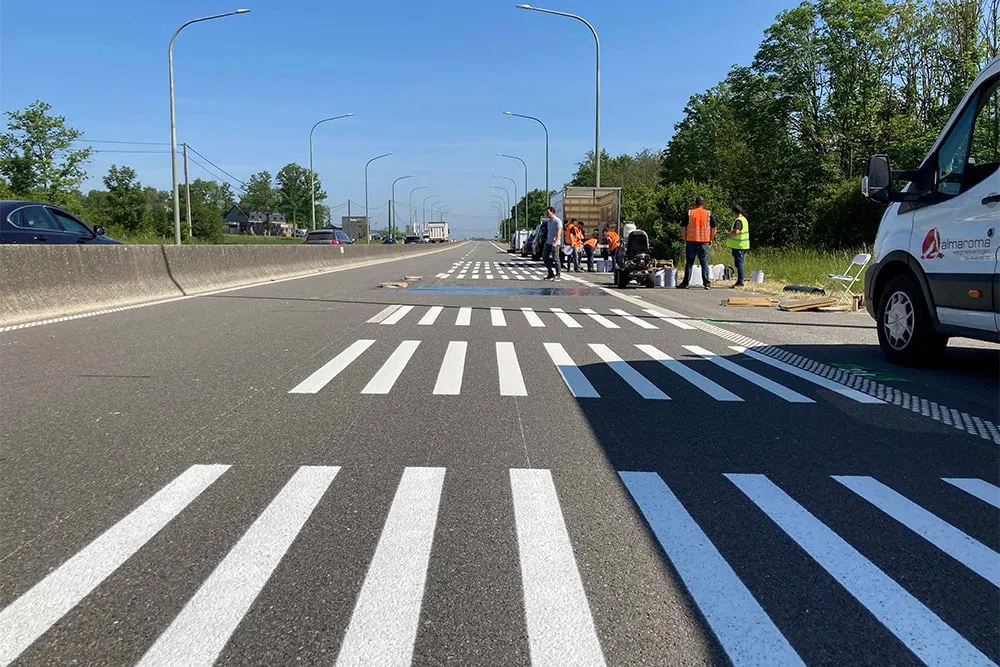
For COPRO, maintaining quality in the field of safety is a priority. The renowned certification body does this, of course, by rolling out, marketing and monitoring numerous product and process certifications, but also through new initiatives, such as clear guidelines for the product certification of drop-on materials and road markings. “Every year, any producer can come to our test sections in Baillonville to test their systems,” says Fulcrane De Bruyn, certification manager at COPRO.
All road users will agree that clearly visible road markings contribute to road safety. Road marking systems used on our public roads therefore undergo an extensive certification process. COPRO plays an important role in both CE certification and BENOR certification of road marking products. Thanks to close cooperation between COPRO, road marking product manufacturers and the various regions of our country, certification currently makes a significant contribution to product quality and the safety of our roads.
Products used in Belgium for road marking works are subject to conformity checks. These are carried out by COPRO and the competent departments of SPW (the public authority for Wallonia). The inspection procedures include initial tests for daytime and night-time visibility, skid resistance and the durability of these marking systems. For this purpose, test sections (in accordance with the specifications of standard NBN EN 1824) are provided on the N63 (between Marche-en-Famenne and Liège) in Baillonville. A homologation campaign for these systems is held every year, with the cooperation of AWV (Agentschap Wegen en Verkeer).
Testing
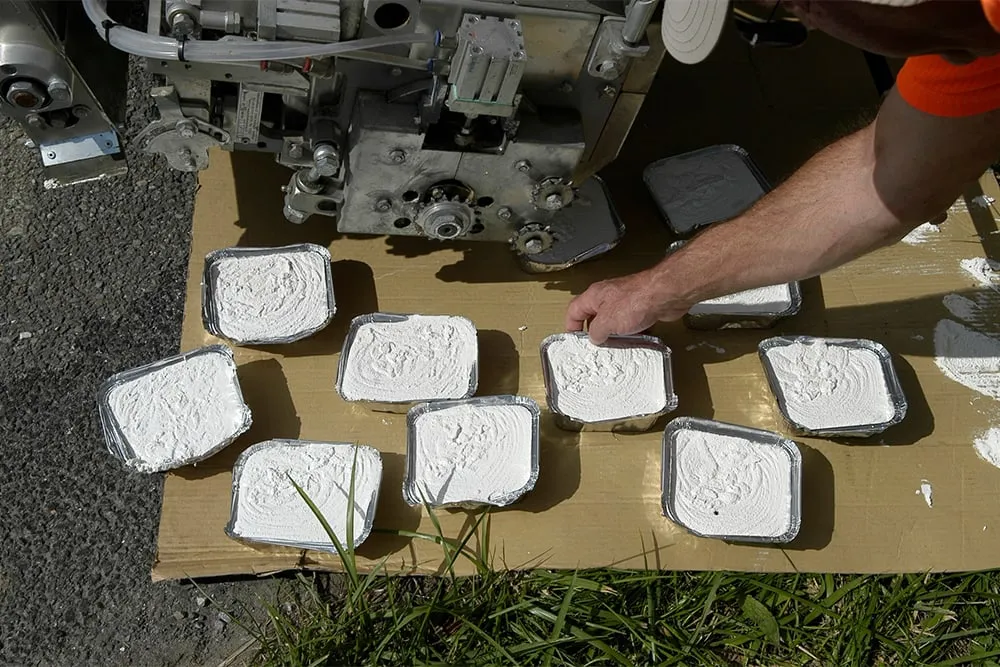
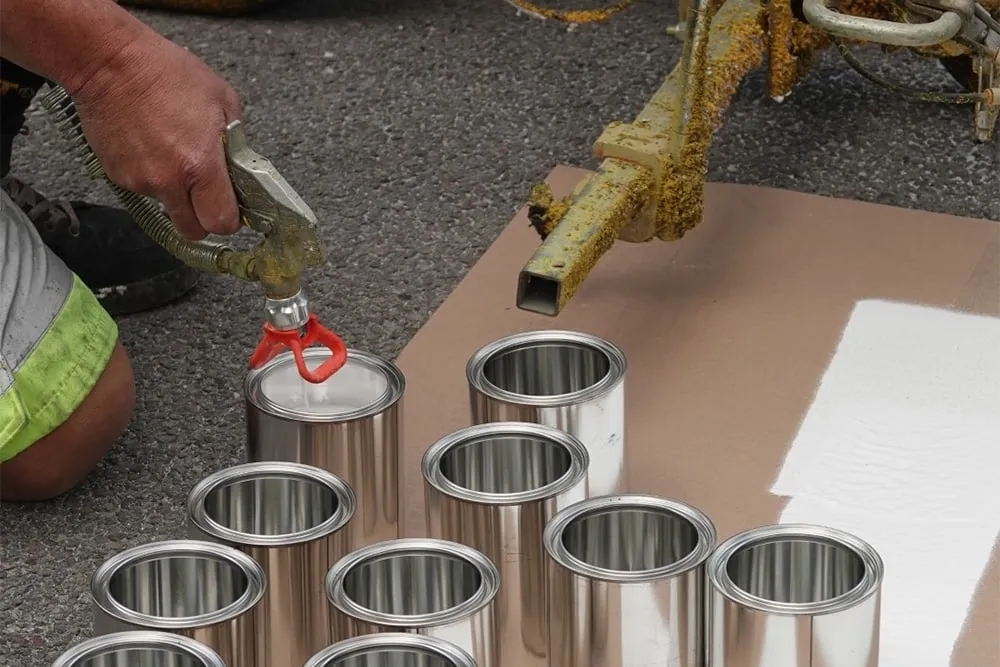
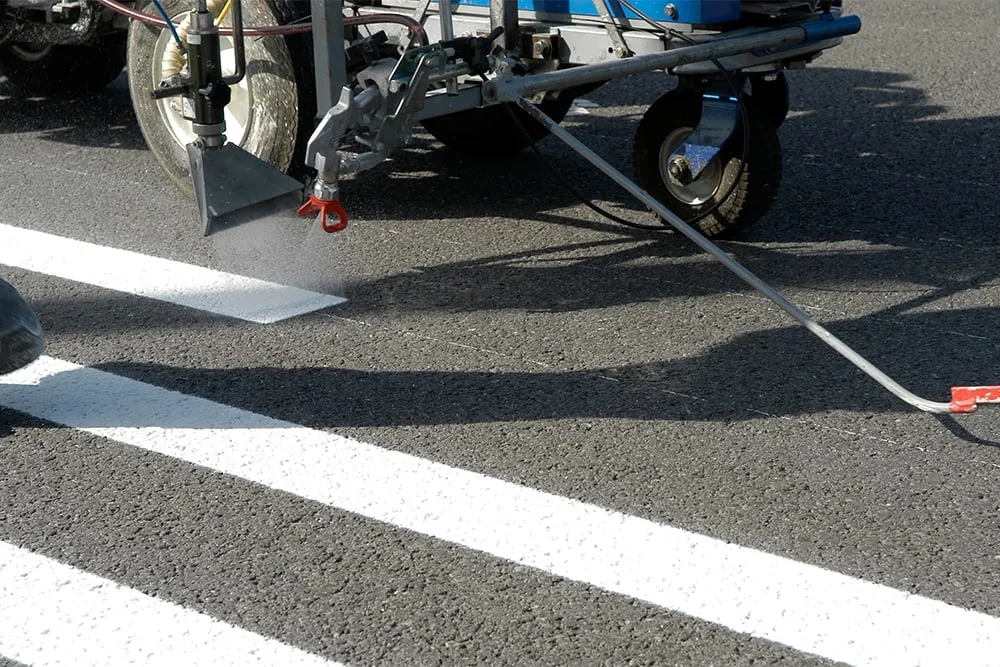
Fulcrane De Bruyn: “Testing usually takes place in late May or early June, as there is a reasonable chance of dry roads then, which is essential for carrying out the tests. The test sections in Baillonville are open to all road marking product manufacturers, and anyone can register for the annual tests. During the test, contractors apply a road marking system consisting of a base product such as paint, thermoplastic or tape, combined with drop-on material such as glass beads or anti-skid materials. COPRO also takes samples of the base material and drop-on material that day, for later analysis at an external laboratory. The dosage is also checked on the day of the test. This is, of course, very important for the system’s performance and will ultimately also be stated on the certificate.”
Nine parallel lines are applied during the test. “There’s a reason for this,” says Fulcrane De Bruyn. “A few weeks after application, an initial measurement is taken to check whether the system is performing well. The official measurement is carried out after about a year. The Belgian authorities have decided to define official performance after 1,000,000 vehicle passes (traffic class P5). The traffic class and the performance levels that systems in Belgium must achieve are set out in guideline G0025. These passes are recorded by a counting system, which is also why nine lines are applied. The line with the required number of wheel passes is identified and tested. Samples previously taken from systems that pass are then sent to the laboratory for identification testing. If all goes well, the manufacturer receives its BENOR certificate after 1.5 to 2 years and production can begin.”
Consistent and clear
Regional authorities in Belgium and municipal authorities alike know they can always turn to COPRO for clear, unambiguous advice on the product certification of road marking system products. COPRO is meanwhile working with the regions on new Technical Regulations for the surface colouring of cycle paths and cycle lanes. Once drawn up, these Technical Regulations will serve as the basis for product certification, and each region will be able to include them in its specifications. Consistent, clear requirements for surface colouring products and systems will also help improve safety for all road users.
Een zakelijke vraag aan Copro? Get in touch
Companies in this story

Keep following this
Get an email when a new story is published. No account needed.
- ThemeFuture-proofing roads and railways
- SubjectRoad construction
- CompanyCopro