Coppicing gets under way along roads and waterways
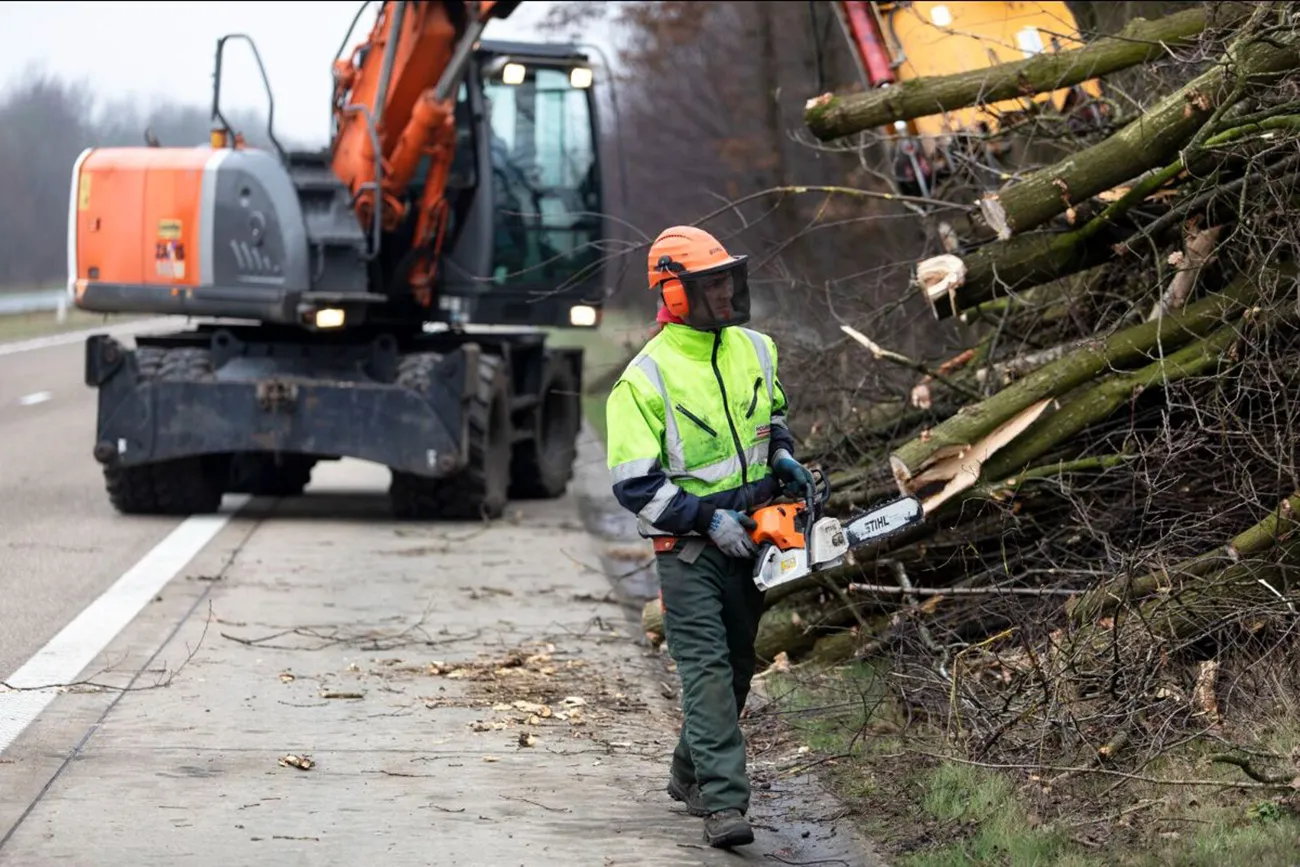
As every year, the coppicing season starts on 1 November. The Agency for Roads and Traffic (AWV) and De Vlaamse Waterweg nv then cut back shrubs and trees on verges along roads and waterways. Coppicing may look drastic, but it boosts biodiversity and road safety.
Trees and shrubs line many of our roads, often planted when the roads were built. Many years later, they have grown into tall trees, often standing close to the road or canal.
As these hedgerows grow taller and older, the risks to road safety increase. For this reason, between November and March the Agency for Roads and Traffic (AWV) and De Vlaamse Waterweg nv cut the plants back to a height of 10 to 20 centimetres. During this period, sap flow slows and the plants recover well from the heavy pruning. It also falls outside the bird nesting season.
Temporary visual impact, no impact on noise
Coppicing is an age-old method and one of the ways of managing trees and shrubs along roads and waterways. The choice between coppicing, pollarding, pruning, thinning or non-intervention management, which allows trees to grow freely, depends on the type of vegetation and the location. Coppicing is often the best option for woody vegetation.
Good coppice management is not just a necessity, it also improves biodiversity. The pruning may look drastic, but new shoots emerge from the stumps after a few months. The vegetation becomes younger and denser, supporting a richer and more diverse range of flora and fauna.
The authorities also work in sections of no more than 500 m. This gives one area time to start growing back before another section is tackled, several years later. A mix of young and old plants creates greater variety and provides a home for more plant and animal species. Coppicing has no effect on road traffic noise.
Better coordination of coppicing and more communication with local authorities
Last year, Flemish Minister for Mobility and Public Works Lydia Peeters launched a new charter to coordinate green space management along roads and waterways and step up communication and cooperation with local authorities and the public, thereby increasing support for coppicing. The minister also wants to make management smarter and more efficient. Minister Peeters said: “It is very important that all stakeholders, such as local authorities, are fully informed in advance about the coppicing plans in their municipality. That way, they will no longer be caught by surprise when pruning work begins.”
As well as the administrations within the Mobility and Public Works policy area, the charter was also signed by the Department of Environment, the Agency for Nature and Forests, the Research Institute for Nature and Forest, the Association for Public Green Spaces in Flanders (VVOG), the Association of Flemish Cities and Municipalities (VVSG), Natuurpunt, Bond Beter Leefmilieu, the Durme non-profit organisation and Limburgs Landschap.
Question about this story? Ask your question
Keep following this
Get an email when a new story is published. No account needed.
- ThemeStrengthening waterways and coastlines
- SubjectRoad construction