3D milling in road construction: how Holgo and Leica Geosystems bring precision to milling work
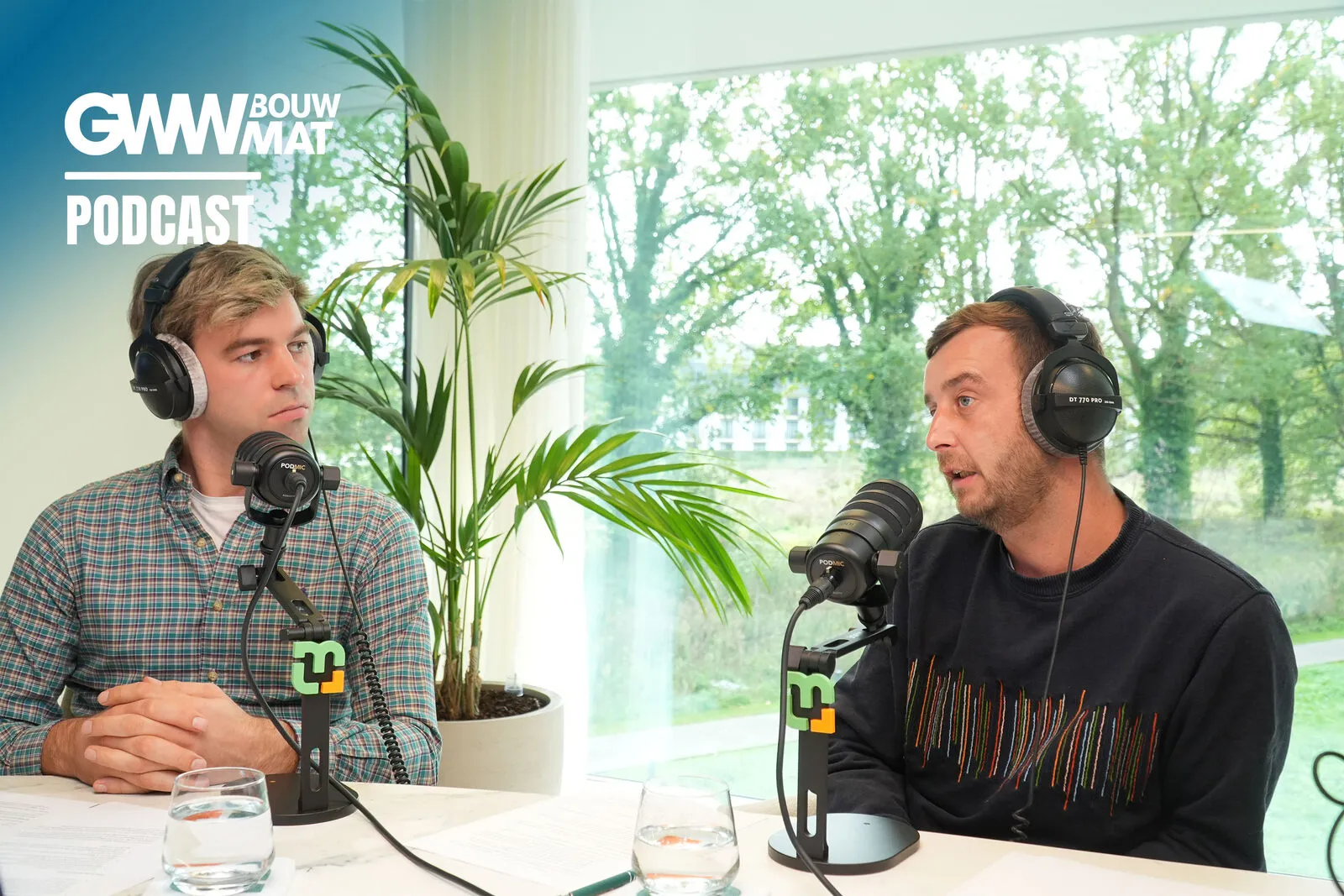
Milling used to be mainly a matter of removing old roads. Today it is increasingly a precise, digital preparation for the asphalting works. Bavo Boutsen talks about it with Michiel Verhaeren, managing director of the independent milling contractor Holgo, and Thijs De Keukelaere, Sales Engineer Machine Control at Leica Geosystems, which is part of Hexagon.
They discuss the takeover and growth of Holgo and the first large 3D milling job at Brussels Airport. They also explain the difference between differential milling using GPS and the 1UP solution with a total station. Other topics include the milling machine operator's working day, millimetre accuracy, lower asphalt consumption and the business case.
Finally, the guests look ahead: how quickly will 3D milling become the standard, which technical developments are coming, and what role remains for the operator in an increasingly automated road construction sector?
A business question for HOLGO? Get in touch
Full transcript
All chapters (28)
- Introduction
- How Michiel Verhaeren came to Holgo
- Experience within the family
- A deliberate choice for milling without asphalting
- Size of Holgo and the Belgian milling market
- The takeover of the sister company
- Running a family business
- Milling as precision work
- How technological road construction has become
- Where digitalisation comes from
- Inspiration from the Netherlands and the first test
- The collaboration from Leica's point of view
- Existing technology from the portfolio
- First field trial at Brussels Airport
- A day in the life of the operator in 3D milling
- The difference with traditional milling
- Differential milling and the 1UP solution
- Why accuracy is becoming ever more important
- Less asphalt and rework as a climate gain
- Impact on staff
- Who the milling machine operators are
- Why not every project in 3D
- The business case for Holgo
- The business case for Leica
- Where will 3D milling stand in five years?
- Technical developments at Leica
- Automation and the role of the operator
- Closing
Read the full transcriptCollapse transcript28 chapters
Introduction
Bavo Boutsen Welcome to a new podcast from Grond-, Weg- en Waterbouw. Today we are talking about milling. Where it used to be mainly a matter of removing material, today it is a precise, digital preparation for what comes next. To make that shift, the company Holgo is now investing heavily in 3D milling. And for that it found a technology partner in Leica Geosystems. But how exactly does that process work, and what does it deliver? And what does this evolution say about the future of road construction? I will be discussing that today with Michiel Verhaeren, managing director at Holgo, and with Thijs De Keukelaere, Sales Engineer Machine Control at Leica, which is itself part of Hexagon. Welcome, both of you.
How Michiel Verhaeren came to Holgo
Bavo Boutsen Michiel, we have to start with you, and therefore with Holgo. Today you are mainly known as a milling specialist, but that has not actually been the case for very long. The company's story goes back further than that. So perhaps we should start there. How did you yourself get into that story?
Michiel Verhaeren I actually worked for a very long time, ten years, for another road builder in the construction sector. Until at some point I had had enough of it. We started looking for another challenge. In 2022, Holgo then crossed our path. That was the company of the Holtappels-Goossens family. They were looking for someone to take over. Together with my brother and my father, we decided to take on that challenge. We then invested heavily in new machines and extra training for the men who were already there, because we saw that this would be the most important thing in the future. At the moment, milling is really our main activity. In the beginning we still did some sweeping work on the side, but we have gradually moved away from that.
Experience within the family
Bavo Boutsen So when you made the takeover, you had experience yourself. Was that also the case for your brother and your father?
Michiel Verhaeren Certainly. My father built up a road construction company from 40 people to 700. My brother had no experience yet and actually started with us straight from school.
A deliberate choice for milling without asphalting
Bavo Boutsen Okay, so it was not a leap into the complete unknown for your family. But today you deliberately choose not to lay asphalt yourselves, but to focus entirely on milling. Why that choice? Why so specific?
Michiel Verhaeren That's right, because we really want to be an independent milling company. If we start laying asphalt ourselves, we would actually start competing with our own current customers. Commercially speaking, that is obviously not ideal.
Size of Holgo and the Belgian milling market
Bavo Boutsen And if we look at the scale of the company for a moment: how big are you today?
Michiel Verhaeren Holgo alone has about 15 people. We also have a sister company, R.C.S. Rabotage and R.C.S. Balayage, in Wallonia, where another 35 people work. We currently have two depots, one in Charleroi and one in Boortmeerbeek, so that we can serve the whole of Belgium.
Bavo Boutsen And how many players like you are there in Belgium? How big is that market?
Michiel Verhaeren There are four really big milling companies, spread more or less across the whole of Belgium.
The takeover of the sister company
Bavo Boutsen And speaking of those sister companies: the striking thing is that at the time of your takeover, in 2024, they were actually bigger than Holgo itself. I find that a very ambitious entrepreneurial move. Why did you feel confident enough to dare to do it?
Michiel Verhaeren We had actually been working very closely with R.C.S. Rabotage since 2022. At that point the company came up for sale, and it was really a question of catching the train and moving forward, or waiting and seeing someone else take it over. We chose to take that step.
Running a family business
Bavo Boutsen And what is it like to run a company with your brother and your father? Do you still manage to keep the family relationships intact?
Michiel Verhaeren We certainly do. There is the odd clash, but that is part of it, and it has to be possible to sort things out. And that certainly happens.
Bavo Boutsen And do you play on that family character towards the rest of the employees?
Michiel Verhaeren We try to be very approachable for our employees and to be real patres familias, so to speak.
Milling as precision work
Bavo Boutsen Okay. If we now talk about the activity itself, so the milling: if I had to describe it as a complete layman, I would say it is taking the road out so that the actual roadworks can start. But that is probably far too simple an explanation that is not entirely in line with today's complex reality. So how does it really work? How should we understand it?
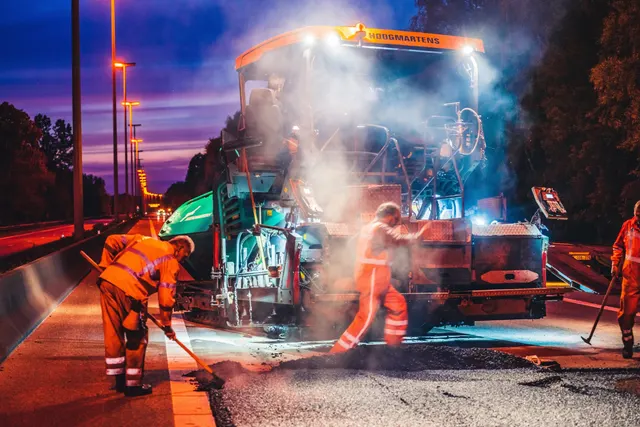
Michiel Verhaeren In the past it was indeed simply a matter of taking out the old roads, but I think that today it is much more precision work and really counts more as preparation for the asphalting works, so that those asphalting works can run as quickly and smoothly as possible.
Bavo Boutsen And that is, as a rule, always done with a milling machine. What does such a machine look like? How technological is it?
Michiel Verhaeren It is actually very technological. It can work to the millimetre. You can work with slopes. It has an enormous number of options.
Bavo Boutsen I think that for complete outsiders, road construction has a rather mechanical image, or not a very high-tech image. Is that in line with reality today?
Michiel Verhaeren No, on the contrary. It is actually very high-tech. The milling machine can change heights extremely quickly. You can ask it for anything needed to take a road out perfectly flat.
How technological road construction has become
Bavo Boutsen Okay, if we talk about that technology, we of course come to the technology partners, so to Thijs. As Leica, you are of course active for various partners in road construction. So you can judge very well how technological the sector has become.
Thijs De Keukelaere I think we can say that technology in road construction, and also in earthmoving, is progressing quite well. Looking back 10, 50 years ago, there was a great deal of technological development: GPS guidance on excavators and bulldozers. And we obviously already have a lot of experience with that. I think that over the last three, four years we have seen milling machines, concrete machines and the heavier road construction machines, rollers, increasingly running in 3D, with both total station and GPS solutions. And that there is still growth in that sector, but that we are already coming into a fairly mature market. 3D guidance on excavators and bulldozers is now really a very mature market. For milling work and concrete machines, we are of course still developing. And we sense that there is some more demand coming in that market.
Where digitalisation comes from
Bavo Boutsen We will certainly come back to those different methods you can work with. But first, a word on that general digitalisation and technological [unclear]. Where does it come from? Is it at the request of players like Holgo?
Thijs De Keukelaere Yes, of course. I think that Holgo, together with Thijs in Wallonia, is the second party to have 3D on milling machines. So you are definitely pioneers in milling in 3D. And the technology around it keeps developing. And that will never stop. So in that respect we will certainly see new developments further and further down the line. Which we may talk more about later.
Inspiration from the Netherlands and the first test
Bavo Boutsen Okay, so let us take up 3D milling itself. That is something you at Holgo, Michiel, came across because it already existed in the Netherlands. Why did you think: okay, we have to do that in Belgium too?
Michiel Verhaeren We work very closely with the Dutch market. And when we started with Holgo in 2022, we really went to look at how it works in the Netherlands. How do they actually work there? We came across 3D guidance there. It is not the same system as the one we use, but we did notice that this was the future we wanted to move towards. We then had a test at Antwerp airport, which actually went quite well. But at that point we had not yet bought any 3D guidance systems. Then we contacted Leica, because we had a very big job. And that is when we started looking for solutions with Leica. I knew Leica from earlier days in earthmoving. I had very good experiences with them and I phoned them. I knew they had the existing technologies, but they were not yet that well known with them on the Belgian market. And together with us they really searched very hard for solutions.
Bavo Boutsen Okay.
The collaboration from Leica's point of view
Bavo Boutsen Is that right? Is that your story at Leica too?
Thijs De Keukelaere Yes, that's right. I still remember Michiel's phone call very well. You were in our system, because you already had a bulldozer guidance system at a subsidiary of yours. And that is how we actually got back in touch with each other. And I still remember very well the meeting where we put the big plan on the table. And that for the big project at the airport we had to mill in different zones. And we have several solutions for that. So we also had to consider which solution to use for which zone we were going to mill. So yes, I remember very well how it came about. It was also the first time that I myself worked on such a big project. And our technicians too, of course. We had less of that experience with 3D milling in Flanders. In Wallonia and Luxembourg, colleagues of mine had already been involved in carrying out jobs, also at a partner of ours. So in that way we could already draw on some expertise and experience to bring your projects to a successful conclusion too.
Bavo Boutsen Was that a very atypical project for you as Leica at that moment?
Thijs De Keukelaere Internationally not an atypical project, but locally it was the first big project to be carried out within the local Leica Belgium team.
Existing technology from the portfolio
Bavo Boutsen And in terms of technology: was it a matter of implementing existing technology? Or was it really a case of developing and building new technology for this story?
Thijs De Keukelaere It is mainly technology that we already had in our portfolio. The controls and the technology behind them largely match those of the other machines, the concrete pavers. It is a different machine, but the technology is largely drawn from that division.
First field trial at Brussels Airport
Bavo Boutsen And as we said, the first field trial for your partnership was at the airport, so Brussels Airport. That doesn't strike me as an environment with much margin for error. Why was it nonetheless an interesting first case?
Michiel Verhaeren There was indeed no margin for error. But we were fairly confident in our solution. We had also run a few tests together on our own sites. We knew what could go wrong and what would work in any case. And I think you always perform a little better when there is some pressure. Then everyone is on their toes.
Bavo Boutsen And how long did the project last? Take us out to the runway itself.
Michiel Verhaeren In the end it took two and a half weeks, well, three weeks with a few days in between, to mill out 120,000 tonnes in 3D. The difficulty of the project, I think, was that we had to mill using both GPS and a total station. So we needed several solutions. And because it is an airport, a lot had to happen and there is an enormous amount of movement on a site like that: cranes, lorries driving past. So that was also a challenge: how do we position everything, how do we set everything up. I think there was a great deal of preparatory work on both sides to make it run as smoothly as possible.
Bavo Boutsen But looking back, did everything actually work out as you had planned?
Michiel Verhaeren Better than planned.
Bavo Boutsen So a kind of proof of concept: okay, this works, this partnership works. That was the value of that project.
Michiel Verhaeren Yes, exactly.
A day in the life of the operator in 3D milling
Bavo Boutsen Okay, let's try to make the technique of 3D milling as concrete as possible. Say I'm an operator, the driver of such a 3D machine. And I arrive on a Holgo site in the morning. What do I find? What has already happened by the time the operator arrives?
Michiel Verhaeren Usually a surveyor has already come to measure the existing situation. He has then drawn up a new plan: what do we actually want to achieve after the milling work? What should it look like? That plan has usually already been approved by the client, so that the client confirms: okay, this is exactly what we want. Then the plan is loaded into the machine. In the morning the total stations are set up and the points are measured in. And everything is mounted on the milling machine: the prism, the GPS receiver. Then for the operator it is simply a matter of starting up, checking that the plan matches what we had in mind, and then he can start milling.
Bavo Boutsen So in effect the operator can arrive with this system and start working straight away.
Michiel Verhaeren Yes.
The difference with traditional milling
Bavo Boutsen But then the logical question is: if it isn't done in 3D, what is the difference? How does it work then?
Michiel Verhaeren Then the operator first has to interpret the entire situation himself. Together with the site manager he has to work out roughly how deep we are going to mill here. And the big problem, I think, is this: suppose there is already a depression in the road, then we always mill along with it. So the depression will always remain. In 3D, by contrast, you can set it up computer-controlled: this is the milling depth we want to achieve. And if there is a dip, the machine will mill slightly less deeply, so that the surface is nice and flat afterwards. It also removes some of the human error.
Bavo Boutsen So may we say that in a sense 3D is easier for the operator himself? Or is that too simple?
Michiel Verhaeren It is certainly easier for the operator, but it couldn't work without an operator, because you still need to check the result afterwards. 3D remains a system for depths. There are so many other factors that only an operator can take into account.
Bavo Boutsen Yes, so he remains in control and is very important.
Differential milling and the 1UP solution
Bavo Boutsen Okay, Thijs, we have mentioned it briefly, but we need to pick it up: there are actually two ways to orient such a machine. That is by GPS, so via satellite, or via a total station. What exactly is the difference? How should we understand that?
Thijs De Keukelaere Yes. On the one hand we have differential milling, and on the other hand we have a solution called the 1UP solution. With differential milling, we compare an existing design or an existing situation with the design, as Michiel has already said. Because we know the difference, we also know the depth we need to mill. And that is how we control the machine's skis. In this way we achieve very accurate control, purely on GPS. So the machine senses the existing height and then measures towards the design. Then we move on to the second solution. The second solution uses a combination of GPS and a total station. The position, or the XY, is determined by the total stations, and the height is also determined by the total stations. The GPS is used purely to determine the heading of the machine. It is a patented technology that is also used on the concrete pavers. What is the advantage? If we have to mill several times, or at different depths over a given area, we can use this solution, because at any moment we can map the position and the height of the machine, above all the height. And in this way we can mill at any moment, even if we go over the area several times.
Why accuracy is becoming ever more important
Bavo Boutsen And the most important thing in this story seems to me the level of detail at which you can work. Say, for example, that 43 has to be milled away. In reality that sometimes ends up as 4.5 cm. But thanks to technological solutions like this, that is no longer the case and we can really keep working in great detail. Why is it so important that the bar keeps being raised where that level of detail is concerned?
Thijs De Keukelaere I also think that on specific projects we simply have no choice but to work to those tolerances. Take an airport: those are places where the tolerance cannot be any lower. So on such a project a high level of accuracy is required in any case. I think that was even stated as such in the specification.
Michiel Verhaeren Yes, indeed. I also think it isn't really directly necessary for an everyday street. But it is about runways, race circuits.
Bavo Boutsen There every millimetre counts, quite literally.
Michiel Verhaeren Exactly, there it is extremely important that the road is perfectly level. You also see it in lower asphalt consumption. If we normally have to mill off 43, as Thijs already mentioned, that will very quickly become 45 or 50. With 3D it is effectively 43, so the site manager's calculation for his asphalt will always be exactly right.
Less asphalt and rework as a climate gain
Bavo Boutsen So in that sense this level of detail is also a climate story. It means you use less asphalt.
Michiel Verhaeren Right, there are no asphalt leftovers, no lorries have to drive on unnecessarily, no extra tonnage is produced when it isn't needed.
Thijs De Keukelaere And if we look at what you said: if there is a small dip in the road, that dip actually gets filled, and then we have higher asphalt consumption. So in that way we at Leica also try to contribute to climate thinking. But also consider rework, for example. Things that have to be done again: that is all staff time you lose, and of course also emissions that you can save with this solution.
Impact on staff
Bavo Boutsen And besides that climate story, it is also, as mentioned, a matter of human errors that can be eliminated by this technological way of working. If I take that reasoning a step further, I could say: you now simply need fewer people to do the same work. Is that the right way to look at it?
Michiel Verhaeren No, that is certainly not the case. We keep working with the same number of people, whether we mill in 3D or not. 3D is one thing, but there are so many factors at play. I don't think a day will come soon when we can say: we put the milling machine on 3D control without an operator, and the machine drives itself.
Bavo Boutsen And speaking of your operators: you currently employ around 45 of them. How do they respond to this new technique or technology?
Michiel Verhaeren Most of them are quite open to it. They also know it is being used more and more. The men have followed all the training courses themselves. And they see it as making their work easier. They remain ultimately responsible on site. So they still have to check: does what the machine control says match what we want to achieve?
Bavo Boutsen Does that make their job easier, in a sense? Or does it make it easier for someone without experience to do that job?
Michiel Verhaeren No, I don't actually think so. You still need to know just as well what you are doing, what you are working on, how the machine can react. There can also be an error in a plan. The machine can lose its signals. And at that moment, as a milling machine operator, you have to know how to act and carry on.
Who the milling machine operators are
Bavo Boutsen And who are those milling machine operators at your company? Where do you find them? How are they trained?
Michiel Verhaeren Most of them simply come to us. They have no experience with milling machines. Preferably they already have a bit of a feel for machines or some machine experience. But with us anyone can become a milling machine operator. What matters most is that you want it, that you want to learn and that you have a certain sense of responsibility.
Why not every project in 3D
Bavo Boutsen Okay. I think we can state in general terms that the system has a great many advantages. So a logical question seems to me: why isn't everyone doing 3D milling today, everywhere, on every project?
Michiel Verhaeren Because I think the preparation is also considerably more intensive than for an ordinary milling day. Average streets we can simply handle the way it is normally done. I think it is really something for more specific situations. More complex jobs.
Bavo Boutsen What kind of cases are we talking about? When does it really pay off to opt for 3D?
Michiel Verhaeren I think where it is really important, or where there are really large surface areas. You have to bear in mind that you first have to send a surveyor and that you have to buy the systems. So it is in any case more expensive than traditional milling.
Bavo Boutsen But may we say that there is a trend towards more 3D across the sector as a whole?
Michiel Verhaeren Yes, I think so. And I think it will only keep rising.
The business case for Holgo
Bavo Boutsen Okay, and the main reason for that is quality, as we've already said. You can reach a higher level of quality, but at the end of the day there always has to be a business case behind it. So looking at it from an economic angle: where, for you at Holgo, does the business case for 3D milling lie? Why is it also interesting when seen through that lens?
Michiel Verhaeren Because I'm convinced it will be needed more and more. And it makes our job easier to some extent. Afterwards we often know exactly how many square metres and how many cubic metres have been removed, whereas otherwise that is often just an estimate.
The business case for Leica
Bavo Boutsen Okay, and the same question for Leica: where does the business case for this lie for you?
Thijs De Keukelaere I think we've actually already partly covered that. I think we have to look at both rework and... These are all things that make your machine work more efficiently, so you need less time to carry out the work. But above all it's that accuracy that brings the increase in efficiency. All the things you would normally have had to do manually have to happen less often. So you also need less time. And I simply think: all those things... A business owner or a manager doesn't see that when it doesn't happen. Because it no longer has to happen at all. That is often the difficult part of the job as a sales representative. You can explain it, but in practice, well... In practice it's seen less, because many mistakes simply no longer occur. So I think that is our business case.
Bavo Boutsen Yes, it's precisely the elimination of those mistakes that is interesting, because that is what makes the business case attractive. But of course they no longer see it. So that is the hard part to explain, especially in a theoretical meeting. But you still manage.
Thijs De Keukelaere We do manage, yes, of course. Also because the more people or companies invest in the technology, the more they can go and look at each other's work. And that way they can actually see that the workflow is better put together.
Where will 3D milling stand in five years?
Bavo Boutsen But although it's clear that more and more is being invested in it, we are still only talking about 5 to 10 per cent of all road construction sites. How do you see that evolving? Where will 3D milling stand in five years?
Michiel Verhaeren I don't think it is 5 to 10 per cent of all road construction sites. I think that applies mainly to the milling sector. I think the milling sector was a bit behind in that respect. As Thijs has already said: if you look at excavators, I think working with GPS is simply standard now. And I do expect milling to move more in that direction as well. That won't be within three or four years. But I do expect that in the future it will be fairly normal for us to mill largely in 3D.
Thijs De Keukelaere I'm also thinking of the market for those milling machines. I think that eight years ago we had almost no 3D control on a slipform paver. I think we can compare the two a little. Now we are in the middle of it. Holgo has a fine fleet and has invested well in 3D control. And I think that, as with the slipform pavers, much more of it is coming. I think we have already equipped ten slipform pavers, even though there aren't that many of those machines. And it's the same on your side. We are also starting to enter a mature market there. The largest road builders in Flanders all have 3D control on their slipform pavers at the moment. And I think it will be no different for milling work, that it will follow. Indeed, three, four, five years, and then we will be in that mature market too.
Technical developments at Leica
Bavo Boutsen And where is there still technical progress to be made in all this? Is there a limit to this technologisation?
Thijs De Keukelaere It obviously doesn't go super fast. But I can say that within Leica we are again developing further. And that the differential milling function will now also come to the solution with the 1UP. So in that respect we are trying to build one ecosystem around 3D, so that all functions end up in the same control system. So we are definitely working on that. We will keep developing. So yes, we'll see what the future brings.
Automation and the role of the operator
Bavo Boutsen And is that mainly a story of further automation? Or how do we see the role of people evolving?
Thijs De Keukelaere I think it will still be a while before a milling machine drives fully automatically. So, to be clear: we only control the skis of the milling machine. The machine doesn't drive itself, and we don't steer the machine ourselves. The operator still has to do that. So we only control the height of the skis. And that is quite a big difference from a slipform paver: there we actually steer the machine. But it might possibly happen one day. Of course, it's also a question of whether the operators themselves want that.
Bavo Boutsen Do you think that automation... It seems unstoppable, I would think, as an outsider?
Michiel Verhaeren I find it hard to believe, but I don't know. There are so many factors, but there will have been the same with slipform pavers. And those have been solved too.
Bavo Boutsen But the semi-autonomous machines available today, which we have discussed, have a lot going for them and are fully embraced by the operators.
Michiel Verhaeren Yes, absolutely.
Closing
Bavo Boutsen Okay, that seems a good place to close. I think one thing is clear: road construction will continue to innovate very strongly in the coming years, and those are fascinating prospects. 3D milling may seem only a small part of road construction, but it is precisely there that it becomes clear how fast the sector is changing. Fifteen years ago people were still working with string lines and paint, and above all on the basis of experience. Today it increasingly starts from digital models and machines that [unclear]. For Holgo and Leica it is therefore no longer a technological experiment, but part of a roadmap towards a highly innovative future. Michiel Verhaeren and Thijs De Keukelaere, thank you very much for the conversation.
Companies in this story
Keep following this
Get an email when a new story is published. No account needed.
- ThemeFuture-proofing roads and railways
- SubjectRoad construction
- CompanyHOLGO
- CompanyLeica Geosystems