Semi-paved roads are also suitable for heavier traffic
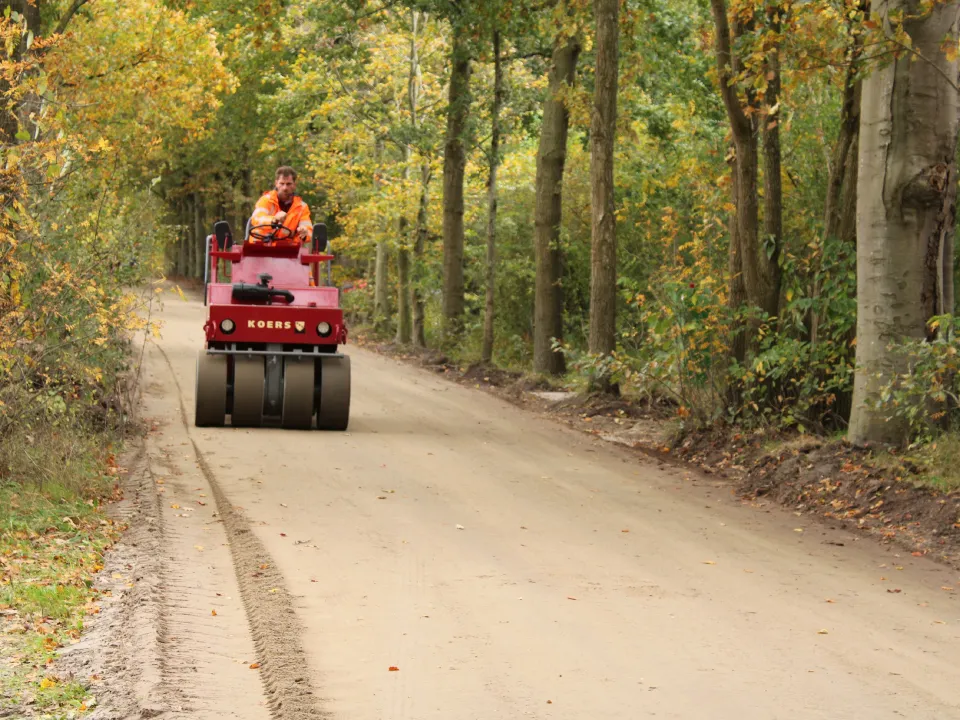
The days when semi-paved surfaces were used only for footpaths and cycle paths are long gone.
One major development in recent years has been the arrival on the market of semi-paved surfaces capable of withstanding heavier loads. And, of course, they retain the key benefits of semi-paved surfaces: they do not seal the ground and remain permeable to water.
“The demand for a semi-paved surface that could withstand heavier loads came from one of our customers,” says Klaas Koers, managing director of Koers bvba, which specialises in separating and processing waste into sustainable materials for road construction and landscape engineering. Around five years ago, the officials concerned from the German municipality of Großenkneten in Lower Saxony told us that heavy agricultural traffic was completely destroying roads in the surrounding countryside. They asked whether Koers could supply a semi-paved surface that combined good permeability and low maintenance costs with high load-bearing capacity. Koers set to work on this in the laboratory. A new semi-paved surface, DurEko-mix BIO, was developed based on an existing product range. It combines hard stone types and biopolymers to deliver excellent durability and much higher load-bearing capacity. The product is suitable for axle loads of 10 to 15 tonnes. Many kilometres of agricultural roads have now been built with it, and they are performing very well.
Natural appearance
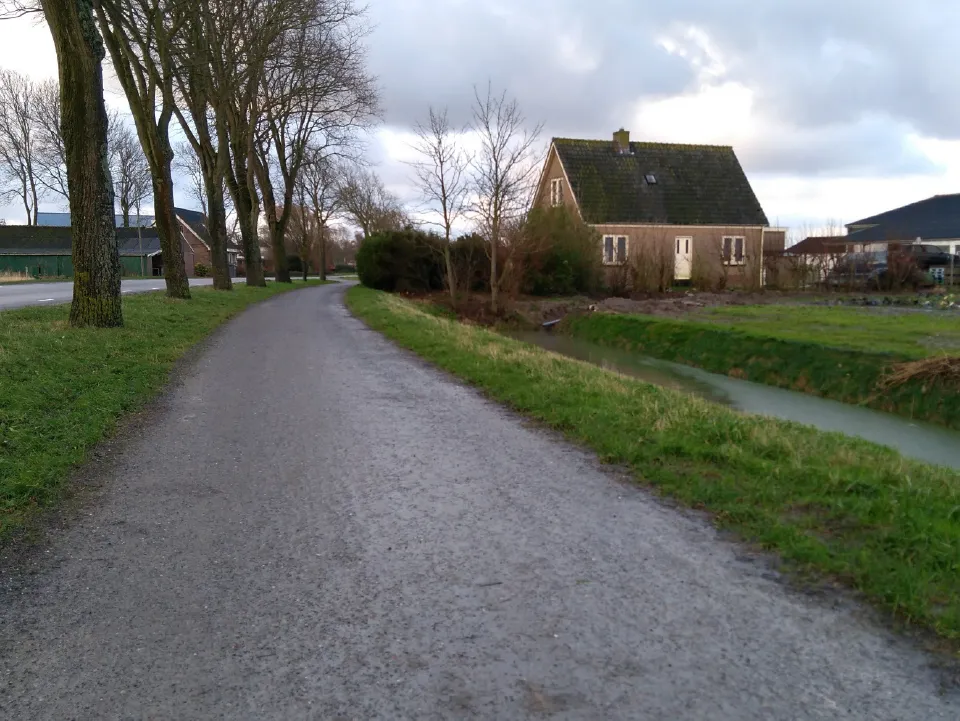
Since DurEko-mix BIO is used mainly in rural areas, it is important for the surface layer to have a natural appearance. The mix has also been formulated to ensure that the road produces very little dust. What makes this new generation of semi-paved surfaces special is that, when the polymers come into contact with water, they can restore the bond within the material. This gives the material self-healing properties, making it relatively inexpensive to maintain. Klaas Koers says: “We always advise our customers to have the road treated once more with the polymer after some time. Based on our experience, we know it will then last for years.”
New applications
Koers recently completed a special project in the Netherlands. It involved a narrow asphalt road carrying heavy agricultural traffic as well as a large number of lorries. As a result, vehicles often drove along the verge, causing frequent and considerable damage that had to be repaired. The municipality had tried to reinforce the road edges using traditional methods, but this achieved little because of the soft subsoil and the excessive loads. Koers discussed the issue with the municipality and found a solution by laying semi-paved material in the verge strips. The new verges are working very well: they form a stable structure and suffer hardly any damage. If the material does settle over time, it can be topped up quickly and easily. An unexpected side effect, which no one had considered beforehand, is that the new “loose” surface layer on the verge appears to reduce vehicle speeds automatically.
Hydraulic sand
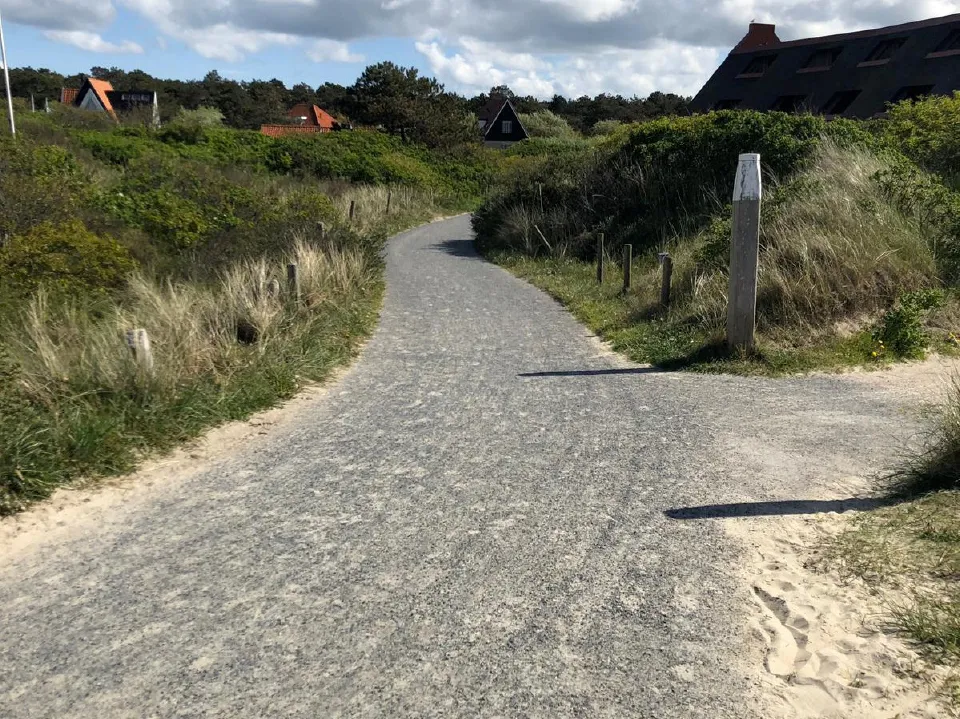
Sandy tracks and roads can also be important from a cultural heritage perspective. Over time, most sandy roads in the countryside have been “paved over”, losing their natural character in the landscape. Today, the policy of municipalities and heritage organisations is to preserve the sandy roads that remain wherever possible.
Klaas Koers says: “In recent years, our company has also become very active in this area, thanks to the special hydraulic sand we developed for these roads. Hydraulic sand preserves the character of a sandy road while minimising its drawbacks.” The road no longer turns into a quagmire, there is no loose sand and it produces virtually no dust when driven on. The old sandy road is milled to a depth of around 25 cm, after which the existing sand is mixed with hydraulic sand. The road is then reprofiled and the sand structure compacted. “Hydraulic sand is a good example of how we want to work as a developer and producer. We aim to make relevant products, incorporate as much recycled material as possible and ensure that both their production and application meet high sustainability standards,” concludes Klaas Koers.
Question about this story? Ask your question
Keep following this
Get an email when a new story is published. No account needed.
- SubjectPublic space