Romanian porphyry: an excellent alternative to dwindling Belgian setts
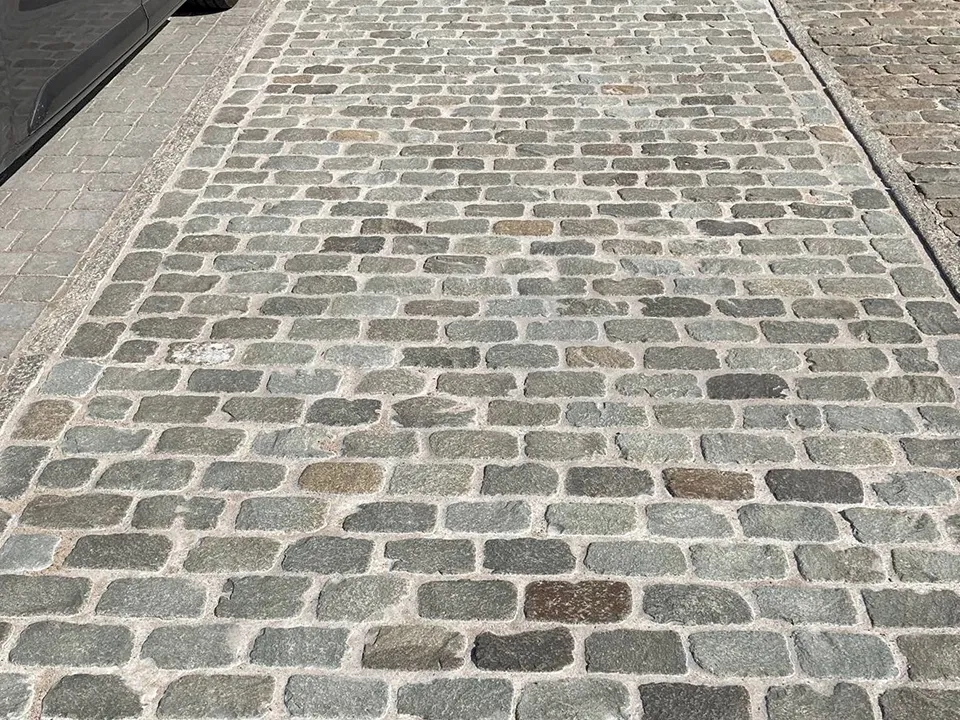
As Belgian porphyry becomes increasingly scarce and calls grow louder to move away from Asia and (re)discover Europe, Hofman nv took the bull by the horns several years ago.
The setts specialist from Hofstade set up a production line at a porphyry quarry in Romania and can now point to its first projects in Belgium. “We dared to invest, and we will certainly reap the benefits in the long term,” says managing director Koen Hofman.
From Kandla and basalt to porphyry and granite, in all sizes and thicknesses. There is a good chance you will find the right sett, kerbstone, paving slab … for your project at Hofman. Recently, a new European porphyry was added to the range. Koen Hofman: “It is Romanian porphyry that is very similar to our Belgian porphyry. The fact that it is a European stone is a major added value. On the one hand, there is increasing pressure to import less from Asia for environmental reasons, and on the other, Belgian porphyry is gradually disappearing altogether. Belgian porphyry is no longer quarried, except as crushed stone for ballast, for example on railways.”
The only Belgian porphyry now used in public or private projects comes from reclaimed material. “But those stocks are often very limited too, and are visibly dwindling,” says Koen Hofman. “For projects of, say, 5,000 m², it is already very difficult to carry out the work. And there is no Belgian alternative. There is still a quarry in Wallonia producing sandstone, but output is very small and intended mainly for local use. This Romanian porphyry is therefore very welcome and is a perfect solution to the shortage of its Belgian counterpart.”
Investing
The quarry in Romania was discovered about twenty years ago. Koen Hofman: “We also got started there at the time, but it was not yet commercially viable because Belgian porphyry was not in imminent short supply. The situation is completely different today. That is why, several years ago, we did not hesitate to invest in machinery ourselves and install a complete production line on site for sawing and splitting stone.
Thanks to these efforts, we can now achieve high output with modern machinery. And thanks to our favourable location in Europe, we can also guarantee fast delivery. Delivery from China can take up to 10 weeks, whereas within Europe it can be reduced to one week. What is more, the stone is transported by train in an environmentally responsible way.”
Hofman has established itself as a pioneer in developing new types of natural stone. “For example, we introduced Kandla to the market, a stone that is now used worldwide,” says Koen Hofman. “The possibilities are there, but you have to be willing and daring enough to invest. For every two stones you develop and bring to market, fifteen have failed first. You have to bear that in mind. By developing this new Romanian porphyry, we are sending a clear message to clients, contractors, architects, public authorities … There is an alternative to Belgian porphyry, with the same technical qualities and a very similar appearance. And there is a guarantee that the same stone will still be readily available in 15 years’ time.”
Three variants
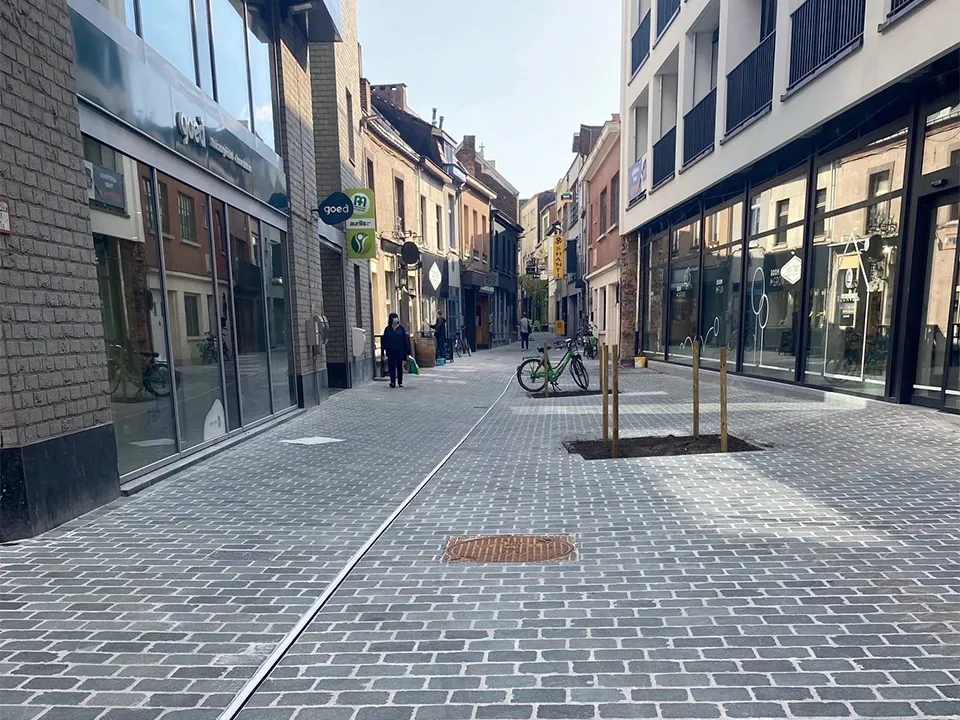
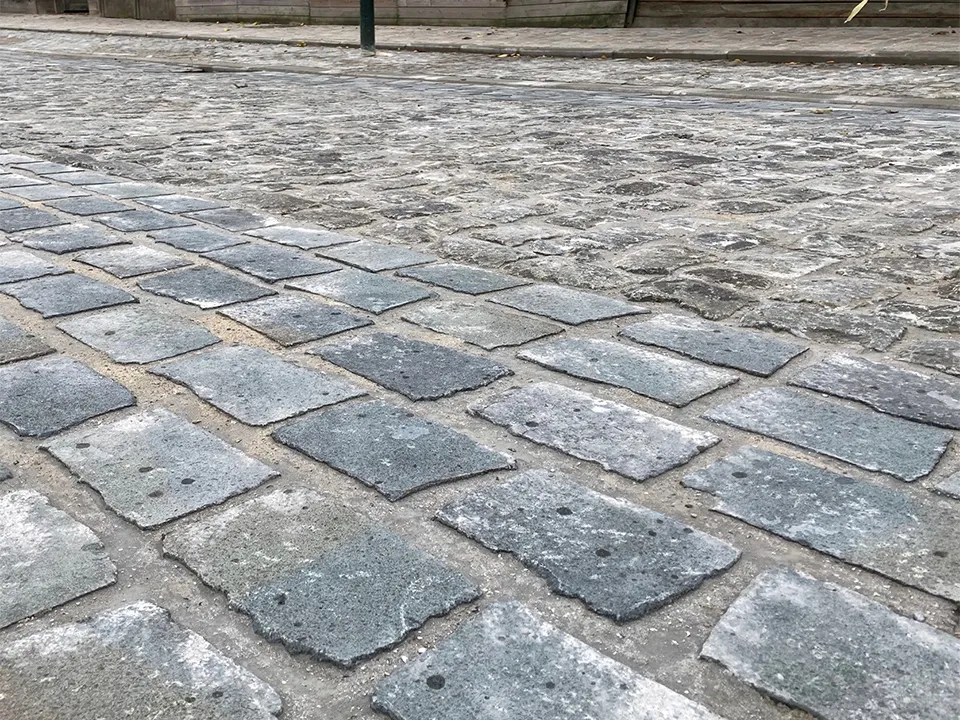
Hofman offers three variants of the new porphyry: sett paving slabs, sawn setts and traditional setts. “In response to growing demand in Belgium, we decided to produce sett paving slabs in Romania too, with sawn top and bottom faces. These slabs are as flat as a billiard table, yet retain the appearance of setts. We have already supplied these Romanian sett paving slabs for a project in the centre of Aalst. Sawn setts offer the same level of walking comfort, but only have a sawn top face, making them thicker and leaving the sides rougher. They look like antique sawn setts. Finally, there are the original, unsawn setts. To make the Romanian variant look even more like Belgian porphyry, it is tumbled to give it an aged patina. These three products give us a varied range. This makes it particularly interesting for public authorities, for example, to use sawn setts on a carriageway, tumbled setts in parking bays and sett paving slabs on footpaths. Different finishes, but still a strong sense of uniformity,” concludes Koen Hofman.
Question about this story? Ask your question
Keep following this
Get an email when a new story is published. No account needed.
- SubjectPublic space