Latest insights into climate-adaptive paving brought together in knowledge document
Text Arno VerheijImage Vandersanden
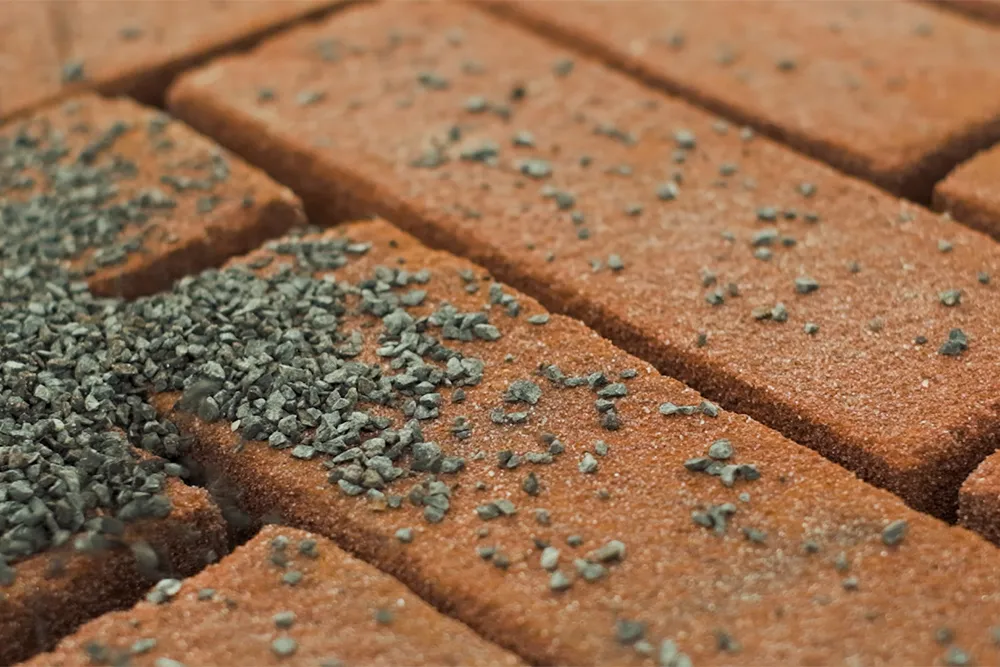
Brick manufacturer Vandersanden specialises in water-permeable paving, a product that allows rainwater to infiltrate where it falls. The company has brought together the latest insights into permeable surfacing in a free knowledge document. With this reference guide, Vandersanden aims to share its expertise in climate-adaptive paving and offer solutions that benefit all parties.
Vandersanden Group is a family business that, since its founding in 1925, has grown into one of Europe’s largest brick manufacturers, with 3 factories in Belgium, 5 in the Netherlands and 1 in Germany. Vandersanden believes in the power of water-permeable paving as a solution to the problems caused by increasingly heavy rainfall and drought. The company recently launched a 44-page knowledge document on permeable surfacing, one of its innovations.
Sharing knowledge
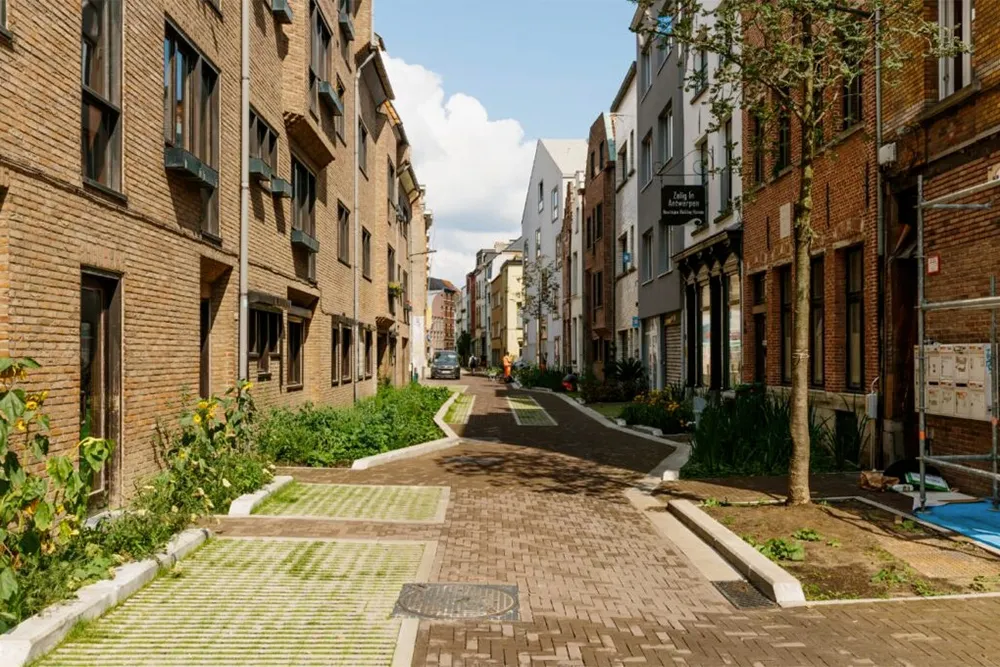
Vandersanden wants the document to serve as a reference guide for all its customers, from architects, engineering consultancies and contractors to pavers, says sales director pavers Kris Van Duyse: “We have two reasons for doing this. First, climate awareness and sustainability are in our company’s DNA. As a family business, we take a long-term view and make decisions with future generations in mind. We also want to meet a need with this document. In Flanders, we are still a long way behind the Netherlands in the fight against flooding and drought. With the Blue Deal, our country is now stepping up its efforts significantly. We want to do our bit by sharing our extensive experience and knowledge of climate-adaptive paving and water permeability: facts and figures, as well as tips and guidance, covering everything from design to maintenance and management.”
Water-permeable pavers
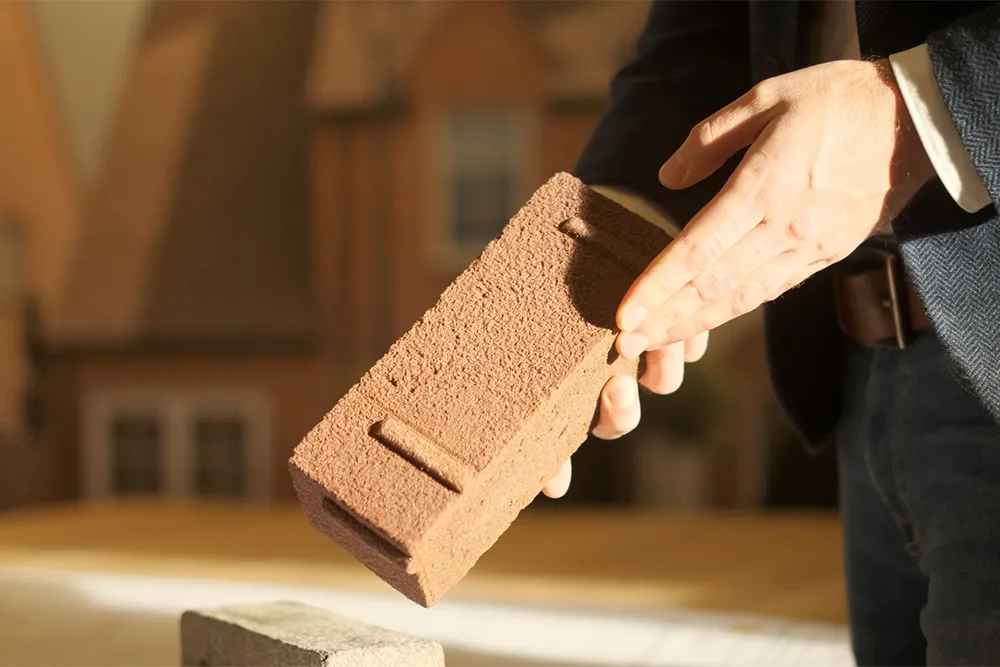
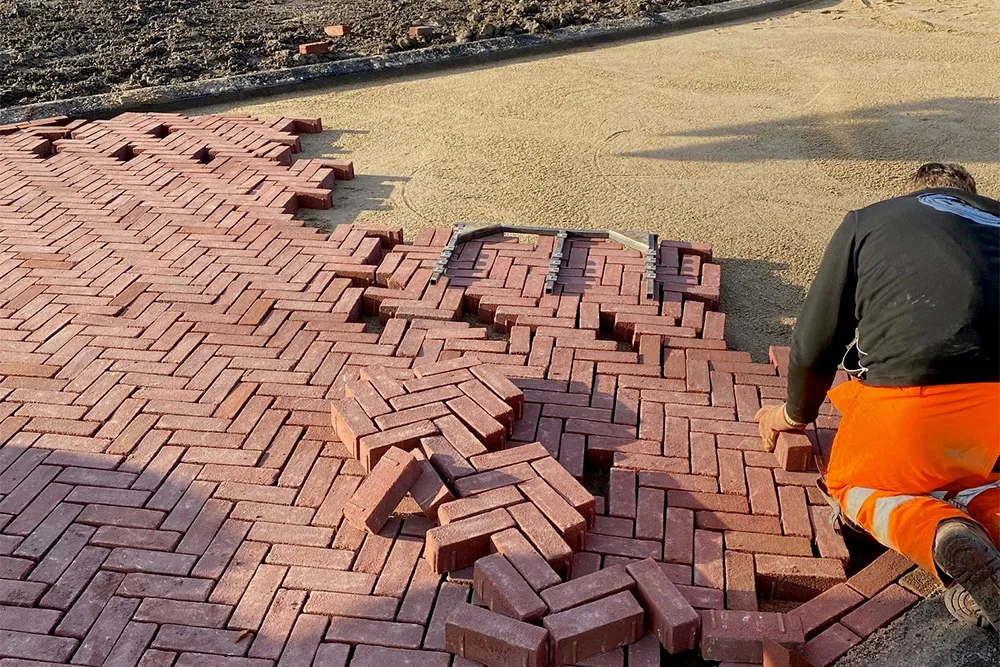
Vandersanden makes fired clay pavers, an extremely strong product that naturally does not absorb water. Kris Van Duyse: “That is why our water-permeable pavers have a specially adapted shape. There are two types: one with recesses at both ends and one with spacers all round. This creates wider joints between the pavers when they are laid, allowing much more rainwater to infiltrate the ground. The rainwater is retained locally, resulting in a healthy groundwater level.” The water-permeable pavers are hard-wearing. Kris Van Duyse: “They can also be used very effectively on carriageways, as is already happening on a large scale in the Netherlands. Here, asphalt and concrete are still predominantly used for this purpose.”
A tool for making the right choices
In addition to product information, the knowledge document also offers advice on how to install and maintain permeable drainage correctly. Kris Van Duyse: “There is much more to it than simply choosing and installing a type of paving. You have to take a great many different factors into account: the subsoil, the surfacing and buildings, the space available … For example, there is no point trying to infiltrate water into a clay layer, because it does not let water through.” Differences in level, groundwater levels, and the intensity and amount of annual rainfall all play a part too. The choice of materials for the sub-base and joints also requires careful consideration. “With this knowledge document, we want to provide our customers with a tool to help them make the right choices, so that permeable surfacing becomes a genuine solution.”
A sustainable, circular product
How sustainable are water-permeable pavers? Kris Van Duyse: “Clay pavers are a sustainable, circular product. They are made from river clay, a raw material officially classified as renewable. They have a long lifespan, averaging 135 years and reaching up to 180 years. In addition, the reuse rate is almost 90 %.
The production process is made as energy-efficient as possible, and we are taking steps to gradually reduce CO2 emissions to zero, with the ultimate goal of achieving carbon neutrality by 2050.”
Een zakelijke vraag aan Vandersanden? Get in touch
Companies in this story
Keep following this
Get an email when a new story is published. No account needed.
- ThemeSpace for water and green infrastructure
- SubjectPublic space
- CompanyVandersanden