“Work volumes are recovering within the ‘new normal’”
Text Niels Rouvrois Beeld BESIX Group
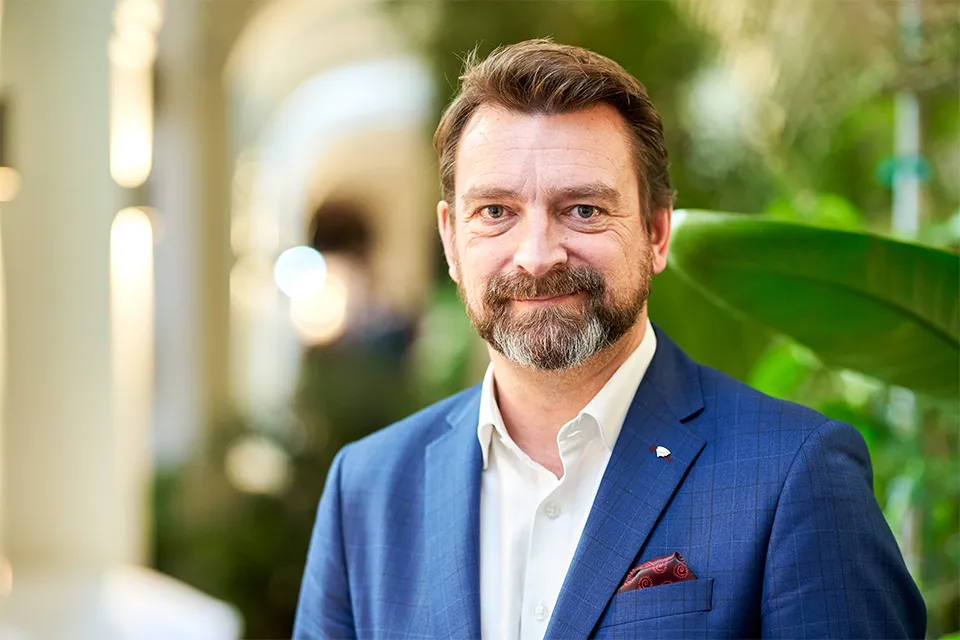
Despite all the challenges facing society in general and the construction sector in particular, BESIX Group continues to stand firm and look ahead. The prices of materials and energy, as well as wages, have risen, margins are under pressure, and the permitting process is becoming increasingly convoluted … It takes a cool head, the necessary flexibility and plenty of perseverance for a construction company to deal with the ‘new normal’. “It’s something our group is good at. And certainly in Belgium, where we can look back on a successful 2024,” says Mark Beyst, General Manager of BESIX België en Luxemburg (BELUX).
Active since 1909, BESIX Group has grown over the years into a multidisciplinary company with a leading position in several markets: construction, property development and concessions. These markets can fluctuate considerably, but the BESIX BELUX order book was a model of stability in 2024.
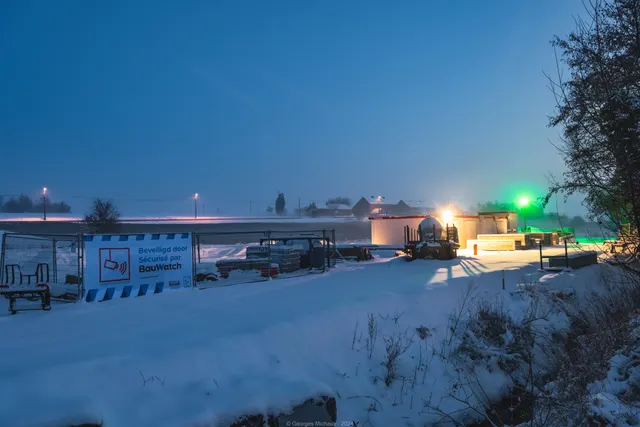
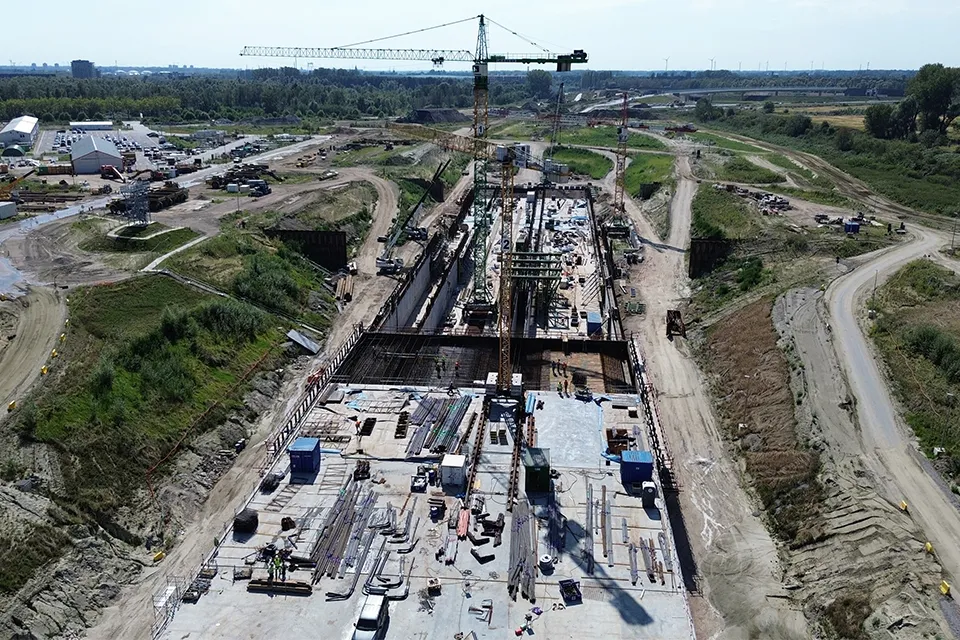
Mark Beyst: “We are seeing a certain volume of work returning to the market. In 2024, for example, we secured more than three times our expected portfolio, amounting to one billion euros’ worth of new work in Belgium for the coming years, as BESIX nv, excluding its subsidiaries. This is the result of a combination of small and medium-sized projects and a number of very large, complex projects, such as the R4 in Ghent, the largest PPP project in Flanders. In autumn 2024, BESIX, BESIX Environment and John Cockerill Hydrogen also started work on Belgium’s first 25 MW renewable hydrogen production unit in Zeebrugge, and we are awaiting the formal go-ahead for a sludge treatment plant for Aquafin in Ghent. In Charleroi, we are building a satellite factory, while in Mons we are working flat out on a new data centre. Work has begun in Obourg on Holcim’s carbon-neutral cement plant, GO4Zero. This is clear evidence of the growing opportunities for us in Wallonia. These larger projects provide stability over several years and allow us to be more selective at the higher end of the market, choosing projects that really appeal to us, often because of their complexity, but also because of their potential to deliver a good result.”
Stability
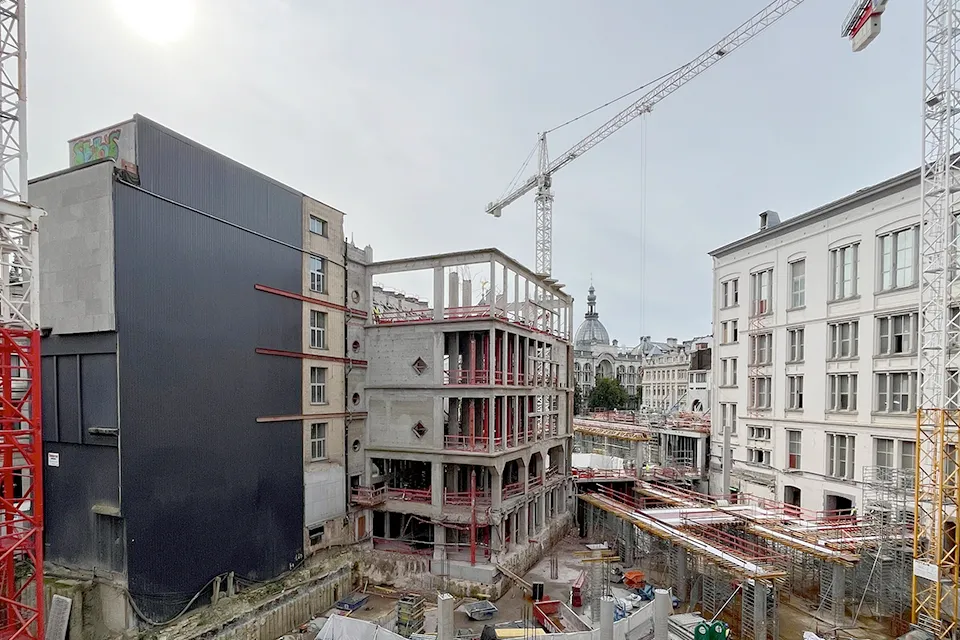
The order book may be well filled, but Mark Beyst has noticed a clear trend in the market: “The development market has cooled. As a result, Brussels and the Grand Duchy of Luxembourg, both predominantly development markets, remain difficult regions. That said, we are seeing a boost in the renovation market in Brussels, for example, with projects such as The Hive for BNP Paribas Fortis. The reasons for the slowdown in development are clear: interest rates remain very high, as do the prices of materials and raw materials. Prices have stabilised, but have not fallen. So we are currently talking about the ‘new normal’. All parties need to find their way within it. I have already noticed a strong determination among subcontractors and suppliers to turn the tide. We are therefore particularly pleased with work volumes in 2024. Stability is gradually returning, and the formation of a Flemish government will certainly also have a positive effect on that stability and on the major infrastructure projects still in the pipeline.”
An energy-intensive preliminary phase
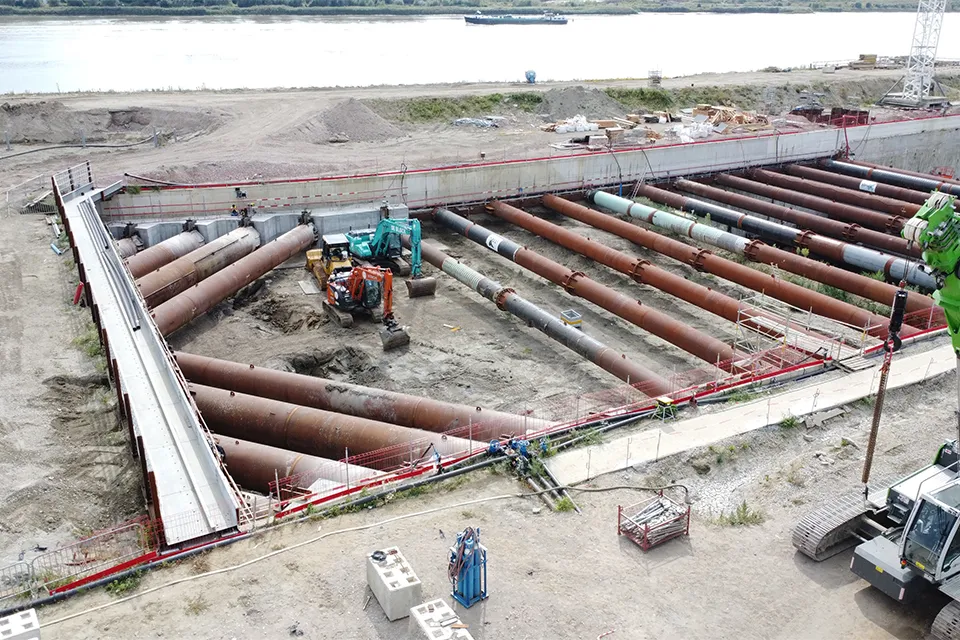
One major challenge today, particularly on larger projects, lies in the early stages. Mark Beyst: “That process takes an enormous amount of time and energy, and requires significant investment at risk. Fortunately, action is gradually being taken. On the one hand, we see the government making funding available for major investments; on the other, the coalition agreement includes initiatives to simplify the administrative maze. We look forward to seeing how these are put into practice. The lead time for the preliminary phase needs to be shortened. It is sometimes too easy to lodge an objection to a project, but the consequences are very serious. Even when an objection has no real grounds, it can quickly cause a delay of 1 to 2 years, with major effects on the schedule, of course, but also on costs, which can in turn jeopardise the project’s viability. Hopefully, the new government(s) will bring about change.”
Renovation market
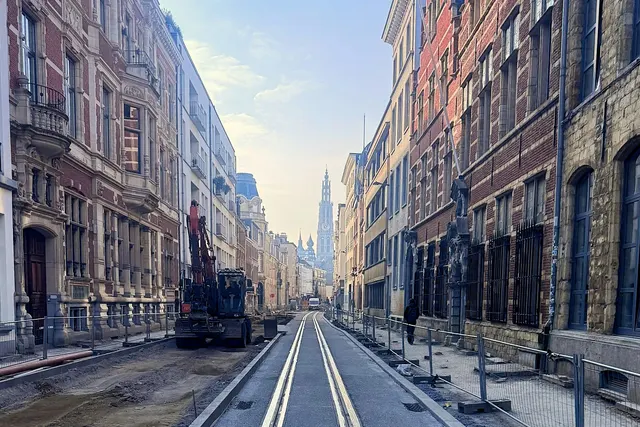
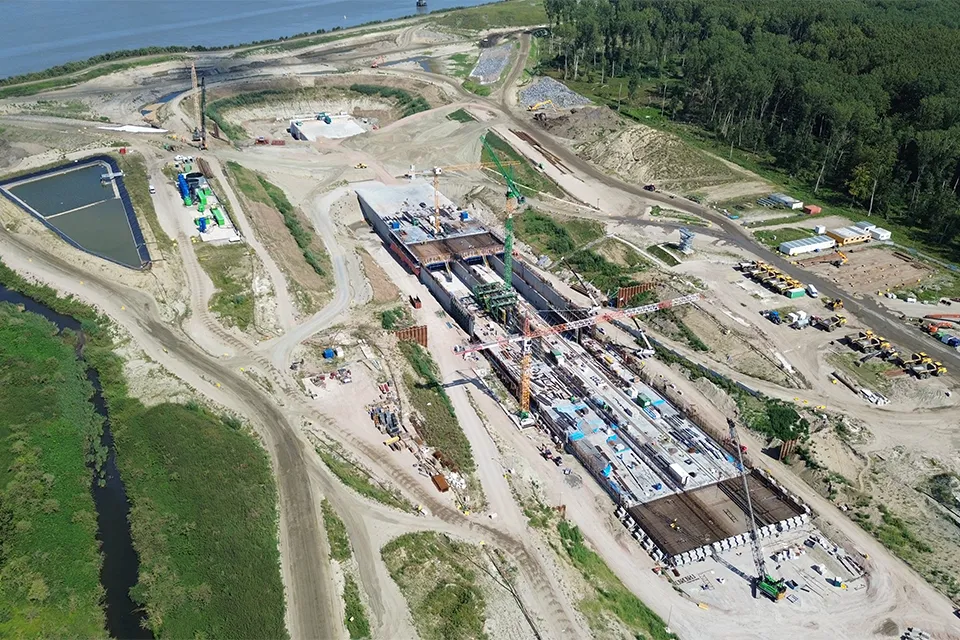
As already mentioned, the renovation market continues to grow. Not only in Brussels, but throughout Flanders, many buildings no longer meet current EPB standards, while (partly) deteriorated structures, such as bridges, tunnels and locks, are on the waiting list for major renovation. Mark Beyst: “Both BESIX BELUX and our subsidiaries have seen significant growth in revenue from the renovation market in recent years, including mixed-use projects combining renovation and new construction. The big question on these projects is not ‘Can we win them?’ but ‘Are they viable?’. Contractors face considerable pressure to keep projects within the budget set out in the end client’s feasibility study. Early Contractor Involvement, where the contractor is brought into the design process as early as possible, plays an important role in this. That way, we can make our expertise fully available. We are smarter and more effective together. It also allows us to share, bear and manage risks more effectively.”
And those risks are substantial. This is particularly true in the renovation sector, where construction teams often encounter unforeseen problems. Mark Beyst: “More so than with new-build projects, renovation work can throw up surprises during construction. You need to agree with the client, designer, engineering consultancy and others on how those risks will be managed. When renovating structures, such as the many tunnels and bridges in poor condition, the work goes beyond the renovation itself. We also need to ensure that these structures are better maintained in future and therefore last longer, with a focus on Total Cost of Ownership.”
Risk management
It is clear that risk management has become part of a contractor’s day-to-day work. Mark Beyst: “An internal gap analysis highlighted a number of issues. We found that certain problems were cropping up on several projects. These often involved an incorrect assessment of site staffing requirements, combined with an underestimation of administrative tasks. More and more rules are being imposed from outside, meaning that more time is spent preparing a project and finding a solution that meets all the requirements is becoming increasingly difficult. That is why we now carry out a very detailed risk assessment for every project, as early as the tender stage, which means we are less likely to face unpleasant surprises. We monitor that report closely during construction so that we always keep a close eye on the budget, risks, possible optimisations and so on.”
“But, and I really want to emphasise this, risk management is a shared responsibility between all parties,” Mark Beyst continues. “In the past, it was all too easy to say: we’ll put all the risks on the contractor, and they’ll sort it out. The risks are not ours alone, but belong to all the parties involved, so they must be shared, above all transparently. That is the only way to deliver a project that is financially and technically sound, with a great end result.”
One-stop shop
BESIX, BESIX Infra, BESIX Unitec, Franki Foundations, Socogetra, Wust, Vanhout, Jacques Delens, LuxTP … Combined with BESIX Invest’s financing expertise in PPPs and concessions, BESIX BELUX is positioning itself more than ever as a one-stop shop for its clients. Mark Beyst: “We are not fully vertically integrated, but we do have a number of specialist subsidiaries that we can call on. The foundation techniques used by Franki Foundations, for example, are closely aligned with BESIX’s activities. That is a win-win for both parties. We work particularly well together on civil engineering projects, such as major infrastructure works, where BESIX Infra and BESIX Unitec provide the perfect complement to our capabilities and enable us to deliver the whole project. We are certainly reaping the benefits of these synergies, and will continue to do so in the coming years.”
Question about this story? Ask your question
Keep following this
Get an email when a new story is published. No account needed.
- SubjectYearbook