Volume reduction cuts transport costs
Text Els GoethalsImage Advanced Machinery
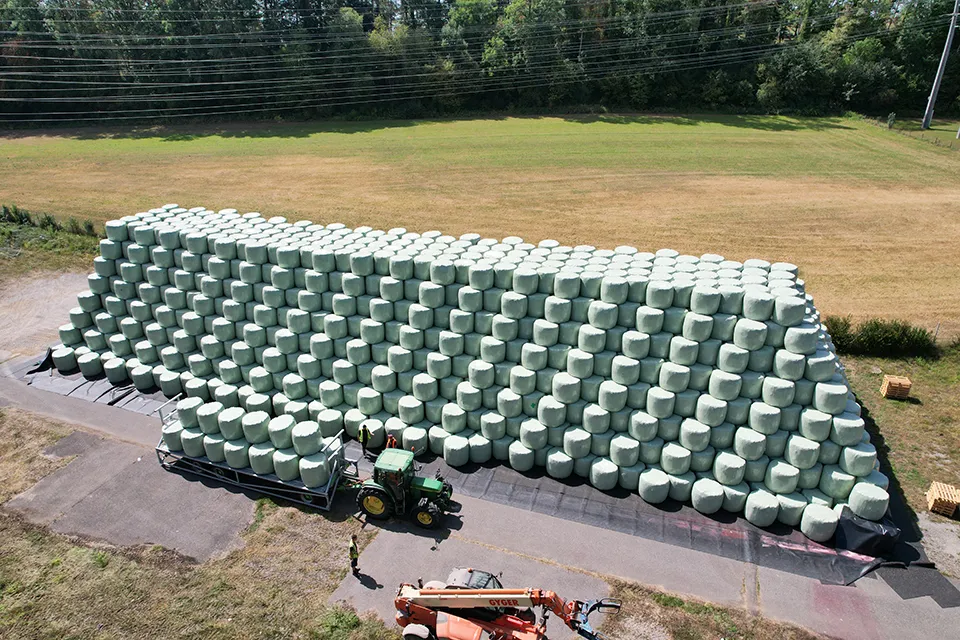
Cutting transport costs without any extra effort? That is sure to strike a chord with recycling and waste-processing companies. With a volume reduction of more than 30%, this is exactly what the Flexus baler and wrapping system deliver. After all, the volume of the load determines the price. Philippe Potier, managing director of Advanced Machinery, explains the precise advantages of the Flexus Typhoon, or rather, how it wraps things up.
Total cost of ownership
Advanced Machinery supplies high-quality recycling machinery tailored to customers’ needs. At the helm is Philippe Potier, an experienced professional with extensive expertise in recycling and waste processing. “We look for the best solution for each customer, taking into account the ‘Total Cost of Ownership’, in other words, the lowest cost per tonne,” says Philippe Potier. “To go all the way for our customers, we offer a broad range of recycling applications at every stage of the process. Optimal preparation for transport is, of course, part of that too.”
Sustainable and efficient transport
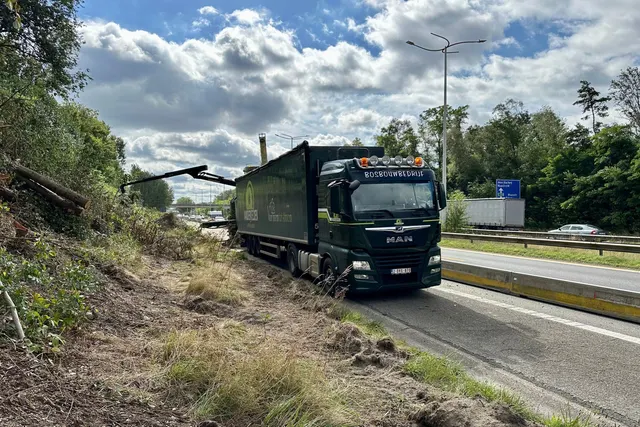
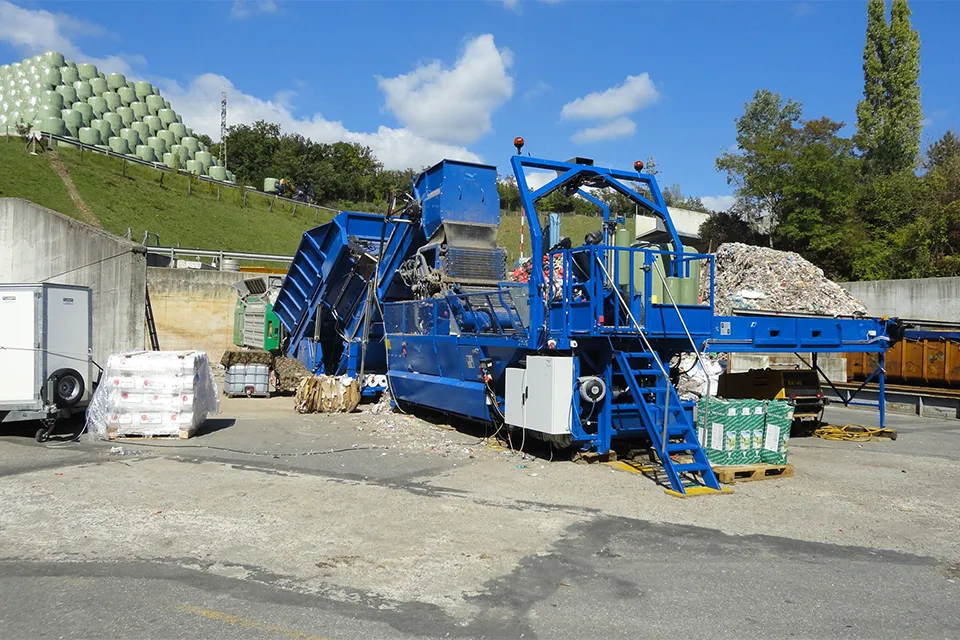
Transport also plays an important role in optimising the entire environmental cycle. The more effectively we can reduce the volume of recycled materials, the more we can cut transport costs, both by water and by road. This is a principle Advanced Machinery takes seriously. That is why Philippe Potier signed a dealership agreement with Flexus several years ago: “The Swedish company is a pioneer in industrial ‘all-in-one baling & wrapping’ solutions for compacting a wide range of materials and reducing their volume.”
From low energy consumption to longer storage times
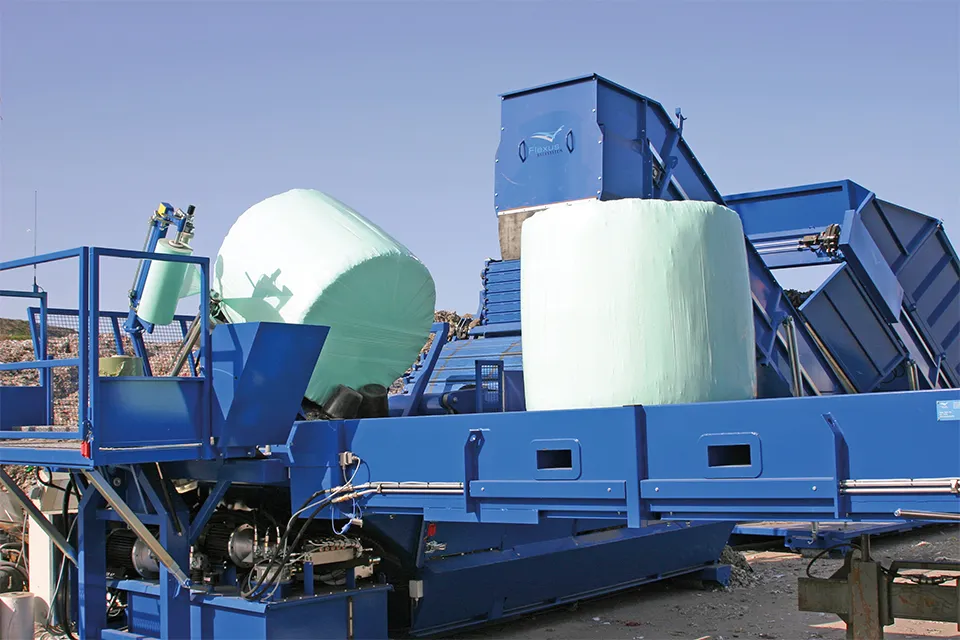
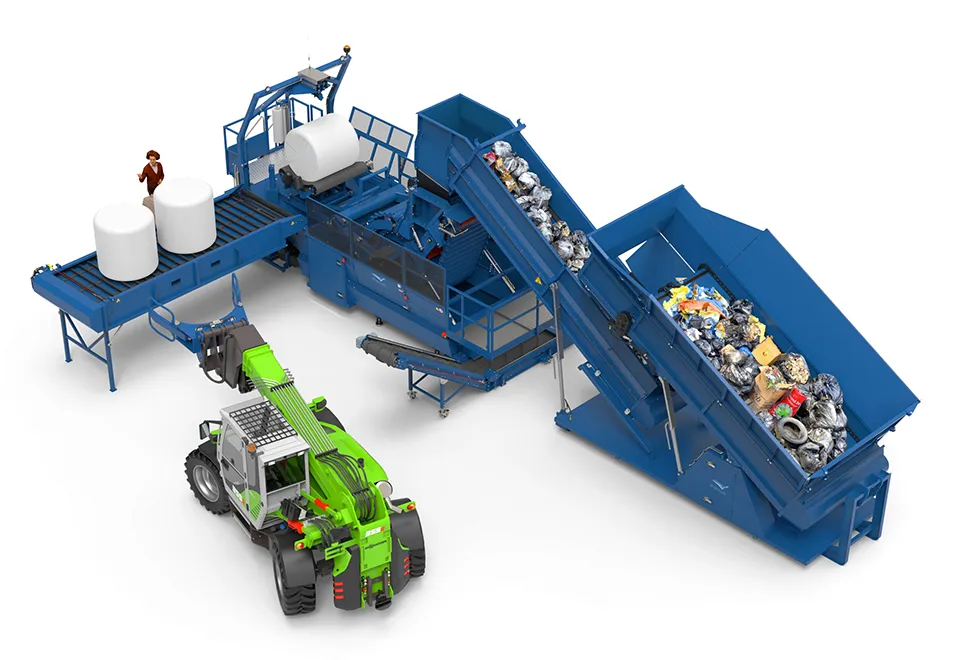
Philippe Potier: “Compressing waste or recycled material and reducing its volume by one third: the Flexus Typhoon heavy-duty baler makes an immediate impression. With a processing capacity of 30 to 34 bales/hour, and up to 50 tonnes/hour for ‘Municipal Solid Waste’ (MSW), this machine delivers impressive performance. Another major advantage is its low energy consumption, between 10 and 40 kW/h, equivalent to around 1 to 1.5 kW per finished bale. The round bales made by the semi-mobile Flexus machine and wrapped airtight in stretch film save a great deal of space when stacked, stored and transported. Storage time is another important benefit. Household waste normally needs to be processed quickly, preferably within 48 hours, but these bales can be stored for six months. Without oxygen, fermentation and organic decomposition cannot get under way. This keeps pests at bay and also prevents nuisance odours.”
The technical details
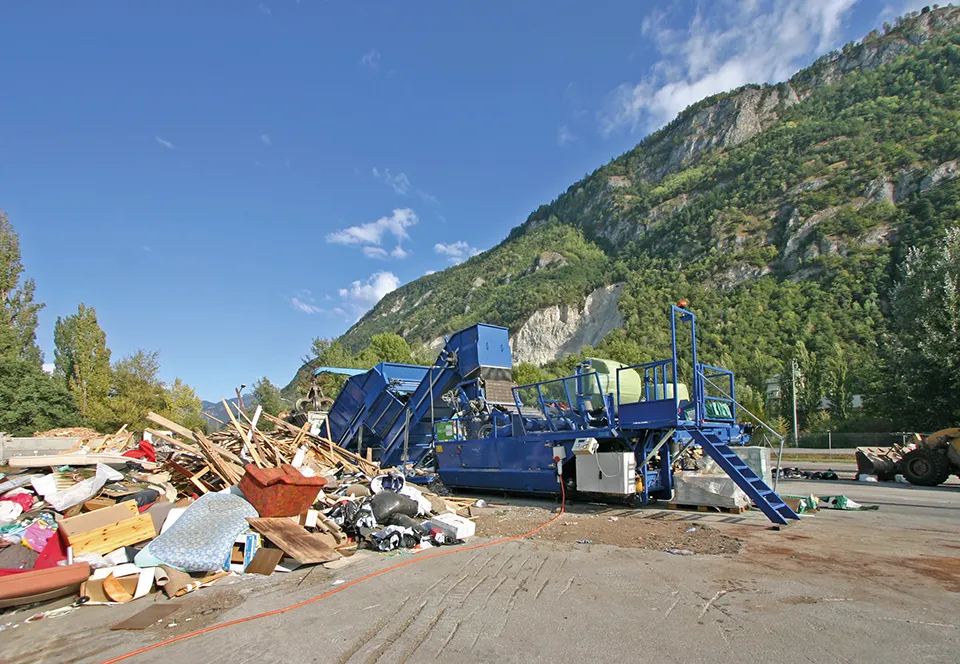
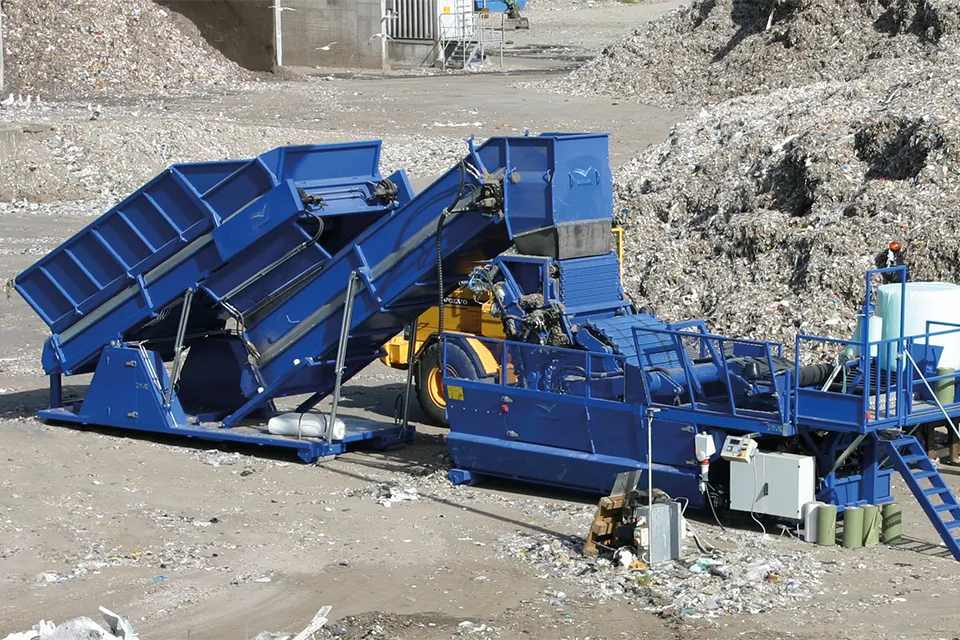
“The Flexus Typhoon is suitable for a wide range of applications. As well as MSW, it can be used in biomass or waste-to-energy processing (WtE, RDF …), B&I waste, shredded rubber … The bales are not the only things designed for easy transport: the Flexus machines themselves are also easy to move, quick to install and dismantle. They are available in hook-lift or trailer-mounted versions. Once on site, the complete installation, including the press, bale wrapper and conveyor belts, is operational within two hours,” adds Andreas De Coninck, marketing at Advanced Machinery. “Its highly efficient operation is due in part to the press’s special patented design. It is powered electrohydraulically. The pressing chamber has rotating sides, and the feed belt runs on ball-bearing rollers.”
Lightweight and strong
The stretch film and net used to wrap the bales are made from environmentally friendly polyethylene, which is converted into carbon dioxide and water when burned. The film is thin, just 25-30 µ, yet extremely strong, preventing any leakage. Environmental considerations are therefore built into every stage of the process.
Question about this story? Ask your question
Keep following this
Get an email when a new story is published. No account needed.
- ThemeMaterials with a lower environmental impact
- SubjectYearbook